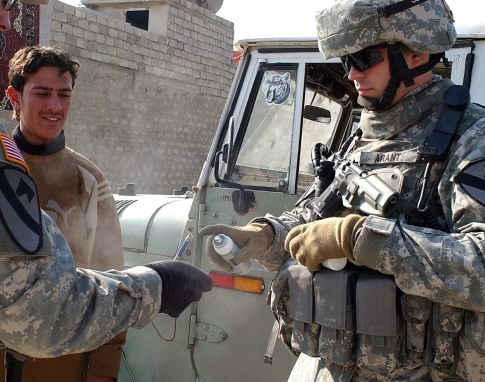
The EXPRAY explosive detection system is user-friendly, field ready, and portable bomb detection kit. Many military units who deploy to Africa, Iraq, and Afghanistan use this kit to check to see if people have handled bombs, improvised explosive device (IED), and other munitions.
The kit is in the class of chemical reaction detection. It is a hand held system and allows for a variety of cargoes and people. It consists of a kit with three spray cans where each spray reacts to different types of explosives. It only takes less than a minute to test, only ways about 2 pounds, requires no power, and has a very long shelf life. Troops in the field should bring this kit with them in their vehicles and have at least one of these kits at the squad level when dismounted.
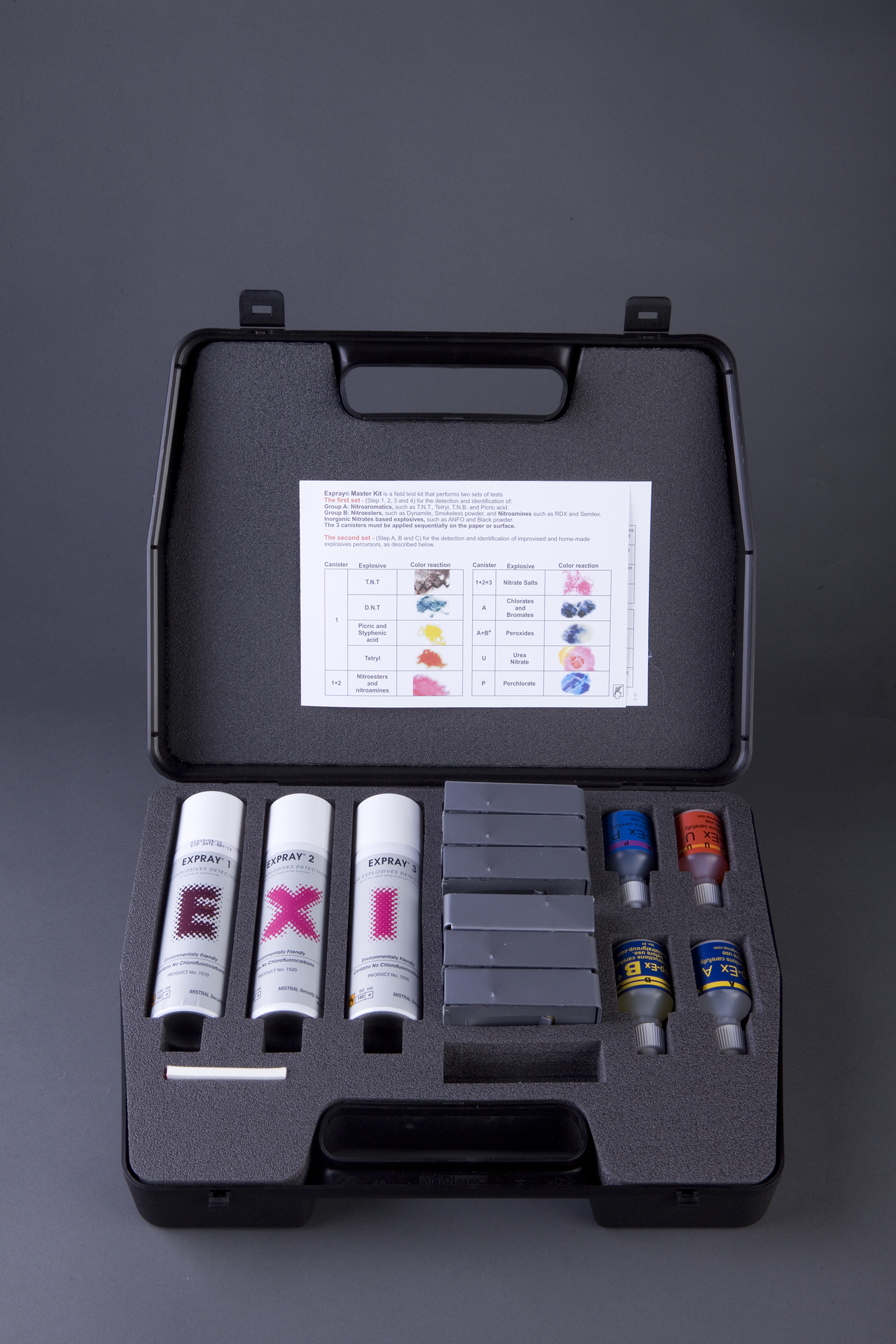
This is a list of what each can detects:
Expray 1 Nitro Aromatics TNT; Picric Acid; Tetryl
Expray 2 Nitro Esters/Nitramines Nitrocellulose; nitroglycerin; RDX; C4; HMX
Expray 3 Inorganic Nitrates (Nitrate Salts); Ammonium Nitrate; Urea Nitrate; ANFO; Black Powder
The cans inside the kit are aerosol-based. The following list are the explosives it will detect:
- Group A Explosives – TNT, TNB, and similar
- Group B Explosives – Semtex H, RDX, C4, and similar
- Compounds containing inorganic nitrates that are used in IEDs like ANFO

A few scenerios where the Expray kit can be used:
- Your unit is on a mission and there are IEDs identified either under the road with wires hanging out or you see something on the side of the road that is later identified as an EFP (explosively formed perpetrator) or IED. After the unit and civilians are out of harms way, typically the unit will want to identify suspects who may have put the bomb there. One of the techniques is to test possible suspects who were over watching the IED / EFP. This kit would be used to try and identify who the IED triggerman or handler is. Anyone who comes up as having handled explosives would then be further analyzed for information.
- Your unit is on patrol and receives sniper fire from a building. You investigate and there are several insurgents apprehended. You test all of the insurgents and they all test positive for explosives. You then include the explosives in their file so they have more evidence against them in court or in the detention process.
- Your unit is on patrol and you see a high value target you are looking for. He is talking with a few people. Your unit apprehends the high value target and then you test the other people he was talking to. In addition to other biometric tests, they pass both the biometric check and the Expray explosive detection test. These people are then cleared for release.
- You suspect that IEDs may have been built in a bomb-maker’s house. After detaining the bomb maker, your unit tests different walls, rooms, and furniture in the house. One of the rooms comes up positive for explosives. You investigate the room further and find stashes of explosives under the floor board, in the furniture, or in the ceiling.
There are many ways to used these kits while in combat. The point is they are a must-have. Unless you have some other way to check for explosives, don’t deploy without these Expray kits.
Some other non-military uses for the Expray:
- You can use it to certify scrap for disposal
- You can screen a sample of soil
- You can prescreen extracts to identify which test should be performed as a follow up (TNT or RDX)
- Use it as a back up tool for detection of residue or explosives
- Check suspicious letters and packages
- Use to check crime scenes
- Quick screen of suspects
- Detect explosives on almost all surfaces
The Expray kits are made by Mistral Security, Inc. out of Bethesda, MD.

Leave a Reply