USMC stands for the United States Marine Corps. It is a branch the U.S. Department of Defense. However its main function is as a component of the U.S. Navy. The Marine Corps functions mainly as training, transportation and logistics support to the United States Armed Forces, specially the Navy. With approximately 194,000 active and 40,000 reserve personnel the USMC operates both form land base setups and on-sea setups. Its on-sea bases are operated form amphibious warfare ships. Though it is the smallest among the United States Armed Forces it has earned a wide popularity and influence over the policy making and implementation systems for its increasingly efficient service.
The Marine Corps traces back its origin to the Continental Marines, which was established in November 10, 1775 to aid in the battle for independence in the American Revolutionary War. Since then it has been serving in each and every war that America has ever fought and have proven their value and strength pretty well. Now the Marine Corps is the most dominant for their theoretical and practical expertise in the arena of amphibious warfare. Presently headed by the Secretary of the Navy Ray Mabus, the Marine Corps is the also called as “America’s third air force” and “second land army” because of its popularity.
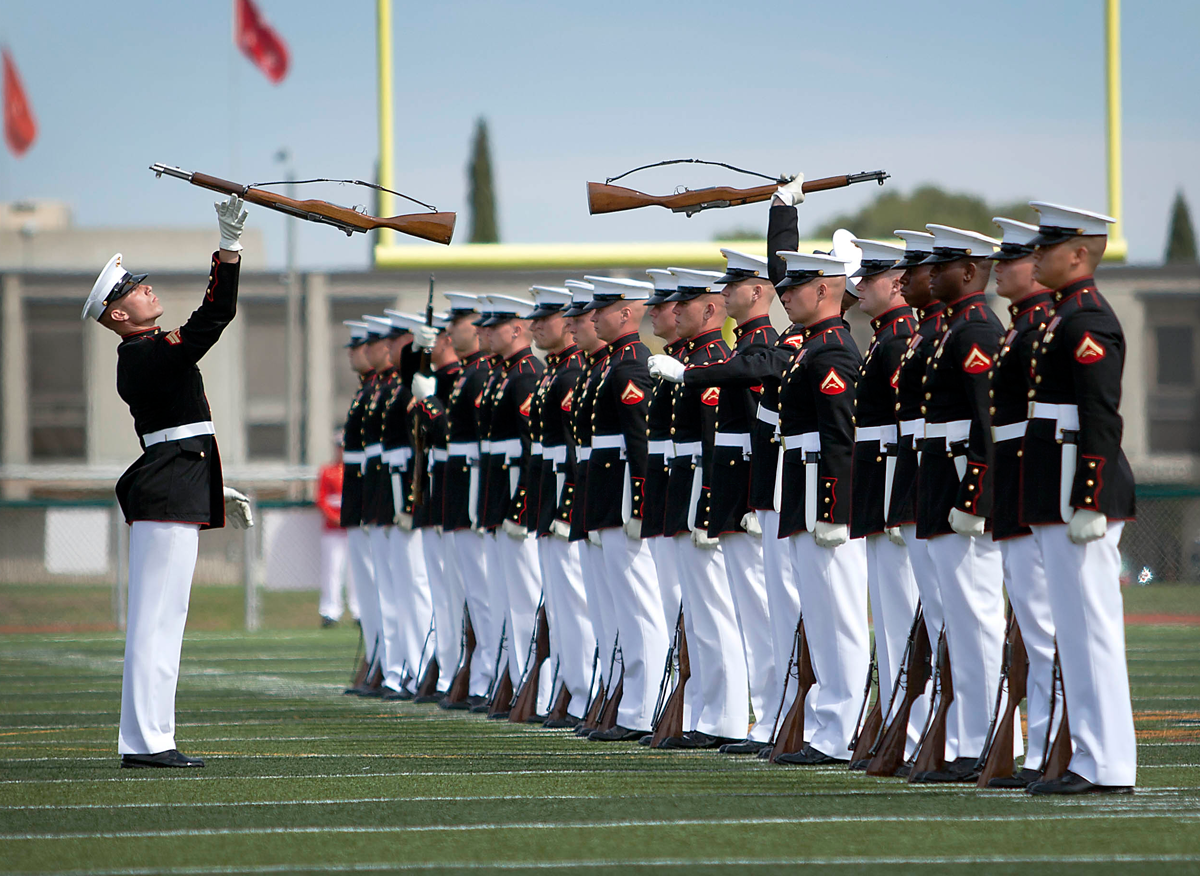
Marine Corps has several Drill Platoons specifically dedicated to exhibiting their expertise through ingenious drill movements. These are called exhibition drills. United States Marine Corps Silent Drill Platoon is one such platoon among others. But it is perhaps the most popular among them. Their precision, performance, grace without even a single bit of misplacement justly shows the Marine’s professionalism and consistency. In this video you will be able to see them in action and have the pleasure to be mesmerized by their smooth and soothing drill movements. This video was taken in the year of 2011 at Pepsi Center, Denver.
The platoon consists of 24 members with a 10.5 pounds M1 Garand rifles each. That’s why they are also known as The Marching Twenty Four. All of the members are selected from the School of Infantry and have to fulfill some requirements. However precision is the key. Primarily designed to be a one time show, the platoon first performed in 1948 and received a huge deal of positive response and because of that it became a part of the routine parades at Marine Barracks Washington, D.C. Since then the platoon displays their presentation worldwide to represent the U.S. Marine Corps.
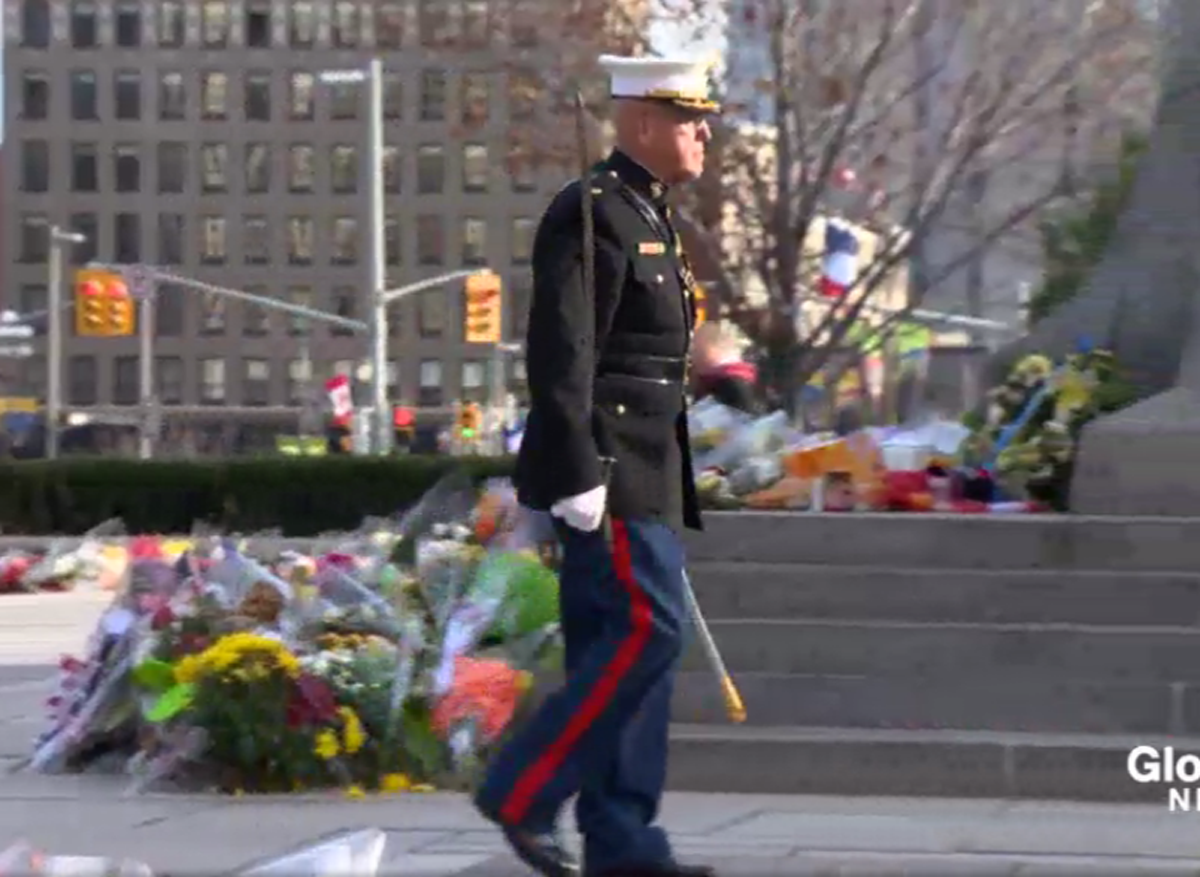
Major Fox Sinke, a highly decorated United States Marine Corps veteran, visited the National War Memorial to prove to everyone that when it comes to fighting the good fight, Canadian and American troops are united as one.
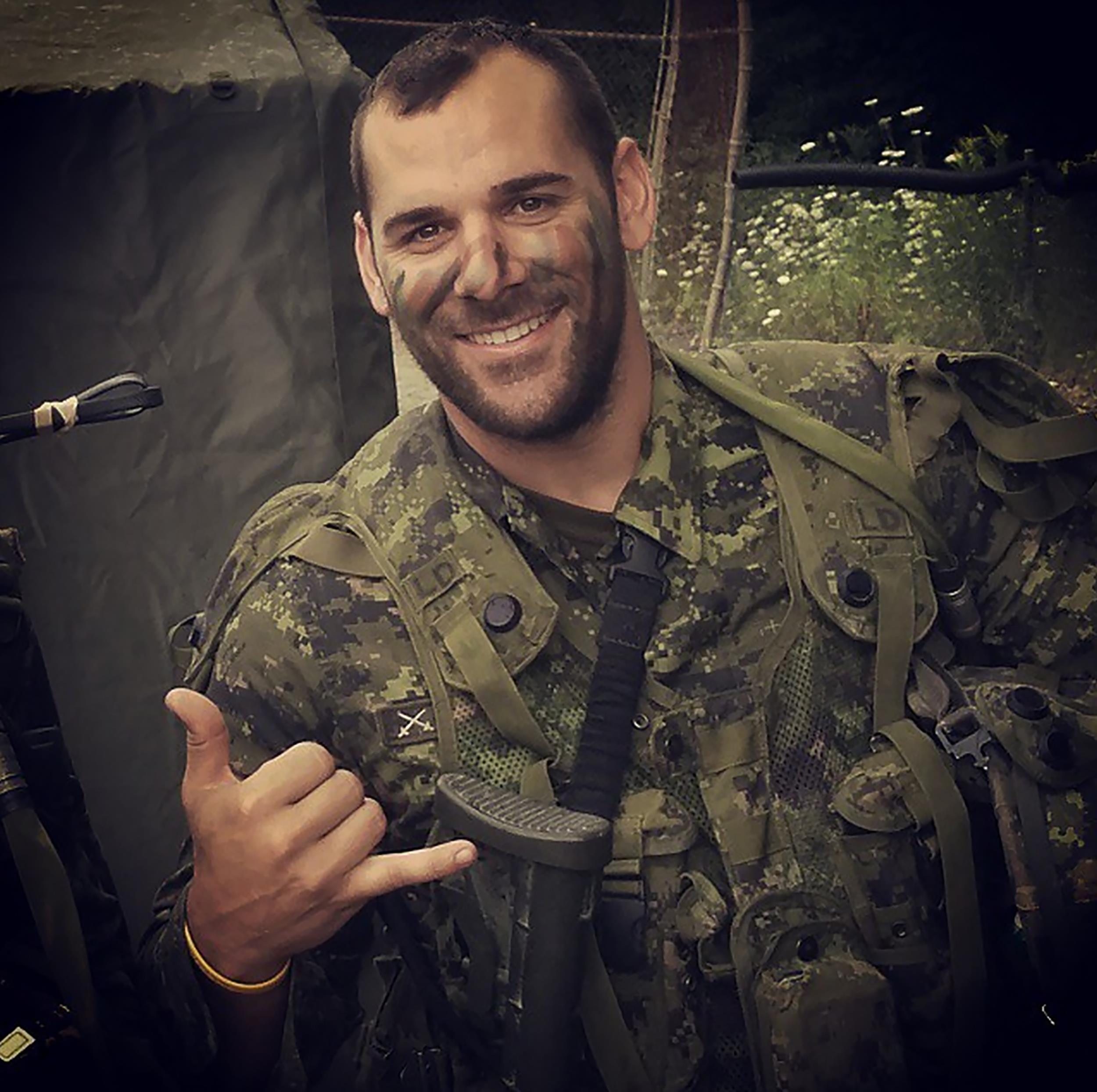
Corporal Nathan Cirillo
Major Sinke is decorated with five purple hearts and three bronze stars. He is here to pay tribute in his own special way to Corporal Nathan Cirillo at the Canadian National War Memorial. Cirillo was shot and killed as a guard at the War Memorial on October 22nd, 2014 by terrorist Michael Zehaf-Bibeau.
Michael Zehaf-Bibeau
Here are some quotes from the video made by Major Sinke. This guy is a great American and human being, who understands the tenants of liberty and respect to his fellow comrade. “That young corporal is a comrade in arms”. “We are not intimidated, take your best shot.” “There are those of us who understand what is happening, and by God, we aren’t going to lie down for it. I am here to make my own personal damn statement.” “We are with you, that’s all I am saying. We got your back.”
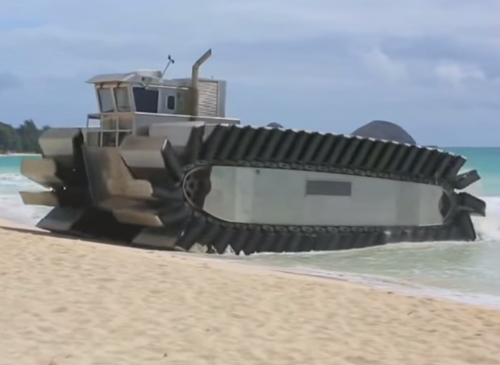
The video displays a prototype of US Marine Corps’ new amphibious vehicle UHAC (Ultra Heavy-lift Amphibious Connector) at its demonstration in Hawaii on 11 July 2014 during a Marine Corps Advanced Warfighting Experiment during RIMPAC 2014. In this demonstration the prototype of UHAC carries an assault vehicle from Rushmore to the shore.
Developed by the Office of Naval Research and Navatek Ltd., this amphibious vehicle is capable of travelling both on sea and land and meant to replace US Marine Corps’ Landing Craft Air Cushion which is being used in operations for more than 20 years.
This prototype is a half-scale version of the full scale UHAC which is made of aluminum and air-filled blocks of foam for giving the vehicle appropriate propulsion. The prototype is 13 metres (42 feet) long, 8 metres (26 feet) wide and 5 metres (17 feet) high. The full-scale UHAC is going to be much bigger and will be able to carry more loads than this half scale prototype. The final UHAC would be 25 (84 feet) metres in length, 10 (34 feet) metres in width and will have a range of 320 kilometres (200 miles). It will be capable of carrying up to 200 tons weight at the speed of 40 kilometers (20 miles) per hour and will be able to scale 3 meters ( 10 feet) high obstacles like sea walls.
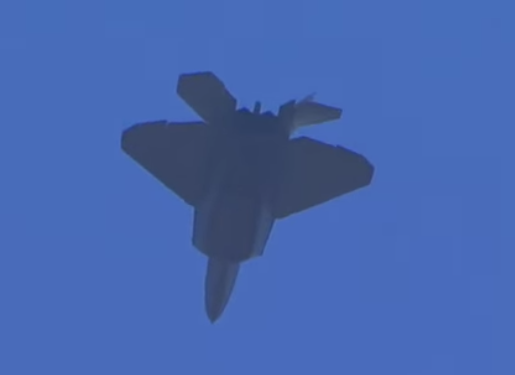
This video shows a demonstration by F-22 Raptor fighter aircraft on the third and last day of MCAS Miramar Air Show, 2012 held at Miramar, CA from 12-14 October.
MACAS Air Show is an air show that Marine Corps Air Station (MCAS), the home of Third Marine Aircraft Wing puts every year with a view to showcasing the air power of US Marine Corps. F-22 Raptor is a double-engine, single seat and all weather stealth mode enabled fighter aircraft primarily designed for the United States Air Force.
In this video, the F-22 Raptor demonstration has been shown with the whole process. The demonstration has been performed by Major Henry “Schadow” Schantz. The process of the demonstration starts with the starting up of the engine. Then after completing the control surface test the aircraft taxies and with the take- off, the demonstration starts. Major Henry ”Schadow” Schantz performs a solo demonstration which showcases the supersonic speed and other features of F-22 Raptor. After completing the solo demonstration, the F-22 joins a P-51 Mustang for the United States Air Force (USAF) Heritage Flight. In the Heritage Flight the two fighter aircrafts represent separate eras of operations. The fly-past is accompanied by the heritage flight song “We Remember” by Dwayne O’Brien.
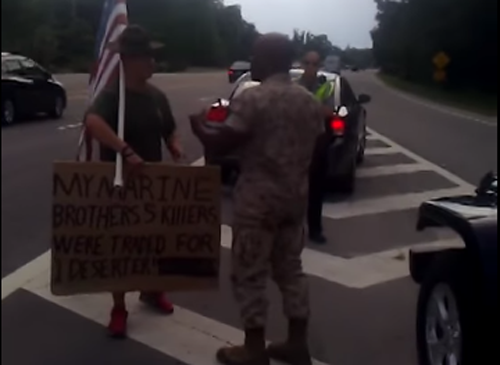
A retired US Marine protests President Obama’s decision to trade five high level Al Qaeda terrorist detainees for Private First Class Bowe Bergdahl who allegedly deserted his platoon. Bergdahl was reported to have carefully meditated about his departure, mailed back his belongings while on duty, and purchased an AK-47 rifle which he took with him when he left, along with water, knives, a journal, a compass, and a digital camera.
The video takes place in Parris Island – the former Drill Instructor and US Marine Corps veteran in the video protests against the trade made partly in uniform, and wearing a Drill Instructor’s cover. He stands cradling the American flag in his arm and a campaign sign in his hand, but is apprehended by the Sgt. Major. The former DI tells the Sgt. Major not to get loud at him and insists that he can do what he wants since he isn’t a marine anymore.
As the argument escalates, the former Drill Instructor’s hat falls off his head and is confiscated by the Sgt. Major. No fists were thrown, and the Sgt. Major drives away from the enraged Marine veteran.
Aaron Jacobs, a clerk at a local gas station, evades an attack from a man who attempted to rob the store he was tending to one night. Armed with a 12-inch blade in his hand, he moves slowly towards the man behind the counter but his sneak attack is quickly countered by the store clerk who turns out to be a former Marine Combat Instructor. The store clerk apparently is a Karate black belter, and has had more than 25 years of training.
The not so off guard store clerk knocks the blade out of the attacker’s hand and is smoothly able to subdue him in an arm bar submission, he then rams his attacker into a rack and sends him running out the door for dear life. The would-be victim remained unscathed, other than a few cuts from the struggle with the knife.
After what went down, he dismisses the whole incident as a fluke and keeps his faith in his quiet neighborhood. And at the end of the brawl, this store clerk was more interested in the welfare of his cigarette and chips rack more than anything else.
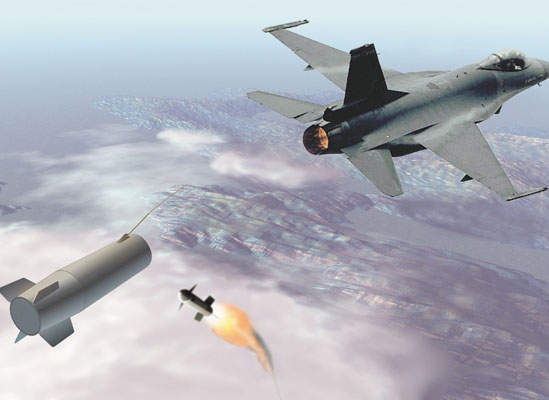
The ALE-50 Towed Decoy system, also known as “little Buddy,” is a state-of-the-art defense system designed by Raytheon. The main objective of the system is to create an effective countermeasure to defend American aircraft against radar-directed missiles. This anti-missile countermeasure decoy system is currently used for different U.S. Air Force, Navy, and Marine Corps aircraft, in addition to some other air forces.
The system has been used in various combats, where the ALE-50 Towed Decoy System successfully demonstrated its effectiveness in thwarting enemy missile attacks. Thus, there is now very little skepticism about what the “Little Buddy” can do.
Development of the ALE-50 Towed Decoy System
The ALE-50 Towed Decoy System is the fruit of collaboration of an integrated product team containing experts from Raytheon, the U.S. Air Force, and the U.S. Navy. The team worked on this groundbreaking concept at a Goleta, California facility.
The first deployment of the system dates back to 1995. Nonetheless, the system is currently used on multiple aircraft that include the F/A-18E/F Super Hornet and the B-1B Lancer. Further, The system has also been incorporated into the innovative ALQ-184(V)9 ECM pod. This integration has helped the system become more vigilant towards threats, and it has also enabled it to be ready to be used on numerous platforms.
An F/A-18F Super Hornet aircraft assigned to Strike Fighter Squadron One Zero Two fuels an F/A-18E Super Hornet aircraft from Strike Fighter Squadron Two Seven during exercise Malabar 07-2 while over the Bay of Bengal Sept. 7, 2007. More than 20,000 personnel from five different countries are participating in the multinational exercise that includes naval forces from India, Australia, Japan, Singapore and the United States. (Photo credit: Wikipedia)
Capabilities
If the ALE-50 Towed Decoy System has been in service for more than ten years, now, it’s because it has efficaciously demonstrated its wide range of capabilities. When employed, the system shields the aircraft and crew against guided missiles (surface-to-air and air-to-air missiles). The system lures the missile toward a more attractive target and away from the intended one. The decoy that the system utilizes is used when required and cut free before landing. The “Little Buddy” offers the possibility of being operated manually as an independent device. However, it can also be incorporated and controlled by the ALE-47 Airborne Countermeasures Dispenser System (made by BAE Systems).
In 1999, the ALE-50 Towed Decoy System was tested in Yugoslavia. The results were reportedly very encouraging. Hence, Air Force Officials reported that the system locked down and diverted 10 of 30 surface-to-air missiles that had been fired at B-1 bombers in different parts of Yugoslavia.
United States Government Accountability Office (GAO) confirmed that planes that have the ALE-50 Towed Decoy System installed in them are more likely to escape fatal enemy attacks. In a report to Congressional Committees in 1997, the GAO expressed its satisfaction regarding how this system improves survivability, and stated that test results indicate the ALE-50 Towed Decoy System, “offers improved effectiveness against radar-controlled threats.” Based on these results, the GAO recommended further use of the system on other platforms such as the F/A-18C/D that the Navy uses.
As far as the specifications of the ALE-50 Towed Decoy System are concerned, the system is equipped with a launch controller, as well as a launcher that is usually installed on the plane’s wing pylon, in addition to one or more expandable towed decoys, which has a shelf-life of ten years.
When speaking about the ALE-50 Towed Decoy System, Pat Hurley, vice president and general manager of Raytheon Electronic Warfare Systems, reiterated that, throughout its 50 years of existence, the company has always been concerned with developing its systems in order to provide the military with high-performing products. In this regard, Hurley added that the permanence of the company’s business and of the ALE-50 Towed Decoy System is a valid testimony to the company’s “high-performing products,” as well as its “laser-like focus on serving the customer.”
ALE-50 Towed Decoy System – Pricing
Many experts consider Raytheon to be a leading provider of systems that offer pilots with the most precise information available. With its $22 billion of sales in 2005, the company is also regarded as a leader in defense systems, information technology as well as business and special mission aircraft. The company has a workforce of about 80,000 deployed throughout the world.
Raytheon manufactures and sells the ALE-50 expendable decoy at $22,000 per unit. In October 2010, the company made a delivery of its latest production run (1,048 units). The total number of units that Raytheon has produced is estimated at 35,000 units, increasing the company’s sales to more than $500 million.
Soaring OVER THE PACIFIC OCEAN — A B-1B Lancer drops back after air refueling training Sept. 30. The B-1B is deployed to Andersen Air Force Base, Guam, as part of the Pacific Command’s continuous bomber presence in the Asia-Pacific region, enhancing regional security and the United States commitment to the Western Pacific. The B-1 is from the 28th Bomb Wing, Ellsworth AFB, South Dakota.http://www.af.mil/photos/index.asp?galleryID=12&page=2 (Photo credit: Wikipedia)
Issuance to the Military (Quantities)
Raytheon has now produced 25,682 units of the system. All of the units have been purchased by the US Department of Defense at a cost of $500 million ($22,000 per unit). The system was initially installed on F-16s only with plans of implementation on other platforms. Therefore, these plans have been carried out systematically and have now been completed successfully. Thus, the “Little Buddy” is currently installed on the B-1B bombers and F/A-18 aircraft.
In 2005, Raytheon received a production contract from the US Navy and the US Air Force. In late 2006, The US Air Force granted the manufacturing company a production contract for 862 decoys worth $21 million.
Use in War:
The system’s adaptability and reasonable cost enables it to be installed on a variety of aircraft. Thus, the ALE-50 Towed Decoy system now functions on many aircraft such as the F-16, F/A-18E/F, and B-1B aircraft.
The usefulness of the system has been proven in many situations. ALE-50 Towed Decoy System has shown its capabilities in every major war in which it was deployed. For instance, it considerably helped improve the survivability of aircraft and their crews in places like Kosovo, Afghanistan and Iraq.
In this regard, Col. Art Huber, commander of the 542nd Combat Sustainment Group at Warner Robins Air Logistics Center, which is in charge of the ALE-50 praised the ALE-50 Towed Decoy System by saying that it is “credited with numerous aircraft saves,” and that “our pilots depend on it.”
Final Analysis of the ALE-50 Towed Decoy System
The “Little Buddy” is probably the best countermeasure in use, right now. Tests and actual use in wars have proven its efficacy. The ALE-50’s suitability and interoperability with other B-1B systems when installed in the B-1B bombers have been quite a success. Furthermore, the pricing is very encouraging, and the quality/price ratio has been a determining factor in making the system a must for every aircraft in service. This is why, many pilots who have been to war in different parts of the world have communicated that the ALE-50 Towed Decoy System has been critical in saving them and their aircraft from the dangers of guided missiles.
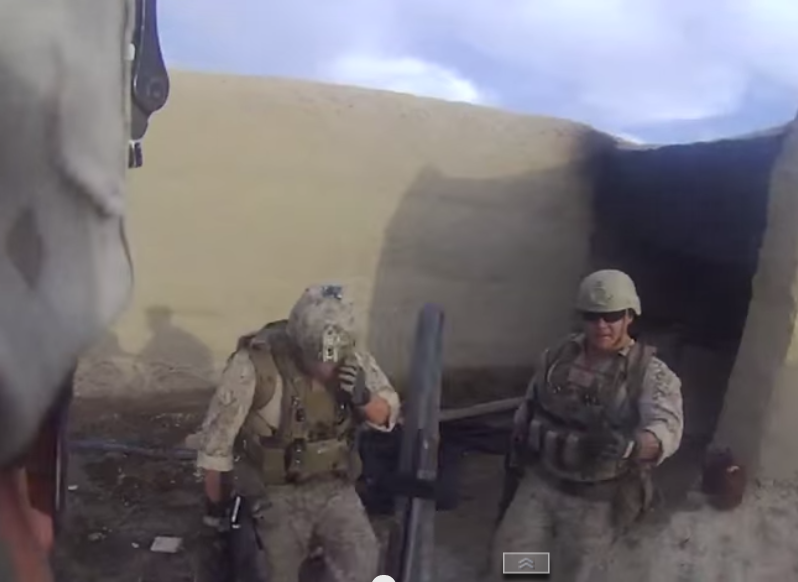
There is a Marine who is counting his blessings today because he survived a head shot from and Afghan Sniper. The Marines were maneuvering on an enemy position. After walking down a tunnel that one would think would be a secure place to go for infantry forces, an enemy round enters the tunnel and hits a Marine right in his helmet. The Marines bound back to a secure location and evaluate the possible injury. Only ears ringing and a minor headache are reported. Then the Marines interrupt the traffic on radio to inform their higher headquarters that there is an enemy sniper out there and everyone needs to be careful. The video ends with one of the Marines saying “let’s do something about this” and it appears they moved out to go kill the shooter.
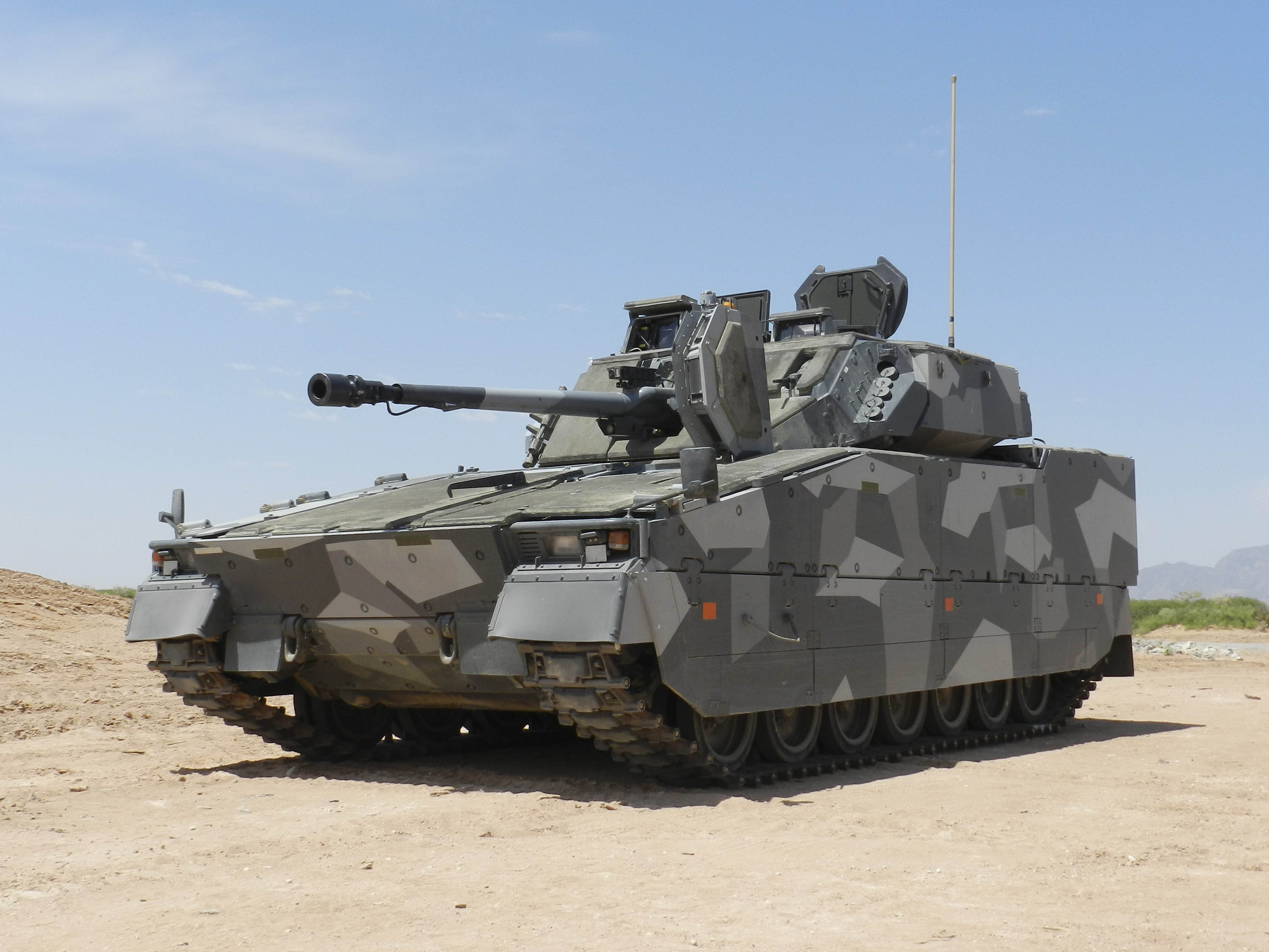
Where did the Ground Combat Vehicle come from and what is it? In 2009, the US Army announced its intention to “significantly restructure” it’s Future Combat System” (FCS). This was formally announced by the Secretary of Defense, Robert Gates. The FCS was a program being developed since the year 2000. It was to be a multi-billion dollar program which would be implemented over a period of several years, and one of the salient features of this program was the Manned Ground Vehicle, (MGV).
However, the development of the MGV was cancelled and replaced by another vehicle called the “Ground Combat Vehicle” (GCV), to replace the then existing M113s and the Bradley. The features were obviously planned to be better than the Bradley, in all respects.
M2 Bradley IFV (Photo credit: Wikipedia)
Features of the Ground Combat Vehicle
The basic philosophy behind the GCV was that it should be possible to add capabilities on to it in the future, including development of armor. Further, the vehicle should be adaptable to both existing as well as future network capabilities like jammers, radar and sensors. Furthermore, it should be integrated with mature technologies. The vehicle was expected to be in the field by the year 2017, at the latest. The capacity was expected to be a total of 13 soldiers, which would have been more that the capacity of 9 in the M2 Bradley. A common chassis would enable variants to be built around the base structure. The vehicle would also have modular armor, which could be added and removed according to combat requirements. The propulsion system would be an E-X Drive hybrid electric that would deliver high power torque.
Setbacks and Budget Cuts
Originally, once the Analysis of Alternatives (AoA) had been carried out by the army, and no other alternative contractors had been located, two contracts of $439.7 million and $449.9 million were awarded to two contractors, General Dynamics and BAE Systems, Nothrop Grumman respectively. Firms like Lockheed Martin, MTU, Detroit Diesel, Raytheon, Rheinmetall Defence, Krauss-Maffei Wegmann, SAIC and Boeing were also in the fray.
In 2010, a Request for Proposal (RFP) was issued. Under the deadlines of this RFP, companies were given up to January 2011 for proposals to be submitted for tracked or wheeled vehicles. The Army put a ceiling on the cost per vehicle to a range between $9 million to $10.5 million. The cost of each operational mile was to be $200. The vehicle was also required to fit on a C-17 transport aircraft. 1,874 vehicles had been planned, with the first ones being run off the production line in April 2018.
However, there were several clauses that the Army introduced, that would put the companies in extremely deep water, if there were any glitches in the production. For instance, there was a $450 million ceiling per company and if there was any further rise in the cost, 100% of the additional cost would have to borne by the contractor.
Further deterioration of the program occurred with Boeing protesting about its rejected proposals. The Army defended its case by stating that it had requested certain technical details from Boeing, but the company did not come forward. A total of 20 weaknesses of Boeing were identified, but according to the Army, the company did not address them adequately.
The program was officially called off on 24 February 2014, as confirmed by the Secretary of Defense, Chuck Hagel.
Potential of the Ground Combat Vehicle
If the GCV had been continued, would it, and how would it have benefited the Army? In 2009, Maj. Gen. Robert H. Scales (Ret.) wrote an article for the Armed Forces Journal. In his article, A Vehicle for Modern Times, Scales brings to the fore the burning issue of the state of the US Army’s ground forces. He feels that the GCV would be able to bring about the much-needed modernization of the US Army’s ground forces. He feels that the GCV could influence the way all other support systems of the war machine work, like sensors, network, aircraft and fire support. Scales makes a lucid observation that it is unfortunate that drastic changes are usually brought in as a consequence to the death of soldiers.
When the Stykers and Land Warriors were introduced, Scales says, they played different roles, such as long-range and short range transporters, firepower platforms, rally points or even rest centers. He says that the development of a land vehicle effectively resistant to Improvised Explosive Devices (IEDs) abundantly found in Afghanistan is far from satisfactory. He says that loading on armor has got its limitations; the balance has to be struck between offering sufficient protection and making the vehicle to unwieldy and overweight due to excessive armor. This is one good thing that the GCV has going for it.
Scales hits the nail on the head by stating that Soldiers and Marines have paid a heavy price in Iraq and Afghanistan. The Ground Combat Vehicle program he feels, would give them back what they have lost. He concludes the article with a powerful summation by saying, “Let’s get on with giving them the fighting system they deserve.”
The Jesse VenturaChris Kyle lawsuit has been the talk of the town these last couple of days ever since a jury awarded Jesse $1.8 Million in damages from the slain Navy SEAL sniper’s estate. The jury decided yesterday, July 29th in Minnesota.
The lawsuit started when Chris Kyle said in his book that he punched Jesse Ventura out in a bar in 2006 when Kyle claimed that Jesse said the SEALs “deserved to lose a few” as it relates to combat.
There is a lot of interest in this case for two main reasons. First, both men are celebrities in their own right. Chris Kyle, an author, a famous SEAL sniper, a 2 time Silver Star recipient for valor, a five time Bronze Star recipient for valor, and who is no longer with us. Chris was killed at a gun range by Eddie Ray Routh, a Marine who Kyle was helping to recover from PTSD. Jesse Ventura is a former Navy SEAL, professional wrestler, Minnesota governor, an author, and a TV show host. Both men have other accomplishments, but these are the main ones.
Celebrity infighting is the main reason for interest in this case. Yet another major reason is this is probably the first time the public has seen a case where a man’s widow has to pay for her late husband’s lawsuit for defamation. Sure there may be examples, but none so prominent as this one. And people are upset at Ventura for going through with it. Others are glad Jesse won because it clears his name, which is something that is priceless in the public eye. It is very apparent that the court of public opinion is with the Kyle’s widow.
Here are several prominent responses to the Jesse Ventura Chris Kyle Lawsuit:
I cannot believe that Jesse Ventura successfully sued the widow of a fallen Navy SEAL. Has he no shame?
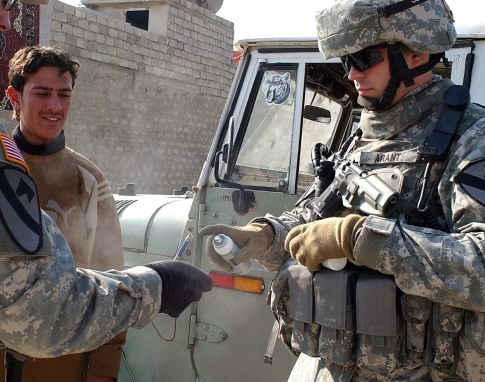
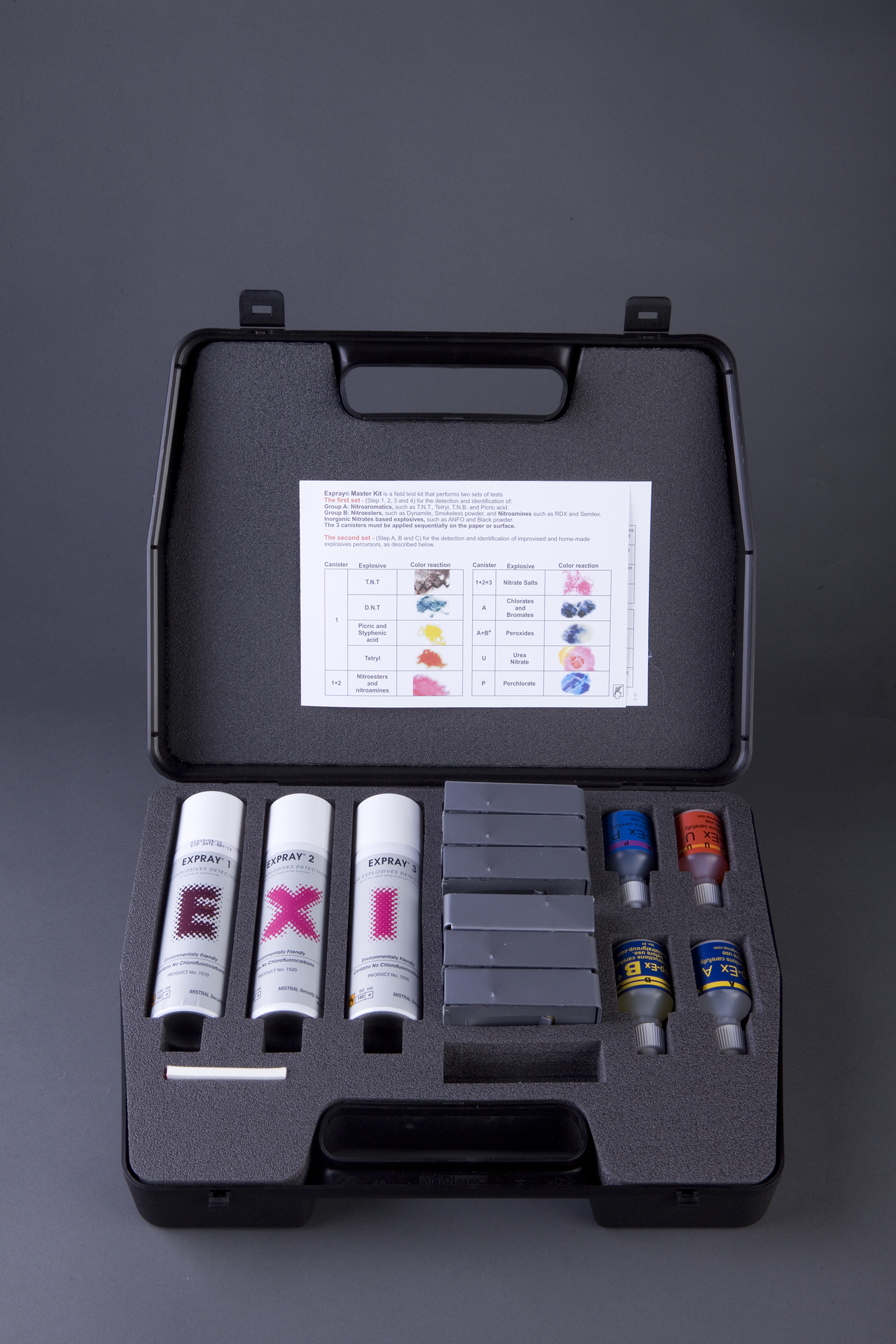
The EXPRAY explosive detection system is user-friendly, field ready, and portable bomb detection kit. Many military units who deploy to Africa, Iraq, and Afghanistan use this kit to check to see if people have handled bombs, improvised explosive device (IED), and other munitions.
The kit is in the class of chemical reaction detection. It is a hand held system and allows for a variety of cargoes and people. It consists of a kit with three spray cans where each spray reacts to different types of explosives. It only takes less than a minute to test, only ways about 2 pounds, requires no power, and has a very long shelf life. Troops in the field should bring this kit with them in their vehicles and have at least one of these kits at the squad level when dismounted.
The cans inside the kit are aerosol-based. The following list are the explosives it will detect:
Group A Explosives – TNT, TNB, and similar
Group B Explosives – Semtex H, RDX, C4, and similar
Compounds containing inorganic nitrates that are used in IEDs like ANFO
US Marines demonstrate immediate action drills for improvised explosive devices to Spanish Marines (Photo credit: Official U.S. Navy Imagery)
A few scenerios where the Expray kit can be used:
Your unit is on a mission and there are IEDs identified either under the road with wires hanging out or you see something on the side of the road that is later identified as an EFP (explosively formed perpetrator) or IED. After the unit and civilians are out of harms way, typically the unit will want to identify suspects who may have put the bomb there. One of the techniques is to test possible suspects who were over watching the IED / EFP. This kit would be used to try and identify who the IED triggerman or handler is. Anyone who comes up as having handled explosives would then be further analyzed for information.
Your unit is on patrol and receives sniper fire from a building. You investigate and there are several insurgents apprehended. You test all of the insurgents and they all test positive for explosives. You then include the explosives in their file so they have more evidence against them in court or in the detention process.
Your unit is on patrol and you see a high value target you are looking for. He is talking with a few people. Your unit apprehends the high value target and then you test the other people he was talking to. In addition to other biometric tests, they pass both the biometric check and the Expray explosive detection test. These people are then cleared for release.
You suspect that IEDs may have been built in a bomb-maker’s house. After detaining the bomb maker, your unit tests different walls, rooms, and furniture in the house. One of the rooms comes up positive for explosives. You investigate the room further and find stashes of explosives under the floor board, in the furniture, or in the ceiling.
There are many ways to used these kits while in combat. The point is they are a must-have. Unless you have some other way to check for explosives, don’t deploy without these Expray kits.
Some other non-military uses for the Expray:
You can use it to certify scrap for disposal
You can screen a sample of soil
You can prescreen extracts to identify which test should be performed as a follow up (TNT or RDX)
Use it as a back up tool for detection of residue or explosives
Check suspicious letters and packages
Use to check crime scenes
Quick screen of suspects
Detect explosives on almost all surfaces
The Expray kits are made by Mistral Security, Inc. out of Bethesda, MD.