
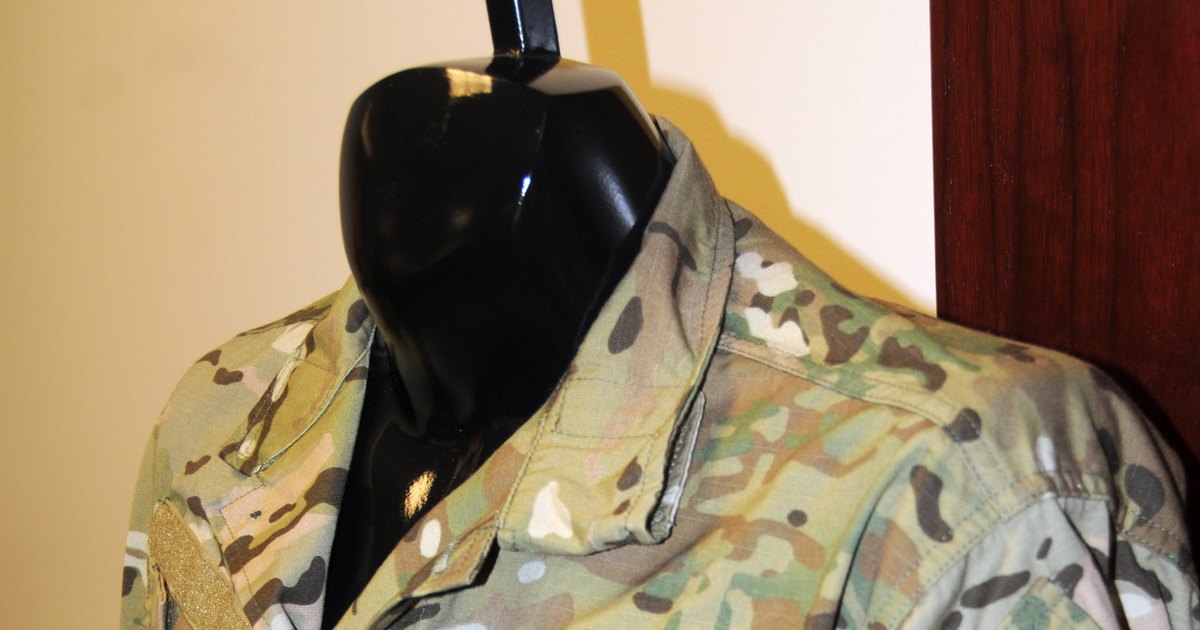
Crye Precision makes combat uniforms, camouflage and plate carriers used by many service members. This guide covers the main commercial gear for troops and families: the G3 and G4 combat uniforms, Crye MultiCam, and the JPC and AVS plate carriers, plus sizing, care and buying tips. Issued uniforms and armor still follow your service’s regulations, and a plate carrier provides no ballistic protection without the correct inserts.
Who Crye Precision is
Crye Precision is a U.S. company based at the Brooklyn Navy Yard. Its website footer lists 63 Flushing Ave, Building 100, Brooklyn, NY 11205. The JPC 2.0 operator’s manual says the company “designs and manufactures truly innovative equipment for America’s fighting forces” and that “We make all of our gear in America from American materials.” The product pages in this guide are marked “Made in US from US materials.”
Crye Precision combat uniforms: G3 vs G4
The Crye Precision combat uniform is sold in two generations, the G3 and the G4, each as a combat shirt and combat pant. Field shirts and pants are listed too.
The G3 Combat Shirt is what Crye calls “the design that started a movement.” It is made to be worn under body armor, with a wicking, flame-resistant DRIFIRE torso and reinforced mil-spec 50/50 NYCO ripstop sleeves. The G3 Combat Pant is described as a “no-compromise assault uniform,” sized in 2-inch waist increments with multiple lengths, stretch panels, 10 pockets, and a mil-spec 50/50 NYCO ripstop base. Removable AirFlex pads are sold separately.
The G4 Combat Shirt and G4 Combat Pant are Crye’s “next generation of Combat Apparel,” built from stretch VTX RIPSTOP fabric with Invista’s T420 high-tenacity nylon. Crye says the stretch allows a slimmer cut with maximum mobility. The G4 pant adds mesh venting and a padded adjustable waistband.
The practical Crye G3 vs G4 difference is the fabric and cut: G3 uses mil-spec 50/50 NYCO ripstop with stretch panels, while G4 is built around stretch VTX RIPSTOP. Crye also lists G4 Female Fit, Hot Weather and flame-resistant variants.
Crye MultiCam, and how it relates to Army uniforms
Crye’s site links to the official MultiCam pattern site, which calls MultiCam “the combat-proven solution for concealment when one needs to operate in widely varied and mixed terrain.” The FAQ says the original MultiCam design was created in the early 2000s, with later variants — Tropic, Arid, Alpine and Black — for narrower environments.

In 2010, the U.S. Army issued a fire-resistant Army Combat Uniform in MultiCam to Soldiers deploying to Afghanistan, beginning in July, according to an Army News Service article. The Army described MultiCam as seven shades that “takes in surrounding colors,” a pattern later called the Operation Enduring Freedom Camouflage Pattern, or OEFCP.
That is not the same as the Army’s later Operational Camouflage Pattern. A June 1, 2015, Army article said Operational Camouflage Pattern, or OCP, would become available on July 1, 2015, to replace the Universal Camouflage Pattern. The pattern later named OCP was developed at Natick. During the transition, Soldiers could still wear OEFCP. Commercial Crye MultiCam remains on Crye’s product pages, including MultiCam Arid, Black and Tropic. Issued wear rules control what you may wear on duty.
Crye plate carriers: the JPC 2.0 and the AVS
The JPC 2.0 is a “lightweight and minimal armor vest designed for maximum mobility, weight savings, and packability.” Crye says the entire carrier weighs just over one pound and that its Skeletal cummerbund lets pouches mount on the inside and the outside. It is compatible with AVS detachable front flaps (sold separately). Crye also lists a two-step emergency-doffing system, zip-on back panels, and a drag handle rated to 400 pounds. The original Jumpable Plate Carrier remains listed, at 1.2 to 1.5 pounds depending on size.
The AVS Harness is the “primary base component” of the Adaptive Vest System, described as a mounting platform for a range of AVS components. The AVS operator’s manual shows the harness used with standard or MBAV plate bags, skeletal cummerbunds or single side straps, and add-on pouches and flaps. The JPC is the minimal, packable Crye plate carrier; the AVS is the modular system.
Both manuals warn that the carrier offers no ballistic protection on its own and must be worn with ballistic inserts. Get replacement parts from Crye or a licensed distributor.
How to choose and size Crye gear
Start with whatever your unit already issues. Size pants from Crye’s chart, not from a civilian jeans size, and size a carrier to both the chest and the plates you will actually use.
Crye’s G3 and G4 Combat Pant charts use the same method: measure the natural waist (the point that bends when you lean side to side) and the inseam (crotch to the bottom of the foot). Waist sizes run in 2-inch increments, with Short, Regular, Long and XLong lengths. The G4 Combat Shirt chart uses chest circumference, measured under the arms at the fullest part of the chest, in sizes from XS through 3X, plus those four lengths.
The JPC 2.0 and AVS Harness charts use the same chest ranges: small, 33–36 inches; medium, 37–40; large, 41–45; extra large, 46–49. The JPC 2.0 product page also sizes the carrier to Standard/SAPI plates; if a plate falls between sizes, or is thicker than 1.25 inches, Crye recommends sizing up. On the original JPC, sizes are based on the ballistic plate.
Care tips
Follow the care label on each garment. This guide does not invent wash settings for the G3 and G4 uniforms, because a published laundry sheet was not retrieved.
Plate carriers are different. The JPC 2.0 operator’s manual says: do not machine wash or dry clean the carrier; detergents, bleach or solvents may degrade it. Remove dirt with a cloth or soft brush, hand-wash the carrier with warm water, and air-dry it indoors or in the shade. Do not alter the product or expose it to open flame or excessive heat. Inspect it before and after use; holes or cuts may mean the inserts are damaged.
Buying from Crye or a licensed dealer, and avoiding counterfeits
Buy finished Crye gear from Crye’s webstore or a licensed distributor. Crye’s support page says the company ships to APO and FPO addresses by USPS and offers a 10 percent U.S. military and first-responder discount, verified through ID.me. Returns are accepted only on direct purchases and require a return authorization.
The JPC 2.0 manual, dated March 2019, says Crye will repair or replace a product free of charge for life if a defect in materials or workmanship is found, excluding normal wear and tear. It applies to the original purchaser, is nontransferable, and the buyer pays return shipping. Confirm current terms on Crye’s site.
Counterfeit camouflage is a separate problem. MultiCam’s FAQ says the only way to be certain a product is authentic MultiCam is to confirm the seller with MultiCam directly. It advises avoiding MultiCam-like patterns that do not use the word “MultiCam,” looking for official hangtags, and checking that fabrics come from a licensed provider.
Before a deployment, use the pre-deployment checklist for the paperwork to finish first. Clothing and individual equipment sit in Class II of the Army’s classes of supply.
FAQ
What is the difference between the Crye G3 and G4 combat uniforms?
The G3 uses mil-spec 50/50 NYCO ripstop with stretch panels and a DRIFIRE shirt torso. The G4 uses stretch VTX RIPSTOP, which Crye says allows a slimmer cut and more mobility.
Is the Army’s Operational Camouflage Pattern the same as Crye MultiCam?
No. The Army issued MultiCam in 2010 as OEFCP for Afghanistan. OCP, fielded in 2015, was developed at Natick and is a later, separate pattern.
How should I size a Crye plate carrier?
Use Crye’s chest chart and plate-size chart. Size the JPC 2.0 to the plates you will carry, and size up if a plate is between sizes or thicker than 1.25 inches.
Can I machine-wash a Crye JPC or AVS carrier?
No. The JPC 2.0 manual says to hand-wash the carrier with warm water and air-dry it indoors or in the shade. Follow the uniform care label.
How do I buy authentic Crye Precision or MultiCam gear?
Order from Crye’s website or a licensed distributor, and ask MultiCam directly if you need to confirm a seller. Avoid look-alike patterns that do not say MultiCam.
Leave a Reply