Author: Deployment Essentials

  • RQ-170 Sentinel Drone – The US Air Force’s Stealth Drone

    RQ-170 Sentinel Drone – The US Air Force’s Stealth Drone

    History

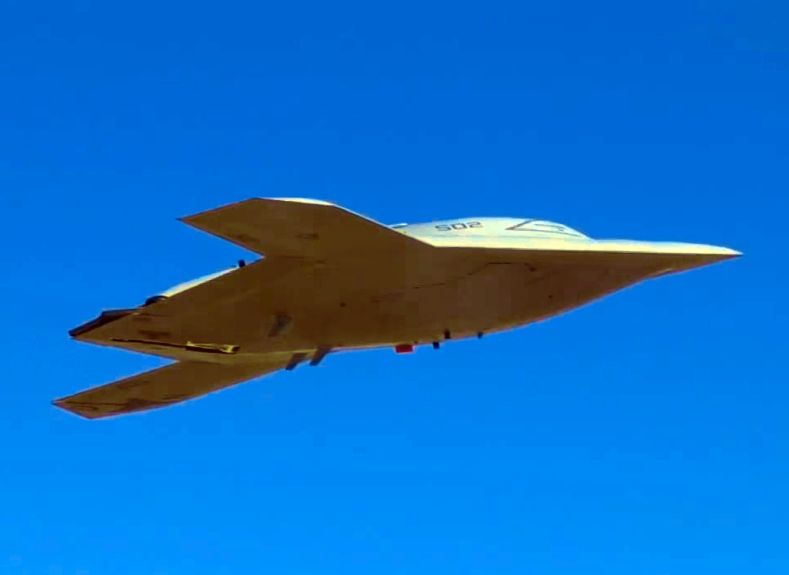
    The US Air Force and the Pentagon have been pursuing their drone development program since 1995, the most prominent drone series being the Predator series (A, B & C). Today, it is a full-fledged operation. One of the latest projects now being pursued is the US Air Force’s RQ-170 Sentinel Drone, manufactured by Lockheed Martin. The US Air Force has not released much information about this drone. However, this US drone is known to be a stealth aircraft, fitted with reconnaissance equipment for the purpose of gathering data from non-cooperative countries such as Iran, Iraq and Afghanistan. It is being used since 2011, when it was launched during the ongoing war in Afghanistan, called “Operation Enduring Freedom”.

    It is also worthwhile to note that this US drone was used quite effectively for tracking down Osama Bin Laden, the mastermind of the 9/11 attacks. The system is believed to have been set up in the Pakistani town of Abbottabad where the terrorist was believed to have been hiding, in a heavily guarded compound, with the full knowledge of the Pakistani authorities. It was through the data fed to the Navy SEALs from the Sentinel system that they were able to penetrate the compound and terminate this dreaded terrorist on the spot.

    The RQ-170 Sentinel has also been used in South Korean airspace, which would have been obviously for the purpose of spying on activities in North Korea.

    Lockheed Martin RQ-170 Sentinel
    Lockheed Martin RQ-170 Sentinel (Photo credit: Wikipedia)

    Duplication of the Sentinel

    In December 2011, an RQ-170 Sentinel was sent into Iran on a reconnaissance mission. The Iranian armed forces intercepted the drone and hacked into its navigation systems, managing to capture it. They claimed that they had been able to duplicate it by decoding the software and using reverse engineering. Although, the claims were stated as being fake by a former Pentagon official, the Iranians stuck to their story and showed video footage of the drone.

    The landing gear, however, was covered by a banner stating, “We’ll trample America underfoot” and “the US cannot do a damn thing.”

    The RQ-170 Sentinel has also been copied by the Chinese who released pictures of the copied drone along with some other aircraft.

    Specifications

    The specifications the US drone described here are not official, as there are no official documents available, due to the highly classified nature of the RQ-170 Sentinel project, as it is being kept under wraps by the CIA and the Pentagon. However, what has been reproduced here, are as accurately-possible facts, which should give a fair picture about the Sentinel and its capabilities.

    The RQ-170 Sentinel by Lockheed Martin is a rather new addition to the United States Air Force’s fleet of Unmanned Aerial Vehicles (UAVs). It is a stealth vehicle, which is supposed to be a cost-effective drone with added qualities put on to existing design features. The purpose of the Sentinel is for surveillance and reconnaissance of enemy territories from a high altitude. The drone is mostly connected to CIA missions, which is the reason most of the information on it remains classified by the Pentagon and unavailable to the general public.

    A B-2 Spirit soars after a refueling mission o...
    A B-2 Spirit soars after a refueling mission over the Pacific Ocean on Tuesday, May 30, 2006. The B-2, from the 509th Bomb Wing at Whiteman Air Force Base, Mo., is part of a continuous bomber presence in the Asia-Pacific region. (U.S. Air Force photo/Staff Sgt. Bennie J. Davis III) (Photo credit: Wikipedia)

    Looks-wise, the Sentinel is more of wing, with less of vertical tail surfaces. The wing structures are swept towards the rear of the aircraft, giving it the appearance of the B-2 Spirit Stealth Bomber. It is powered by a single General Electric TF34 series turbofan engine. The payload region is also located in the central area. The abundant wings serve the purpose of offering extra fuel storage. The undercarriage is in a regular tricycle configuration with two main landing wheels and a single landing gear in the nose section.

    The aircraft is equipped with a full suite of cameras and sensors. There are full motion real-time cameras and radioactive isotope-detecting sensors for locating nuclear material. It is assumed that the drone is also armed with missiles, in the same way that the Predator is. It is also understood to have the latest infra-red and other optical devices fitted.

    The maximum altitude observed by this drone is at least 50,000 feet. The wingspan is estimated at 26 meters, with a height of 1.84 meters and a length of 4.5 meters.

    Future Prospects of the Sentinel

    It would seem that the Sentinel has had a rather big setback with the copying of its design by the Iranians. Although there is no information forthcoming from the Department of Defense, the Pentagon, US Air Force or the CIA, there is no dearth of information emanating from Iran regarding the Sentinel and future plans. RT.com News published an article in May 2014 quotes a statement made by Iranian leaders who said that their engineers have managed to decode the drone’s technology and copy it. There will soon be a test flight, they promised.

    From what we see, the RQ-170 Sentinel is definitely here to stay, but if the US military is to keep the technology to itself, it is going to have to figure out how to keep its classified secrets from falling into enemy hands, as has been the case in the recent past.

     

  • American Sniper Chris Kyle Trailer Released

    American Sniper Chris Kyle Trailer Released

    The long awaited American Sniper Chris Kyle Trailer is now out. Many people have been waiting a long time to see this movie, and the trailer is creating quite a stir. Some people are excited because they read Chris Kyle’s book. Chris Kyle made quite a splash when he was with us through his heroism as a Navy SEAL, through his entrepreneurship as CEO of Craft International, and also through his charity work as founder of Heroes Project.

    There is no doubt many people will flock to see the movie American Sniper. The movie is set to be released on Christmas Day, 2014. Bradley Cooper will take the lead role as Chris Kyle, Clint Eastwood will direct, Sienna Miller will play Taya Kyle, and Jake McDorman, Brian Hallisay, and Kyle Gallner will play others in Kyle’s military life.

    The movie is based on the book, American Sniper, written by Jason Dean Hall and Chris Kyle.

    Chris Kyle passed away in a shooting accident in 2013 and left a legacy of patriotism, service, and charity for all veterans and Americans to emulate.

    Below is the American Sniper Chris Kyle Trailer

  • Virginia Class Submarine – Navy Buys Ten New Subs for $17.6 Billion

    Virginia Class Submarine – Navy Buys Ten New Subs for $17.6 Billion

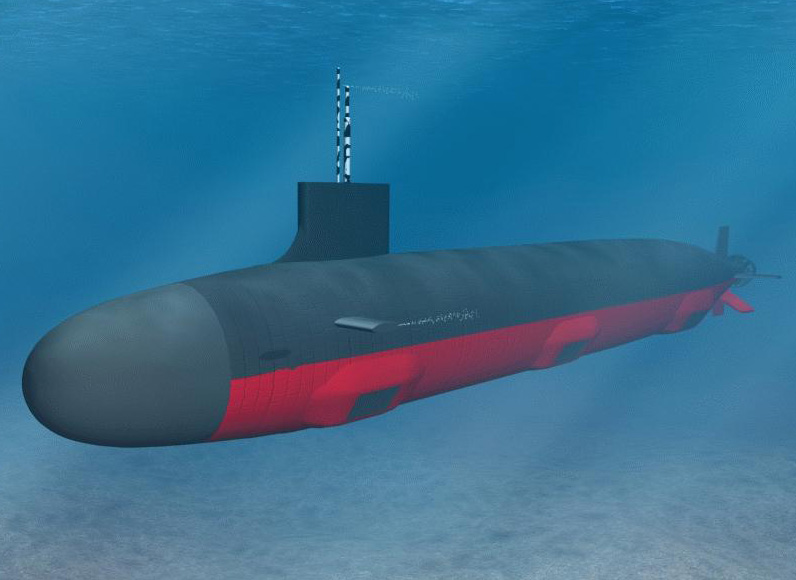
    In April 2014, the US Navy made public its latest intention to contract 10 new submarines (the Virginia Class submarine). This contract consists of Block III of the 3-block supply schedule. Blocks I and II have already been delivered. The total value of the contract is estimated to be $17.645 billion. The model is SSN 774 Virginia-class, and they are nuclear power attack submarines. The contract has been awarded to two companies – General Dynamics Electric Boat and Huntington Ingalls Newport News Shipbuilding. The supply will commence in 2018, with two subs each year, one from each yard, for a period of 5 years, until the year 2023.

    English: GROTON, Conn. (June 21, 2008) Pre-com...
    English: GROTON, Conn. (June 21, 2008) Pre-commissioning Unit New Hampshire (SSN 778) sits moored to the pier at General Dynamics Electric Boat shipyard moments before her christening ceremony commenced. New Hampshire, the fifth Virginia class submarine built, was officially christened by sponsor Cheryl McGuinness. U.S. Navy photo by John Narewski (Released) (Photo credit: Wikipedia)

    Impact of the Contract

    This contract has literally created waves in the Navy and shipbuilding circles. Financially, it is considered the biggest contract ever to be awarded in the history of the US Navy. Rear Adm. Dave Johnson who is the executive officer for submarines at Naval Sea Command (NAVSEA) is all praise for the contract. He says that it reinforces a solid relationship between the Navy and industry as far as the Virginia-Class program is concerned. He has called this program “a model of acquisition excellence.”

    Shipbuilders also had their say by stating that it is the largest contract till date in terms of number of boats ordered in a single contract, which is especially unique in today’s scenario, considering the current economic and political situation. The president of the Electric Boat, Jeffrey Geiger, says that if they are able to supply two ships a year, it will greatly enhance the US Navy’s undersea dominance.

    The hull numbers are designated SSN 792 to SSN 801, but these submarines have not yet been named. The US Navy already has 10 Virginia-class submarines. There are another eight in the process of being built. Almost all contracts for Virginia-class subs have been awarded on the basis of multiyear contracts which creating cost-efficiency in the long run.

    Virginia (SSN 774) returns to the General Dyna...
    Virginia (SSN 774) returns to the General Dynamics Electric Boat shipyard following the successful completion of its “alpha” sea trials in 2004. (Photo credit: Wikipedia)

    Specifications and Costs of the Virginia Class Submarine

    Although the amount quoted in the contract is for $17,645,580,644, there are options for on-board repair parts, so the total value of the contract could touch $17,827,808,738.

    Even though some foreign competitors had more sophisticated models in their proposals; these 10 Virginia-class submarines will basically contain all the existing features of this class, but with some new ones added on. Incremental integration of new technologies will be added to the main structure.

    Submerged, each sub displaces 7,800 tons. The hull is 377 feet long and 34 feet in diameter. The submarines will be able to reach speeds in excess of 25 knots and the diving depth will be over 800 feet. Each submarine will carry Mark 48 advanced capability torpedoes, along with Tomahawk missiles and also unmanned underwater vehicles.

    So, let us take a closer look at the specs of the Virginia-class Submarines of the US Navy. In addition to the points mentioned above, the hull has structurally integrated enclosures. Designed for easy repair, maintenance and upgrade. It has modular deck structures, which makes it easy to install and maintain. The diving control and steering of the submarine is accessed through a joystick of 4 buttons and a double axis. Being a stealth vessel, the submarine has a low acoustic signature which is achieved through anechoic coatings and a specially-modified engine.

    USS North Dakota (SSN-784)
    USS North Dakota (SSN-784) (Photo credit: Wikipedia)

    What’s New in the Block III Submarines?

    One major difference in the Block III submarines is in the payload tubes. They are designed to reduce cost and at the same time, increase the scope of missile-firing capabilities. Up till now, a Virginia Class submarine has 12 separate vertical launch tubes with a diameter of 21 inches for firing Tomahawk missiles. The Block III submarines, however, have only two tubes of 87 inches in diameter, where each tube has the capability of launching 6 Tomahawk missiles.

    Although the main motivation behind the modification of the launch tubes is cost-reduction, it also increases the possibility of future missiles and launching of off-board sensors from these tubes. The Virginia Class Submarines also have the special characteristic of fly-by-wire technology, where the entire controls are computerized, and the submarines are driven by the touch of a button or touchscreen controls. This is unlike the earlier versions of submarines which used to run on mechanized hydraulics.

    The Large Aperture Bow array of the Block III submarines also establishes an advanced sonar system in the boat’s bow, known as the conformal sonar system.3

    The LAB array is an improvement over the previous spherical arrays which enable enhanced passive listening capabilities. There is also a medium-frequency active array added to the LAB array. The hydrophones are based on previous designs and serve the usual functions of either locating active reflected sounds or incoming passive sounds.

    USS Florida launching a Tomahawk cruise missile
    USS Florida launching a Tomahawk cruise missile (Photo credit: Wikipedia)

    Future Plans for the Virginia Class Submarine

    The US Navy has great plans on the anvil, and the Block III submarines are likely to receive the new technology as it is handed out. There is talk of the development of futuristic weapons by the US Navy like Laser weapons, which are being currently tested in the Persian Gulf and electromagnetic rail guns which uses electromagnetic force to send a missile over a long range at mind-boggling speeds. The Virginia Class Submarine will change the way undersea battles are fought.

  • PAK FA T-50 – High Performance Fifth-Generation Russian Stealth Aircraft

    PAK FA T-50 – High Performance Fifth-Generation Russian Stealth Aircraft

    The PAK FA T-50 is in an entirely new league of fighter aircraft. PAK FA is short for Perspektivny Aviatsionny Kompleks Frontovoy Aviatsii.  When translated into English, it means “Prospective Airborne Complex of Frontline Aviation” or “Future Air Complex – Tactical Air Forces”.  It is being developed by Russia to be a fifth generation stealth fighter with capabilities rivaling and even exceeding in some areas those of the American Lockheed F-22A, the first fifth generation fighter in the world. The finished prototype belonging to the Russian Air Force possesses advanced features like supercruise and extreme maneuverability and is expected to enter into service by 2015.

    English: Sukhoi T-50, b/n 51.
    English: Sukhoi T-50, b/n 51. (Photo credit: Wikipedia)

    Here are some of the specifications of the PAK T-50 fighter aircraft.

    Length: 19.8 m (65.0 ft)
    Wingspan: 13.95 m (45.8 ft)
    Height: 4.74 m (15.6 ft)
    Maximum Take Off Weight: 35,000 kg (77,160 lb)
    Powerplant: 2 × NPO Saturn izdeliye 117 (AL-41F1) initially; turbofan engines, each developing 35,000lbs of thrust
    Max Speed at Altitude: Mach 2.3
    Max Speed at Supercruise: Mach 1.6
    Fuel capacity: 10,300 kg (22,700 lb)
    Mikoyan Project 1.44
    Mikoyan Project 1.44 (Photo credit: Wikipedia)

    Origin of the PAK FA T-50

    In the 1980s, Russia sought to develop a multirole fighter that could serve as a replacement for the MiG-29s as well as for the, then recently deployed, Su-27s.  The MiG 1.44 was created through the MFI program.  The program encountered repeated delays.  Its first flight was behind schedule by nine years.  By then, Sukhoi had already started developing the technology required for the next generation aircraft even though it was not a part of the MFI program.  The development of MiG 1.44 was officially scrapped due to the lack of funds ensuing from the collapse of Soviet Union.  At that point, Sukhoi was, after winning the PAK FA competition, chosen to lead the designing of a new fifth generation aircraft.

    T-50 ПАК-ФА
    T-50 ПАК-ФА (Photo credit: Wikipedia)

    Since 2007, Russia and India have collaborated to jointly develop an Indian prototype of the T-50 stealth fighter.  The program, initially known as FGFA (Fifth Generation Fighter Aircraft) is now jointly called the PMF (Perspective Multirole Fighter).  India has agreed to bear half the cost of the projected $12 billion.  Two separate prototypes are expected to be developed in the process – one each by India and Russia.  India is expected to buy over 144 single seater PAK FAs while Russia is expected to order over 150.

    Timeline for the PAK FA T-50

    • The initial design for PAK FA was completed in 2004.
    • The first public flight was in January 2010 and lasted 47 minutes.
    • In August 2012, flight testing of the AESA radar suite was started.
    • In June 2014, a prototype T-50 caught fire during landing.  However, Sukhoi has stated that this incident “will not affect the timing of the T-50 test program”.


    Sukhoi T-50
    Sukhoi T-50 (Photo credit: Wikipedia)

    PAK FA T-50 Design

    Due to the secrecy surrounding PAK FA project, there is not much substantiated information available regarding the design and development of the T-50 prototype.  However, it is clear that it will be the first aircraft in the Russian Air Force that is stealthy.  Besides stealth, this fighter aircraft will also possess other advanced features.  Among them is a highly advanced radar system called the advanced phase array radar that adds the capacity for both, forward looking as well as side scanning.  Its sensor fusion capability will allow it to track and engage with multiple targets at the same time.  The current PAK FA prototypes that are scheduled to go into service will use the izdeliye 117 engine.  These powerful engines will allow the aircraft to supercruise; that is, sustain a supersonic flight without the use of afterburners.

    The armament details of the PAK FA have been kept largely under wraps.  However, it is believed that the current T50 prototype could be equipped with air to surface missiles, air to air missiles, anti ship missiles, anti radiation missiles, and guided bombs.  When the prototype comes into service, it may use the in-service missiles.  However, it is expected that over time special munitions will be developed specifically to be used in the PAK FA family.

    In certain aspects of design, the PAK FA does resemble the existing American fifth generation F-22s, notably in its broad shape and long lines.  Its advanced aerodynamic system gives it extreme agility, a trait that is somewhat lacking in the F-22s.  The 25,000 lb internal fuel load gives it another edge over the F-22s when it comes to combat persistence.

    The Political and Strategic Impact of the PAK FA

    A technical analysis of the PAK FA shows that is clearly more advanced in agility and aerodynamic performance than any aircraft built by the USA, whether in service currently or in planning.  Given the configuration of the PAK FA and its stealth parameters, it is believed that it will change the nature of missile combat.  The missile will come into the combat at a closer range than before, and the timeline of actual engagement will be shorter as well.  This means that stealth will be one of the most important features for fighter aircrafts in the time to come.  The other factor most likely to affect the outcome of the air combat would be the ability of the fighters to supercruise for longer periods of time.  As such, the advent of the mature production PAK FA could mean the end of line for the teen series generation aircrafts such as F-15 / F-16 / F/A-18.

    Even when it comes to the current fifth generation American fighter F-22A, the United States will not have a clear and certain advantage when it comes to air strikes and will immediately lose the ability to impose air superiority rapidly.  According to the tactical analysis, “Fights between the F-22A and the PAK FA will be close, high, fast and lethal …The outcome will be difficult to predict as it will depend a lot on the combat skills of the pilots and the capabilities of the missiles for end-game kills. There is no guarantee that the F-22 will prevail every time.”

    Summary

    PAK FA T-50 is believed to be the one of the foremost “game changers” in the field of fighter technology since T-10 & Su-27s.  Its impact is not just limited to technology and politics, but rather it could have fundamental ramifications tactically, strategically, as well as operationally.   Most importantly, it challenges the aerial advantage that the United States has held for many decades.  Unless their planning for future air power tactics changes immediately and drastically, United States will have fewer strategic options going forward that are nonnuclear in nature. The PAK FA T-50 is certainly a counter punch that will cause the US to innovate an even better fighter than the F-35 and F-22.

    Featured photo credit: GDE-Fon.com

  • Liquid Body Armor – a Stronger & Lighter Body Armor Solution

    Liquid Body Armor – a Stronger & Lighter Body Armor Solution

    Engineers at BAE Systems are in the process of developing path-breaking body armor. The new armor is called “Liquid Armor” or “Liquid Body Armor” and hopefully, it will revolutionize the way armor is manufactured, used, and worn for decades to come.

    Photo: Body armor of the Livonian Order.
    Photo: Body armor of the Livonian Order. (Photo credit: Wikipedia)

    Body armor is not a new concept. It has been around for centuries. The Romans used it extensively and it was also widely used in medieval Europe. The material used for body armor was mostly iron, steel and various metallic alloys. However, metallic body suits were heavy and unwieldy. Over the years, with the advancement of technology and progress in munitions, metallic armor was not practical. As a result of decades of research and development, several materials were evolved to replace metal in body armor. One of the most practical inventions was Kevlar, which is popularly used even today by the police and armed forces of countries all around the world.

    Front view of a UH-60 Black Hawk helicopter do...
    Front view of a UH-60 Black Hawk helicopter door gunner’s kevlar helmet with painted facemask. Balad Air Base, Iraq (April 2005). Photo by Peter Rimar. (Photo credit: Wikipedia)

    History of Liquid Body Armor

    Kevlar was invented by an American, Stephanie Kwolek in 1964. Kwolek was trying to invent fibers for lighter car tires amid predictions of a gasoline shortage. The result was Kevlar, which has numerous applications today, in suspension bridges, thermal gloves, and audio equipment, just to name a few. But the most widely-known application of Kevlar is for its use in body armor.

    Soldiers from the 2nd Infantry Division conduc...
    Soldiers from the 2nd Infantry Division conduct an area reconnaissance mission in . (Photo credit: Wikipedia)

    Although Kevlar body armor is flexible to some extent, it is still unwieldy, constricts movement and is generally uncomfortable. It also tends to block ventilation, increasing body heat and fatigue, especially in terrain where the ambient temperature tends to be high, like in Afghanistan.

    The new innovation is to combine Kevlar with a “counter-intuitive liquid”, which makes liquid body armor combined with traditional armor. This combination results in body armor of 45% less thickness, while still retaining the protective properties of the armor. The material used in liquid armor is a shear thickening fluid called shear-thickening fluid (STF) which is basically polyethylene glycol, a non-toxic, temperature-resistant substance.

    How Liquid Body Armor Works

    Head of Business Development for Design and Materials Technologies at BAE Systems, Stewart Penney explains. He says that the best way of understanding this technology is to think of how water gets stirred with a spoon. Initially, not much resistance is felt. However, if you start to stir more rapidly, the resistance seems to increase. There is a dual action in the case of liquid armor. When a bullet strikes the liquid at a high velocity, there is a great resistance and at the same time the liquid hardens, resulting in the impact energy gets absorbed.

    In comparison, if a bullet hits Kevlar armor, a notable dent is caused in the region of the impact and the impact area is small. A soldier, who gets hit by a bullet while wearing Kevlar, may not get wounded, but it still hurts quite a lot. On the other hand, the impact of bullet in the case of liquid armor is spread over a wider area. The depth of penetration is also restricted, due to the fact that the liquid limits the flow of liquids and motion of the fabric. This causes negligible distortion in the armor and the liquid armor gets restored to its original flexible form.

    Uses and Users

    The new liquid armor promises to cause a marked improvement in armed forces circles as well as with the police force. This material would be of special interest to bomb disposal squads. Soldiers in high-risk combat zones will get the best benefit from wearing uniforms reinforced with liquid armor. It is stirring up some serious discussions in US Army circles.

    There is research being carried out on liquid armor at the US Army Research Laboratory in Maryland. The US Army has special interest in the development of this material for obvious reasons. Dr Eric Wetzel who works for the Weapons and Materials Research Directorate and leads the project team says that technology aims at development of new materials which are both cost-effective and lightweight and yet superior to Kevlar in its bullet-stopping properties. Moreover, it should also be thinner and more flexible.

    Speaking on other uses of liquid armor, Wetzel says that prison staff could also enjoy the benefits of this technology. Prison staff he says is mostly susceptible to attacks with hand-crafted weapons, and liquid armor would provide effective resistance to stabbing attacks. Dr Eric Wetzel received the Paul A Simple Award along with his team in 2002. It is the highest award for scientific accomplishment in the US Army.

    The Future of Liquid Body Armor

    It goes without saying that this new technology is definitely going places. As of now, this new material is still in the laboratory testing stage. However, Wetzel says that the scope of liquid armor knows no bounds. He adds that initially, the material will be placed in body locations currently unprotected by bulletproof vests like pants, sleeves and boots. It could also be used to cover suspected bombs or even added to soldiers’ jump boots for shock absorption. Liquid armor is definitely a material of the future.

    Liquid Body Armor Videos


  • PL-01 Tank – Polish Tank in a Class of it Own

    PL-01 Tank – Polish Tank in a Class of it Own

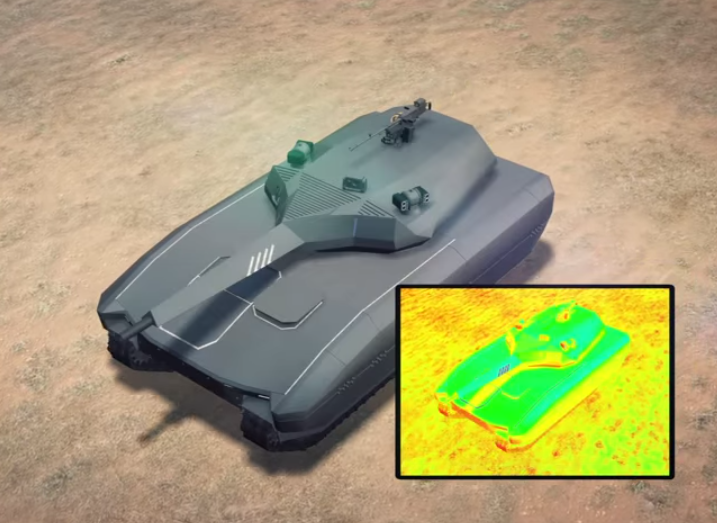
    Poland is making defense technology splashes lately with the arrival of its PL-01 Tank concept, thought to be one of the tanks of the future that governments are starting to move towards. The Polish Government, Orbrum, and BAE Systems are working jointly on this project. The PL-01 Tank has a major feature, that it is virtually invisible to radar and thermals, that distinguishes it from the traditional tanks. The PL-01 Tank is invisible to enemy thermal imaging, infrared, and radar which make it unique and an attractive buy for any nation’s Army.

    Launch of the PL-01 Tank:

    This proposed Polish PL-01 tank is mainly designed for the Polish military and is being developed jointly between Polish Defense Company Obrum and British conglomerate BAE Systems. It is a light armored tank and designed as a fighting vehicle. It was disclosed first at the International Defense Industry Exhibition at MSPO in Poland on 2 September 2013. The tank is estimated that a full sample will be completed in 2016 and if everything goes well, it will be in service for marketing immediately thereafter. Mass production is planned to commence in 2018.

    Key Specifications of the PL-01:

    The Polish PL-01 tank has some unique and distinctive features that make it different from other traditional concept of most modern tanks. The obvious specification is that it is a stealth tank as far as radar and thermals are concerned. Very significant technologies are integrated into the concept to help the tank reduce its infrared signature. Cooled wafers are used on the outside of the tank to perplex the tracking systems of anti-tank weapons on the battlefield. It has the capacity to avoid the enemy thermal imaging, infrared and radar. In addition, the tank has a 940hp diesel engine that has the special capability of dispersing the exhaust system to further reduce its infrared signature. This feature will allow it to blend in with the environment by confusing the electronic detection systems of the enemy. Special cooled wafers (like a cooling plate) on the outside of the tank are used to make the tank appear more like a car or other object when it is viewed in infrared or detected in the enemy thermal devices. The tank has an unmanned turret and a large auto loading cannon. The turret is very versatile and can do multiple different firing tasks from the same vehicle. The angles of the tank are intended to diminish its radar signature and it is enclosed with a radar permeable coating. The sum total weight of the tank is 30,000 kg (standard layout) and with additional armor panels, it is 35,000 kg. The length, width and height of this vehicle are respectably 7 m, 3.8 m and 2.8 m. It can facilitate a crew of three. The main armament of this tank constitutes 105 mm or 120 mm caliber main cannon and the secondary armament is 7.62 mm remote controlled machine gun as well as other active and passive countermeasures. This includes a 40 mm or 12.7 mm grenade launcher, heat and radar reduction. It is equipped with a 940 horse power diesel engine attached to a torque converter, automatic gearbox and driving assistant mechanism. The suspension torsion bar is based on seven wheels. The speed can vary from smooth road to rough territory. On paved roads, the tank is supposed to reach up to 70 kph and on rough terrain, it can reach up to 50 kph. The operational range is maximum 500 km on paved roads. The PL-01 tank can use steel or rubber tracks. It can move rapidly on and off roads and efficiently traverses water.

    English: This is the M1A2 TUSK Abrams Tank.
    English: This is the M1A2 TUSK Abrams Tank. (Photo credit: Wikipedia)

    PL-01 Tank Layout and Comparison:

    The design of PL-01 tank is akin to that of main battle tanks, with the driver located at the front of the vehicle and an unmanned turret mounted at the rear. There is a gunner and a commander within the hull and a crew of three soldiers can take their position in the rear part. The Combat Vehicle 90 is the model based on which the chassis of the tank is based. Currently the vehicle weighs in at about 33 tons and it is calculated that it will be about 39 tons with the additional armor. Russian T-90 main battle tank isn’t as light as the weight of the Polish tank. It is ten tons lighter than the Russian one and it is an advanced model of Abrams tank. There is a lot of criticism that the PL-01 is just another variation of the Polish Anders Tank. There are also some close similarities between the PL-01 tank and the Israeli tank Merkava – mainly that the engine-transmission compartment is located in the front part of both tanks.

    English: T-90 main battle tank.
    English: T-90 main battle tank. (Photo credit: Wikipedia)
    English: IDF Merkava Mk4 main battle tank עברי...
    English: IDF Merkava Mk4 main battle tank עברית: טנק מרכבה סימן 4 (Photo credit: Wikipedia)

    Future Planning for the PL-01 Tank:

    The Polish concept tank is currently on the stage of early development and on the verge of initialization. Designers confirm that in the future, there will be improvements to the concept to include possibly an “invisible” feature which causes the tank to appear to blend in with its surroundings to the naked eye. The designers would likely to use a system that has cameras and some type of displays on the outside of the tank. This will help the tank to match the image seen on the one side of the tank onto the video receivers on the other side of the tank. Having the tank be stealth and invisible would put it in an all new class of ground warfare that could change the battlefield forever.

    Thoughts About the PL-01 Tank:

    The Polish concept of PL-01 Tank is truly exciting and intriguing. It is quite interesting that the big budgets in the United States Military usually go into Aircraft (F-22 Raptor, F-35 Joint Strike Fighter) probably to help gain air superiority first. Sure they improve the ground vehicles, but not on the level of what Poland is trying to do. Poland has already conceded that it will not have air superiority against a Russian attack. So they are hoping to differentiate their forces by providing a tactical advantage with their armor. It is worth noting that there is no way Poland would have access to the stealth technology provided by BAE Systems without some kind of approval from the UK or US governments. In the end of the day, this same technology will probably make its way easily back to the United States and other NATO allies once it is fully developed and proven in Poland. The PL-01 Tank is definitely worth watching.

    Videos of the PL-01


  • Ground X-Vehicle Technology – Changing Mounted Warfare Forever

    Ground X-Vehicle Technology – Changing Mounted Warfare Forever

    DARPA has been busy with the advancement of Ground X-Vehicle Technology.

    English: This was the most up-to-date DARPA lo...
    English: This was the most up-to-date DARPA logo as of January 2009. It is obsolete now. (Photo credit: Wikipedia)

    There has been a consistent formula which applies to mechanized warfare for at least a century, with regards to the protection of land-based armored vehicles and those who occupy them which is, the more the armor, the more the protection. The difficulty that has developed in the recent years is that with the increased armored protection, there has been an even higher increase in the penetration power of weaponry. As a result, there has been an exponential increase in the armor on such vehicles. This decreases the mobility of these vehicles while at the same time, it shoots up the manufacturing cost. This also restricts the access of such vehicles to roads only, and it becomes next to impossible for them to gain access into restricted spaces.

    Size of the Ground X-Vehicle Technology Does Matter

    On looking at any US Army armored division, the first thing that one notices is that the tanks are really, really big, and expensive. For instance, a British Challenger 2 weighs 68.9 tons and comes with a price tag of $7 million. There is no escape because, with the increasing power of antitank weapons, the tanks have to be increased in size accordingly. If we take a look back into history, during the First World War, the tanks were no larger than an average-sized SUV. However, over the years, tanks began to get loaded with heavier artillery and more sophisticated armor. To compound matters further, there was a lot of technology being loaded onto these tanks. This resulted in bigger tanks – much bigger.

    All this led to the US military taking a closer look at the way armored vehicles are being produced and there was a serious doubt as to whether “The more the armor, the more the protection” was the only solution to the problem. With this in mind, the Defense Advanced Research Projects Agency (DARPA) put into force the Ground X-Vehicle Technology (GXV-T) program for addressing this issue and streamlining the way mechanized warfare is executed. Under the new program, instead of adding on armor, there would be a different approach to resisting and avoiding direct hits on armored vehicles, thus increasing mobility and survivability.

    Ground X-Vehicle Technology
    Ground X-Vehicle Technology

    Specifications Ground X-Vehicle Technology

    Here is a product that is not quite on the drawing board yet. However the Ground X-Vehicle Technology is being pursued single-mindedly by DARPA. Here is a brief description of the technology that DARPA is trying to implement in the years to come.

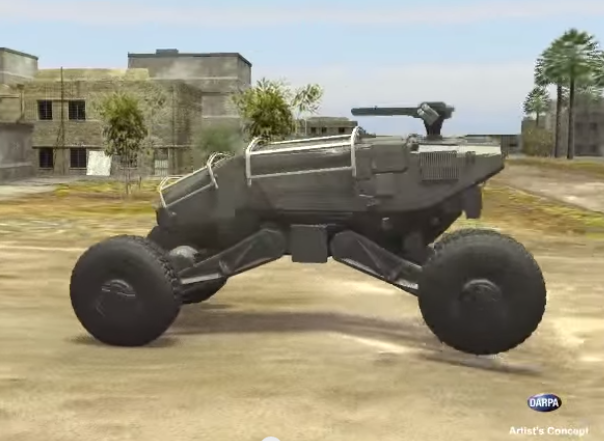
    The main aim of the Ground X-Vehicle Technology is to produce tanks which are “half as heavy and twice as fast.” The program stresses on agility of the vehicles which should have capabilities of swiftly reacting to an attack by say, shifting the location of armor around within a split second. At the same time it should be able to effect a rapid change in direction in a bid to avoid a direct attack. DARPA also requires that the vehicles should have the capability of literally “dodging” bullets and rockets aimed at them.

    The concept of the Ground X-Vehicle Technology program is to entirely remove the dependency on excessive armor once and for all. Kevin Massey, a DARPA program manager cites the example of the X-plane programs where more efficient aircraft was developed but, while at the same time, drastically reducing the size. The GXV-T program aims at manufacturing vehicles which are 50% smaller, thereby reducing the size of the crews and at the same time doubling the speed. These vehicles should be accessible to more than 95% of the terrain, increasing the difficulty in locating and engaging them.

    What all this means is that methods have to be devised for producing tanks which are capable of off-road movements, similar to the way rally cars operate, and should be capable of dodging enemy attacks, while at the same time exhibiting stealth properties, shielding them from detection through infrared and electromagnetic sensors. In line with all these requirements, DARPA is hopeful of the emergence of these new GVX-T technologies within two years of awarding the contracts to successful bidders which is scheduled for April 2015.

    DARPA Proposers’ Day

    The need for bringing in fresh technology to realize the requirements of the Ground X-Vehicle Technology was expressed in the form of “Proposers Day” held on 5 September 2014. The aim of this gathering was to get prospective contractors together at one place, where they could put forth ideas, backed with the related technologies for the development of ground-based vehicles in line with the requirements of the Ground X-Vehicle Technology.

    Order of Things to come

    With the aggressive campaign of DARPA to create the Ground X-Vehicle Technology, it is going to be interesting to watch and see which way the wind blows. Budgets permitting, it does seem that the US Army is headed for a technological revolution in terms of ground-based vehicles. Although it is early days yet, when the technology finally does come into the field, it will probably change the way land-based army combat operations are executed. Until then, we can only wait and see what emerges with Ground X-Vehicle Technology.

    A video of the Ground X-Vehicle Technology concept can be found here:

  • MQ-9 Reaper Drone – Death from Above

    MQ-9 Reaper Drone – Death from Above

    Before we get into the specifics of the MQ-9 Reaper Drone, one of the deadliest drones in the US arsenal, we must first cover some history.

    History of the Drone

    A third of the US Air Force’s aircraft is estimated to comprise of drones today. The concept of drones is not a new one. The history of drones or Unmanned Aerial Vehicles (UAVs) dates back to the 1930s with the development of the “Queen Bee” by the British Royal Navy. However, it was not until 1995, that concerted efforts were commenced by the United States to develop drones for military applications. The MQ-1 Predator (Predator A) was first put into use in 1995. It began as a surveillance vehicle and data gatherer, but was later fitted with Hellfire Missiles, for targeting suspected terrorists. It was created as a result of a directive from the Department of Defense for counter-insurgency measures at overseas locations.

    Reasons for MQ-9 Reaper Drone Development

    As a result of the war with Iraq, and in the aftermath of the 9/11 attacks, a need was felt to step up counter-terrorist measures by the US armed forces. The ongoing war with Afghanistan also reinforced this conviction. In 2007, the first test flights of the MQ-9 Reaper Drone were carried out at the Creech Air Force Base in Nevada. This new series of drones was first pressed into service in actual combat in Iraq and Afghanistan later during the same year. This was followed by successful missions in other countries like Ethiopia and Libya.

    English: An MQ-9 Reaper unmanned aerial vehicl...
    English: An MQ-9 Reaper unmanned aerial vehicle flies a combat mission over southern Afghanistan. (Photo credit: Wikipedia)

    MQ-9 Reaper Drone Technical Specifications

    The MQ-9 Reaper Drone (Predator B) was developed as an improvement to the MQ-1 Predator (Predator A). It is bigger and better than the MQ-1 Predator in terms of power and munitions delivery. The codification of the drone is as follows: “M” stands for Mulirole, “Q” for Unmanned Aerial Vehicle and “9” is the series designation.3

    This drone is described as an armed drone of medium, multi-mission, medium-altitude capabilities. Its primary function is that of intelligence collection and the secondary function is attack on dynamic execution targets.

    The MQ-9 Reaper is totally remote-controlled. It is fitted with a Multi-Spectral Targeted System, consisting of visual, infra-red and laser sensors. The munitions system is also laser-guided.  The suite of functions that the Reaper can perform is surveillance, reconnaissance, precision strike, search and rescue during combat, convoy/raid over-watch, air support, buddy-laser, and terminal air guidance, development of targets and clearance of routes. The aircraft is fully-equipped with sensors and weapons with a satellite link between the drone and the ground control station. The entire aircraft can be dismantled and transported in a C-17 transporter or larger, but is also capable of independent taking off and landing from a standard US airfield.

    Here is a summary of some of the specifications of the MQ-9 Reaper:

    Specifications

    Primary Function  Intelligence collection & reconnaissance
    Contractor General Atomics Aeronautical Systems, Inc.
    Power plant  Honeywell TPE331-10GD turboprop engine
    Thrust 900 shaft horsepower
    Wingspan  66 feet (20.1 meters)
    Length 36 feet (11 meters)
    Height  12.5 feet (3.8 meters)
    Weight 4,900 pounds (2,223 kilograms) empty
    Fuel Capacity 10,500 pounds (4,760 kilograms)
    Payload  4,000 pounds (602 gallons)
    Speed 3,750 pounds (1,701 kilograms)
    Range  Cruise speed approx. 230 mph
    Ceiling 1,150 miles (1,000 nautical miles)
    Armament Up to 50,000 feet (15,240 meters)
    Crew AGM-114 Hellfire missiles, GBU-12 Paveway II and GBU-38 Joint Direct Attack Munitions
    Unit Cost $56.5 million (4 aircraft with associated equipment)

    Other MQ-9 Reaper Drone Buyers

    The primary customer of the MQ-9 Reaper is the US Air Force and the US Government. However, the sale of this drone is not restricted to the US alone. In 2011, the US Department of Defense signed a contract with General Atomics Aeronautical Systems to supply 24 extra systems of the MQ-9 Reaper to the Italian Air Force. The total value of the contract was tagged at $15,053,926.

    In 2013, the Netherlands declared that it would be acquiring its own fleet of Reapers by the year 2017, amounting to 4. Today, France and the UK are also using MQ-9 Reapers, making this drone a global product.

    MQ-9 Reaper
    MQ-9 Reaper (Photo credit: Wikipedia)

    Future Plans of the MQ-9 Reaper Drone

    The MQ-9 Reaper has had a good tour of duty. However, it is likely to be replaced by the next generation of drones. The Army is now developing the successor to the Reaper – the Avenger (Predator – C), a sleeker and more robust design, compared to the Reaper. The main features which differentiate the Avenger from the Reaper is that the Avenger is jet-propelled and it is has stealth properties and the cruise speed is double that of the Reaper.

    MQ-9 Reaper Drone Final Analysis

    If we consider the track record of the MQ-9 Reaper, it would be fair to say that it has had a fairly successful journey. One thing is sure, and that is, unmanned aircraft will play a prominent role in the US Air Force in the future years. When Secretary of Defense, Robert M Gates addressed the Air Force Academy in 2011, he mentioned that although there will always be a need for manned flight in the US military, there is a great scope for the development of remotely piloted vehicles, for reconnaissance and strike. “I see no excuse for men in fighter planes to shoot down bombers,” he says, “The next Air Force is going to be built around scientists.”

    It appears the MQ-9 Reaper Drone will continue to see heavy use for many years to come, until such a time as it is fully replaced by the Predator 3 and future models.

  • Ground Combat Vehicle – The Bradley Replacement That Could Have Been

    Ground Combat Vehicle – The Bradley Replacement That Could Have Been

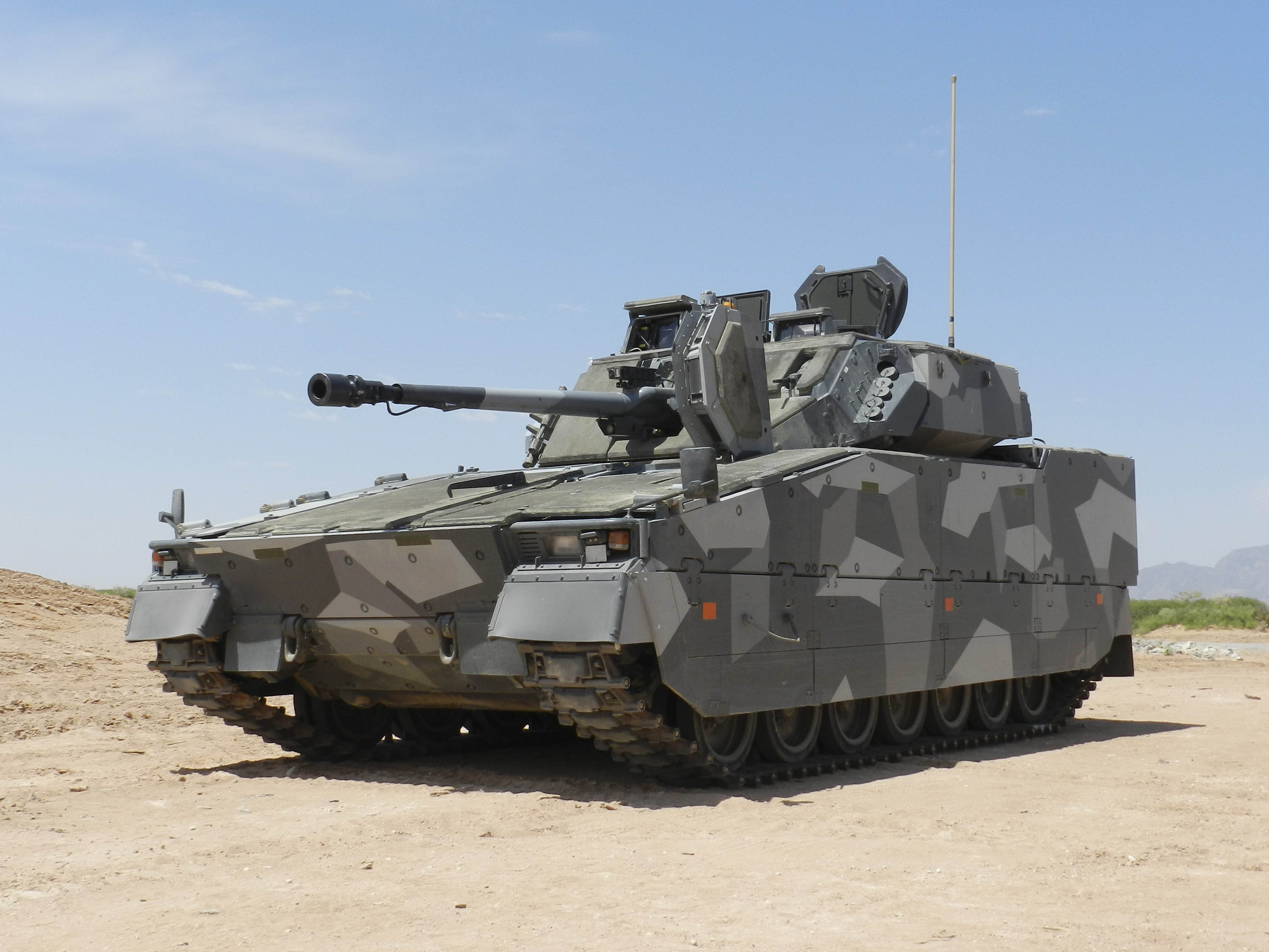
    Where did the Ground Combat Vehicle come from and what is it? In 2009, the US Army announced its intention to “significantly restructure” it’s Future Combat System” (FCS). This was formally announced by the Secretary of Defense, Robert Gates. The FCS was a program being developed since the year 2000. It was to be a multi-billion dollar program which would be implemented over a period of several years, and one of the salient features of this program was the Manned Ground Vehicle, (MGV).

    However, the development of the MGV was cancelled and replaced by another vehicle called the “Ground Combat Vehicle” (GCV), to replace the then existing M113s and the Bradley. The features were obviously planned to be better than the Bradley, in all respects.

    M2 Bradley IFV
    M2 Bradley IFV (Photo credit: Wikipedia)

    Features of the Ground Combat Vehicle

    The basic philosophy behind the GCV was that it should be possible to add capabilities on to it in the future, including development of armor. Further, the vehicle should be adaptable to both existing as well as future network capabilities like jammers, radar and sensors. Furthermore, it should be integrated with mature technologies. The vehicle was expected to be in the field by the year 2017, at the latest. The capacity was expected to be a total of 13 soldiers, which would have been more that the capacity of 9 in the M2 Bradley. A common chassis would enable variants to be built around the base structure. The vehicle would also have modular armor, which could be added and removed according to combat requirements. The propulsion system would be an E-X Drive hybrid electric that would deliver high power torque.

    Setbacks and Budget Cuts

    Originally, once the Analysis of Alternatives (AoA) had been carried out by the army, and no other alternative contractors had been located, two contracts of $439.7 million and $449.9 million were awarded to two contractors, General Dynamics and BAE Systems, Nothrop Grumman respectively. Firms like Lockheed Martin, MTU, Detroit Diesel, Raytheon, Rheinmetall Defence, Krauss-Maffei Wegmann, SAIC and Boeing were also in the fray.

    In 2010, a Request for Proposal (RFP) was issued. Under the deadlines of this RFP, companies were given up to January 2011 for proposals to be submitted for tracked or wheeled vehicles. The Army put a ceiling on the cost per vehicle to a range between $9 million to $10.5 million. The cost of each operational mile was to be $200. The vehicle was also required to fit on a C-17 transport aircraft. 1,874 vehicles had been planned, with the first ones being run off the production line in April 2018.

    However, there were several clauses that the Army introduced, that would put the companies in extremely deep water, if there were any glitches in the production. For instance, there was a $450 million ceiling per company and if there was any further rise in the cost, 100% of the additional cost would have to borne by the contractor.

    Further deterioration of the program occurred with Boeing protesting about its rejected proposals. The Army defended its case by stating that it had requested certain technical details from Boeing, but the company did not come forward. A total of 20 weaknesses of Boeing were identified, but according to the Army, the company did not address them adequately.

    The program was officially called off on 24 February 2014, as confirmed by the Secretary of Defense, Chuck Hagel.

    Potential of the Ground Combat Vehicle

    If the GCV had been continued, would it, and how would it have benefited the Army? In 2009, Maj. Gen. Robert H. Scales (Ret.) wrote an article for the Armed Forces Journal. In his article, A Vehicle for Modern Times, Scales brings to the fore the burning issue of the state of the US Army’s ground forces. He feels that the GCV would be able to bring about the much-needed modernization of the US Army’s ground forces. He feels that the GCV could influence the way all other support systems of the war machine work, like sensors, network, aircraft and fire support. Scales makes a lucid observation that it is unfortunate that drastic changes are usually brought in as a consequence to the death of soldiers.

    When the Stykers and Land Warriors were introduced, Scales says, they played different roles, such as long-range and short range transporters, firepower platforms, rally points or even rest centers. He says that the development of a land vehicle effectively resistant to Improvised Explosive Devices (IEDs) abundantly found in Afghanistan is far from satisfactory. He says that loading on armor has got its limitations; the balance has to be struck between offering sufficient protection and making the vehicle to unwieldy and overweight due to excessive armor. This is one good thing that the GCV has going for it.

    Scales hits the nail on the head by stating that Soldiers and Marines have paid a heavy price in Iraq and Afghanistan. The Ground Combat Vehicle program he feels, would give them back what they have lost. He concludes the article with a powerful summation by saying, “Let’s get on with giving them the fighting system they deserve.”

  • USS Zumwalt Destroyer – The Newest Navy Destroyer

    USS Zumwalt Destroyer – The Newest Navy Destroyer

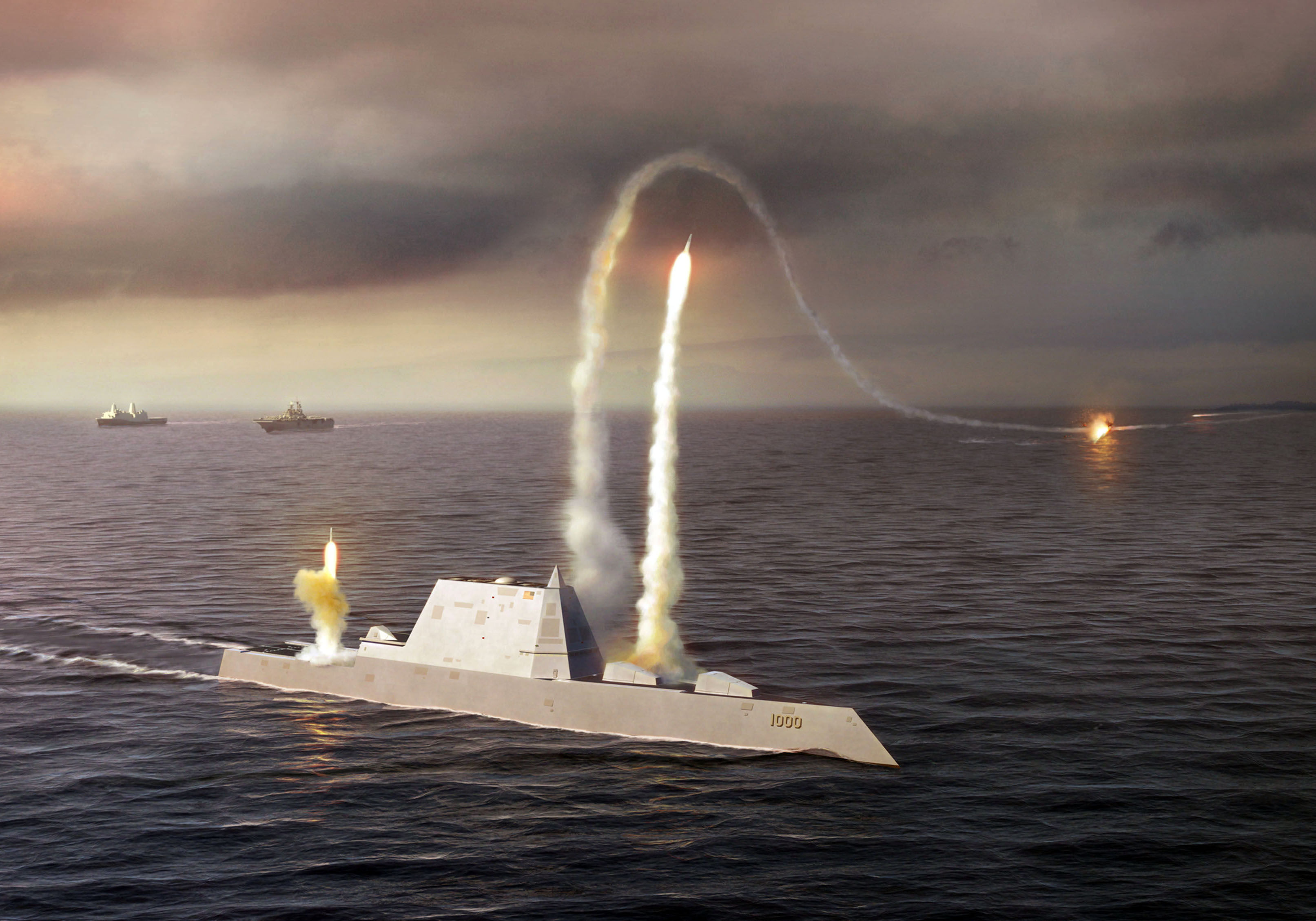
    The latest darling of the US Navy is the USS Zumwalt Destroyer, a force to reckon with and on the top of the list of the US defense arsenal. Named after the renowned Chief of Naval Operations, Elmo Russell Zumwalt, Jr., the USS Zumwalt is the first in line of three such guided missile destroyers.

    The origins of the ship’s basic features date back to 2001, as a result of Congressional defense cutbacks and the subsequent acquisition program. The source of the initial funding came from the National Defense Authorization Act of 2007. The summer of 2008 saw the formation of a construction timetable which was issued to the contractor, General Dynamics with a completion date targeted as March 2015. However, this deadline was later rescheduled to 2014. The first section of the ship was completed by the end of 2011. Despite much speculation about the commissioning being further delayed, the vessel was launched from Bath Iron Works on 29 October 2013.

    More about the USS Zumwalt

    The USS Zumwalt is a DDG-1000 class destroyer and it is one among a total of 3 destroyers of the same class, from the Bath Iron Works, the other two being the Michael Monsoor (DDG 1001) and Lyndon B. Johnson (DDG 1002) which are scheduled to be completed in 2015.

    What makes the USS Zumwalt special is that it is the first of its kind to have some advanced features that were not available with previous ships. Although the bridge is constructed like any other regular ship’s bridge, the Zumwalt is fitted with software that enables the captain to control systems at any location onboard.

    The Zumwalt is also equipped with some of the most advanced radar tracking systems, laser weapons and rail guns and a few gizmos that are still under test by the US Navy. However, the biggest asset of the Zumwalt is its stealth properties. The shielding is designed to make the ship show up as a mere fishing boat on enemy radar!

    Other Special Features

    The Zumwalt is fitted with Raytheon’s Integrated Indersea Warfare sonar, which is built from the type of sonar sensors which are used by sophisticated submarines. The high degree of computerization on board and the high level of automation cuts down manpower requirements drastically. In comparison the 210 sailors required to man an Arleigh-Burke-class destroyer, the USS Zumwalt only requires 130 personnel, with the addition of another 28 for aviation operations. There is a helipad on the ship which accommodates 2 helicopters and a vertical takeoff drone.

    080214-N-0923G-005 WASHINGTON A model of the D...
    080214-N-0923G-005 WASHINGTON A model of the DDG 1000 Zumwalt Class destroyer to be built by Bath Iron Works and Northrop Grumman Shipbuilding is displayed during a contract signing ceremony at the Pentagon. Both companies signed $1.4 billion construction contracts with the Navy as part of the Navy dual lead-ship strategy to introduce the new class of destroyer that will deliver improved warfighting capabilities, continued forward presence and combat power for the surface Navy. ) (Photo credit: Wikipedia)

    Budget Considerations

    As can be well imagined, the cost of all the power and technology that is packed into the USS Zumwalt comes at a price, and a considerable one, at that. Originally, the projected budget of this ship was put at $3.8 billion. However, with all the added developmental costs involved, the original estimate has become inflated to $7 billion. The General Accounting Office initially felt that excessive technology was being pumped into a single vessel, more than required. Due to the huge size of the hull, General Dynamics had to spend $40 million on a building at the Bath Shipyard to accommodate it. It is a well-known fact that originally, 32 Zumwalt-class ships had been planned for, but when the initial estimates came out, this number was hurriedly chiseled down to 24, and the final number ended with just 3.

    English: Zumwalt class destroyer (side view)
    English: Zumwalt class destroyer (side view) (Photo credit: Wikipedia)

    What it means to the US Navy

    The basic objective behind the entire Zumwalt project, although not specifically spelt out by the US Navy, seems to be to show its military presence in the Pacific to counter China’s increasing military power in that area. It is a subtle or maybe not so subtle attempt at maintaining the balance of power in the region.

    Future Plans

    There are no plans to build more than 3 Zumwalt class ships. The US Navy will then revert back to building the traditional Arleigh Burke-class destroyers. It is estimated that even if extensive modernization is applied to these classical vessels, the costs will still be well below those incurred during the Zumwalt-class production line.

    English: PACIFIC OCEAN (Aug. 16, 2009) The Arl...
    English: PACIFIC OCEAN (Aug. 16, 2009) The Arleigh Burke-class guided-missile destroyer USS Mustin (DDG 89) transits the western Pacific Ocean. Mustin is one of seven Arleigh Burke-class destroyers assigned to Destroyer Squadron (DESRON) 15 and operates from Yokosuka, Japan. (U.S. Navy photo by Mass Communication Specialist 2nd Class Bryan Reckard/Released) (Photo credit: Wikipedia)

    Reflections on the Zumwalt

    The USS Zumwalt and the other associated Zumwalt-class destroyers represent a shot in the arm for the US Navy. It is through these vessels that the American military presence can somewhat renew its strength. Here is a vessel which has a lot of power packed into its punch, and enough technology added to make the force of the US Navy felt. However, this class of Navy vessel cannot be sustained indefinitely in the cash-strapped American economy. A balance has to be struck at some point. We have seen the birth of the USS Zumwalt, but how sure can we be about the emergence of the remaining two ships? What can be confirmed however is that the USS Zumwalt is here to stay. It continues to be a proud feather in the cap of the US navy.

    Sources:

    Press Herald
    Global Security
    CBS News

  • New Army Uniform Getting Rolled Out

    New Army Uniform Getting Rolled Out

    The Old and the New

    The latest buzz going around in US Army circles is about the new army uniforms, the Operational Camouflage Pattern (OCP), which are in the process of being rolled out; the entire conversion to the new uniform is expected to be completed by the summer of 2018. In 2004, the US Army decided to scrap the two versions of uniforms, to be replaced by a standardized model called the Army Combat Uniform (ACU). The cost of this conversion was $5 billion. The budget for the OCP has been estimated at $4 billion. According the army’s plan, the new uniform will be available in stores from next summer, and soldiers will have to replace their worn-out uniforms with the new ones.

    The Battle Dress Uniform (BDU)

    From the 1980s to the mid-2000s, this uniform was used by the US Army. This uniform is basically in shades for jungle camouflage, using olive green, tan and brown. It is similar to the type of uniform that was used during the Vietnam Era. These uniforms are also called ‘temperate weight uniforms’.

    There existed several variations of the BDU such as ‘tropical weight’ BDU composed of 100% cotton rip-stop poplin cloth. Other BDU variants are the ‘temperate weather’ BDU, ‘hot weather BDU and the ‘enhanced hot weather’ BDU. The main feature that distinguishes each variation is the ratio of synthetic fiber to cotton fiber.

    The Shortfalls of the ACUs

    The ACUs were beset with flaws from the very start. In an attempt to modernize the uniform, an excessive amount of Velcro was used. In a combat situation where absolute silence is required, the Velcro fasteners have a tendency to open with a scraping sound, possibly giving the soldier’s position away to the enemy. Moreover, this Velcro restricts the movement of personnel, especially when brushing against each other with the Velcro strips adhering to each other’s uniforms.

    The color scheme was another bone of contention, as the choice of colors was unsuitable for blending into the environment. Moreover, due to mass production of this uniform, there were several quality issues and the ACUs wore out faster. To put it bluntly, the troops hated the ACUs.

    The Rise and Fall of MultiCam

    In early 2010, a new version of army uniform was introduced known as the ‘MultiCam’ uniform. This was introduced as an interim arrangement, to remedy the flaws that existed in the ACU uniforms. It was intended to be suitable for use under different weather, elevations, light conditions and environmental conditions. MultiCam was a suitable choice for many technical reasons, the main advantage being that it blended well into multiple environments.

    Commercially, the MultiCam uniform was a great choice as the design already existed in the market. This presented a cost-effective solution to the problems of the ACUs, as the huge outlay for creation of a new design was eliminated. Finally, the most relevant reason for the potential success of MultiCam – the troops loved it.

    Unfortunately, it was commercial problems that led to the failure of MultiCam. The army asked the MultiCam manufacturer, Crye Precision, to reduce the licensing fees of the fabric printers, but owner Caleb Crye did not agree to this. The army then offered to buy the manufacturing rights from Crye, but was not willing to pay him the $24.8 million that he asked. This marked the last nail in the coffin of MultiCam, giving birth to the new army uniform which the US Army claims to be “very similar to MultiCam”, although not much is known about it yet. However, recent photographs of the uniform do show a resemblance with the old camouflage pattern of greens, yellows and browns.

    New Army Uniform
    New Army Uniform

    The New Army Uniform

    The new uniform pattern is called ‘Scorpion’. Senior US Army officials have started briefing their staff about it, although the army is playing this one rather close to the chest, possibly due to the flak that it has drawn from frequent and expensive changes in the recent and not so recent past. The new uniform has yet to be announced, but extensive field testing has been carried out over the last 4 to 5 years, using thousands of soldiers as volunteers for measurement of parameters like thermal reflection, level of concealment, comfort of wearing and general wear and tear.

    Release Date

    It appears that there is no official release date for the new Scorpion pattern style uniform. While it is being tested and the logistics are still being worked out, as soon as we know the release date we will post it here.

    The Bottom Line

    Whether the troops like the new army uniform or not, will largely depend on their actual experience from wearing the uniform, and that too, in combat situations. As the old adage goes, “The truth of the pudding is in the eating.” There has been a lot of skepticism in general about the uniform policy of the US Army. Billions of taxpayer’s dollars have been spent, often with little to show, as each version seemed to have its own set of issues, some newer versions being worse than the previous ones (see the ACU). The question that is in everyone’s mind now is as to whether this Catch-22 situation will continue, or will the US Army finally succeed in coming out with a good product that will win the approval of the final users, the soldiers themselves? This is something that remains to be seen (on in this case – hopefully “not seen” since it is supposed to be camouflaged).

  • 6 Tips For Those Transitioning Out of the Military

    6 Tips For Those Transitioning Out of the Military

    Transitioning out of the military is becoming a hot topic these days. Recently, 1,100 Army captains and 550 Army majors received word that they are being released from the military early. Secretary Chuck Hagel proposed a plan in February to drop the active Army by 130,000 troops (from 570,000 to 440,000 troops). Most of these officers and a lot of the noncommissioned officers (NCOs) had planned to stay 20 years in the Army so that they can receive their full retirement and medical benefits but are being released early and therefore cannot meet their full retirement.

    As someone who transitioned out of the Army in 2008, I have some tips I would like to share with my fellow soon-to-be veterans. First of all, you are all heroes. I salute you and would personally like to thank you for your service. If you were hit by this draw down, know that it has happened to a first class group of officers and NCOs. You all have been through a lot and are the best this nation has to offer.

    Without further ado, here are the tips.

    Keep Your Medical Records

    When you are going through out processing, keep all your medical records. You will need them time and time again and the military will lose them time and time again. Between the medical clinic, the hospital, the VA, Human Resources Command, and the National Guard or Army Reserve, someone is going to lose your records. So when it comes time to turn your records in, make a photo copy and turn in the photo copy. Keep all originals.

    Consider the National Guard or Army Reserve

    When you get out of the Army, you are losing your basic allowance for housing (BAH), your basic allowance for subsistence (BAS), your Commissary benefits, your PX/BX benefits, your medical benefits, your dental benefits, your retirement and any other benefits that go along with your service. That is a big hit to take and to make up for on such short notice. Healthcare coverage on the outside of the military is running $800 a month with a $10K deductible – not very attractive or worth it. If you join the reserve component, you will have access to ~$200 a month Tricare Reserve Select that has a very generous reimbursement plan. You will receive $700ish a month from one weekend a month as well. Plus, you get to serve your country again and have the comradery, which are usually things people miss (I know I do). Lastly and finally, you earn points toward getting retirement you worked so hard to try and obtain while active. The reserve component uses a points system and those with active duty time do very well once they hit 20 years.

    Apply for an Advanced Degree Now

    Use the Post 9-11 GI Bill. They help you with BAH and with full funding of your degree. Whatever level you are, you can go to school for up to 3 years. I personally recommend an executive MBA program (like the one at the University of South Florida) if you can get into one. That type of program is tailored toward those who are working professionals and meet on weekends or once every two weeks. This way you can earn a living and you can get your degree. The MBA is a very versatile and respectable degree that can be used to help you in any industry or as an entrepreneur. I recommend finding where you want to go now so that you can apply and know where you are going. This will give you an idea for your job search and where you want your residence.

    Get on LinkedIn

    To help you with your job search, LinkedIn is a great resource. Besides that it helps you connect with your network, other professionals, and recruiters, it also helps you learn what people are doing and what credentials and experience they have. It is a good measuring tool to help you gauge yourself. LinkedIn offers a free 1 year premium membership that helps you stand out above the crowd. Also, you should add as many people from your past from high school, college, every unit you have ever been in, family, friends, etc. Also add me, (Spence Rogers) I would gladly accept your invite. Be careful to only add people you know. And, you send up to 3,000 invites before you hit your limit. However, you can also request for more invites once you hit that point and LinkedIn usually gives you 3,000 more. Fill your profile out with everything you can. Take a look at mine and you will see how complete it is. Get endorsements by endorsing other people (they will turn around and do it for you). Most importantly, if you are seeking a job (which most will be), put “Seeking New Opportunity” or “Available for Job Opportunities” in your description tag line that shows up under your name. This will let recruiters know you are available for hire.

    Reach out to Military Recruiters

    The big two military recruiting companies are Lucas Group and Orion International. They have special relationships with Fortune 500 and 100 companies that can quickly help you get placed. Most major corporations have military recruiting departments. Reach out to them too. One key point, you will want to pick up the phone, not just send a bunch of emails. A phone call makes you more real to the recruiter and to the hiring manager. Here are some companies to check out that have military sections for their HR:

    Walmart
    USAA
    Amazon.com

    Here is a more comprehensive list of 100 companies that are friendly to military.

    Square Away Your Real Estate Requirements

    If you have a house you are needing to get out of or you are needing to buy one, call my friend and fellow veteran Eric Balough. He is CEO of Garry Owen Homes, a real estate investment company. He will give you all sorts of advice and will assist you with your real estate needs. His company is tailored for military real estate requirements. Also once you figure out where you want to live, it may be a good idea to use your VA Home Loan if you haven’t used it yet. Mortgage rates are at an all time low and there is no telling how long this will last.

    Is there anything I forgot about transitioning out of the military? Do you have any other tips or updates for us? Please tell us below.

  • Shipping Container Dimensions – Good to Have Info

    Shipping Container Dimensions – Good to Have Info

    Shipping container dimensions are something that anybody in the sea freight or logistics field should have handy. That is why I wrote this article, to give you all an easy way to look everything up at once. First I will go into some background, then I provide the dimensions.

    Evolution of Shipping Containers

    The modern, standardized, reusable shipping containers which we see today evolved in the 1950s, when shipping companies collaborated with the US military to develop an international standard for containers. The purpose of this standardization was to simplify the way goods were transported throughout the world, thereby creating a more efficient, secure and cost-effective shipping system. The term ‘intermodal’ is often used to indicate that these containers can be used in different modes of transport such as sea, rail or road, without having to make any modification to the container or move its contents.

    One of the most significant developments in the evolution of intermodal shipping containers was the invention of the twist-lock in 1950 by Keith W Tantlinger. This seemingly insignificant invention actually revolutionized the way containers were handled and stored and is an integral part of the intermodal container even today. The twist-lock enables containers to be stacked on a ship or locked onto the base of a truck in a simple but extremely secure way.

    Different Categories of Containers

    The intermodal container is made of corrugated steel with a door at one end of the container. The doors have pilfer-proof latches which can be locked securely, but due to the high crime rate in the world today, these are sometimes fitted with intruder alarms. Some are even fitted with wireless radios for alerting security guards.

    Due to different requirements, based on the varying nature of their cargoes, containers are modified accordingly. For example, perishable goods are transported in refrigerated containers, which are fitted with a self-contained refrigeration system, which keeps the goods at sub-zero temperatures at all times. A container can also be in the form of a tank, for the purpose of carrying liquids. Containers can be specially coated or lined internally if they are to be used for carrying cargoes like coal, chemicals or garbage. Here is a list of some of the most common container categories:

    • Collapsible ISO
    • Tank Containers (transportation of bulk liquids, including hazardous chemicals)
    • Insulated Containers (for fragile or volatile substances and pharmaceutical products)
    • Gas Containers
    • Garmentainers (used for transporting garments on hangers)
    • Ventilated Containers
    • Open side
    • Open Top (for heavy machinery and bulk minerals)
    • Flushfolding flat-rack containers

    Standard Dimensions for Shipping Containers

    The sizes and weights of these different containers are more or less the same for each class of container. However, the weight of each individual container may differ between from one manufacturer to the next. The most commonly-used containers have two basic sizes, 20 feet and 40 feet which is the length of each individual container. In the early days, both these sizes had a width and height of 8 feet each. Today, the same containers are 8 feet, six inches high.

    Variations

    There are taller containers, commonly known as “hi-cube” units and have a height of 9 feet, 6 inches. The United States and Canada also use longer containers from time to time. These again come in two sizes of 48 feet and 53 feet respectively.

    Another variety is the “pallet wide” container. These containers are wider than standard containers by about 2 inches to accommodate the pallets commonly used in Europe known as Euro-pallets. The reason for this extra dimension is so that the pallets can be arranged side-by-side in the standard space which is provided by several shipping companies on their vessels. A similar variation is the Australian RACE container, which is adapted for placing on Australia Standard pallets. The commonest of this class of containers in the 45-foot wide container called ‘high-cube shortsea’. A standardization process has been initiated by the EU for pallet widths.

    A worthwhile mention is the “tricon” and “quadcon” containers. These were exclusively developed by the United States Army. While the tricon is a set of three containers which fit into the footprint of a standard 20’ ISO container, the quadcon consists of a set of four such containers.

    Container Capacity

    The standard unit of container capacity is usually expressed in terms of “twenty-foot equivalents” (TEU), It is the measurement of the approximate cubic capacity of a single 20-foot by 8-foot container. The cargo contained in a 40-foot container would be thus considered as two TEU, although it could also be described as one “forty-foot equivalent unit” (FEU).

    Shipping Container Dimensions

    Below you will find images of the 20′, 40′, 40′ High-Cube, 45′ High-Cube, Tricon, and Quadcon variations.

    Shipping Container Dimensions 40 Foot and 20 Foot Container
    Shipping Container Dimensions 40 Foot and 20 Foot Container

    (Info Source: Wikipedia)

    Shipping Container Dimensions Tricon and Quadcon
    Shipping Container Dimensions Tricon and Quadcon

    (Info Source: Maloy Storage)

    Conclusion

    Today, whether at office or at home, almost every single object you lay your eyes upon has been in a container or at least part of it, at some time or the other. Standardization of container types has led to robust and cost-effective containers, which are capable of safely transporting every imaginable cargo to its destination, intact and secure. However, having said that, it is extremely important to be aware of the kind of container required for a particular cargo. One should also be familiar with the available dimensions. This will enable you to optimize the container capacity so that the maximum volume of goods can be transported in a single shipment, which will definitely prove to be cost-effective in the long run.

  • Jesse Ventura Chris Kyle Lawsuit Concluded – Jesse Wins

    Jesse Ventura Chris Kyle Lawsuit Concluded – Jesse Wins

    The Jesse Ventura Chris Kyle lawsuit has been the talk of the town these last couple of days ever since a jury awarded Jesse $1.8 Million in damages from the slain Navy SEAL sniper’s estate. The jury decided yesterday, July 29th in Minnesota.

    The lawsuit started when Chris Kyle said in his book that he punched Jesse Ventura out in a bar in 2006 when Kyle claimed that Jesse said the SEALs “deserved to lose a few” as it relates to combat.

    There is a lot of interest in this case for two main reasons. First, both men are celebrities in their own right. Chris Kyle, an author, a famous SEAL sniper, a 2 time Silver Star recipient for valor, a five time Bronze Star recipient for valor, and who is no longer with us. Chris was killed at a gun range by Eddie Ray Routh, a Marine who Kyle was helping to recover from PTSD. Jesse Ventura is a former Navy SEAL, professional wrestler, Minnesota governor, an author, and a TV show host. Both men have other accomplishments, but these are the main ones.

    Celebrity infighting is the main reason for interest in this case. Yet another major reason is this is probably the first time the public has seen a case where a man’s widow has to pay for her late husband’s lawsuit for defamation. Sure there may be examples, but none so prominent as this one. And people are upset at Ventura for going through with it. Others are glad Jesse won because it clears his name, which is something that is priceless in the public eye. It is very apparent that the court of public opinion is with the Kyle’s widow.

    Here are several prominent responses to the Jesse Ventura Chris Kyle Lawsuit:


  • Classes of Supply – What are they?

    Classes of Supply – What are they?

    The United States Armed Forces uses ten classes of supply. These are ten roman numerals designed to categorize the different types of items one might need on the battlefield. These classes of supply are a great checklist to use when deciding if you need something or not.

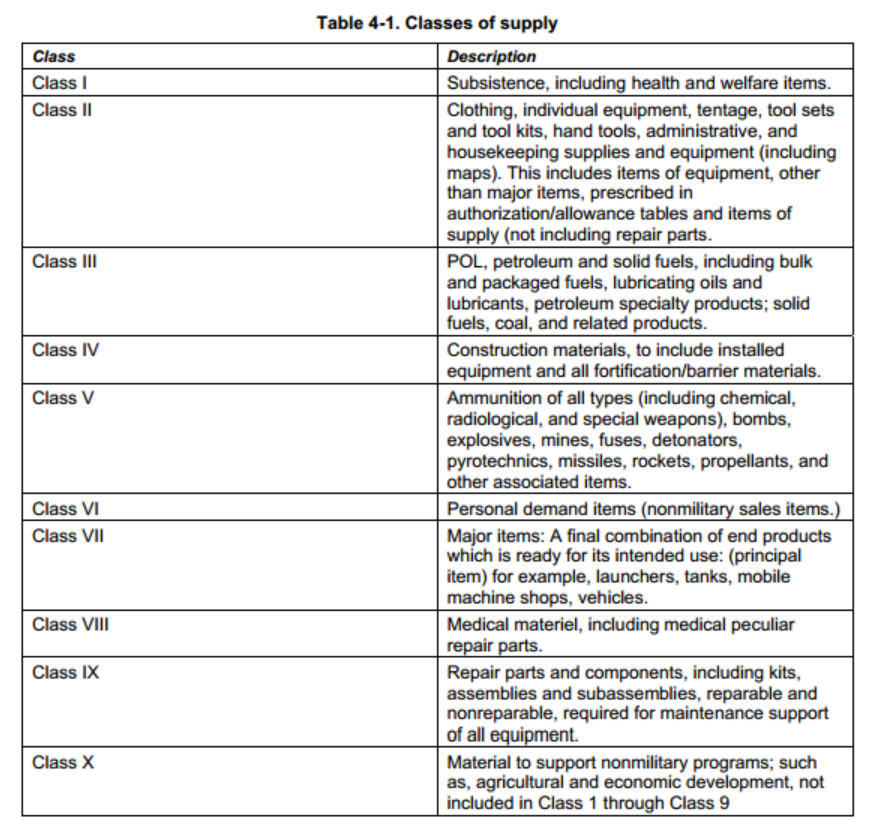
    So here is the list of the Army classes of supply directly out of the U.S. Army Field Manual 4-0:

    • Class I Subsistence, including health and welfare items.
    • Class II Clothing, individual equipment, tentage, tool sets and tool kits, hand tools, administrative, and  housekeeping supplies and equipment (including maps). This includes items of equipment, other than major items, prescribed in authorization/allowance tables and items of supply (not including repair parts.
    • Class III POL, petroleum and solid fuels, including bulk and packaged fuels, lubricating oils and lubricants, petroleum specialty products; solid fuels, coal, and related products.
    • Class IV Construction materials, to include installed equipment and all fortification/barrier materials.
    • Class V Ammunition of all types (including chemical, radiological, and special weapons), bombs,
    • explosives, mines, fuses, detonators, pyrotechnics, missiles, rockets, propellants, and other associated items.
    • Class VI Personal demand items (nonmilitary sales items.)
    • Class VII Major items: A final combination of end products which is ready for its intended use: (principal item) for example, launchers, tanks, mobile machine shops, vehicles.
    • Class VIII Medical materiel, including medical peculiar repair parts.
    • Class IX Repair parts and components, including kits, assemblies and subassemblies, reparable and  nonreparable, required for maintenance support of all equipment.
    • Class X Material to support nonmilitary programs; such as, agricultural and economic development, not included in Class 1 through Class 9.


    The above was the text version of it, now we are putting an image of them in case you want to print it out or use the image in a presentation etc. So here is the image:

    Classes of Supply
    Classes of Supply from the Army Field Manual 4-0

    Tips for Classes of Supply

    They are a great mental checklist to run through prior to any mission. In your head, ask yourself each class of supply and see if your rucksack, M2 Bradley, and HMMWV has everything you need for upcoming missions. The mental check would go like this:

    Class I – Do we have all the food, water, and hygiene items like MREs, Gatorade (for hydration), or ice if you are in a very hot vehicle in 110 degree heat in the middle of the desert.

    Class II – Do we have enough toilet paper and changes of clothes?

    Class III – There are 2 types of Class III. There is Class III(P) which is short for POL (meaning lubricants). Then there is Class III(B) which is short for bulk (meaning fuel). You would want to make sure you have both types of Class III prior to a mission. Gun cleaning oil and JP8 diesel fuel.

    Class IV – Do we have concertina wire and building materials (sand bags) for any bunkers we need to build?

    Class V – Do we have all of the kinds of ammunition, missiles, grenades, and flares we need?

    Class VI – Do you have all entertainment items (smokes, frisbees, etc.) for the trip. This may sound trivial but you would be surprised how many DVDs deployed soldiers watch when not on duty. Also soccer balls were often handed out to kids to try and win hearts and minds.

    Class VII – Do you have the right vehicle? In our unit we had both M2 Bradleys and HMMWVs we could take out. Sometimes when it was a major firefight we would take Bradleys, other times when we needed speed at long distances we would take the wheeled vehicles.

    Class VIII – Do you have all medications, IVs, bandages, alcohol swabs, etc. you will need for the worst case scenerio?

    Class IX – Do you have all the batteries and repair parts you need? You know what those pieces of equipment are that break often. Well sometimes stocking repair parts for items that break a lot will help you get your equipment fully mission capable quickly and it will save the day. So bring repair parts and batteries.

    Class X – Anything else you may need that has nothing to do with the other classes of supply?

  • Expray Explosive Detection System – Must Have

    Expray Explosive Detection System – Must Have

    The EXPRAY explosive detection system is user-friendly, field ready, and portable bomb detection kit. Many military units who deploy to Africa, Iraq, and Afghanistan use this kit to check to see if people have handled bombs, improvised explosive device (IED), and other munitions.

    The kit is in the class of chemical reaction detection. It is a hand held system and allows for a variety of cargoes and people. It consists of a kit with three spray cans where each spray reacts to different types of explosives. It only takes less than a minute to test, only ways about 2 pounds, requires no power, and has a very long shelf life. Troops in the field should bring this kit with them in their vehicles and have at least one of these kits at the squad level when dismounted.

    Expray Explosive Detection Kits
    Expray Explosive Detection Kits (Photo Mistral Security)

    This is a list of what each can detects:

    Expray 1 Nitro Aromatics TNT; Picric Acid; Tetryl
    Expray 2 Nitro Esters/Nitramines Nitrocellulose; nitroglycerin; RDX; C4; HMX
    Expray 3 Inorganic Nitrates (Nitrate Salts); Ammonium Nitrate; Urea Nitrate; ANFO; Black Powder

    The cans inside the kit are aerosol-based. The following list are the explosives it will detect:

    • Group A Explosives – TNT, TNB, and similar
    • Group B Explosives – Semtex H, RDX, C4, and similar
    • Compounds containing inorganic nitrates that are used in IEDs like ANFO


    US Marines demonstrate immediate action drills...
    US Marines demonstrate immediate action drills for improvised explosive devices to Spanish Marines (Photo credit: Official U.S. Navy Imagery)

    A few scenerios where the Expray kit can be used:

    1. Your unit is on a mission and there are IEDs identified either under the road with wires hanging out or you see something on the side of the road that is later identified as an EFP (explosively formed perpetrator) or IED. After the unit and civilians are out of harms way, typically the unit will want to identify suspects who may have put the bomb there. One of the techniques is to test possible suspects who were over watching the IED / EFP. This kit would be used to try and identify who the IED triggerman or handler is. Anyone who comes up as having handled explosives would then be further analyzed for information.
    2. Your unit is on patrol and receives sniper fire from a building. You investigate and there are several insurgents apprehended. You test all of the insurgents and they all test positive for explosives. You then include the explosives in their file so they have more evidence against them in court or in the detention process.
    3. Your unit is on patrol and you see a high value target you are looking for. He is talking with a few people. Your unit apprehends the high value target and then you test the other people he was talking to. In addition to other biometric tests, they pass both the biometric check and the Expray explosive detection test. These people are then cleared for release.
    4. You suspect that IEDs may have been built in a bomb-maker’s house. After detaining the bomb maker, your unit tests different walls, rooms, and furniture in the house. One of the rooms comes up positive for explosives. You investigate the room further and find stashes of explosives under the floor board, in the furniture, or in the ceiling.


    There are many ways to used these kits while in combat. The point is they are a must-have. Unless you have some other way to check for explosives, don’t deploy without these Expray kits.

    Some other non-military uses for the Expray:

    • You can use it to certify scrap for disposal
    • You can screen a sample of soil
    • You can prescreen extracts to identify which test should be performed as a follow up (TNT or RDX)
    • Use it as a back up tool for detection of residue or explosives
    • Check suspicious letters and packages
    • Use to check crime scenes
    • Quick screen of suspects
    • Detect explosives on almost all surfaces


    The Expray kits are made by Mistral Security, Inc. out of Bethesda, MD.

  • Ironclad Gloves – a Great Asbestos Glove Replacement for Barrel Changing

    Ironclad Gloves – a Great Asbestos Glove Replacement for Barrel Changing

    Ironclad Gloves – Easier and Nicer Looking

    In the old days, the soldier’s GI issue glove for changing out the barrel of the M240 Machine Gun (and other MGs) was the standard ugly-looking asbestos glove. Also the asbestos gloves of old are often no longer included in the crew served kits because of medical concerns. Units are finding themselves having to buy something else as a commercial off the shelf purchase.

    Barrel Change Asbestos Glove

    After experience in combat and based on military feedback, we have found that the Ironclad Gloves, also known as “Heatworx” are what crew-served weapons teams should use.  Here s a brief summary about why it is better:

    • Needed to replace asbestos gloves no longer included in Crew Weapon kits.
    • Provide essential heat protection and grip for safety during barrel changes on hot weapons.
    • Prevents burn injuries to Soldiers’ hand due to the dangerously unsafe heat created by after minimal firing of weapon.
    • Provides Intermittent Heat Resistance up to 600 Degrees F
    • Padded Knuckles, Full Finger, and 2 3/4 in cuff protection
    • Resistance to heat without sacrificing hand use
    • Breathable and 100% machine washable