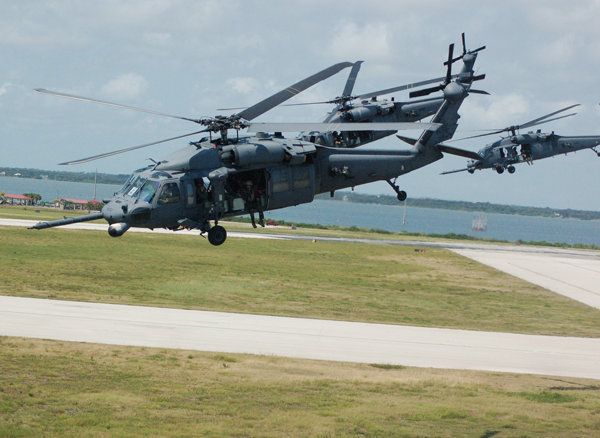
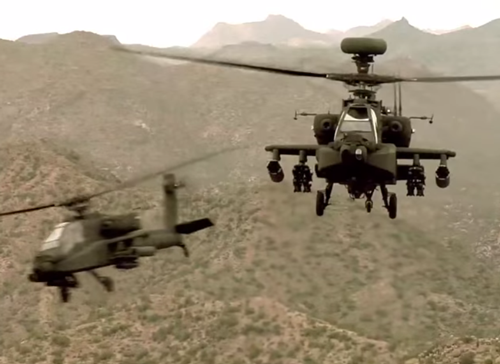
Just when you would think that things have somewhat settled down in Ferguson, there has been a sighting of four National Guard helicopters roaming the skies of nearby Kirkwood. There has been an alarming number of armored trucks as well that can be seen from the streets. This is in anticipation of a grand jury decision in the Michael Brown case.
Ferguson was in the news back in August after a white police officer, Darren Wilson, shot Michael Brown. The police claim that Wilson shot Brown during a struggle; while Brown’s family claim that the deceased was raising his arms to surrender during the time of shooting.
This incident caused major civil unrest in the form of protests as well as civil disobedience in the form of riots, lootings, and vandalism. The Ferguson Police Department has been accused of using unnecessary and heavy-handed force in the dispersal of crowds, as well as the arrest of journalists who were covering the event.
Government officials are now preparing for the worst and are taking precautions. Its police department is gearing up for any eventualities that might come up after the indictment by stocking up on crowd control equipment such as body armor and tear gas.
Just because you are a member of the armed forces, it does not mean that educational prospects need to be restricted – you are entitled to significant military tuition assistance. In fact, not only can you pursue your education after joining the military, but Congress has empowered each individual department of the armed forces with the capacity to pay up to 100% of the tuition fees for their personnel.
Another interesting fact is that if the TA benefit of an individual is not fully utilized, it can be shared with their family members. This sharing option is a new development which was not available to military personnel prior to the “Post 9/11 GI Bill”.
Here, we take a look at some of the ways in which a person can avail of their military tuition assistance entitlement. There are conditions attached for availing these benefits, so we also discuss that aspect.
Military Tuition with the Post 9/11 GI Bill
The Post 9/11 GI Bill is the latest GI Bill for military tuition, and it mostly includes features of the previous GI bills, with a few new additions. This bill’s benefits are available to all military personnel who have a remaining aggregate of at least 90 days, after 10 September 2001. If a person chooses to avail of the Post 9/11 GI Bill benefits for military tuition, they have to elect for the program by submitting an application in writing through form VA Form 22-1990. This form can also be submitted online on www.gibill.va.gov.
US Navy 090714-N-2468S-001 Robert Bailey, a veterans benefits coordinator for the Biloxi Veterans Hospital, briefs active duty Sailors and retirees on the new Post 9-11 GI Bill at Naval Construction Battalion Center, Gulfport (Photo credit: Wikipedia)
Features of the Post 9/11 GI Bill
The salient features of military tuition under this program are:
100% fees are paid to your institution if your course is for 36 months or if you have 30 continuous days and are discharged through a service-related disability.
Other than the above conditions, a percentage will be paid.
An annual stipend of up to $1,000 is paid for books and supplies.
Tuition fees are paid directly to the educational institution.
A Monthly Housing Allowance (MHA) is available to residential students (but not for those military personnel who are on active duty).
There is a list of the various courses available for military tuition on the official website of the US Department of Veteran Affairs.
The normal eligibility for military tuition assistance is 36 months and is available to an individual over a period of 15 years.
One new feature of the Post 9/11 GI Bill is transfer of benefits to spouses and dependents. You can transfer unused benefits to your spouse or dependent, usually on the condition that you agree to at least another four years of service.
Another new feature is the Yellow Ribbon Program. The basic concept of this program is that the concerned institution makes a contribution to the tuition fees which are matched by a contribution made by the Department of Veteran Affairs.
The Post 9/11 GI Bill also now includes members of the National Guard, although the Coast Guard Reserve members are not included.
English: CORONADO, Calif. (April 29, 2011) Beth Juachon, a Veterans Affairs military services coordinator, explains details of the Montgomery G.I. Bill for active-duty service members to Naval Special Warfare Sailors at Naval Amphibious Base, Coronado. The Post 9/11 Montgomery G.I. Bill offers tuition and fees, yearly books and supplies, and a monthly housing allowance to qualified service members. (U.S. Navy photo by Mass Communication Specialist Seaman Megan N. Anuci/Released) (Photo credit: Wikipedia)
The Montgomery GI Bill
Another alternative to military tuition is the Montgomery GI bill. Passed in 1984, this was a path-breaking advancement in the history of military tuition assistance. The basic eligibility to the Montgomery GI Bill is that an active member of the military contributes $100.00 per month to the program for a year. There are two categories for those eligible under the Montgomery GI Bill, Montgomery GI Bill Active Duty (MGIB-AD) and Montgomery GI Bill Selected Reserve (MGIB-SR).
Who is eligible under the Montgomery GI Bill?
You are eligible under the Montgomery GI Bill if you have:
Paid $100 per month for the first year of your active duty
Completed high school or equivalent
Completed a minimum of two years of active duty
Although the Montgomery GI Bill is a great benefit for active service members of the military, it is also important to realize its limitations which are compensated for in the Post 9/11 GI Bill. The advantages of the latter bill are transfer of benefits to a spouse and other family members, MHA, the Yellow Ribbon Program and the inclusion of the National Guard to the program.
Yokosuka, Japan (March 21, 2006) – Seaman Ruth Pipke assigned to Commander Fleet Activities Yokosuka, and Hospital Corpsman 3rd Class Clinnt Favo assigned to U.S. Naval Hospital Yokosuka, fill out the required forms for tuition assistance at the Navy College Office, Fleet Activities Yokosuka. The Navy’s College Program offers Sailors the opportunity to receive tuition assistance for up to twelve credit hours per year. U.S. Navy photo by Photographer’s Mate 1st Class Crystal Brooks (RELEASED) (Photo credit: Wikipedia)
Other Alternatives to Military Tuition
Although the programs offered by the Department of Veteran Affairs are great sources of military tuition assistance, if you still have further requirements, you may like to consider vocational rehab funding or loans.
Vocational Rehab Funding
Although not specifically designed to cater to the needs of the US Military, this program called Vocational Rehabilitation State Grants founded and sustained by the US Department of Education. However, this program is meant for people with physical or mental disabilities. There is a fair percentage of military personnel with physical disabilities that could be eligible for this program. Grants are given on the basis of the extent of the disability.
Loans, Private and Public
The US Department of Education runs a department known as Federal Student Aid, which covers the specific needs of military personnel. Some of the highlights of these loans are:
Special interest rates of 6% during periods of active duty
Military Service Deferment (loan repayment can be postponed during or just after active duty)
Public Service Loan Forgiveness (Subject to conditions, part of the loan is waived)
0% interest while serving in a hostile area
Part or whole loan repayment by the Department of Defense under certain conditions
Heroes Act Waiver
Discharge of student federal loans for disabled personnel
Private Military Tuition Assistance
If there are some specific educational requirements which are not covered under the programs mentioned above, you might have to seek a private educational loan. Although the interest rates may be higher, there are special rates for military personnel, and there are some other added benefits. However, caution should be exercised while registering for a private loan as all private lenders are not military-friendly.
Conclusion
As mentioned earlier, it is possible to continue with education while still in military service. Moreover, you can avail of benefits even after leaving the Armed Forces. It’s just a matter of choosing a suitable program and getting the paperwork in place. You can soon be well on the way to improve your career options, once you enroll with a program that provides you suitable military tuition assistance for earning your degree.
Before the start of the NFL football game between top teams Dallas Cowboys and Arizona Cardinals, a Navy SEAL and a paratrooper service dog rappelled down the AT&T Stadium scoreboard in order to deliver the game coin to officially start the game. The descent of the duo was smooth, except for an initial struggle from the dog. The Arizona Cardinals beat the Dallas Cowboys with a final score of 28 – 17.
Considered as one of the highlights of the game, this is a welcome moment especially after a controversial and stern memo from the Naval Special Warfare was sent to Navy SEALs about divulging information regarding the Osama Bin Laden raid.
Matt Bissonnette, published a book about how Bin Laden was shot, while Rob O’Neill claims to be the one who fired the fatal shot that killed Bin Laden. Both were members of the SEAL Team Six, a highly trained special group that was sent into secretive and highly-classified missions. With these conflicting reports, the two has broken the Navy SEALs’ tenet of confidentiality.
Nontheless, this video helped the NFL viewers focus on something light-hearted:
Boeing 737-800, while on its way to New Delhi, India was stopped in the middle of its take off in Surat’s airport after encountering a stray buffalo on the runway. The airplane was supposed to fly out to New Delhi, carrying 146 people on board. All of them were safe and sound, but the aircraft suffered major damage, especially in its left engine. The water buffalo, unfortunately, did not survive the accident. According to a representative from the airline, the animal was virtually invisible in the dark background. All 146 people were later on transferred to another SpiceJet aircraft.
As a result of this incident, SpiceJet’s operations from New Delhi to Surat and vice versa have been suspended. Sanjiv Kapoor, the Chief Operating Officer of SpiceJet, went on Twitter and blamed the incident on the airport’s lack of security.
Most of the major airports in India are secured with perimeter fences; however, there are still some airports, especially those that are located in faraway provinces, that are not, and these have gone through security breaches. A news agency has reported that the Surat airport has only been in operation for two years and handles only 3 flights per day. Its operations are being handled by the state-run Airports Authority of India.
You can read more of the story and see more pictures about it here.
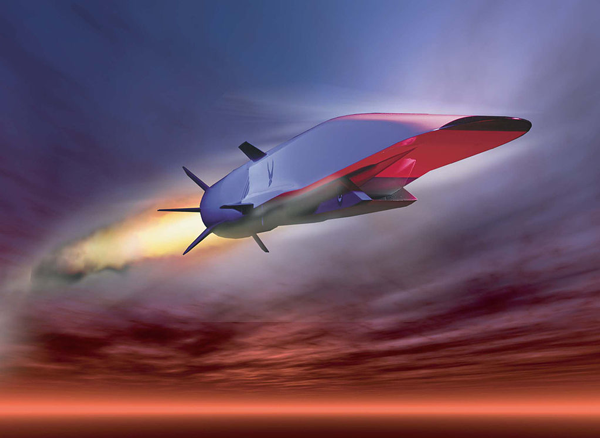
This video talks about scramjet engine and its capability of travelling in hypersonic speed (meaning greater than Mach 5). Joseph Vogel, the Director of Hypersonics of Boeing Defense, Space & Security talks about X-51A WaveRider, an unmanned scramjet powered demonstration aircraft for hypersonic flight testing. The aim of the aircraft is to travel at Mach 6 or 4000 miles per hour. As this aircraft uses its shock wave for adding lift it has been named WaveRider. The X-51A WaveRider has the capability of travelling across the United States in less than one hour. This aircraft is a result of the Waverider program which is run jointly by Boeing, the Air Force Research Laboratory, DARPA and Pratt & Whitney Rocketdyne. This X-51 technology is going to be used in a Mach 5+ missile named High Speed Strike Weapon (HSSW) which is planned to be launched in 2020.
The X-51A WaveRider is chiefly designed to demonstrate various aspects of hypersonic flight. It completed its first ever flight on 26 May 2010 and in June the second test flight took place. With a goal of achieving Mach 6 for 300 seconds, a test flight was conducted in August 2012. But the aircraft crushed after 16 seconds due to some troubles in the control fin. After all these failed attempts, X-51A completed its first successful flight on May 1 2013. In that flight X-51A achieved hypersonic speed above Mach 5 for 210 seconds.
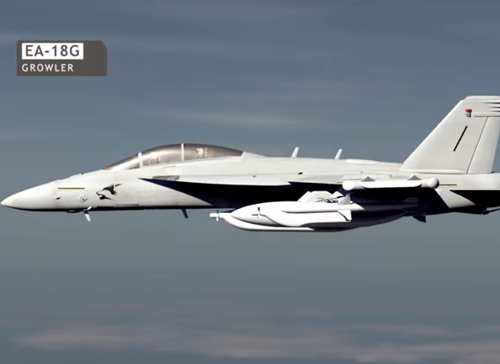
This video introduces Boeing EA-18G Growler. Scott Radke, the Avionics Integration Engineer of EA-18G Program is seen taking about Boeing’s new electronic warfare aircraft EA-18G Growler.
Boeing EA-18G Growler an American electronic warfare aircraft developed for the United States Navy. It is a customized version of combat proven Boeing F/A-18F Super Hornet incorporating more developed AEA avionics for enhancing SEAD (Suppression of Enemy Air Defenses) capability and performing non-traditional electronic attacks. The chief feature of Boeing Growler is that it is capable of jamming enemy radars and thus effective in helping aircrews to reach targets without being detected.
Boeing Growler is capable of encountering enemy air defenses by using pre-emptive as well as reactive jamming techniques. Along with its capability of being greatly effective for stand-off jamming missions, it is also capable of performing escorting role with the agility and speed of the Super Hornet. With its uninterrupted communications and advanced situational awareness Boeing Growler is capable of achieving effective integration with ground operations than before. The use of Advanced Electronically Scanned Array (AESA) radar, air-to-air missiles and digital data link provide the aircraft with self-protection capability and makes it effective for target identifications and prosecution as well.
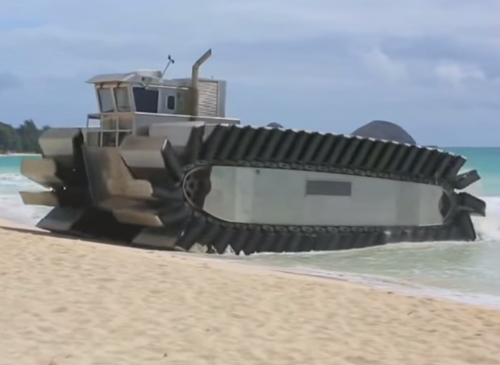
The video displays a prototype of US Marine Corps’ new amphibious vehicle UHAC (Ultra Heavy-lift Amphibious Connector) at its demonstration in Hawaii on 11 July 2014 during a Marine Corps Advanced Warfighting Experiment during RIMPAC 2014. In this demonstration the prototype of UHAC carries an assault vehicle from Rushmore to the shore.
Developed by the Office of Naval Research and Navatek Ltd., this amphibious vehicle is capable of travelling both on sea and land and meant to replace US Marine Corps’ Landing Craft Air Cushion which is being used in operations for more than 20 years.
This prototype is a half-scale version of the full scale UHAC which is made of aluminum and air-filled blocks of foam for giving the vehicle appropriate propulsion. The prototype is 13 metres (42 feet) long, 8 metres (26 feet) wide and 5 metres (17 feet) high. The full-scale UHAC is going to be much bigger and will be able to carry more loads than this half scale prototype. The final UHAC would be 25 (84 feet) metres in length, 10 (34 feet) metres in width and will have a range of 320 kilometres (200 miles). It will be capable of carrying up to 200 tons weight at the speed of 40 kilometers (20 miles) per hour and will be able to scale 3 meters ( 10 feet) high obstacles like sea walls.
In this video John Schibler, the Boeing Chief Engineer of US Attack Helicopter Programs talks about the effectiveness of Boeing Defense, Space & Security’s newest model of Apache helicopter, AH-64E Guardian and tells how it acts as a safeguard for the soldiers serving on the ground.
Apache AH-64E Guardian like all the previous models has two engines, four blades and carries one pilot and one co pilot gunner. With a speed of 164 knots and range of 250 nautical miles it carries an aerial rocket system, automatic gun of 30 mm, hellfire missiles and an M239E1 chain gun. It is different from its predecessors in many ways. Not only it flies farther and faster than other Apache models but also it has more enhanced communication systems. The main feature that makes it different from others is that it is inter-operable with unmanned aircraft systems that enables the pilot to control the UAS sensors, weapon system and flight path (meaning it can control UAVs from the cockpit).
Apache helicopters are evidently known as deadliest helicopters for their destructive features, but Apache Guardian is more than that. Its “eye-in-the-sky” technology makes it yet more effective to keep the soldiers safe. It is capable of seeking and eliminating threats that otherwise would have remained undetectable and therefore makes it easy and safe for the soldiers to complete their assigned missions. So the name “Guardian” aptly suits this newest model of Apache as when it is around, the soldiers can have a breath of relief.
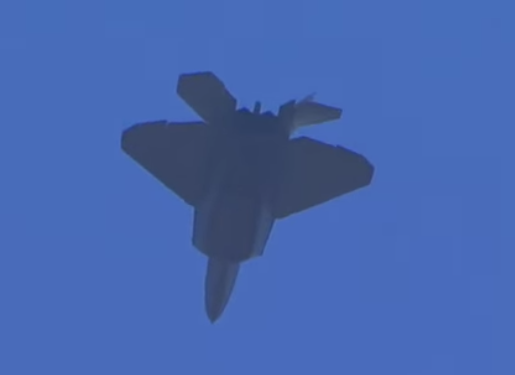
This video shows a demonstration by F-22 Raptor fighter aircraft on the third and last day of MCAS Miramar Air Show, 2012 held at Miramar, CA from 12-14 October.
MACAS Air Show is an air show that Marine Corps Air Station (MCAS), the home of Third Marine Aircraft Wing puts every year with a view to showcasing the air power of US Marine Corps. F-22 Raptor is a double-engine, single seat and all weather stealth mode enabled fighter aircraft primarily designed for the United States Air Force.
In this video, the F-22 Raptor demonstration has been shown with the whole process. The demonstration has been performed by Major Henry “Schadow” Schantz. The process of the demonstration starts with the starting up of the engine. Then after completing the control surface test the aircraft taxies and with the take- off, the demonstration starts. Major Henry ”Schadow” Schantz performs a solo demonstration which showcases the supersonic speed and other features of F-22 Raptor. After completing the solo demonstration, the F-22 joins a P-51 Mustang for the United States Air Force (USAF) Heritage Flight. In the Heritage Flight the two fighter aircrafts represent separate eras of operations. The fly-past is accompanied by the heritage flight song “We Remember” by Dwayne O’Brien.
A retired US Marine protests President Obama’s decision to trade five high level Al Qaeda terrorist detainees for Private First Class Bowe Bergdahl who allegedly deserted his platoon. Bergdahl was reported to have carefully meditated about his departure, mailed back his belongings while on duty, and purchased an AK-47 rifle which he took with him when he left, along with water, knives, a journal, a compass, and a digital camera.
The video takes place in Parris Island – the former Drill Instructor and US Marine Corps veteran in the video protests against the trade made partly in uniform, and wearing a Drill Instructor’s cover. He stands cradling the American flag in his arm and a campaign sign in his hand, but is apprehended by the Sgt. Major. The former DI tells the Sgt. Major not to get loud at him and insists that he can do what he wants since he isn’t a marine anymore.
As the argument escalates, the former Drill Instructor’s hat falls off his head and is confiscated by the Sgt. Major. No fists were thrown, and the Sgt. Major drives away from the enraged Marine veteran.
Aaron Jacobs, a clerk at a local gas station, evades an attack from a man who attempted to rob the store he was tending to one night. Armed with a 12-inch blade in his hand, he moves slowly towards the man behind the counter but his sneak attack is quickly countered by the store clerk who turns out to be a former Marine Combat Instructor. The store clerk apparently is a Karate black belter, and has had more than 25 years of training.
The not so off guard store clerk knocks the blade out of the attacker’s hand and is smoothly able to subdue him in an arm bar submission, he then rams his attacker into a rack and sends him running out the door for dear life. The would-be victim remained unscathed, other than a few cuts from the struggle with the knife.
After what went down, he dismisses the whole incident as a fluke and keeps his faith in his quiet neighborhood. And at the end of the brawl, this store clerk was more interested in the welfare of his cigarette and chips rack more than anything else.
Surprising news show that for years, Mexican soldiers have been passing U.S. borders into Arizona and other nearby states. The numbers, when tallied, suggest that these foreign troops have entered the U.S. soil at least 300 times already. Additionally, the events are becoming more and more alarming because of the rogue soldiers that are able to pass the country lines.
These rogue soldiers have been known to threaten U.S. federal agents when pursued. Reports say that their excuse was that they were on the tail of a drug deal lead, but there is no concrete evidence to support their alibi. Along with being hostile towards United States’ officers, the rogue soldiers that are being able to pass into the country have allegedly shot at a number of citizens, causing alarm and even injury. A young man named Javier Jose Rodriguez was reportedly shot by rogue members of the Mexican Army, leading to increased distress in the area.
However, it seems that no one has been investigating the root of the problem. Even if handfuls of these rogue soldiers have been threatening innocent citizens and federal agents, the government is silent. A senator has asked for answers for the events, but no reasons or theories have been presented yet.
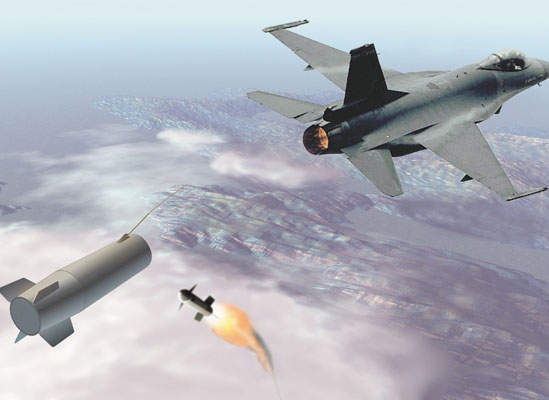
The ALE-50 Towed Decoy system, also known as “little Buddy,” is a state-of-the-art defense system designed by Raytheon. The main objective of the system is to create an effective countermeasure to defend American aircraft against radar-directed missiles. This anti-missile countermeasure decoy system is currently used for different U.S. Air Force, Navy, and Marine Corps aircraft, in addition to some other air forces.
The system has been used in various combats, where the ALE-50 Towed Decoy System successfully demonstrated its effectiveness in thwarting enemy missile attacks. Thus, there is now very little skepticism about what the “Little Buddy” can do.
Development of the ALE-50 Towed Decoy System
The ALE-50 Towed Decoy System is the fruit of collaboration of an integrated product team containing experts from Raytheon, the U.S. Air Force, and the U.S. Navy. The team worked on this groundbreaking concept at a Goleta, California facility.
The first deployment of the system dates back to 1995. Nonetheless, the system is currently used on multiple aircraft that include the F/A-18E/F Super Hornet and the B-1B Lancer. Further, The system has also been incorporated into the innovative ALQ-184(V)9 ECM pod. This integration has helped the system become more vigilant towards threats, and it has also enabled it to be ready to be used on numerous platforms.
An F/A-18F Super Hornet aircraft assigned to Strike Fighter Squadron One Zero Two fuels an F/A-18E Super Hornet aircraft from Strike Fighter Squadron Two Seven during exercise Malabar 07-2 while over the Bay of Bengal Sept. 7, 2007. More than 20,000 personnel from five different countries are participating in the multinational exercise that includes naval forces from India, Australia, Japan, Singapore and the United States. (Photo credit: Wikipedia)
Capabilities
If the ALE-50 Towed Decoy System has been in service for more than ten years, now, it’s because it has efficaciously demonstrated its wide range of capabilities. When employed, the system shields the aircraft and crew against guided missiles (surface-to-air and air-to-air missiles). The system lures the missile toward a more attractive target and away from the intended one. The decoy that the system utilizes is used when required and cut free before landing. The “Little Buddy” offers the possibility of being operated manually as an independent device. However, it can also be incorporated and controlled by the ALE-47 Airborne Countermeasures Dispenser System (made by BAE Systems).
In 1999, the ALE-50 Towed Decoy System was tested in Yugoslavia. The results were reportedly very encouraging. Hence, Air Force Officials reported that the system locked down and diverted 10 of 30 surface-to-air missiles that had been fired at B-1 bombers in different parts of Yugoslavia.
United States Government Accountability Office (GAO) confirmed that planes that have the ALE-50 Towed Decoy System installed in them are more likely to escape fatal enemy attacks. In a report to Congressional Committees in 1997, the GAO expressed its satisfaction regarding how this system improves survivability, and stated that test results indicate the ALE-50 Towed Decoy System, “offers improved effectiveness against radar-controlled threats.” Based on these results, the GAO recommended further use of the system on other platforms such as the F/A-18C/D that the Navy uses.
As far as the specifications of the ALE-50 Towed Decoy System are concerned, the system is equipped with a launch controller, as well as a launcher that is usually installed on the plane’s wing pylon, in addition to one or more expandable towed decoys, which has a shelf-life of ten years.
When speaking about the ALE-50 Towed Decoy System, Pat Hurley, vice president and general manager of Raytheon Electronic Warfare Systems, reiterated that, throughout its 50 years of existence, the company has always been concerned with developing its systems in order to provide the military with high-performing products. In this regard, Hurley added that the permanence of the company’s business and of the ALE-50 Towed Decoy System is a valid testimony to the company’s “high-performing products,” as well as its “laser-like focus on serving the customer.”
ALE-50 Towed Decoy System – Pricing
Many experts consider Raytheon to be a leading provider of systems that offer pilots with the most precise information available. With its $22 billion of sales in 2005, the company is also regarded as a leader in defense systems, information technology as well as business and special mission aircraft. The company has a workforce of about 80,000 deployed throughout the world.
Raytheon manufactures and sells the ALE-50 expendable decoy at $22,000 per unit. In October 2010, the company made a delivery of its latest production run (1,048 units). The total number of units that Raytheon has produced is estimated at 35,000 units, increasing the company’s sales to more than $500 million.
Soaring OVER THE PACIFIC OCEAN — A B-1B Lancer drops back after air refueling training Sept. 30. The B-1B is deployed to Andersen Air Force Base, Guam, as part of the Pacific Command’s continuous bomber presence in the Asia-Pacific region, enhancing regional security and the United States commitment to the Western Pacific. The B-1 is from the 28th Bomb Wing, Ellsworth AFB, South Dakota.http://www.af.mil/photos/index.asp?galleryID=12&page=2 (Photo credit: Wikipedia)
Issuance to the Military (Quantities)
Raytheon has now produced 25,682 units of the system. All of the units have been purchased by the US Department of Defense at a cost of $500 million ($22,000 per unit). The system was initially installed on F-16s only with plans of implementation on other platforms. Therefore, these plans have been carried out systematically and have now been completed successfully. Thus, the “Little Buddy” is currently installed on the B-1B bombers and F/A-18 aircraft.
In 2005, Raytheon received a production contract from the US Navy and the US Air Force. In late 2006, The US Air Force granted the manufacturing company a production contract for 862 decoys worth $21 million.
Use in War:
The system’s adaptability and reasonable cost enables it to be installed on a variety of aircraft. Thus, the ALE-50 Towed Decoy system now functions on many aircraft such as the F-16, F/A-18E/F, and B-1B aircraft.
The usefulness of the system has been proven in many situations. ALE-50 Towed Decoy System has shown its capabilities in every major war in which it was deployed. For instance, it considerably helped improve the survivability of aircraft and their crews in places like Kosovo, Afghanistan and Iraq.
In this regard, Col. Art Huber, commander of the 542nd Combat Sustainment Group at Warner Robins Air Logistics Center, which is in charge of the ALE-50 praised the ALE-50 Towed Decoy System by saying that it is “credited with numerous aircraft saves,” and that “our pilots depend on it.”
Final Analysis of the ALE-50 Towed Decoy System
The “Little Buddy” is probably the best countermeasure in use, right now. Tests and actual use in wars have proven its efficacy. The ALE-50’s suitability and interoperability with other B-1B systems when installed in the B-1B bombers have been quite a success. Furthermore, the pricing is very encouraging, and the quality/price ratio has been a determining factor in making the system a must for every aircraft in service. This is why, many pilots who have been to war in different parts of the world have communicated that the ALE-50 Towed Decoy System has been critical in saving them and their aircraft from the dangers of guided missiles.
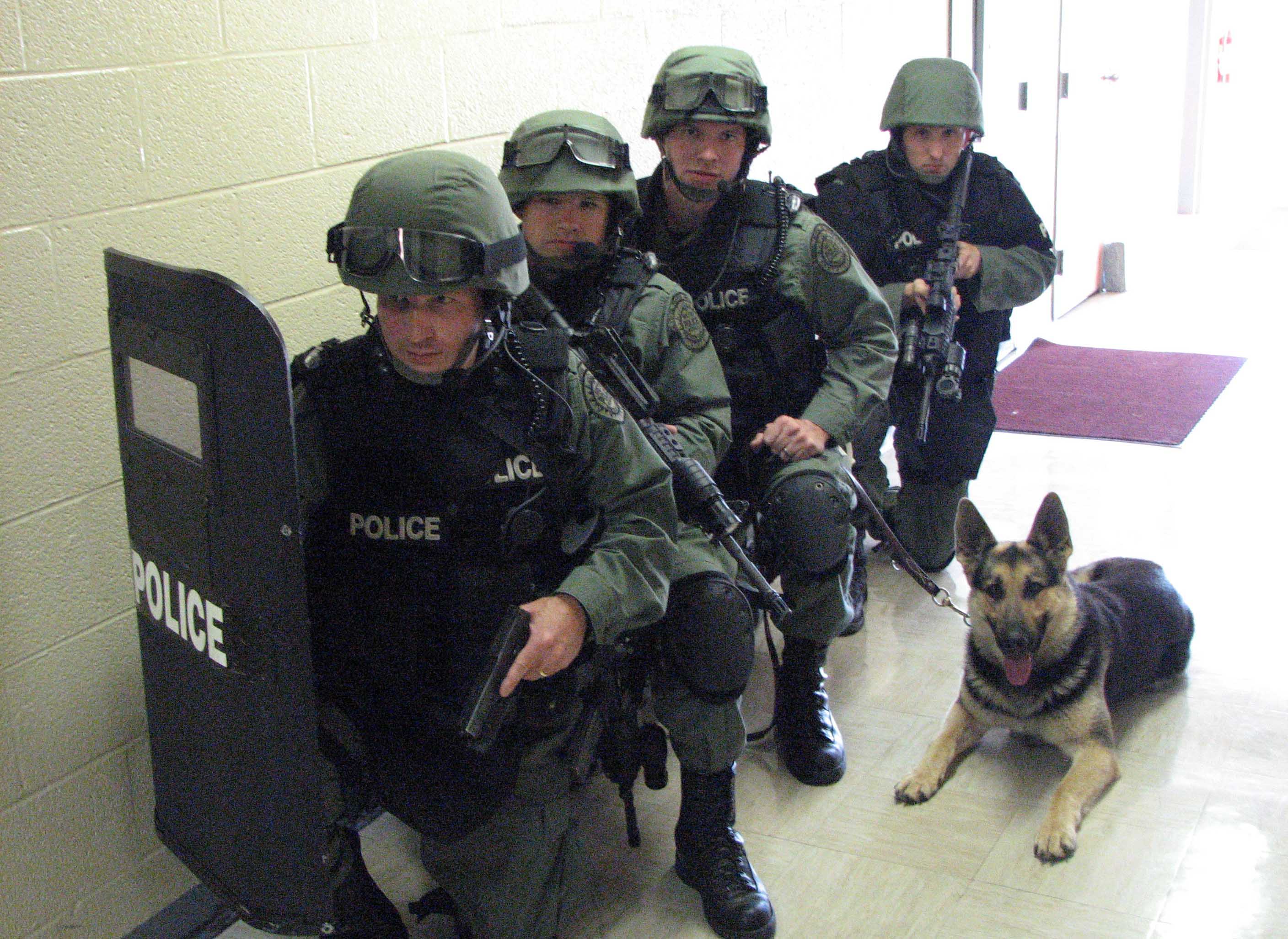
A SWAT team is called in to find someone who has allegedly been sending threats to their police chief Billy Bolin. The Evansville team follows protocol during the mission, working quickly and thoroughly, and communicating constantly the whole time.
They exit the vehicle and swiftly make their way to the house, everyone dressed in full gear. They then separate to find entrances and the main point of view follows the man on the way to the front door. While shouting and trying to explain that they are police and are simply following orders, they break into the house by smashing the glass door.
The team then enters and is almost immediately faced with a surprise: the first person they find is a young girl, whom they handcuff. Their second and only other arrest is an old woman whom they also handcuff. The elderly woman graciously leads them through the back door and out at the side, all of them exiting the house with the girl in tow. The man then reenters the house and laughs with his mates because they have realized that they had probably just raided the wrong house.
This is a ridiculous situation where they didn’t vet the owner of the house or the address. They need to do more mission analysis prior to doing such a raid on US soil.
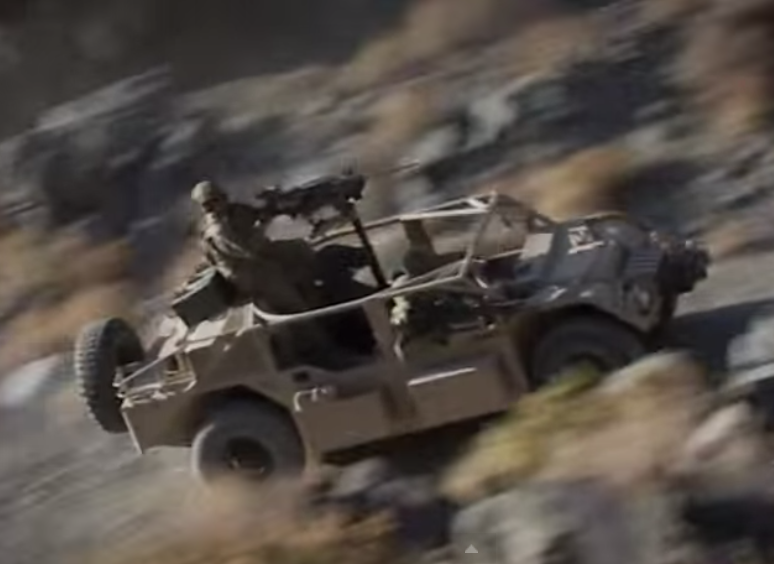
General Dynamics just released the new Flyer Advanced Light Strike Vehicle (ALSV). The ALSV is a reliable vehicle with innovative features and is created almost specifically for use in the most unforgiving terrains.
The Flyer can be transported to almost any combat zone because of its high trans-portability, which means that cargo planes can carry the strong vehicle. It’s made for the soldiers who are looking for numerous gun mounts on their vehicles, along with speed and maneuverability. The Flyer is perfectly capable of passing through rugged terrain, and can make every mission seem a little bit easier.
The vehicle can be modified according to your every need, and can be used in almost any way necessary. This means that it can be used for anything, from ambushes to rescue missions, simultaneously. It comes with an armored variant for greater protection, and every modification made on the car does not hamper its ability to be driven effectively.
With the Flyer Advanced Light Strike Vehicle, improved transportation comes without any loss of firearm compatibility, speed, or even maneuverability. Instead, you receive innovations for mission vehicles, such as a number of applicable modifications and high trans-portability, but at the same time it is practical and definitely usable.
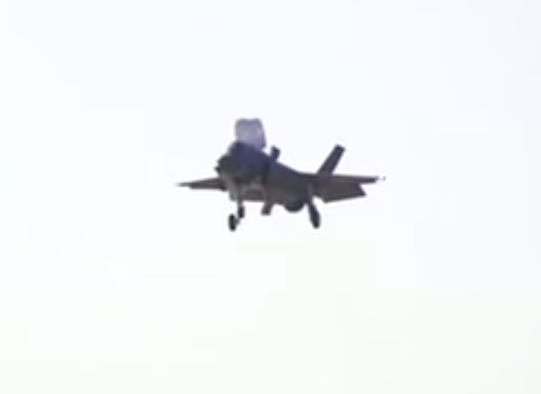
The video captured the first ever hover performance of a B-model aircraft at the Fort Worth, Texas. The aircraft was named F-35B, which aside from having the capability to hover like a helicopter – as demonstrated in the video – also features a short takeoff/vertical landing (STOVL) ability. The aircraft’s predecessor models were modified to better satisfy more modern security needs, and in order to allow it to operate on other landscapes, on or off land.
The STOVL operation of the aircraft works on the Rolls-Royce patented shaft-driven LiftFan system, paired with an engine with a 90 degree swivel feature during short takeoff/vertical landing mode. The said Rolls-Royce LiftSystem is the first ever to facilitate Short Take Off and Vertical Landing operations for fighter jets. The aircraft is able to be propelled vertically by a 3BSM which can easily swivel ninety-five degrees in two and a half seconds, managed to direct up to 18,000 pounds of engine exhaust towards the ground, sending the vehicle upwards.
All mechanisms come together in this jet and work together like a perfectly oiled machine. It allows for easy piloting and a quick response time, all with easy controls like switching to STOVL mode with a simple press of a button.
Between 1930 and 1970, asbestos was used heavily in several areas of the US Army, US Air Force, and the Marine Corps and mostly in the US Navy, over the years, resulting in mesothelioma Navy veterans. Millions of people who served in their respective military units were exposed to asbestos over the legal permissible limits. In fact, for most of the period, the hazard of asbestos was not even known, meaning that for quite a time during this period, there were no threshold limits to asbestos exposure at all. It was in the early seventies that asbestos began to get banned from use in various fields. But the damage had already been done. And, here is the fatal twist in the tale of asbestos exposure by Navy Veterans.
The symptoms of excessive exposure to asbestos manifest themselves after decades. So, even if a person were exposed to asbestos during the course of their service tenure in the armed forces, the symptoms of any asbestos-related disease would only appear several years after they returned to civilian life. This occurrence has led to numerous court cases featuring Navy veterans.
English: Mesothelioma of the left lower lung. (Photo credit: Wikipedia)
There are restrictions imposed on military personnel and their families who seek compensation from the US armed forces, by law, specifically outlined on the “Feres Doctrine”. Due to this reason, there is very little public information regarding mesothelioma claims for navy veterans. Although some cases have been cited, there is no specific information available, and usually names and dates are not publicized.
However, there was a recent case which came to light, where a law firm by the name of Weitz & Luxenberg managed to get a sizeable settlement for a Navy veteran from 26 companies who had supplied asbestos material to the Navy. The specific details are not available, but the amount that the court instructed to be awarded to the family of the Navy veteran who died in 2011 was a total of $10 million.
Although Navy veterans are unable to enter into litigation against the US Navy, it is possible to get a settlement through the Department of Veteran Affairs, VA. There is great activity in the in the area of VA compensation, and we highlight later in the article the benefits that are available from this department for Navy Veterans afflicted with asbestos-related diseases and how one can avail of these benefits.
An aerial view of the decommissioned aircraft carrier USS Ranger (CV-61) in a graving dock at the shipyard Long Beach Naval Shipyard, California (USA), on 6 October 1993. Moored in the background are the amphibious assault ships USS Essex (LHD-2), left, and USS Tarawa (LHA-1), right. (Photo credit: Wikipedia)
History of Asbestos Exposure in the Navy
By the 1970s, the hazards of exposure to asbestos became known and its use was discontinued on naval vessels. However, the vessels still continued to be used, and the Navy personnel onboard those ships continued to be exposed to this hazardous substance. This was further exacerbated during the process of renovation or demolition of these ships. Boilermakers, boiler tenders and boiler technicians were considered to be the highest risk group, due to the excessive use of asbestos in boiler rooms.
Another high-risk group was the sailors who slept in bunks beneath pipes that were covered with asbestos. Over an extended period, these men would have inhaled very high levels of asbestos.
High reliance on asbestos for building materials during the early years is another cause for concern. For example, residential naval quarters in Klamath County, Oregon were built using a high volume of asbestos sheets. In 2011, the EPA declared these quarters as asbestos contaminated.
VA Medical Center in Long Beach, California (Photo credit: Wikipedia)
Free Help is at Hand with the Department of Veterans Affairs
The US Department of Veterans Affairs has a dedicated Mesothelioma Center where VA-Accredited Claims Agents are available to give free advice and assistance on Mesothelioma claims. These agents are retired Navy officers, so they have a good grasp of the ins and outs of VA claims with a specific focus on Mesothelioma cases. These agents provide an effective bridge of communication between Navy veterans, their families and the VA. This speeds up the process of getting VA claims under way.
How do I file a VA Claim?
The best way to file a VA claim is to log on to benefits.va.gov and follow the steps to file a VA Claim. You need to follow the steps mentioned below, to ensure that your claim is valid.
First, you will need to document your service, get your medical records, document any doctor visits you have taken, and ensure you have all your Navy documentation showing the ships you served on.
Then you should seek one of the representatives at the VA mentioned on their website (above), or go to a VA Hospital near you to help you to file your claim.
Once you tried all of these and if you are still having trouble, you could always Google a mesothelioma claim lawyer to help you. But they don’t come cheap and will take a good chunk of your benefits over the next few years.
Social Security Benefits for Mesothelioma Navy Veterans
If a person has made payments to Social Security and has been diagnosed with mesothelioma, they will be able to get Social Security benefits. The condition is, however that they should not already be taking retirement benefits from Social Security. Several claims are reviewed individually, but in the case of Mesothelioma, the disease is considered to be severe enough to receive Social Security benefits without much delay.
Mesothelioma Benefits from Medicaid
Medicaid is another viable source of getting benefits for those suffering from Mesothelioma. Medicaid is usually applicable to the lower income bracket, but then, a major chunk of retired Navy personnel do come under this category. Your VA disability and any other entitlement programs you receive typically do not count toward your income when calculating Medicaid income thresholds. The process for claiming Medicaid assistance is quite similar to that involved in claiming Social Security benefits.
Conclusion
So, in retrospect, it becomes quite clear that even though this deadly disease, mesothelioma manifests itself literally decades after the last exposure to asbestos, there are sufficient legal channels for getting assistance and be awarded a settlement. Hence, Navy veterans who fall ill to mesothelioma and their families should not lose hope, as help is at hand and by following these basic guidelines, it will pave the road for a settlement.
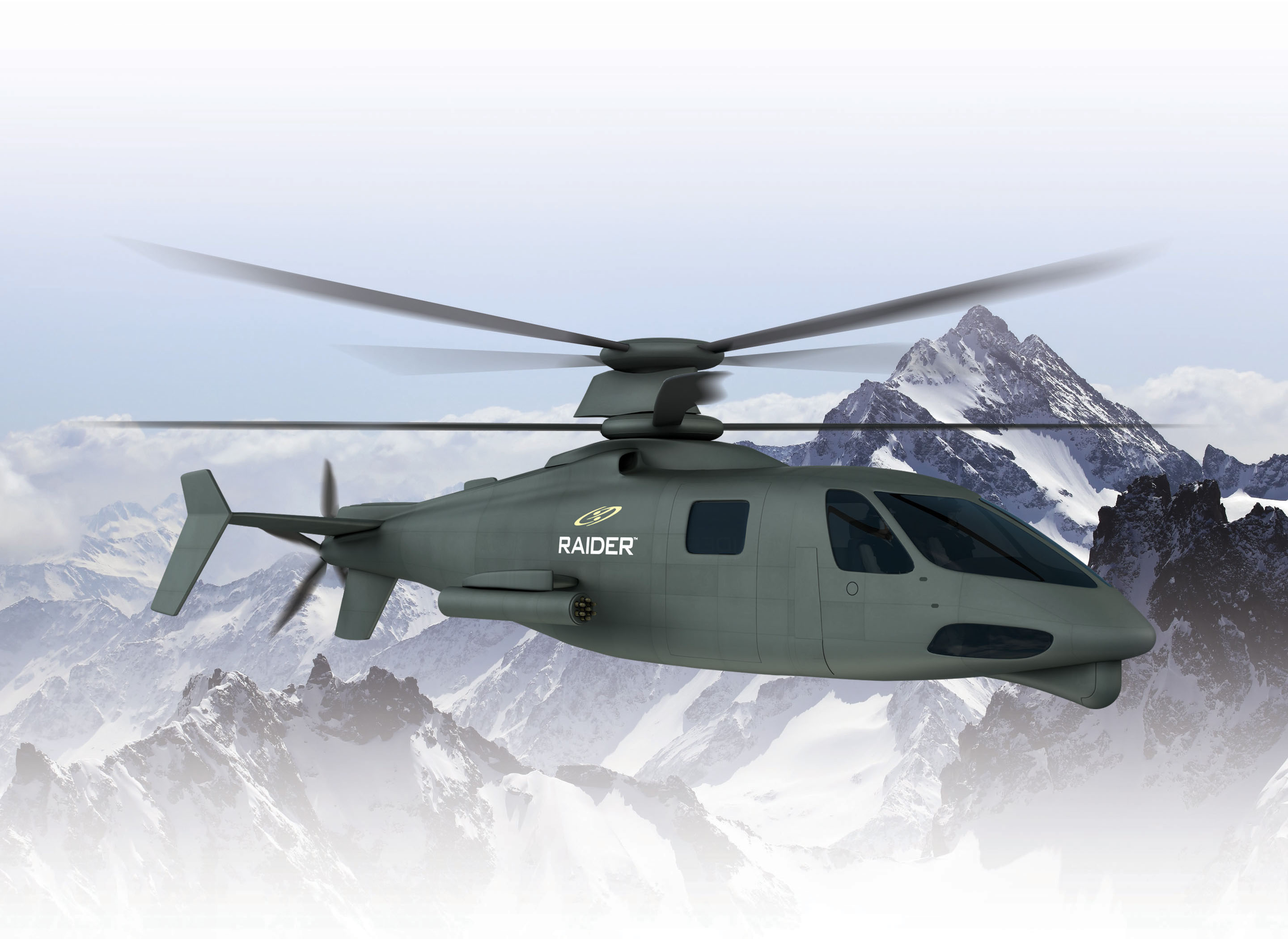
In March 2010, the Armed Aerial Scout program made a request for information for an advanced helicopter, and the result was the Sikorsky S-97 Raider as proposed by Sikorsky. Four years later, the company finally unveiled the first full production model of the groundbreaking scout and attack helicopter in the company’s facility in West Palm Beach, Florida.
The objective set for the new aircraft is to replace the army’s OH-58D Kiowa Warrior. However, specialists think that if the manufacturer’s claims about the Sikorsky S-97 Raider capabilities are true, it is almost certain that this helicopter’s reach will grow to cover a much wider audience. For instance, if the Sikorsky S-97 Raider proves useful, it might be used to replace other US Army military helicopters such as the MH-6 Little Bird used by the U.S. Special Operations Command. In addition to its expected military roles, The Sikorsky S-97 Raider could also be adapted to carry out civilian missions.
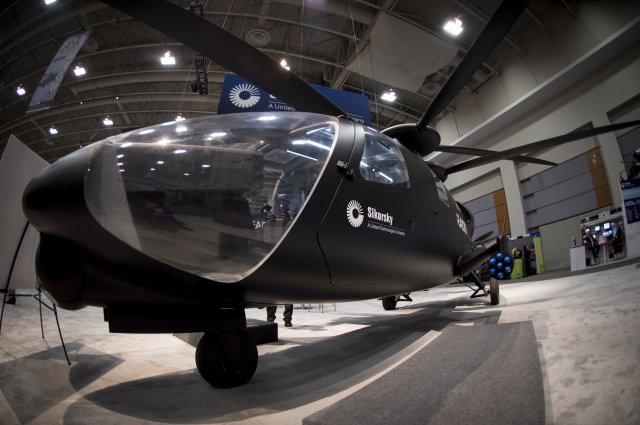
Sikorsky Raider at AUSA
Cost of the Sikorsky S-97 Raider
Up to now, Sikorsky and its various suppliers have invested in as much as $200 million on the two first prototypes of the helicopter. The company hopes to be able to produce this revolutionary helicopter at $15 million per unit.
The Sikorsky S-97 Raider is set to fly for the first time on December 2014. However, the aircraft’s first flight and its first demonstration of capabilities won’t take place until mid-2015.
Sikorsky S-97 Raider Design
Design is one of the most eye-catching attributes of the Sikorsky S-97 Raider. Being a compound helicopter, the Sikorsky S-97 Raider includes variable speed coaxial main rotors and a variable pitch pusher propeller. The helicopter is large enough for 6 passengers to fit in, and the side-by-side cockpit can contain two pilots. However, the S-97 is also designed so that it can fly autonomously.
Sikorsky UH-60M Black Hawk, Radom 2007 (Photo credit: Wikipedia)
As far as the engine is concerned, it is based on the Sikorsky X2 demonstrator. Until now, The Sikorsky S-97 is equipped with the same engine used in the UH-60M Black Hawk. Nonetheless, the company foresees the development of an improved engine for its new helicopter.
Key Dates
Here is a timeline of the key dates since Sikorsky first launched its X2 Technology Demonstrator in August 2008. These key dates are in conformity with the information provided by Sikorsky on their Sikorsky S-97 Raider website.
August 2008: X2 Technology Demonstrator™first flight
September 2010: X2 Technology Demonstrator reaches 250 knots
October 2010: S97 Raider™ launched
July 2011: X2 Technology Demonstrator final flight
January 2012: Initial Raider supplier team announced
March 2013: Raider Critical Design Review completed
September 2013: Raider aircraft #1 delivered, airframe final assembly begun
January 2014:Raider Systems Integrations Lab (SIL) fully operational
May 2014: Raider electrical power on achieved
October 2014: Raider Rollout Ceremony
December 2014: Raider first flight
2015:Raider flight test and Raider capability demonstrations
General Characteristics
The Sikorsky S-97 Raider has a capacity for six troopers including up to two pilots. The space inside the helicopter can be adjusted according to needs. Thus, if need be, the space in the cockpit of the aircraft can be used to store additional equipment or ammunition.
According to the information disclosed by Sikorsky, the S-97 Raider is 36ft long and weighs 8,945 lb. Its maximum takeoff weight is 11,400 lb. It is equipped with one General Electric YT706 powerplant, and its main rotor diameter is of 34 ft. The aircraft is 6-bladed variable pitch and clutchable pusher propellers.
Sikorsky S-97 Raider Performance
The S-97 has a staggering Never exceed speed of 276 mph (240kn), and a cruising speed of 253 mph (200kn) external weapons included. The weapons include 50 cal guns w/500 rounds and a seven shot rockets pod, Hellfire missiles and 2.75” rockets. The range exceeds 600 km, and it has an endurance mean of 2.7 hours on standard fuel. In addition, the S-97 is also capable of aerial refueling.
An OH-58D Kiowa Warrior from 1st Battalion (ATTACK), 25th Aviation Regiment, 25th Infantry Division (L), “Lightning Attack”, patrols the skies over , . Lightning Attack deployed from Schofield Barracks, Hawaii to Iraq in January and is conducting aerial reconnaissance, close combat attacks and security missions for the 1st Armored Division and the 1st Cavalry Division in support of Operation Iraqi Freedom. (Original caption) (Photo credit: Wikipedia)
Comparisons
As a matter of fact, the new and futuristic Sikorsky S-97 Raider is produced in order to replace the army’s OH-58D Kiowa Warrior, an aircraft that has been in service since the 1960’s and which has been used in many wars by the US Army such as the Iraq and Afghanistan wars. Thus, while, there are some similarities between the two helicopters, the Sikorsky S-97 Raider is clearly much more advanced at all levels.
In his article published in The Aviationist website, David Cenciotti compares the new Sikorsky S-97 Raider with the “mysterious stealth” aircraft that was used in the raid on Osama Bin Laden.
Cenciotti states, “it is safe to believe that Sikorsky has embedded some of the features developed for the secret, radar evading US Army Stealth Black Hawk used by the Navy SEALs at Abbottabad in May 2011,”
Future Plans for the Sikorsky S-97 Raider
Sikorsky seems to be leading the way and setting an example to other companies on how to get things done. Not only does Sikorsky build state-of-the-art machines, but it also invests in future development opportunities. For example, as recently as in May 2014, Sikorsky won a U.S. Navy deal for the President’s Marine One helicopters. According to Reuters, the company “won an initial $1.24 billion contract to develop and build six new U.S. presidential helicopters, the first step toward a fleet of 21 new aircraft by 2023.”
Other future plans of the company include teaming up with other leading companies such as Boeing and Aurora Flight Sciences to manufacture new aircraft. In addition to all these recent successes, Sikorsky and Boeing have also been chosen to work hand in hand in order to produce the SB>1 Defiant, which is a “medium-lift-sized demonstrator.” The demonstrator is built for Future Vertical Lift and is expected to fly in 2017 as advanced by Sikorsky in a press release.
Final Thoughts
It is probably safe to say that during its 90 years of existence, Sikorsky is now stronger than ever. The rumors about the company’s divestiture have calmed down especially after the company was awarded a $1.24 billion deal to build the presidential helicopters. Therefore, although the Sikorsky S-97 Raider is one of the least revenue generating units belonging to United Technologies, the company isn’t thinking about selling it or spinning it off.
If Sikorsky continues its innovative efforts, it will eventually find more and more reliable customers than the US Army. This idea of using helicopters for civilian duties might be an interesting alternative, and selling the Sikorsky S-97 Raider to American allies could also help widen the company’s business opportunities.
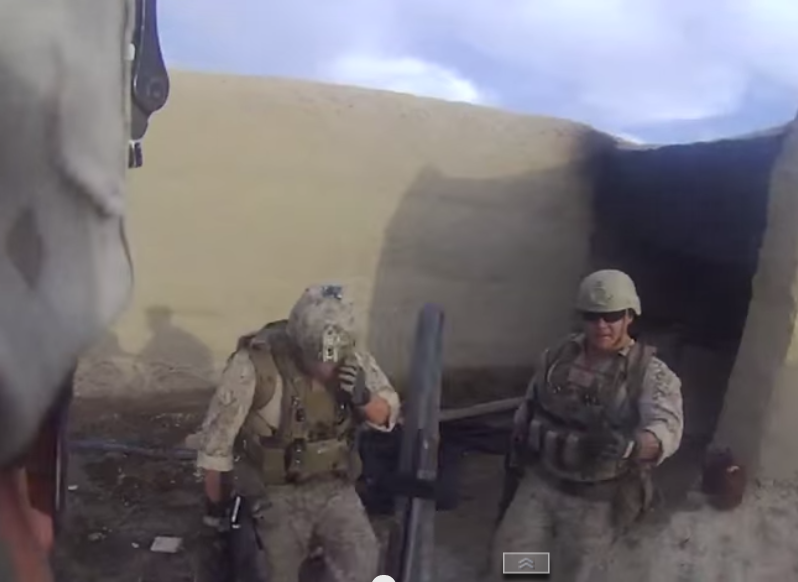
There is a Marine who is counting his blessings today because he survived a head shot from and Afghan Sniper. The Marines were maneuvering on an enemy position. After walking down a tunnel that one would think would be a secure place to go for infantry forces, an enemy round enters the tunnel and hits a Marine right in his helmet. The Marines bound back to a secure location and evaluate the possible injury. Only ears ringing and a minor headache are reported. Then the Marines interrupt the traffic on radio to inform their higher headquarters that there is an enemy sniper out there and everyone needs to be careful. The video ends with one of the Marines saying “let’s do something about this” and it appears they moved out to go kill the shooter.
Lockheed Martin’s Skunk Works division is developing a fusion reactor that is small enough to go on an airplane, yet powerful enough to power a warship or space station. They are calling it the Compact Fusion Reactor, or the CFR. They believe they will test a CFR design in less than a year. If Lockheed Martin is successful, it will revolutionize the use of energy worldwide. Even if it remains expensive, it will still be small enough to power airplanes, space ships, trains, and other forms of transportation large enough to profit from an expensive unlimited power supply. A reactor like this could allow for travel to other star systems or even allow us to easily colonize other planets (from an energy standpoint)
Two concerns that come to mind would be security against terrorism or preventing a Fukushima type situation in a natural disaster. Could you imagine if there was an earthquake and hundreds of these mini-reactors would melt down? If Lockheed can include safeguards and the ability to shut it down on a moments notice or automatically, then there may be hope for civilian use. Others have brought up thorium reactors which are not dangerous at all. But the technology for thorium is not nearly as advanced as the Lockheed Fusion solution.
Here is the video talking about it from Lockheed Martin Skunk Works.
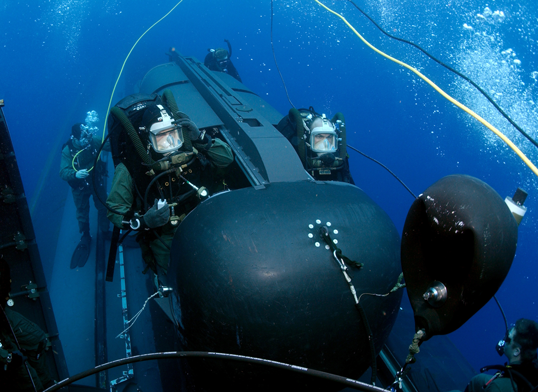
During a promotional video showing multiple Naval ships and assets, the Navy showcases their ability to strike on land in a covert fashion. The Navy SEALs are seen maneuvering a submarine-launched SDV (SEAL Delivery Vehicle). The SDV launches from a Dry Deck Shelter off of the top of a submerged submarine. With these kinds of capabilities at the U.S. Navy’s disposal, there is not type of sea-to-ground requirements they can not accomplish. With this capability, the Navy can literally show up and destroy any target without being detected and by limiting the danger to the SEALs when doing so. A fast boat has nothing on the SDV. Rumor has it that SDVs have been in operation for decades. They were first used starting in 1952 under a different name – “Swimmer Delivery Vehicles”. The SDVs have evolved over the years adding technology and launch capability like the Dry Deck Shelter among other communication, detection-prevention, weaponry, reconnaissance and navigation technology.
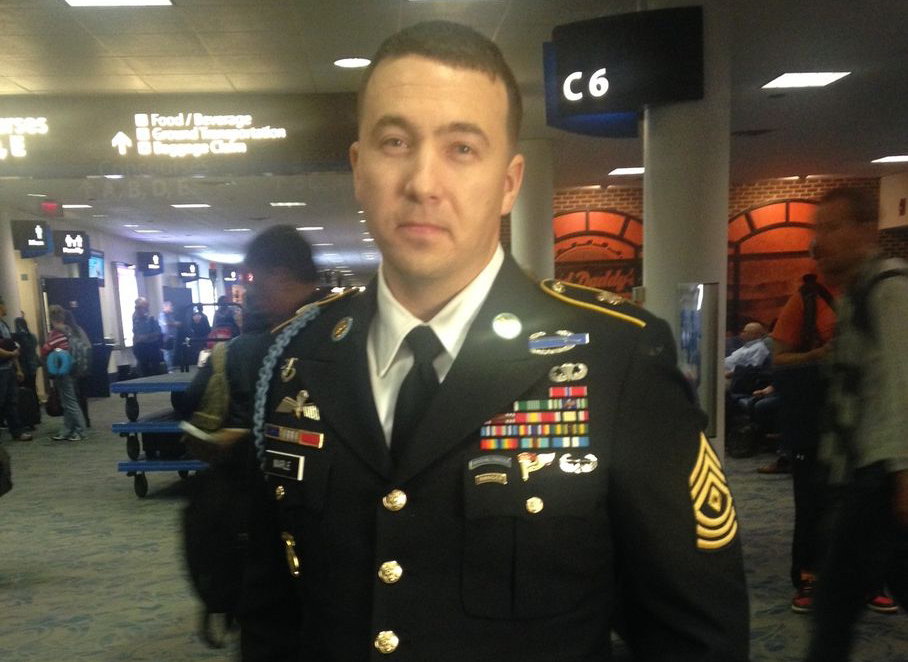
U.S. Airways decided to not hang First Sgt. Albert Marle’s jacket in order to prevent it from being wrinkled on the flight. She refused, citing some bureaucratic red tape policy that only first class passengers get to use the closet. She states that 1SG Marle isn’t one of them and then refused to hang up his jacket. It isn’t like he served his country, put his life on the line, and endured brutal combat in the Middle East so that this flight attendant could live free and be safe. Her exact quote was, “Our airline policy says I’m not going to do it, so I’m not going to do it.”
You can read the official account from WSOCTV who broke the story.
At 6:22 pm ET on October 28th, 2014, a rocket on a resupply mission to the International Space Station took off and subsequently blew up shortly after take off. It is a major setback, especially in light of NASAs recent decision to get rid of the Space Shuttle. The Russians have even issued a statement that they are willing to help us resupply the Space Station. It is a little ironic since the Russians have been posturing to be a super power again. NASA says they will regroup and learn from this experience. Fortunately, it was an unmanned space craft so no crew members were hurt. William Gerstenmaier, one of NASA’s top people in charge of this program, issued a statement:
The following statement is from William Gerstenmaier, Associate Administrator of NASA’s Human Exploration and Operations Directorate, regarding the launch failure that occurred at Pad 0A of the Mid-Atlantic Regional Spaceport at NASA’s Wallops Flight Facility in Virginia during the attempted launch of Orbital Sciences Corp’s Antares rocket and Cygnus cargo spacecraft at 6:22 p.m. Tuesday, Oct. 28.
“While NASA is disappointed that Orbital Sciences’ third contracted resupply mission to the International Space Station was not successful today, we will continue to move forward toward the next attempt once we fully understand today’s mishap. The crew of the International Space Station is in no danger of running out of food or other critical supplies.
“Orbital has demonstrated extraordinary capabilities in its first two missions to the station earlier this year, and we know they can replicate that success. Launching rockets is an incredibly difficult undertaking, and we learn from each success and each setback. Today’s launch attempt will not deter us from our work to expand our already successful capability to launch cargo from American shores to the International Space Station.”
There are several reasons why a person must attend a military online education course instead of an in-class or in person class. They may be posted abroad or working aboard a ship or on some remote location without access to regular facilities for a long period. Hence, with internet access, and with government funding via the Montgomery GI Bill, the GI Bill for the 21st Century and other military online education funding, an online military degree is a possibility today.
Military online education is much more flexible than regular full-time education. The basic infrastructure consists of email, message boards, chat rooms, compact discs and many more multimedia aids. Attending a military online education course for just a couple of hours each day could result in earning a respectable degree within a short period.
Today, there are several colleges that offer military online education, and it can prove to be quite a difficult task to select a college suitable to specific, individual requirements when it comes to distance education. Here we take a look at some of the top colleges which offer military online education, which should help a person in making a suitable choice.
Choosing the Right University
Enrolling for an online degree is not like joining a regular university, where you get to visit the campus, meet the faculty members and even get a guided tour around the campus. You are dealing with people you have never met or may never meet. Due the unknown factor, it is imperative to exercise extreme caution before signing up for a course.
If you are looking for a “military friendly” university, there are some vital issues that need to be addressed. In short, you should check to see if the school has a military culture, whether financial assistance is available if there is enough flexibility and most importantly, whether adequate support services are in place.
You need to ask questions like if classes are held on base or not, are transfer credits from other universities possible and whether active duty students get “in-state” tuition or not. You can visit guidetoonlineschools.com which has an exhaustive list of online universities where you can compare the pros and cons of one against another.
Here, we have filtered the options down to some of the universities that are best-recommended by virtue of their reviews.
Bowling Green State University
This is by far one of the highest recommended online universities. Bowling Green State University offers more than 35 online programs in the various categories of bachelor degrees, master degrees and endorsement programs. There is a dedicated department which looks into matters regarding transfer of existing credits from other universities. The university has an excellent faculty, which has national and international experts who are available to distance education students whenever required.
Reviews
The feedback received about this university is that because it is not too huge, personalized attention is possible for each student. According the EDU in Review, “BGSU offers distance education, which is an innovative form of education where technology is used to facilitate the learning process via the internet.”
Capella University
Here is another university offering various degrees in business, technical and criminal Justice, as well as in homeland security. Capella University got mentioned in the G.I. Jobs Magazine in 2010. It was categorized as a Military Friendly School. The State of Minnesota has named Capella University a “Yellow Ribbon” organization. Therefore, a person with a military background will be comfortable in pursuing a degree from this university.
Reviews
This university has some rather good reviews on the internet. The consensus is that the courses are challenging and on par with the level of difficulty faced while pursuing a full-time course. There has also been a good amount of positive feedback from housewives who wished to pursue their higher studies after having a family. An anonymous poster on onlinedegreereviews.org, “Am loving my Ph.D. and so proud that Capella is my alma mater!”
Colorado Technical University
This university offers technical and business degrees with the addition of criminal Justice and security. The Colorado Technical University does not offer the range of degrees that some other universities offer, but it makes up for this shortfall with the degree of specialization that is offered under each course. It is, however, a military friendly institution.
Reviews
The reviews on Colorado Technical University are largely positive. Of course, there are a few negative ones as well, but positive reviews seem to out-rank the negative ones. Says police officer Matthew Vincent Blackstock, “I really enjoyed my time there and it assisted me in obtaining a position as a Criminal Investigator in a State Police agency in Texas”.
Drexel University
This university has conducted online education programs for over ten years, now. If you want to specialize in business technology, Drexel University is the place to go. However, the quality of degrees offered in general studies, criminal justice, education and communications are also superb. It is also possible to study for certain offbeat degrees like property management. Drexel University has a very good reputation for its professionalism and is highly respected among business circles.
Reviews
It has been pointed out that this university is expensive, but then, it has also been stressed that it is a highly professional institution with well-qualified instructors. The negative feedback is that the faculty is rather old-fashioned, but those who were able to adjust to the teaching culture had an overall good learning experience.
University of Massachusetts
The University of Massachusetts is a well-known university has a remarkably vast range of distance education programs to offer. Not only does the University of Massachusetts have all the required courses in the business and technical category, it also has several other degrees in fields like liberal arts and journalism among several other courses and specializations. There is a lot of flexibility in the learning pattern, which allows the student to organize their study in a highly personal and customized way.
Reviews
The general opinion of those who have attended the online courses of the University of Massachusetts is that it is a good university, compared with the rest. The online site thebestcolleges.org highlights the fact that the faculty is made up of national award winners of prizes like the Pulitzer, the Draper (for excellence in engineering) and even some Nobel laureates.
The Final Analysis of Military Online Education
With the plethora of universities offering military online education today, one has to be very careful in choosing a university that will be suitable to you in all respects and above all, will be military friendly. Once you have enrolled with the school, you don’t want to be looking to transfer to another one within a year. With all this in mind, and seeing the success rate of several universities, it is possible to come out on top with a degree of your choice, and have a good studying experience with a course in military online education.
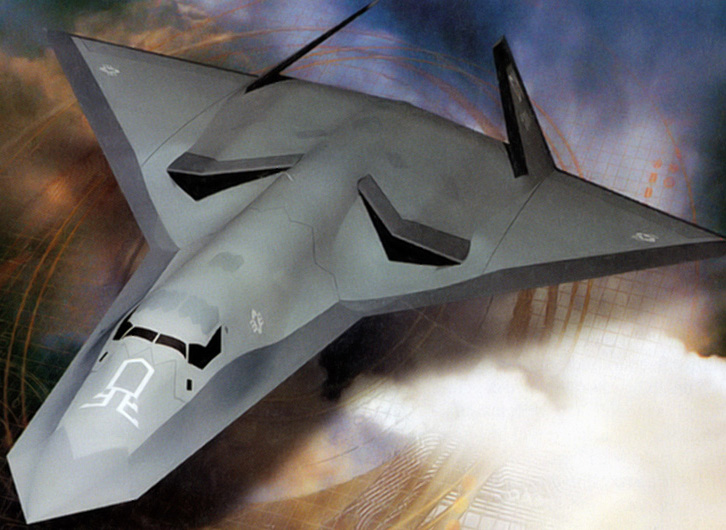
There is a new long range strike bomber being developed by the US Air Force. The aircraft program is under wraps to the extent that the Pentagon did not even admit that there is a program at all until recently, let alone giving out details about the project. A spokeswoman with the US Air Force was quoted as saying, “Specific LRS programmatic details are protected with enhanced security measures.”
Known Facts
Not much is known about the new long range strike bomber, except that there is an aircraft program called the “LRS-B” program, and it is highly classified. What is also known, is that money to the tune of $300 million has been allocated for the defense project for the fiscal year 2013-14, and the total money allocated so far from 2013 to 2017 is estimated to be about $6.3 billion. The B-3 bomber as it has come to be called will be long range, optionally-manned, and it will have stealth properties. This bomber aircraft will have a price tag of about $550 million apiece. The entire fleet of about 80 to 100 stealth bombers is expected to be commissioned by 2020.
The B-3 bomber is a replacement of the B-2 bomber, which in turn was a replacement for the B-1. So, let us take a look at the previous versions of the ‘B’ series of strike bombers.
A B-1B Lancer with wings swept full forward (Photo credit: Wikipedia)
The B-1 Bomber
The B-1 Bomber was introduced in 1986 as a replacement of the B-52 Stratofortress. This bomber aircraft was built by Rockwell International, and there were two versions. An initial version was actually in existence since 1974, called the B-1A. It was capable of carrying nuclear bombs, flew at twice the speed of sound at high altitudes and could also carry short-range attack missiles. It also had stealth features, meaning that it had the ability to lower its visibility on radar to 1/100th of the B52, but this also had an adverse effect on the speed of the aircraft. During the period of 1984 to 1988, the US Air Force built its B-1 Bomber aircraft fleet up to 100.
A U.S. Air Force Boeing B-52H Stratofortress static display with weapons, at Barksdale Air Force Base, Louisiana (USA), in 2006. (Photo credit: Wikipedia)
The second version, the B1-B is also supersonic, but its normal cruising speed is subsonic – about Mach 0.9 which is 670 miles per hour. It can fly at an altitude of as low as 200 feet above the ground. It can carry up to 24 nuclear bombs and has a flying range of 4,600 miles (7,400 kilometers) without having to refuel.
B-2A Block 10 (upgraded to Block 30) Spirit, 82-1069, “Spirit of Indiana”, of the Eighth Air Force 509th Bomb Wing (Photo credit: Wikipedia)
The B-2 Stealth Bomber
The specialty of the B-2 Stealth Bomber is that its development marked the integration of aerospace technologies with conventional aviation technology. It is a versatile aircraft, capable of delivering nuclear as well as conventional weapons.
The B-2 Bomber was developed by Northrop, Boeing in the late eighties, the first successful flight of the B-2 Bomber took place in July 1989. This bomber aircraft is built on the lines of the B-35 of the 1940s. The bodywork mostly consists of resin-impregnated graphite fiber.
More on the LRS-B Long Range Strike Bomber
Due to the utmost secrecy being maintained by the Pentagon, Northrop Grumman also seems to have been sidetracked and is non-committal on the matter (of the B-3 Bomber). Even though Northrop has not put in a bid yet, it is unknown whether they will now or will compete for the LRS-B contract at a later stage. It has been speculated that maybe it is just waiting for better terms, or a more defined scope of work on the project. Boeing and Lockheed Martin have joined hands in a bid to win the high-budget project and have been approached by the Pentagon. Boeing will be the main contractor and an announcement to this effect was made in October 2013.
The Downside of Secrecy
It has been said that excessive security can have a negative effect on development. In a recent article published in The Daily Beast, Bill Sweetman says this about the B-3 Stealth Bomber, “… almost everything about it is secret, and that’s not necessarily a good thing.” Sweetman goes on to point out that the secrecy associated with the Long Range Strike Bomber is the highest in the history of all similar projects since the 1980s. He says that while developing the B-2, certain features were developed, but never used and will never be used. Due to this reason, there were people working within a “security bubble”, who had a free hand in doing just as they pleased, as they were shielded from public scrutiny. The above reason is why some projects overrun their budgets.
Secrecy, to a point is acceptable, especially when a military weapon is being developed. But secrecy beyond reasonable limits can result in impractical technical development with a series of budget overruns, which could ultimately threaten the very existence of the project. An official announcement is expected sometime in 2015 regarding the confirmation of this aircraft program. Until then, the world will just have to rely on snippets about this much-needed, futuristic Long Range Strike bomber.
Everyone is looking for protection against the Ebola virus. Greta Van Susteren sits down with doctors from the Walter Reed Army Institute of Research recently to talk about the Ebola vaccine development. According to the interview, the vaccine was 100% successful on mice, rodents, and monkeys. So now they have 39 volunteers they are going to test the vaccine on. The Army doctors seem very optimistic about the chances of the vaccine. Once this phase of clinical trials is complete, the vaccine will enter another phase of wider testing before ultimately entering mass production. One can only speculate, but if Ebola were become more wide spread in the United States, it appears that this vaccine will enter the market a lot faster than it is taking right now.
The US Army’s New Defense System “High Energy Laser Mobile Demonstrator” Wields its Power
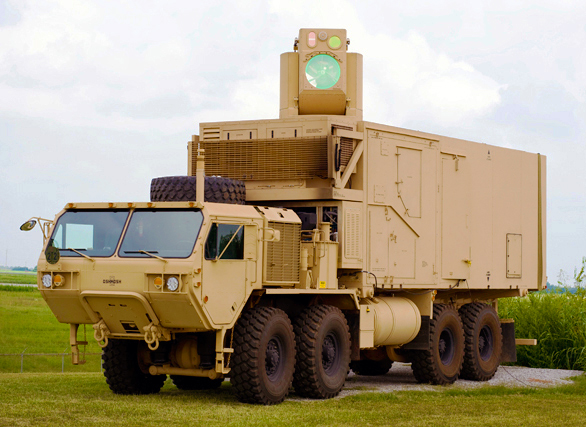
The High Energy Laser Mobile Demonstrator (HEL-MD) is a top-notch laser-based defense weapon being developed by the American Army’s Space and Missile Defense Command, in collaboration with Boeing.
The HEL-MD’s role is to display the potential of directed-energy technology for shielding US Army troops against rockets, artillery and mortars. The first successful trials took place between November 18th and December 10th, 2013 in the White Sands Missile Range, New Mexico. However, the complete integration with a Heavy Expanded Mobility Tactical Truck (HEMTT) was during the summer of 2011, and the first low-power tests of this laser weapon took place during the fall and winter of the same year.
Historical Overview of the HEL-MD
In 1980, US President Ronald Raegan advanced the most prominent propositions for the use of laser guns to destroy flying targets before they could land. The project was called the Strategic Defense Initiative (SDI), which people also referred to as “Star Wars.” However, most of the laser weapon projects were overlooked regardless of the fact that the strategic missile defense concept has never ceased to exist.
Boeing, on the other hand, continued working on the concept, and in February 2010, the company successfully tested one of its Directed-Energy weapons.
YAL-1A Airborne Laser in flight with the mirror unstowed (Photo credit: Wikipedia)
How Does the HEL MD Compare to Other Defense Systems?
The HEL MD is not the first defensive system that the US army devised in order to defend the American operating bases with laser weapons in Iraq and Afghanistan. Similar systems include the Boeing YAL-1 Airborne Laser Testbed and the Phalanx-based Counter Rocket, Artillery and Mortar (C-RAM).
Unlike the HEL MD, the defense system known as the Boeing YAL-1 Airborne Laser Testbed was mounted inside a modified Boeing 747-400F and was, therefore, not mounted on a ground vehicle. However, due to some test failures, the funding for this system was cut in 2010, before the US Army decided to cancel the whole system in 2011.
C-RAM, on the other hand, proved efficient to some extent. The system successfully detected and destroyed rockets, artillery and mortars. Nonetheless, some attacks in both Iraq and Afghanistan still succeeded to get through, which is not the case with the HEL MD system as proved during testing in 2012 and 2014.
Another area where HEL MD outperforms C-RAM is the number of rounds in the magazine. The HEL MD system has a “near-infinite magazine” because it is a laser, unlike C-RAM that has a finite number of rounds.
Blaine Beardsley, HEL MD program manager at Boeing, explained, “Even while you’re utilizing the magazine and engaging targets, you’re charging that magazine.” Therefore, unlike its counterparts, the HEL MD laser gun uses electrical power to produce lethal effects. Mark Gunzinger, a Senior Fellow at the Center for Strategic and Budgetary Assessments (CSBA), further illustrated this when he said, “As long as they have a source of electricity and cooling, they can keep firing.”
Furthermore, this laser weapon enjoys the very useful attribution of mobility, hence the name “MOBILE Demonstrator.” In this regard Beardsley added, “You can drive it out to any location and emplace it quickly and be able to set it up with full 360-degree coverage.”
HEMTT wrecker (M984, front) and cargo (M977). Photo taken at Bagram Airfield in Afghanistan. (Photo credit: Wikipedia)
Capabilities and Specifications of the HEL MD
The latest tests of this laser weapon by the US Army in New Mexico are considered to be the first successful demonstration of the capabilities of the HEL-MD mounted on a Heavy Expanded Mobility Tactical Truck (HEMTT). The current system uses a 10-kilowatt laser. However, the system’s power is expected to be upgraded to 50 or 60-kilowatt laser. Later, the laser will be increased to 100-Kilowatts.
In addition to the tests in New Mexico, the system was tested again on 4 September 2014 at the Eglin Air Force Base in Florida. The HEL MD proved very successful even in maritime conditions. The defense system successfully managed to target a variety of aerial targets, even under windy, rainy and foggy weather conditions.
When commenting on this success, Dave DeYoung, Boeing Directed Energy Systems director, said, “As proven at White Sands Missile Range in New Mexico in 2013 and at Eglin Air Force Base this spring, HEL MD is reliable and capable of consistently acquiring, tracking and engaging a variety of targets in different environments, demonstrating the potential military utility of directed energy systems”.
Although other systems such as C-RAM have proven their reliability, the latest trials of the HEL MD laser weapon system by the US Army in Florida helped the system gain a considerable margin over all of its competitors.
What follows is a brief summary of some of the specifications of the current HEL MD defense system:
BCS – 50 cm aperture retracting telescope, 300 W target illuminator, low jitter precise pointing tracking system
Acquisition & Track Sensors – IR based WFOV for target acquisition coupled with NFOV for engagement
WMI – For a control of the entire system-based on a standard air defense and Avenger C4I interface
BMC4I – Modular design to enable the interface with current and future fielded BMC4I systems
Electrical Power – One set of lithium ion batteries to provide extremely stable power to the laser. Battery charging and another subsystem power from single 60 kW diesel generator, mounted on HEMTT
Thermal Management – Two-loop chilled water system for the laser and standard air conditioner for all other subsystems
Future Plans
Though the current primary use for the HEL MD laser gun system is for the US Army, plans include using this laser defense system to protect the planet from asteroids. There has been a drastic rise in the interest of using this technology since an asteroid hit Central Russia on February 15, 2013. The incident injured more than 1,000 people, which experts regarded as a serious warning about the need for a defensive system that would protect the Earth from any similar asteroid attacks.
Final Analysis
The (HEL MD) laser weapon system has gained fame as a revolutionary defense system for the US Army. It is the only system that proved successful even under foggy, rainy and in maritime conditions. Hence, although other systems like C-RAM will not cease to exist, it is doubtless that the US Army’s New Defense System, the High Energy Laser Mobile Demonstrator HEL MD, will constitute a threshold for more sophisticated directed-energy weapons, especially that those future plans also include saving the planet from asteroids.