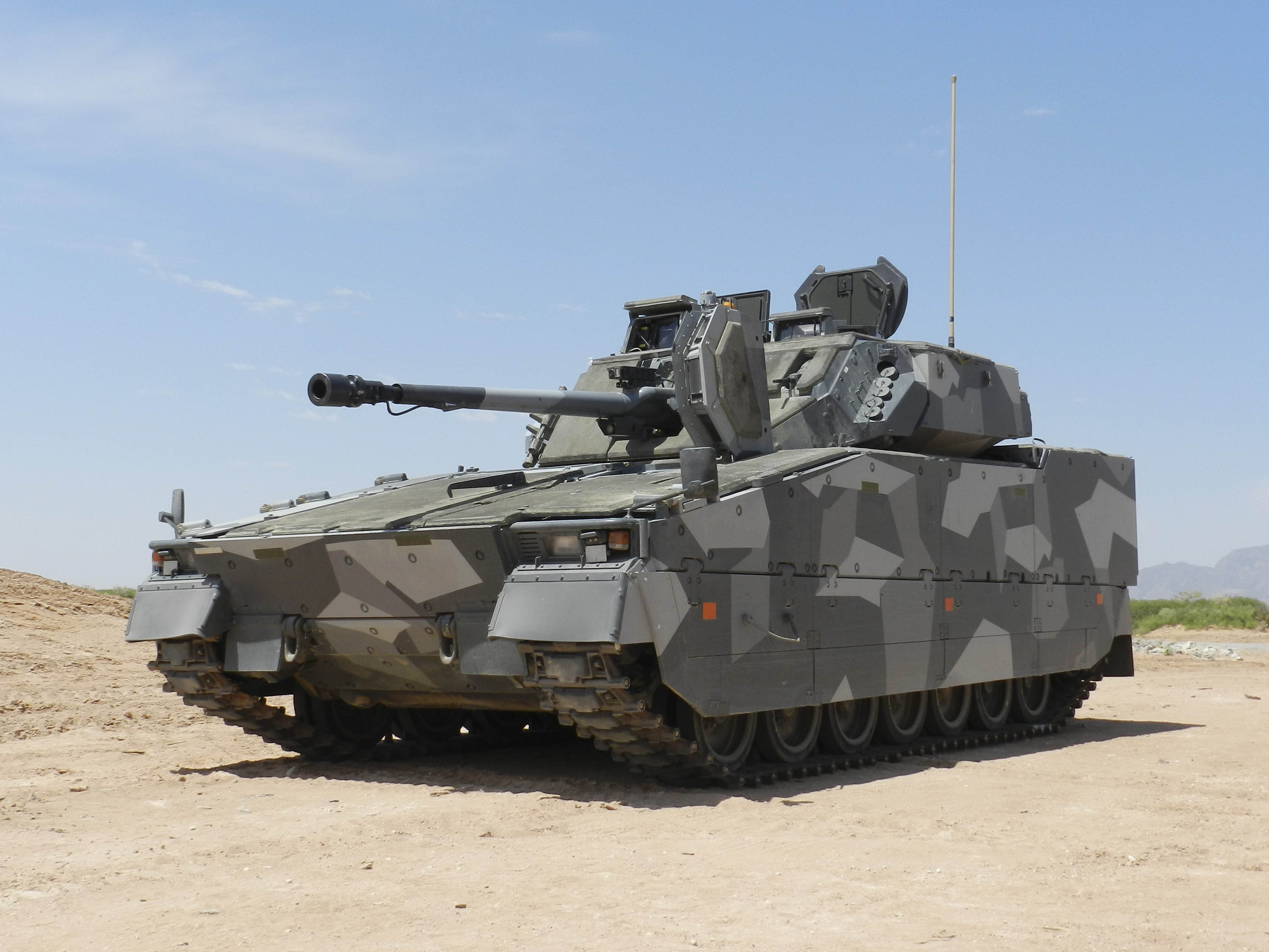
United States Army is under the Department of the Army which in turn is a branch of the Department of Defense. The U.S. Army is concerned with the safety, peace and security of the land. It is the largest of the seven uniformed forces of the U.S; being active from 14 June 1775 it is also the oldest among the United States Armed Forces. Since then it is conducting the military land operations. The Army was established to fulfill the need of the American Revolutionary War. Thus the Army actually has its root in the Continental Army, which was disbanded in after the establishment of the Unites States. Presently 546,047 Active personnel, 559,244 Reserve and National Guard personnel are serving in the Army with the motto of “This We’ll Defend”.
With the mission – “to fight and win our Nation’s wars by providing prompt, sustained land dominance across the full range of military operations and spectrum of conflict in support of combatant commanders” the Army has served the States in wars and operations like American Revolutionary War, Whiskey Rebellion, Indian Wars, First Barbary War, War of 1812, Patriot War, Mexican–American War, Utah War, Cortina Troubles, Reform War, American Civil War, Las Cuevas War, Banana Wars, Philippine-American War, World War I, Russian Civil War, World War II, Puerto Rican Nationalist Revolts, Korean War, Vietnam War, Persian Gulf War, Operation Enduring Freedom, Iraq war, 2014 Intervention against ISIL and many other.
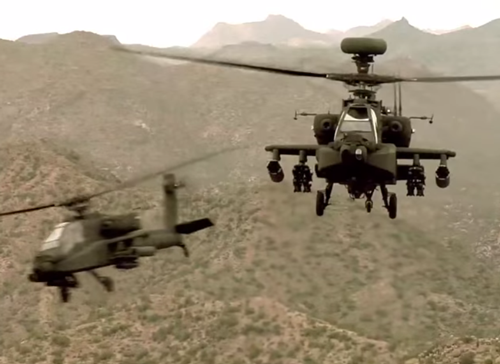
The Kiowa has played an important reconnaissance and supporting role for the ground troops, Apache Attack helicopters, and commanders on the ground over the past 40+ years when it was initially produced in 1969. The helicopter continued to be fielded until 1989, then it began a series of upgrades to keep it modern. The military brass is looking for a more modern air frame that can handle the support requirements of the Army, while trying to cut costs due to the declining budgets and lack of overseas combat missions.
The OH-58D’s being decommissioned will go to Davis-Monthan Air Force Base, AZ where they will either be scrapped, stored, or prepped for sale to civilian law enforcement for local and state support roles. Each Kiowa Warrior cost the Army roughly $5-$6 million initially, and $1.2 million to retrofit with upgrades. Over the years, the maintenance costs from personnel, storage, and parts has been very expensive as well. The true cost to maintain the fleet will never be known, but each helicopter would easily be in the millions over the lifetime of its use. It is also important to note that maintaining a Kiowa is vastly less in cost than maintaining the advanced AH-64D Apache.
English: The Louisiana National Guards two new UH-72 Lakotas touch down for the first time at Esler Field in Pineville, La. (Photo credit: Wikipedia)
The first Eurocopter UH-72 Lakotas entered production in 2006 with 300 being made initially. More are on the way and will eventually replace all OH-58Ds for the light scout role, but that is potentially several years out and there is nothing set in stone yet. The AH64-D and AH-64E are the Army’s main attack helicopters, which can also perform a scouting role. So the Army has opted to let the Apache “sub in” for the Kiowa until more Lakotas or another variant can be produced on a larger scale.
The Kiowas at Fort Rucker, AL (the Army’s main training base for helicopters) are being replaced by Lakotas right now.
Parting Thoughts
Overall, it does not sound like a good plan. Why would the Army get rid of an entire fleet of helicopters that cost around $5 million and replace their role with an attack helicopter that costs $35 million? Sure there are Lakotas that can help fill the gap, but there are only 300 Lakotas and those can only fill so many gaps of the nearly 2,200 Kiowas that are being phased out. The downsize is premature and a lot of good pilots are having to relearn different air frames. The Army’s primary scout capability via air is non-existent. Sure you can use drones to help fill the gap, but it just isn’t the same as a Kiowa with a rocket or hell fire package that can change the entire battle with one Kiowa team.
Just look at any scenario where there were Apaches needed to help ground troops – they were not always available. With an asymmetric battlefield and troops in contact in many places in the same day all over the battlefield, the Army needs a light scouting capability via air. With Kiowas, you can send 7 Kiowas for the price of 1 Apache. The Army scrapped the RAH-66 Comanche several years ago, causing even more upheaval in the air requirements. And with congress talking about scrapping the A-10 Warthog, the Air Force’s ground support aircraft, the forecast does not look good.
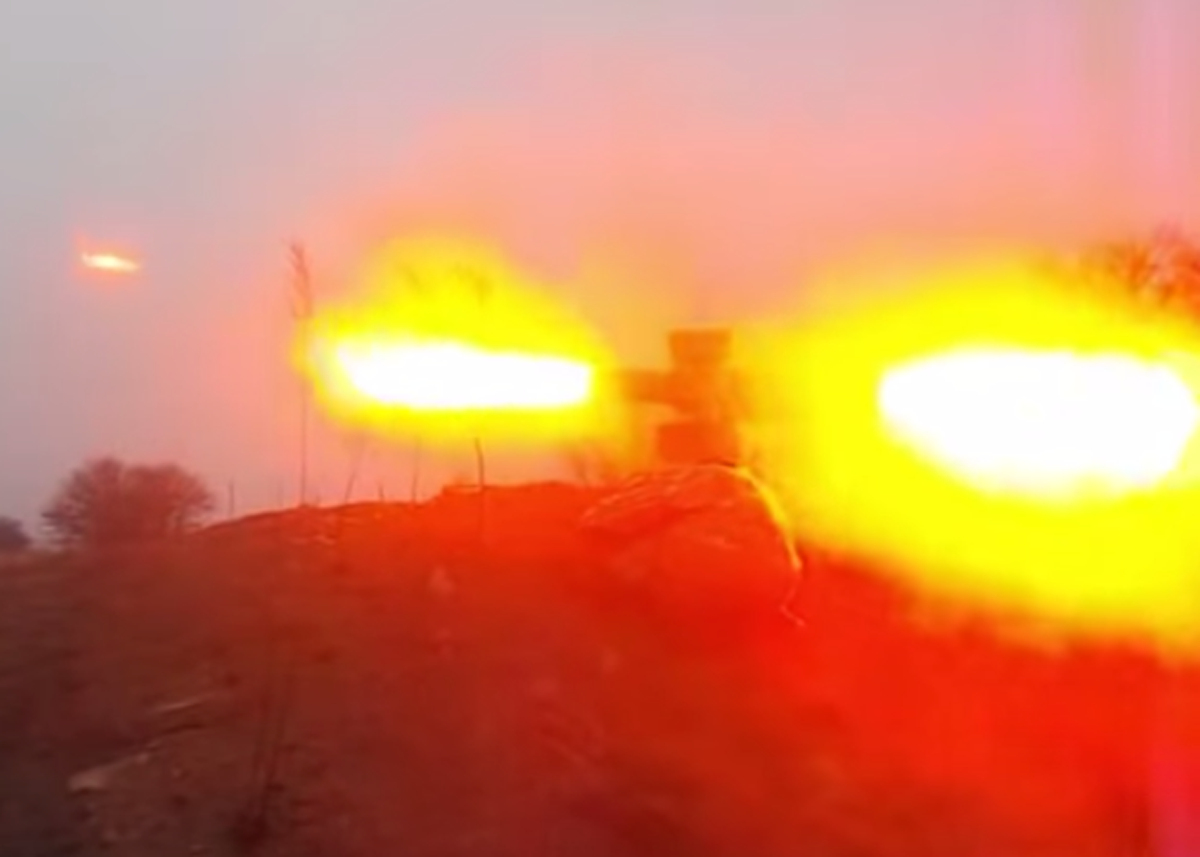
This video shows a battlefield blooper from the front over in Ukraine. Here you will enjoy a misfire from a Russian Kornet Anti-Tank Guided Missile. You will notice a soldier doing something with the tripod but the tube suddenly fires the missile by accident. It is assumed the missile goes into some hillside somewhere or into the ground. Hopefully there wasn’t an unfortunate soul on the receiving end of that. In the United States Army, this would be classified as a misfire and the 15-6 investigation would start immediately.
However if not misfired, Kornet ATGMs are pretty lethal against heavily armored vehicles. Designed to be tank busters against the American M1 Abrams Main Battle Tank, the Israeli Merkava, or the German Leopard 2, it is important that these devices get removed from the battlefield by air assets or light infantry prior to an armored engagement. The Kornet can penetrate two armored layers (double layers) on a tank because it has 2 warheads/charges. The first one detonates on the external layer, and the second explodes inside penetration the remaining armor and killing the crew. Well, at least with this video, there is one less ATGM the US Army has to worry about.
These types of videos really bother me on so many levels. First, you have the fact that the guy is a liar. Then you have the fact that people are probably giving the guy praise all the time, thanking him for his service, for something he didn’t do. Then he is probably getting military discounts and deals at stores for being a fake in uniform. But the worst crime is that he is pretending to be something that only a select few people in this country are willing to be. Only a fraction of a percent of Americans step up to put their lives on the line for their country. And an even smaller percent step up to be infantrymen, and a more elite group serve in combat as Army Rangers. This person disgusts me. Please spread the word about him and expose him for what he has done.
A statement was released concerning the appointment of the 15th Sergeant Major of the Army.
Command Sergeant Major Daniel A. Dailey, the senior enlisted non-commissioned officer for the Training and Doctrine Command has been chosen to take the position. A lot of the soldiers in the combat arms are pleased to see an infantryman take the job, especially since the infantry do a lot of the front line fighting, especially in battles like Sadr City, the mountains of Afghanistan, and during the Surge of Baghdad. He will be receiving the position from the incumbent Sergeant Major of the Army, Raymond F. Chandler III, on the 30th of January in 2015. The position takes on a number of different roles, the most prominent of which would be his assignment on recommending improvements in the standard of living of soldiers, including enlisted personnel and their families.
English: Raymond F. Chandler III, Sergeant Major of the Army (Photo credit: Wikipedia)
The Army Secretary John McHugh expressed great approval in the decision. He said that Dailey would do great in the position, the same way that Chandler was able to handle it. Army seniors have said that Dailey is a great choice for the job, especially because of his great career background. He has been recommended by other seniors knowing that he had gained great experiences in the field that will help him gain wisdom in the execution of his new task. Dailey is a veteran of Operation Iraqi Freedom, Operation New Dawn, Operation Desert Shield and Operation Desert Storm.
In this video John Schibler, the Boeing Chief Engineer of US Attack Helicopter Programs talks about the effectiveness of Boeing Defense, Space & Security’s newest model of Apache helicopter, AH-64E Guardian and tells how it acts as a safeguard for the soldiers serving on the ground.
Apache AH-64E Guardian like all the previous models has two engines, four blades and carries one pilot and one co pilot gunner. With a speed of 164 knots and range of 250 nautical miles it carries an aerial rocket system, automatic gun of 30 mm, hellfire missiles and an M239E1 chain gun. It is different from its predecessors in many ways. Not only it flies farther and faster than other Apache models but also it has more enhanced communication systems. The main feature that makes it different from others is that it is inter-operable with unmanned aircraft systems that enables the pilot to control the UAS sensors, weapon system and flight path (meaning it can control UAVs from the cockpit).
Apache helicopters are evidently known as deadliest helicopters for their destructive features, but Apache Guardian is more than that. Its “eye-in-the-sky” technology makes it yet more effective to keep the soldiers safe. It is capable of seeking and eliminating threats that otherwise would have remained undetectable and therefore makes it easy and safe for the soldiers to complete their assigned missions. So the name “Guardian” aptly suits this newest model of Apache as when it is around, the soldiers can have a breath of relief.
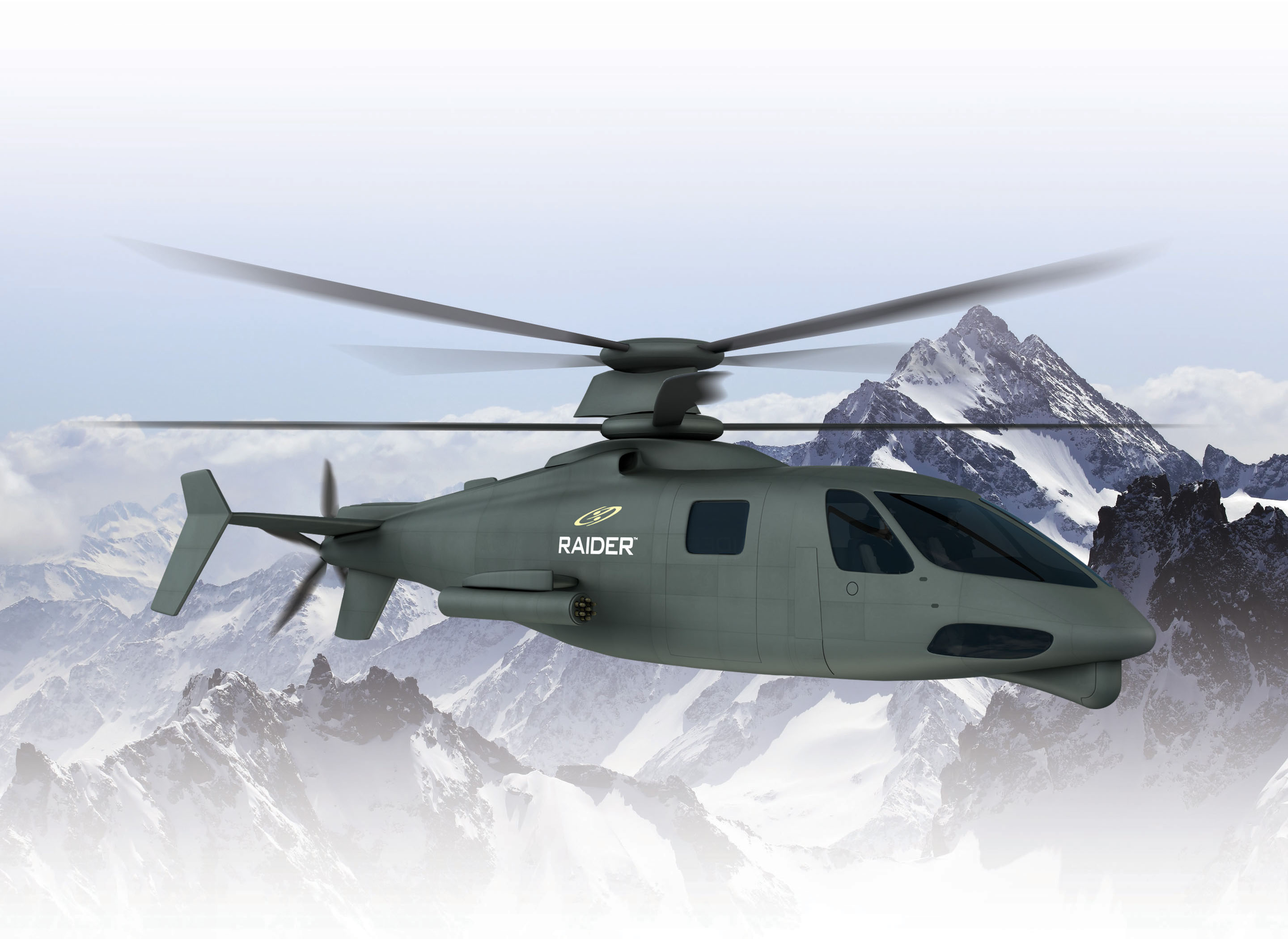
In March 2010, the Armed Aerial Scout program made a request for information for an advanced helicopter, and the result was the Sikorsky S-97 Raider as proposed by Sikorsky. Four years later, the company finally unveiled the first full production model of the groundbreaking scout and attack helicopter in the company’s facility in West Palm Beach, Florida.
The objective set for the new aircraft is to replace the army’s OH-58D Kiowa Warrior. However, specialists think that if the manufacturer’s claims about the Sikorsky S-97 Raider capabilities are true, it is almost certain that this helicopter’s reach will grow to cover a much wider audience. For instance, if the Sikorsky S-97 Raider proves useful, it might be used to replace other US Army military helicopters such as the MH-6 Little Bird used by the U.S. Special Operations Command. In addition to its expected military roles, The Sikorsky S-97 Raider could also be adapted to carry out civilian missions.
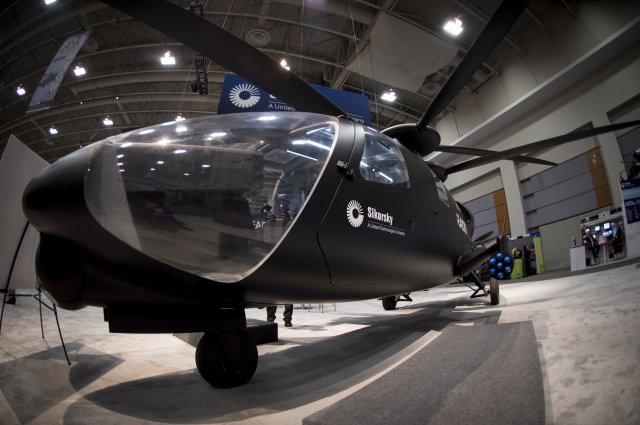
Sikorsky Raider at AUSA
Cost of the Sikorsky S-97 Raider
Up to now, Sikorsky and its various suppliers have invested in as much as $200 million on the two first prototypes of the helicopter. The company hopes to be able to produce this revolutionary helicopter at $15 million per unit.
The Sikorsky S-97 Raider is set to fly for the first time on December 2014. However, the aircraft’s first flight and its first demonstration of capabilities won’t take place until mid-2015.
Sikorsky S-97 Raider Design
Design is one of the most eye-catching attributes of the Sikorsky S-97 Raider. Being a compound helicopter, the Sikorsky S-97 Raider includes variable speed coaxial main rotors and a variable pitch pusher propeller. The helicopter is large enough for 6 passengers to fit in, and the side-by-side cockpit can contain two pilots. However, the S-97 is also designed so that it can fly autonomously.
Sikorsky UH-60M Black Hawk, Radom 2007 (Photo credit: Wikipedia)
As far as the engine is concerned, it is based on the Sikorsky X2 demonstrator. Until now, The Sikorsky S-97 is equipped with the same engine used in the UH-60M Black Hawk. Nonetheless, the company foresees the development of an improved engine for its new helicopter.
Key Dates
Here is a timeline of the key dates since Sikorsky first launched its X2 Technology Demonstrator in August 2008. These key dates are in conformity with the information provided by Sikorsky on their Sikorsky S-97 Raider website.
August 2008: X2 Technology Demonstrator™first flight
September 2010: X2 Technology Demonstrator reaches 250 knots
October 2010: S97 Raider™ launched
July 2011: X2 Technology Demonstrator final flight
January 2012: Initial Raider supplier team announced
March 2013: Raider Critical Design Review completed
September 2013: Raider aircraft #1 delivered, airframe final assembly begun
January 2014:Raider Systems Integrations Lab (SIL) fully operational
May 2014: Raider electrical power on achieved
October 2014: Raider Rollout Ceremony
December 2014: Raider first flight
2015:Raider flight test and Raider capability demonstrations
General Characteristics
The Sikorsky S-97 Raider has a capacity for six troopers including up to two pilots. The space inside the helicopter can be adjusted according to needs. Thus, if need be, the space in the cockpit of the aircraft can be used to store additional equipment or ammunition.
According to the information disclosed by Sikorsky, the S-97 Raider is 36ft long and weighs 8,945 lb. Its maximum takeoff weight is 11,400 lb. It is equipped with one General Electric YT706 powerplant, and its main rotor diameter is of 34 ft. The aircraft is 6-bladed variable pitch and clutchable pusher propellers.
Sikorsky S-97 Raider Performance
The S-97 has a staggering Never exceed speed of 276 mph (240kn), and a cruising speed of 253 mph (200kn) external weapons included. The weapons include 50 cal guns w/500 rounds and a seven shot rockets pod, Hellfire missiles and 2.75” rockets. The range exceeds 600 km, and it has an endurance mean of 2.7 hours on standard fuel. In addition, the S-97 is also capable of aerial refueling.
An OH-58D Kiowa Warrior from 1st Battalion (ATTACK), 25th Aviation Regiment, 25th Infantry Division (L), “Lightning Attack”, patrols the skies over , . Lightning Attack deployed from Schofield Barracks, Hawaii to Iraq in January and is conducting aerial reconnaissance, close combat attacks and security missions for the 1st Armored Division and the 1st Cavalry Division in support of Operation Iraqi Freedom. (Original caption) (Photo credit: Wikipedia)
Comparisons
As a matter of fact, the new and futuristic Sikorsky S-97 Raider is produced in order to replace the army’s OH-58D Kiowa Warrior, an aircraft that has been in service since the 1960’s and which has been used in many wars by the US Army such as the Iraq and Afghanistan wars. Thus, while, there are some similarities between the two helicopters, the Sikorsky S-97 Raider is clearly much more advanced at all levels.
In his article published in The Aviationist website, David Cenciotti compares the new Sikorsky S-97 Raider with the “mysterious stealth” aircraft that was used in the raid on Osama Bin Laden.
Cenciotti states, “it is safe to believe that Sikorsky has embedded some of the features developed for the secret, radar evading US Army Stealth Black Hawk used by the Navy SEALs at Abbottabad in May 2011,”
Future Plans for the Sikorsky S-97 Raider
Sikorsky seems to be leading the way and setting an example to other companies on how to get things done. Not only does Sikorsky build state-of-the-art machines, but it also invests in future development opportunities. For example, as recently as in May 2014, Sikorsky won a U.S. Navy deal for the President’s Marine One helicopters. According to Reuters, the company “won an initial $1.24 billion contract to develop and build six new U.S. presidential helicopters, the first step toward a fleet of 21 new aircraft by 2023.”
Other future plans of the company include teaming up with other leading companies such as Boeing and Aurora Flight Sciences to manufacture new aircraft. In addition to all these recent successes, Sikorsky and Boeing have also been chosen to work hand in hand in order to produce the SB>1 Defiant, which is a “medium-lift-sized demonstrator.” The demonstrator is built for Future Vertical Lift and is expected to fly in 2017 as advanced by Sikorsky in a press release.
Final Thoughts
It is probably safe to say that during its 90 years of existence, Sikorsky is now stronger than ever. The rumors about the company’s divestiture have calmed down especially after the company was awarded a $1.24 billion deal to build the presidential helicopters. Therefore, although the Sikorsky S-97 Raider is one of the least revenue generating units belonging to United Technologies, the company isn’t thinking about selling it or spinning it off.
If Sikorsky continues its innovative efforts, it will eventually find more and more reliable customers than the US Army. This idea of using helicopters for civilian duties might be an interesting alternative, and selling the Sikorsky S-97 Raider to American allies could also help widen the company’s business opportunities.
U.S. Airways decided to not hang First Sgt. Albert Marle’s jacket in order to prevent it from being wrinkled on the flight. She refused, citing some bureaucratic red tape policy that only first class passengers get to use the closet. She states that 1SG Marle isn’t one of them and then refused to hang up his jacket. It isn’t like he served his country, put his life on the line, and endured brutal combat in the Middle East so that this flight attendant could live free and be safe. Her exact quote was, “Our airline policy says I’m not going to do it, so I’m not going to do it.”
You can read the official account from WSOCTV who broke the story.
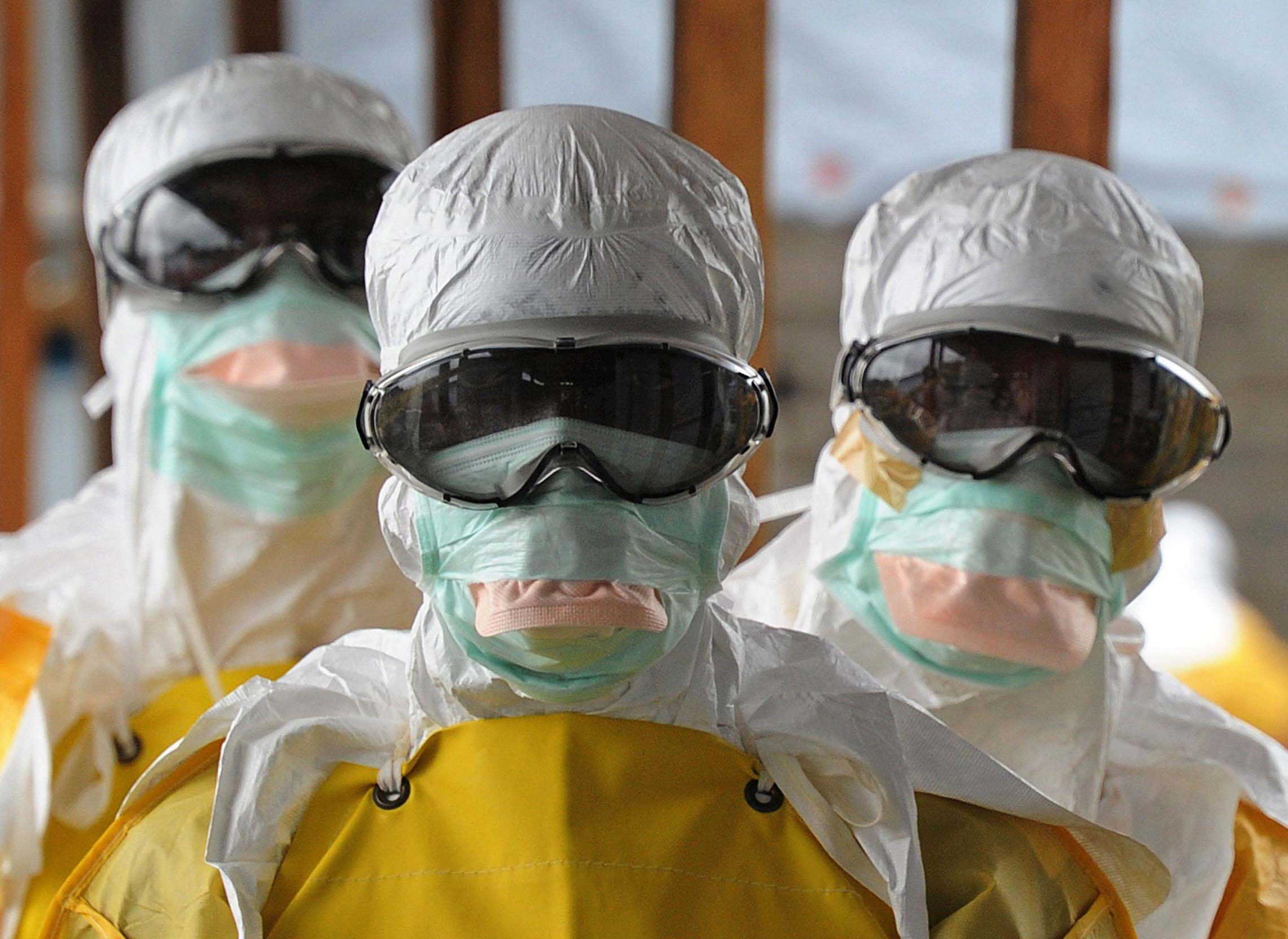
Everyone is looking for protection against the Ebola virus. Greta Van Susteren sits down with doctors from the Walter Reed Army Institute of Research recently to talk about the Ebola vaccine development. According to the interview, the vaccine was 100% successful on mice, rodents, and monkeys. So now they have 39 volunteers they are going to test the vaccine on. The Army doctors seem very optimistic about the chances of the vaccine. Once this phase of clinical trials is complete, the vaccine will enter another phase of wider testing before ultimately entering mass production. One can only speculate, but if Ebola were become more wide spread in the United States, it appears that this vaccine will enter the market a lot faster than it is taking right now.
The US Army’s New Defense System “High Energy Laser Mobile Demonstrator” Wields its Power
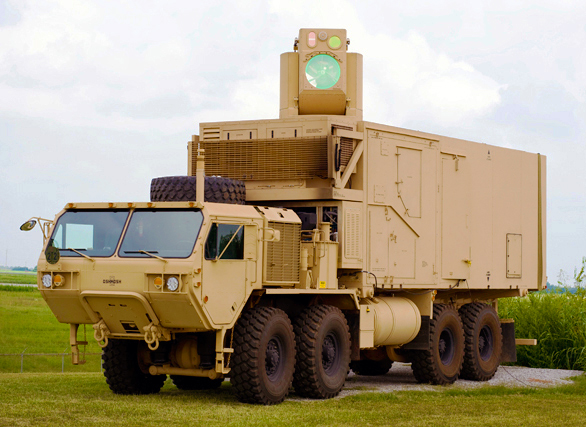
The High Energy Laser Mobile Demonstrator (HEL-MD) is a top-notch laser-based defense weapon being developed by the American Army’s Space and Missile Defense Command, in collaboration with Boeing.
The HEL-MD’s role is to display the potential of directed-energy technology for shielding US Army troops against rockets, artillery and mortars. The first successful trials took place between November 18th and December 10th, 2013 in the White Sands Missile Range, New Mexico. However, the complete integration with a Heavy Expanded Mobility Tactical Truck (HEMTT) was during the summer of 2011, and the first low-power tests of this laser weapon took place during the fall and winter of the same year.
Historical Overview of the HEL-MD
In 1980, US President Ronald Raegan advanced the most prominent propositions for the use of laser guns to destroy flying targets before they could land. The project was called the Strategic Defense Initiative (SDI), which people also referred to as “Star Wars.” However, most of the laser weapon projects were overlooked regardless of the fact that the strategic missile defense concept has never ceased to exist.
Boeing, on the other hand, continued working on the concept, and in February 2010, the company successfully tested one of its Directed-Energy weapons.
YAL-1A Airborne Laser in flight with the mirror unstowed (Photo credit: Wikipedia)
How Does the HEL MD Compare to Other Defense Systems?
The HEL MD is not the first defensive system that the US army devised in order to defend the American operating bases with laser weapons in Iraq and Afghanistan. Similar systems include the Boeing YAL-1 Airborne Laser Testbed and the Phalanx-based Counter Rocket, Artillery and Mortar (C-RAM).
Unlike the HEL MD, the defense system known as the Boeing YAL-1 Airborne Laser Testbed was mounted inside a modified Boeing 747-400F and was, therefore, not mounted on a ground vehicle. However, due to some test failures, the funding for this system was cut in 2010, before the US Army decided to cancel the whole system in 2011.
C-RAM, on the other hand, proved efficient to some extent. The system successfully detected and destroyed rockets, artillery and mortars. Nonetheless, some attacks in both Iraq and Afghanistan still succeeded to get through, which is not the case with the HEL MD system as proved during testing in 2012 and 2014.
Another area where HEL MD outperforms C-RAM is the number of rounds in the magazine. The HEL MD system has a “near-infinite magazine” because it is a laser, unlike C-RAM that has a finite number of rounds.
Blaine Beardsley, HEL MD program manager at Boeing, explained, “Even while you’re utilizing the magazine and engaging targets, you’re charging that magazine.” Therefore, unlike its counterparts, the HEL MD laser gun uses electrical power to produce lethal effects. Mark Gunzinger, a Senior Fellow at the Center for Strategic and Budgetary Assessments (CSBA), further illustrated this when he said, “As long as they have a source of electricity and cooling, they can keep firing.”
Furthermore, this laser weapon enjoys the very useful attribution of mobility, hence the name “MOBILE Demonstrator.” In this regard Beardsley added, “You can drive it out to any location and emplace it quickly and be able to set it up with full 360-degree coverage.”
HEMTT wrecker (M984, front) and cargo (M977). Photo taken at Bagram Airfield in Afghanistan. (Photo credit: Wikipedia)
Capabilities and Specifications of the HEL MD
The latest tests of this laser weapon by the US Army in New Mexico are considered to be the first successful demonstration of the capabilities of the HEL-MD mounted on a Heavy Expanded Mobility Tactical Truck (HEMTT). The current system uses a 10-kilowatt laser. However, the system’s power is expected to be upgraded to 50 or 60-kilowatt laser. Later, the laser will be increased to 100-Kilowatts.
In addition to the tests in New Mexico, the system was tested again on 4 September 2014 at the Eglin Air Force Base in Florida. The HEL MD proved very successful even in maritime conditions. The defense system successfully managed to target a variety of aerial targets, even under windy, rainy and foggy weather conditions.
When commenting on this success, Dave DeYoung, Boeing Directed Energy Systems director, said, “As proven at White Sands Missile Range in New Mexico in 2013 and at Eglin Air Force Base this spring, HEL MD is reliable and capable of consistently acquiring, tracking and engaging a variety of targets in different environments, demonstrating the potential military utility of directed energy systems”.
Although other systems such as C-RAM have proven their reliability, the latest trials of the HEL MD laser weapon system by the US Army in Florida helped the system gain a considerable margin over all of its competitors.
What follows is a brief summary of some of the specifications of the current HEL MD defense system:
BCS – 50 cm aperture retracting telescope, 300 W target illuminator, low jitter precise pointing tracking system
Acquisition & Track Sensors – IR based WFOV for target acquisition coupled with NFOV for engagement
WMI – For a control of the entire system-based on a standard air defense and Avenger C4I interface
BMC4I – Modular design to enable the interface with current and future fielded BMC4I systems
Electrical Power – One set of lithium ion batteries to provide extremely stable power to the laser. Battery charging and another subsystem power from single 60 kW diesel generator, mounted on HEMTT
Thermal Management – Two-loop chilled water system for the laser and standard air conditioner for all other subsystems
Future Plans
Though the current primary use for the HEL MD laser gun system is for the US Army, plans include using this laser defense system to protect the planet from asteroids. There has been a drastic rise in the interest of using this technology since an asteroid hit Central Russia on February 15, 2013. The incident injured more than 1,000 people, which experts regarded as a serious warning about the need for a defensive system that would protect the Earth from any similar asteroid attacks.
Final Analysis
The (HEL MD) laser weapon system has gained fame as a revolutionary defense system for the US Army. It is the only system that proved successful even under foggy, rainy and in maritime conditions. Hence, although other systems like C-RAM will not cease to exist, it is doubtless that the US Army’s New Defense System, the High Energy Laser Mobile Demonstrator HEL MD, will constitute a threshold for more sophisticated directed-energy weapons, especially that those future plans also include saving the planet from asteroids.
Engineers at BAE Systems are in the process of developing path-breaking body armor. The new armor is called “Liquid Armor” or “Liquid Body Armor” and hopefully, it will revolutionize the way armor is manufactured, used, and worn for decades to come.
Photo: Body armor of the Livonian Order. (Photo credit: Wikipedia)
Body armor is not a new concept. It has been around for centuries. The Romans used it extensively and it was also widely used in medieval Europe. The material used for body armor was mostly iron, steel and various metallic alloys. However, metallic body suits were heavy and unwieldy. Over the years, with the advancement of technology and progress in munitions, metallic armor was not practical. As a result of decades of research and development, several materials were evolved to replace metal in body armor. One of the most practical inventions was Kevlar, which is popularly used even today by the police and armed forces of countries all around the world.
Front view of a UH-60 Black Hawk helicopter door gunner’s kevlar helmet with painted facemask. Balad Air Base, Iraq (April 2005). Photo by Peter Rimar. (Photo credit: Wikipedia)
History of Liquid Body Armor
Kevlar was invented by an American, Stephanie Kwolek in 1964. Kwolek was trying to invent fibers for lighter car tires amid predictions of a gasoline shortage. The result was Kevlar, which has numerous applications today, in suspension bridges, thermal gloves, and audio equipment, just to name a few. But the most widely-known application of Kevlar is for its use in body armor.
Soldiers from the 2nd Infantry Division conduct an area reconnaissance mission in . (Photo credit: Wikipedia)
Although Kevlar body armor is flexible to some extent, it is still unwieldy, constricts movement and is generally uncomfortable. It also tends to block ventilation, increasing body heat and fatigue, especially in terrain where the ambient temperature tends to be high, like in Afghanistan.
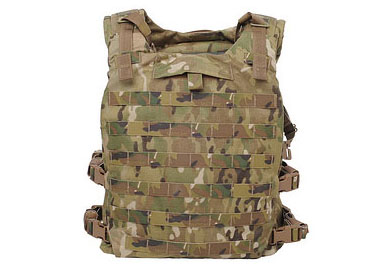
The new innovation is to combine Kevlar with a “counter-intuitive liquid”, which makes liquid body armor combined with traditional armor. This combination results in body armor of 45% less thickness, while still retaining the protective properties of the armor. The material used in liquid armor is a shear thickening fluid called shear-thickening fluid (STF) which is basically polyethylene glycol, a non-toxic, temperature-resistant substance.
How Liquid Body Armor Works
Head of Business Development for Design and Materials Technologies at BAE Systems, Stewart Penney explains. He says that the best way of understanding this technology is to think of how water gets stirred with a spoon. Initially, not much resistance is felt. However, if you start to stir more rapidly, the resistance seems to increase. There is a dual action in the case of liquid armor. When a bullet strikes the liquid at a high velocity, there is a great resistance and at the same time the liquid hardens, resulting in the impact energy gets absorbed.
In comparison, if a bullet hits Kevlar armor, a notable dent is caused in the region of the impact and the impact area is small. A soldier, who gets hit by a bullet while wearing Kevlar, may not get wounded, but it still hurts quite a lot. On the other hand, the impact of bullet in the case of liquid armor is spread over a wider area. The depth of penetration is also restricted, due to the fact that the liquid limits the flow of liquids and motion of the fabric. This causes negligible distortion in the armor and the liquid armor gets restored to its original flexible form.
Uses and Users
The new liquid armor promises to cause a marked improvement in armed forces circles as well as with the police force. This material would be of special interest to bomb disposal squads. Soldiers in high-risk combat zones will get the best benefit from wearing uniforms reinforced with liquid armor. It is stirring up some serious discussions in US Army circles.
There is research being carried out on liquid armor at the US Army Research Laboratory in Maryland. The US Army has special interest in the development of this material for obvious reasons. Dr Eric Wetzel who works for the Weapons and Materials Research Directorate and leads the project team says that technology aims at development of new materials which are both cost-effective and lightweight and yet superior to Kevlar in its bullet-stopping properties. Moreover, it should also be thinner and more flexible.
Speaking on other uses of liquid armor, Wetzel says that prison staff could also enjoy the benefits of this technology. Prison staff he says is mostly susceptible to attacks with hand-crafted weapons, and liquid armor would provide effective resistance to stabbing attacks. Dr Eric Wetzel received the Paul A Simple Award along with his team in 2002. It is the highest award for scientific accomplishment in the US Army.
The Future of Liquid Body Armor
It goes without saying that this new technology is definitely going places. As of now, this new material is still in the laboratory testing stage. However, Wetzel says that the scope of liquid armor knows no bounds. He adds that initially, the material will be placed in body locations currently unprotected by bulletproof vests like pants, sleeves and boots. It could also be used to cover suspected bombs or even added to soldiers’ jump boots for shock absorption. Liquid armor is definitely a material of the future.
DARPA has been busy with the advancement of Ground X-Vehicle Technology.
English: This was the most up-to-date DARPA logo as of January 2009. It is obsolete now. (Photo credit: Wikipedia)
There has been a consistent formula which applies to mechanized warfare for at least a century, with regards to the protection of land-based armored vehicles and those who occupy them which is, the more the armor, the more the protection. The difficulty that has developed in the recent years is that with the increased armored protection, there has been an even higher increase in the penetration power of weaponry. As a result, there has been an exponential increase in the armor on such vehicles. This decreases the mobility of these vehicles while at the same time, it shoots up the manufacturing cost. This also restricts the access of such vehicles to roads only, and it becomes next to impossible for them to gain access into restricted spaces.
Size of the Ground X-Vehicle Technology Does Matter
On looking at any US Army armored division, the first thing that one notices is that the tanks are really, really big, and expensive. For instance, a British Challenger 2 weighs 68.9 tons and comes with a price tag of $7 million. There is no escape because, with the increasing power of antitank weapons, the tanks have to be increased in size accordingly. If we take a look back into history, during the First World War, the tanks were no larger than an average-sized SUV. However, over the years, tanks began to get loaded with heavier artillery and more sophisticated armor. To compound matters further, there was a lot of technology being loaded onto these tanks. This resulted in bigger tanks – much bigger.
All this led to the US military taking a closer look at the way armored vehicles are being produced and there was a serious doubt as to whether “The more the armor, the more the protection” was the only solution to the problem. With this in mind, the Defense Advanced Research Projects Agency (DARPA) put into force the Ground X-Vehicle Technology (GXV-T) program for addressing this issue and streamlining the way mechanized warfare is executed. Under the new program, instead of adding on armor, there would be a different approach to resisting and avoiding direct hits on armored vehicles, thus increasing mobility and survivability.
Ground X-Vehicle Technology
Specifications Ground X-Vehicle Technology
Here is a product that is not quite on the drawing board yet. However the Ground X-Vehicle Technology is being pursued single-mindedly by DARPA. Here is a brief description of the technology that DARPA is trying to implement in the years to come.
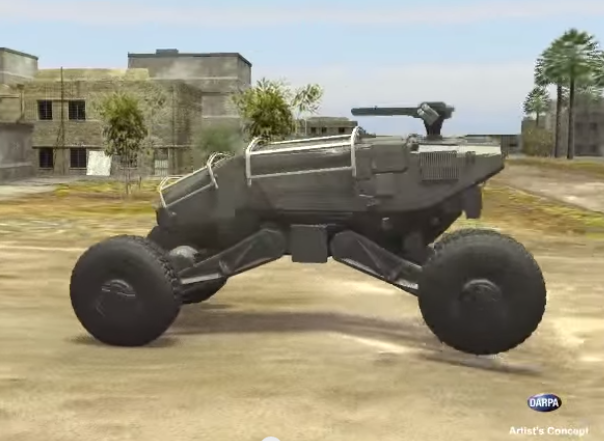
The main aim of the Ground X-Vehicle Technology is to produce tanks which are “half as heavy and twice as fast.” The program stresses on agility of the vehicles which should have capabilities of swiftly reacting to an attack by say, shifting the location of armor around within a split second. At the same time it should be able to effect a rapid change in direction in a bid to avoid a direct attack. DARPA also requires that the vehicles should have the capability of literally “dodging” bullets and rockets aimed at them.
The concept of the Ground X-Vehicle Technology program is to entirely remove the dependency on excessive armor once and for all. Kevin Massey, a DARPA program manager cites the example of the X-plane programs where more efficient aircraft was developed but, while at the same time, drastically reducing the size. The GXV-T program aims at manufacturing vehicles which are 50% smaller, thereby reducing the size of the crews and at the same time doubling the speed. These vehicles should be accessible to more than 95% of the terrain, increasing the difficulty in locating and engaging them.
What all this means is that methods have to be devised for producing tanks which are capable of off-road movements, similar to the way rally cars operate, and should be capable of dodging enemy attacks, while at the same time exhibiting stealth properties, shielding them from detection through infrared and electromagnetic sensors. In line with all these requirements, DARPA is hopeful of the emergence of these new GVX-T technologies within two years of awarding the contracts to successful bidders which is scheduled for April 2015.
DARPA Proposers’ Day
The need for bringing in fresh technology to realize the requirements of the Ground X-Vehicle Technology was expressed in the form of “Proposers Day” held on 5 September 2014. The aim of this gathering was to get prospective contractors together at one place, where they could put forth ideas, backed with the related technologies for the development of ground-based vehicles in line with the requirements of the Ground X-Vehicle Technology.
Order of Things to come
With the aggressive campaign of DARPA to create the Ground X-Vehicle Technology, it is going to be interesting to watch and see which way the wind blows. Budgets permitting, it does seem that the US Army is headed for a technological revolution in terms of ground-based vehicles. Although it is early days yet, when the technology finally does come into the field, it will probably change the way land-based army combat operations are executed. Until then, we can only wait and see what emerges with Ground X-Vehicle Technology.
A video of the Ground X-Vehicle Technology concept can be found here:
Where did the Ground Combat Vehicle come from and what is it? In 2009, the US Army announced its intention to “significantly restructure” it’s Future Combat System” (FCS). This was formally announced by the Secretary of Defense, Robert Gates. The FCS was a program being developed since the year 2000. It was to be a multi-billion dollar program which would be implemented over a period of several years, and one of the salient features of this program was the Manned Ground Vehicle, (MGV).
However, the development of the MGV was cancelled and replaced by another vehicle called the “Ground Combat Vehicle” (GCV), to replace the then existing M113s and the Bradley. The features were obviously planned to be better than the Bradley, in all respects.
M2 Bradley IFV (Photo credit: Wikipedia)
Features of the Ground Combat Vehicle
The basic philosophy behind the GCV was that it should be possible to add capabilities on to it in the future, including development of armor. Further, the vehicle should be adaptable to both existing as well as future network capabilities like jammers, radar and sensors. Furthermore, it should be integrated with mature technologies. The vehicle was expected to be in the field by the year 2017, at the latest. The capacity was expected to be a total of 13 soldiers, which would have been more that the capacity of 9 in the M2 Bradley. A common chassis would enable variants to be built around the base structure. The vehicle would also have modular armor, which could be added and removed according to combat requirements. The propulsion system would be an E-X Drive hybrid electric that would deliver high power torque.
Setbacks and Budget Cuts
Originally, once the Analysis of Alternatives (AoA) had been carried out by the army, and no other alternative contractors had been located, two contracts of $439.7 million and $449.9 million were awarded to two contractors, General Dynamics and BAE Systems, Nothrop Grumman respectively. Firms like Lockheed Martin, MTU, Detroit Diesel, Raytheon, Rheinmetall Defence, Krauss-Maffei Wegmann, SAIC and Boeing were also in the fray.
In 2010, a Request for Proposal (RFP) was issued. Under the deadlines of this RFP, companies were given up to January 2011 for proposals to be submitted for tracked or wheeled vehicles. The Army put a ceiling on the cost per vehicle to a range between $9 million to $10.5 million. The cost of each operational mile was to be $200. The vehicle was also required to fit on a C-17 transport aircraft. 1,874 vehicles had been planned, with the first ones being run off the production line in April 2018.
However, there were several clauses that the Army introduced, that would put the companies in extremely deep water, if there were any glitches in the production. For instance, there was a $450 million ceiling per company and if there was any further rise in the cost, 100% of the additional cost would have to borne by the contractor.
Further deterioration of the program occurred with Boeing protesting about its rejected proposals. The Army defended its case by stating that it had requested certain technical details from Boeing, but the company did not come forward. A total of 20 weaknesses of Boeing were identified, but according to the Army, the company did not address them adequately.
The program was officially called off on 24 February 2014, as confirmed by the Secretary of Defense, Chuck Hagel.
Potential of the Ground Combat Vehicle
If the GCV had been continued, would it, and how would it have benefited the Army? In 2009, Maj. Gen. Robert H. Scales (Ret.) wrote an article for the Armed Forces Journal. In his article, A Vehicle for Modern Times, Scales brings to the fore the burning issue of the state of the US Army’s ground forces. He feels that the GCV would be able to bring about the much-needed modernization of the US Army’s ground forces. He feels that the GCV could influence the way all other support systems of the war machine work, like sensors, network, aircraft and fire support. Scales makes a lucid observation that it is unfortunate that drastic changes are usually brought in as a consequence to the death of soldiers.
When the Stykers and Land Warriors were introduced, Scales says, they played different roles, such as long-range and short range transporters, firepower platforms, rally points or even rest centers. He says that the development of a land vehicle effectively resistant to Improvised Explosive Devices (IEDs) abundantly found in Afghanistan is far from satisfactory. He says that loading on armor has got its limitations; the balance has to be struck between offering sufficient protection and making the vehicle to unwieldy and overweight due to excessive armor. This is one good thing that the GCV has going for it.
Scales hits the nail on the head by stating that Soldiers and Marines have paid a heavy price in Iraq and Afghanistan. The Ground Combat Vehicle program he feels, would give them back what they have lost. He concludes the article with a powerful summation by saying, “Let’s get on with giving them the fighting system they deserve.”
Shipping container dimensions are something that anybody in the sea freight or logistics field should have handy. That is why I wrote this article, to give you all an easy way to look everything up at once. First I will go into some background, then I provide the dimensions.
Evolution of Shipping Containers
The modern, standardized, reusable shipping containers which we see today evolved in the 1950s, when shipping companies collaborated with the US military to develop an international standard for containers. The purpose of this standardization was to simplify the way goods were transported throughout the world, thereby creating a more efficient, secure and cost-effective shipping system. The term ‘intermodal’ is often used to indicate that these containers can be used in different modes of transport such as sea, rail or road, without having to make any modification to the container or move its contents.
One of the most significant developments in the evolution of intermodal shipping containers was the invention of the twist-lock in 1950 by Keith W Tantlinger. This seemingly insignificant invention actually revolutionized the way containers were handled and stored and is an integral part of the intermodal container even today. The twist-lock enables containers to be stacked on a ship or locked onto the base of a truck in a simple but extremely secure way.
Different Categories of Containers
The intermodal container is made of corrugated steel with a door at one end of the container. The doors have pilfer-proof latches which can be locked securely, but due to the high crime rate in the world today, these are sometimes fitted with intruder alarms. Some are even fitted with wireless radios for alerting security guards.
Due to different requirements, based on the varying nature of their cargoes, containers are modified accordingly. For example, perishable goods are transported in refrigerated containers, which are fitted with a self-contained refrigeration system, which keeps the goods at sub-zero temperatures at all times. A container can also be in the form of a tank, for the purpose of carrying liquids. Containers can be specially coated or lined internally if they are to be used for carrying cargoes like coal, chemicals or garbage. Here is a list of some of the most common container categories:
Collapsible ISO
Tank Containers (transportation of bulk liquids, including hazardous chemicals)
Insulated Containers (for fragile or volatile substances and pharmaceutical products)
Gas Containers
Garmentainers (used for transporting garments on hangers)
Ventilated Containers
Open side
Open Top (for heavy machinery and bulk minerals)
Flushfolding flat-rack containers
Standard Dimensions for Shipping Containers
The sizes and weights of these different containers are more or less the same for each class of container. However, the weight of each individual container may differ between from one manufacturer to the next. The most commonly-used containers have two basic sizes, 20 feet and 40 feet which is the length of each individual container. In the early days, both these sizes had a width and height of 8 feet each. Today, the same containers are 8 feet, six inches high.
Variations
There are taller containers, commonly known as “hi-cube” units and have a height of 9 feet, 6 inches. The United States and Canada also use longer containers from time to time. These again come in two sizes of 48 feet and 53 feet respectively.
Another variety is the “pallet wide” container. These containers are wider than standard containers by about 2 inches to accommodate the pallets commonly used in Europe known as Euro-pallets. The reason for this extra dimension is so that the pallets can be arranged side-by-side in the standard space which is provided by several shipping companies on their vessels. A similar variation is the Australian RACE container, which is adapted for placing on Australia Standard pallets. The commonest of this class of containers in the 45-foot wide container called ‘high-cube shortsea’. A standardization process has been initiated by the EU for pallet widths.
A worthwhile mention is the “tricon” and “quadcon” containers. These were exclusively developed by the United States Army. While the tricon is a set of three containers which fit into the footprint of a standard 20’ ISO container, the quadcon consists of a set of four such containers.
Container Capacity
The standard unit of container capacity is usually expressed in terms of “twenty-foot equivalents” (TEU), It is the measurement of the approximate cubic capacity of a single 20-foot by 8-foot container. The cargo contained in a 40-foot container would be thus considered as two TEU, although it could also be described as one “forty-foot equivalent unit” (FEU).
Shipping Container Dimensions
Below you will find images of the 20′, 40′, 40′ High-Cube, 45′ High-Cube, Tricon, and Quadcon variations.
Shipping Container Dimensions 40 Foot and 20 Foot Container
Today, whether at office or at home, almost every single object you lay your eyes upon has been in a container or at least part of it, at some time or the other. Standardization of container types has led to robust and cost-effective containers, which are capable of safely transporting every imaginable cargo to its destination, intact and secure. However, having said that, it is extremely important to be aware of the kind of container required for a particular cargo. One should also be familiar with the available dimensions. This will enable you to optimize the container capacity so that the maximum volume of goods can be transported in a single shipment, which will definitely prove to be cost-effective in the long run.