The US military (Department of Defense) is composed of five military branches: the Army, the Navy, the Marine Corps, the Air Force, and the Coast Guard. It has 1,369,532 active military personnel. The defense budget is set at $612 billion, with US military spending totaling to 39% of the world’s expenditure in military.
The US military’s power is best illustrated in its fleet of 19 aircraft carriers, which is 7 more when compared to the 12 aircraft carriers owned by the other countries combined all over the world. These carriers allow the army to set up military bases anywhere in the world.
The army has also come up with new equipment using its cutting-edge technology, like the Navy’s rail gun, which uses electromagnetism to power projectiles. This weapon is now being considered a game-changer considering that a rail gun is cheaper than other conventional forms of weapons.
In recent news, the Secretary of Defense said it is reinforcing the US troops in the face of Russia’s increased security threat which resurfaced in the recent Crimean crisis. Aside from Ukraine, the army is helping out fight against Islamic militants such as ISIS in Iran and Syria, as well as continuing to provide assistance to the Afghan troops.
This is a video from the War in Afghanistan (Operation Enduring Freedom). Here we can see that a U.S. soldier from 1st ID, 1st Brigade, 2-34 Bravo Co, 3rd PLT REAPERS gets shot by a distant Taliban sniper but shockingly continues his fight. This is a helmet camera footage of the soldier himself that was shot and the incident occurred in Kandahar, Afghanistan in 2011. You can see that after being shot and falling dawn he again rises up and continues to move and fight. This video is a part of an ongoing online archive from Funker530.com. The purpose of the Youtube channel is to show the war through the raw combat footage of the war.
As a matter of fact, the fighting in Afghanistan began with the Afghan Civil War in 1978, with Soviet (USSR) involvement starting in 1979 and ending in 1989. Then the Taliban took control of the nation in 1994. However Operation Enduring Freedom, which started the US involvement in the country, began after the 9/11 attacks and the initiation of Operation Enduring Freedom by the President George W. Bush in 2001. Most of the US Forces are out of Afghanistan now, with small contingents still pressing on. The 1st Brigade, 1st ID, featured in this video, is stationed in Fort Riley, Kansans and is an Armored Brigade Combat Team usually equipped with M2 Bradleys, M1 Abrams Tanks, and Paladin 155mm Howitzers.
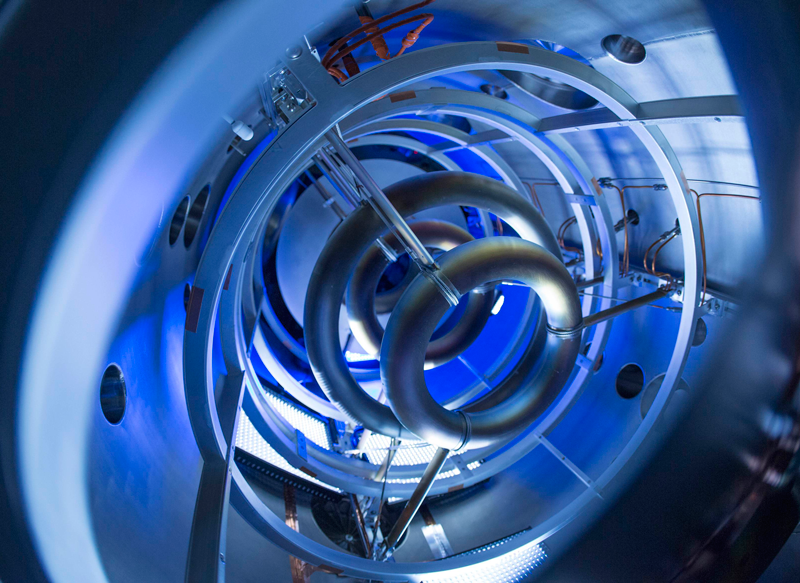
Lockheed Martin’s Skunk Works division is developing a fusion reactor that is small enough to go on an airplane, yet powerful enough to power a warship or space station. They are calling it the Compact Fusion Reactor, or the CFR. They believe they will test a CFR design in less than a year. If Lockheed Martin is successful, it will revolutionize the use of energy worldwide. Even if it remains expensive, it will still be small enough to power airplanes, space ships, trains, and other forms of transportation large enough to profit from an expensive unlimited power supply. A reactor like this could allow for travel to other star systems or even allow us to easily colonize other planets (from an energy standpoint)
Two concerns that come to mind would be security against terrorism or preventing a Fukushima type situation in a natural disaster. Could you imagine if there was an earthquake and hundreds of these mini-reactors would melt down? If Lockheed can include safeguards and the ability to shut it down on a moments notice or automatically, then there may be hope for civilian use. Others have brought up thorium reactors which are not dangerous at all. But the technology for thorium is not nearly as advanced as the Lockheed Fusion solution.
Here is the video talking about it from Lockheed Martin Skunk Works.
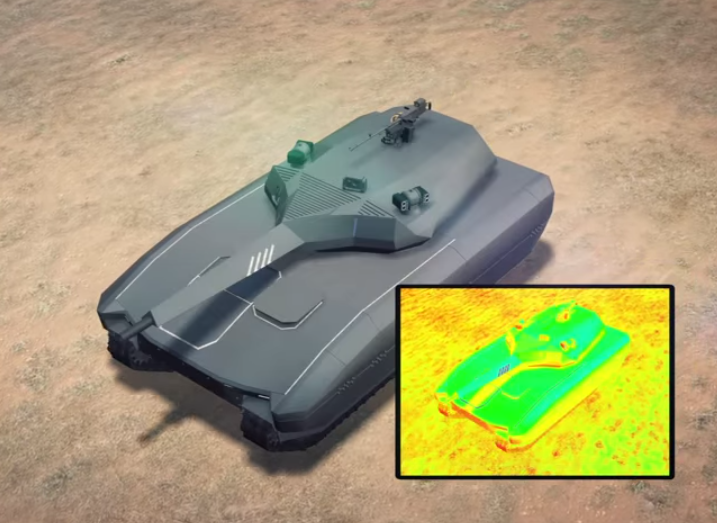
Poland is making defense technology splashes lately with the arrival of its PL-01 Tank concept, thought to be one of the tanks of the future that governments are starting to move towards. The Polish Government, Orbrum, and BAE Systems are working jointly on this project. The PL-01 Tank has a major feature, that it is virtually invisible to radar and thermals, that distinguishes it from the traditional tanks. The PL-01 Tank is invisible to enemy thermal imaging, infrared, and radar which make it unique and an attractive buy for any nation’s Army.
Launch of the PL-01 Tank:
This proposed Polish PL-01 tank is mainly designed for the Polish military and is being developed jointly between Polish Defense Company Obrum and British conglomerate BAE Systems. It is a light armored tank and designed as a fighting vehicle. It was disclosed first at the International Defense Industry Exhibition at MSPO in Poland on 2 September 2013. The tank is estimated that a full sample will be completed in 2016 and if everything goes well, it will be in service for marketing immediately thereafter. Mass production is planned to commence in 2018.
Key Specifications of the PL-01:
The Polish PL-01 tank has some unique and distinctive features that make it different from other traditional concept of most modern tanks. The obvious specification is that it is a stealth tank as far as radar and thermals are concerned. Very significant technologies are integrated into the concept to help the tank reduce its infrared signature. Cooled wafers are used on the outside of the tank to perplex the tracking systems of anti-tank weapons on the battlefield. It has the capacity to avoid the enemy thermal imaging, infrared and radar. In addition, the tank has a 940hp diesel engine that has the special capability of dispersing the exhaust system to further reduce its infrared signature. This feature will allow it to blend in with the environment by confusing the electronic detection systems of the enemy. Special cooled wafers (like a cooling plate) on the outside of the tank are used to make the tank appear more like a car or other object when it is viewed in infrared or detected in the enemy thermal devices. The tank has an unmanned turret and a large auto loading cannon. The turret is very versatile and can do multiple different firing tasks from the same vehicle. The angles of the tank are intended to diminish its radar signature and it is enclosed with a radar permeable coating. The sum total weight of the tank is 30,000 kg (standard layout) and with additional armor panels, it is 35,000 kg. The length, width and height of this vehicle are respectably 7 m, 3.8 m and 2.8 m. It can facilitate a crew of three. The main armament of this tank constitutes 105 mm or 120 mm caliber main cannon and the secondary armament is 7.62 mm remote controlled machine gun as well as other active and passive countermeasures. This includes a 40 mm or 12.7 mm grenade launcher, heat and radar reduction. It is equipped with a 940 horse power diesel engine attached to a torque converter, automatic gearbox and driving assistant mechanism. The suspension torsion bar is based on seven wheels. The speed can vary from smooth road to rough territory. On paved roads, the tank is supposed to reach up to 70 kph and on rough terrain, it can reach up to 50 kph. The operational range is maximum 500 km on paved roads. The PL-01 tank can use steel or rubber tracks. It can move rapidly on and off roads and efficiently traverses water.
English: This is the M1A2 TUSK Abrams Tank. (Photo credit: Wikipedia)
PL-01 Tank Layout and Comparison:
The design of PL-01 tank is akin to that of main battle tanks, with the driver located at the front of the vehicle and an unmanned turret mounted at the rear. There is a gunner and a commander within the hull and a crew of three soldiers can take their position in the rear part. The Combat Vehicle 90 is the model based on which the chassis of the tank is based. Currently the vehicle weighs in at about 33 tons and it is calculated that it will be about 39 tons with the additional armor. Russian T-90 main battle tank isn’t as light as the weight of the Polish tank. It is ten tons lighter than the Russian one and it is an advanced model of Abrams tank. There is a lot of criticism that the PL-01 is just another variation of the Polish Anders Tank. There are also some close similarities between the PL-01 tank and the Israeli tank Merkava – mainly that the engine-transmission compartment is located in the front part of both tanks.
English: T-90 main battle tank. (Photo credit: Wikipedia)English: IDF Merkava Mk4 main battle tank עברית: טנק מרכבה סימן 4 (Photo credit: Wikipedia)
Future Planning for the PL-01 Tank:
The Polish concept tank is currently on the stage of early development and on the verge of initialization. Designers confirm that in the future, there will be improvements to the concept to include possibly an “invisible” feature which causes the tank to appear to blend in with its surroundings to the naked eye. The designers would likely to use a system that has cameras and some type of displays on the outside of the tank. This will help the tank to match the image seen on the one side of the tank onto the video receivers on the other side of the tank. Having the tank be stealth and invisible would put it in an all new class of ground warfare that could change the battlefield forever.
Thoughts About the PL-01 Tank:
The Polish concept of PL-01 Tank is truly exciting and intriguing. It is quite interesting that the big budgets in the United States Military usually go into Aircraft (F-22 Raptor, F-35 Joint Strike Fighter) probably to help gain air superiority first. Sure they improve the ground vehicles, but not on the level of what Poland is trying to do. Poland has already conceded that it will not have air superiority against a Russian attack. So they are hoping to differentiate their forces by providing a tactical advantage with their armor. It is worth noting that there is no way Poland would have access to the stealth technology provided by BAE Systems without some kind of approval from the UK or US governments. In the end of the day, this same technology will probably make its way easily back to the United States and other NATO allies once it is fully developed and proven in Poland. The PL-01 Tank is definitely worth watching.
Before we get into the specifics of the MQ-9 Reaper Drone, one of the deadliest drones in the US arsenal, we must first cover some history.
History of the Drone
A third of the US Air Force’s aircraft is estimated to comprise of drones today. The concept of drones is not a new one. The history of drones or Unmanned Aerial Vehicles (UAVs) dates back to the 1930s with the development of the “Queen Bee” by the British Royal Navy.However, it was not until 1995, that concerted efforts were commenced by the United States to develop drones for military applications. The MQ-1 Predator (Predator A) was first put into use in 1995. It began as a surveillance vehicle and data gatherer, but was later fitted with Hellfire Missiles, for targeting suspected terrorists. It was created as a result of a directive from the Department of Defense for counter-insurgency measures at overseas locations.
Reasons for MQ-9 Reaper Drone Development
As a result of the war with Iraq, and in the aftermath of the 9/11 attacks, a need was felt to step up counter-terrorist measures by the US armed forces. The ongoing war with Afghanistan also reinforced this conviction. In 2007, the first test flights of the MQ-9 Reaper Drone were carried out at the Creech Air Force Base in Nevada. This new series of drones was first pressed into service in actual combat in Iraq and Afghanistan later during the same year. This was followed by successful missions in other countries like Ethiopia and Libya.
English: An MQ-9 Reaper unmanned aerial vehicle flies a combat mission over southern Afghanistan. (Photo credit: Wikipedia)
MQ-9 Reaper Drone Technical Specifications
The MQ-9 Reaper Drone (Predator B) was developed as an improvement to the MQ-1 Predator (Predator A). It is bigger and better than the MQ-1 Predator in terms of power and munitions delivery. The codification of the drone is as follows: “M” stands for Mulirole, “Q” for Unmanned Aerial Vehicle and “9” is the series designation.3
This drone is described as an armed drone of medium, multi-mission, medium-altitude capabilities. Its primary function is that of intelligence collection and the secondary function is attack on dynamic execution targets.
The MQ-9 Reaper is totally remote-controlled. It is fitted with a Multi-Spectral Targeted System, consisting of visual, infra-red and laser sensors. The munitions system is also laser-guided. The suite of functions that the Reaper can perform is surveillance, reconnaissance, precision strike, search and rescue during combat, convoy/raid over-watch, air support, buddy-laser, and terminal air guidance, development of targets and clearance of routes. The aircraft is fully-equipped with sensors and weapons with a satellite link between the drone and the ground control station. The entire aircraft can be dismantled and transported in a C-17 transporter or larger, but is also capable of independent taking off and landing from a standard US airfield.
Here is a summary of some of the specifications of the MQ-9 Reaper:
$56.5 million (4 aircraft with associated equipment)
Other MQ-9 Reaper Drone Buyers
The primary customer of the MQ-9 Reaper is the US Air Force and the US Government. However, the sale of this drone is not restricted to the US alone. In 2011, the US Department of Defense signed a contract with General Atomics Aeronautical Systems to supply 24 extra systems of the MQ-9 Reaper to the Italian Air Force. The total value of the contract was tagged at $15,053,926.
In 2013, the Netherlands declared that it would be acquiring its own fleet of Reapers by the year 2017, amounting to 4. Today, France and the UK are also using MQ-9 Reapers, making this drone a global product.
MQ-9 Reaper (Photo credit: Wikipedia)
Future Plans of the MQ-9 Reaper Drone
The MQ-9 Reaper has had a good tour of duty. However, it is likely to be replaced by the next generation of drones. The Army is now developing the successor to the Reaper – the Avenger (Predator – C), a sleeker and more robust design, compared to the Reaper. The main features which differentiate the Avenger from the Reaper is that the Avenger is jet-propelled and it is has stealth properties and the cruise speed is double that of the Reaper.
MQ-9 Reaper Drone Final Analysis
If we consider the track record of the MQ-9 Reaper, it would be fair to say that it has had a fairly successful journey. One thing is sure, and that is, unmanned aircraft will play a prominent role in the US Air Force in the future years. When Secretary of Defense, Robert M Gates addressed the Air Force Academy in 2011, he mentioned that although there will always be a need for manned flight in the US military, there is a great scope for the development of remotely piloted vehicles, for reconnaissance and strike. “I see no excuse for men in fighter planes to shoot down bombers,” he says, “The next Air Force is going to be built around scientists.”
It appears the MQ-9 Reaper Drone will continue to see heavy use for many years to come, until such a time as it is fully replaced by the Predator 3 and future models.