Tag: Tanks

  • PL-01 Tank – Polish Tank in a Class of it Own

    PL-01 Tank – Polish Tank in a Class of it Own

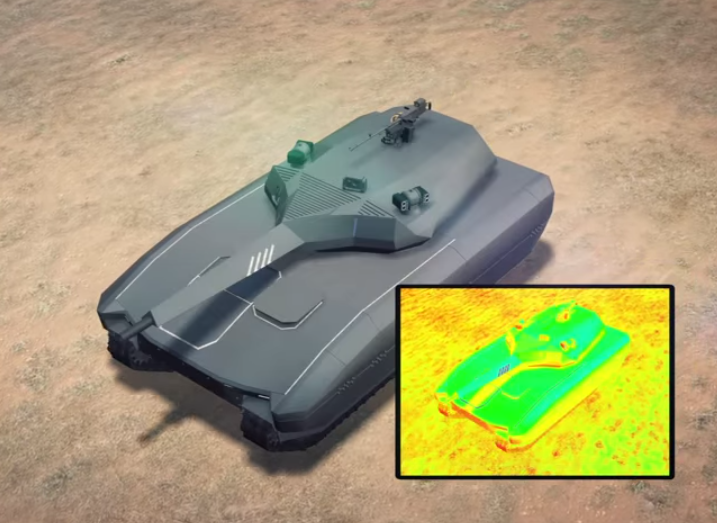
    Poland is making defense technology splashes lately with the arrival of its PL-01 Tank concept, thought to be one of the tanks of the future that governments are starting to move towards. The Polish Government, Orbrum, and BAE Systems are working jointly on this project. The PL-01 Tank has a major feature, that it is virtually invisible to radar and thermals, that distinguishes it from the traditional tanks. The PL-01 Tank is invisible to enemy thermal imaging, infrared, and radar which make it unique and an attractive buy for any nation’s Army.

    Launch of the PL-01 Tank:

    This proposed Polish PL-01 tank is mainly designed for the Polish military and is being developed jointly between Polish Defense Company Obrum and British conglomerate BAE Systems. It is a light armored tank and designed as a fighting vehicle. It was disclosed first at the International Defense Industry Exhibition at MSPO in Poland on 2 September 2013. The tank is estimated that a full sample will be completed in 2016 and if everything goes well, it will be in service for marketing immediately thereafter. Mass production is planned to commence in 2018.

    Key Specifications of the PL-01:

    The Polish PL-01 tank has some unique and distinctive features that make it different from other traditional concept of most modern tanks. The obvious specification is that it is a stealth tank as far as radar and thermals are concerned. Very significant technologies are integrated into the concept to help the tank reduce its infrared signature. Cooled wafers are used on the outside of the tank to perplex the tracking systems of anti-tank weapons on the battlefield. It has the capacity to avoid the enemy thermal imaging, infrared and radar. In addition, the tank has a 940hp diesel engine that has the special capability of dispersing the exhaust system to further reduce its infrared signature. This feature will allow it to blend in with the environment by confusing the electronic detection systems of the enemy. Special cooled wafers (like a cooling plate) on the outside of the tank are used to make the tank appear more like a car or other object when it is viewed in infrared or detected in the enemy thermal devices. The tank has an unmanned turret and a large auto loading cannon. The turret is very versatile and can do multiple different firing tasks from the same vehicle. The angles of the tank are intended to diminish its radar signature and it is enclosed with a radar permeable coating. The sum total weight of the tank is 30,000 kg (standard layout) and with additional armor panels, it is 35,000 kg. The length, width and height of this vehicle are respectably 7 m, 3.8 m and 2.8 m. It can facilitate a crew of three. The main armament of this tank constitutes 105 mm or 120 mm caliber main cannon and the secondary armament is 7.62 mm remote controlled machine gun as well as other active and passive countermeasures. This includes a 40 mm or 12.7 mm grenade launcher, heat and radar reduction. It is equipped with a 940 horse power diesel engine attached to a torque converter, automatic gearbox and driving assistant mechanism. The suspension torsion bar is based on seven wheels. The speed can vary from smooth road to rough territory. On paved roads, the tank is supposed to reach up to 70 kph and on rough terrain, it can reach up to 50 kph. The operational range is maximum 500 km on paved roads. The PL-01 tank can use steel or rubber tracks. It can move rapidly on and off roads and efficiently traverses water.

    English: This is the M1A2 TUSK Abrams Tank.
    English: This is the M1A2 TUSK Abrams Tank. (Photo credit: Wikipedia)

    PL-01 Tank Layout and Comparison:

    The design of PL-01 tank is akin to that of main battle tanks, with the driver located at the front of the vehicle and an unmanned turret mounted at the rear. There is a gunner and a commander within the hull and a crew of three soldiers can take their position in the rear part. The Combat Vehicle 90 is the model based on which the chassis of the tank is based. Currently the vehicle weighs in at about 33 tons and it is calculated that it will be about 39 tons with the additional armor. Russian T-90 main battle tank isn’t as light as the weight of the Polish tank. It is ten tons lighter than the Russian one and it is an advanced model of Abrams tank. There is a lot of criticism that the PL-01 is just another variation of the Polish Anders Tank. There are also some close similarities between the PL-01 tank and the Israeli tank Merkava – mainly that the engine-transmission compartment is located in the front part of both tanks.

    English: T-90 main battle tank.
    English: T-90 main battle tank. (Photo credit: Wikipedia)
    English: IDF Merkava Mk4 main battle tank עברי...
    English: IDF Merkava Mk4 main battle tank עברית: טנק מרכבה סימן 4 (Photo credit: Wikipedia)

    Future Planning for the PL-01 Tank:

    The Polish concept tank is currently on the stage of early development and on the verge of initialization. Designers confirm that in the future, there will be improvements to the concept to include possibly an “invisible” feature which causes the tank to appear to blend in with its surroundings to the naked eye. The designers would likely to use a system that has cameras and some type of displays on the outside of the tank. This will help the tank to match the image seen on the one side of the tank onto the video receivers on the other side of the tank. Having the tank be stealth and invisible would put it in an all new class of ground warfare that could change the battlefield forever.

    Thoughts About the PL-01 Tank:

    The Polish concept of PL-01 Tank is truly exciting and intriguing. It is quite interesting that the big budgets in the United States Military usually go into Aircraft (F-22 Raptor, F-35 Joint Strike Fighter) probably to help gain air superiority first. Sure they improve the ground vehicles, but not on the level of what Poland is trying to do. Poland has already conceded that it will not have air superiority against a Russian attack. So they are hoping to differentiate their forces by providing a tactical advantage with their armor. It is worth noting that there is no way Poland would have access to the stealth technology provided by BAE Systems without some kind of approval from the UK or US governments. In the end of the day, this same technology will probably make its way easily back to the United States and other NATO allies once it is fully developed and proven in Poland. The PL-01 Tank is definitely worth watching.

    Videos of the PL-01


  • Ground X-Vehicle Technology – Changing Mounted Warfare Forever

    Ground X-Vehicle Technology – Changing Mounted Warfare Forever

    DARPA has been busy with the advancement of Ground X-Vehicle Technology.

    English: This was the most up-to-date DARPA lo...
    English: This was the most up-to-date DARPA logo as of January 2009. It is obsolete now. (Photo credit: Wikipedia)

    There has been a consistent formula which applies to mechanized warfare for at least a century, with regards to the protection of land-based armored vehicles and those who occupy them which is, the more the armor, the more the protection. The difficulty that has developed in the recent years is that with the increased armored protection, there has been an even higher increase in the penetration power of weaponry. As a result, there has been an exponential increase in the armor on such vehicles. This decreases the mobility of these vehicles while at the same time, it shoots up the manufacturing cost. This also restricts the access of such vehicles to roads only, and it becomes next to impossible for them to gain access into restricted spaces.

    Size of the Ground X-Vehicle Technology Does Matter

    On looking at any US Army armored division, the first thing that one notices is that the tanks are really, really big, and expensive. For instance, a British Challenger 2 weighs 68.9 tons and comes with a price tag of $7 million. There is no escape because, with the increasing power of antitank weapons, the tanks have to be increased in size accordingly. If we take a look back into history, during the First World War, the tanks were no larger than an average-sized SUV. However, over the years, tanks began to get loaded with heavier artillery and more sophisticated armor. To compound matters further, there was a lot of technology being loaded onto these tanks. This resulted in bigger tanks – much bigger.

    All this led to the US military taking a closer look at the way armored vehicles are being produced and there was a serious doubt as to whether “The more the armor, the more the protection” was the only solution to the problem. With this in mind, the Defense Advanced Research Projects Agency (DARPA) put into force the Ground X-Vehicle Technology (GXV-T) program for addressing this issue and streamlining the way mechanized warfare is executed. Under the new program, instead of adding on armor, there would be a different approach to resisting and avoiding direct hits on armored vehicles, thus increasing mobility and survivability.

    Ground X-Vehicle Technology
    Ground X-Vehicle Technology

    Specifications Ground X-Vehicle Technology

    Here is a product that is not quite on the drawing board yet. However the Ground X-Vehicle Technology is being pursued single-mindedly by DARPA. Here is a brief description of the technology that DARPA is trying to implement in the years to come.

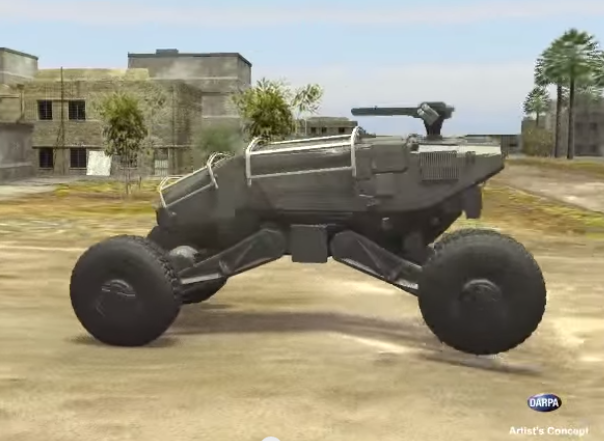
    The main aim of the Ground X-Vehicle Technology is to produce tanks which are “half as heavy and twice as fast.” The program stresses on agility of the vehicles which should have capabilities of swiftly reacting to an attack by say, shifting the location of armor around within a split second. At the same time it should be able to effect a rapid change in direction in a bid to avoid a direct attack. DARPA also requires that the vehicles should have the capability of literally “dodging” bullets and rockets aimed at them.

    The concept of the Ground X-Vehicle Technology program is to entirely remove the dependency on excessive armor once and for all. Kevin Massey, a DARPA program manager cites the example of the X-plane programs where more efficient aircraft was developed but, while at the same time, drastically reducing the size. The GXV-T program aims at manufacturing vehicles which are 50% smaller, thereby reducing the size of the crews and at the same time doubling the speed. These vehicles should be accessible to more than 95% of the terrain, increasing the difficulty in locating and engaging them.

    What all this means is that methods have to be devised for producing tanks which are capable of off-road movements, similar to the way rally cars operate, and should be capable of dodging enemy attacks, while at the same time exhibiting stealth properties, shielding them from detection through infrared and electromagnetic sensors. In line with all these requirements, DARPA is hopeful of the emergence of these new GVX-T technologies within two years of awarding the contracts to successful bidders which is scheduled for April 2015.

    DARPA Proposers’ Day

    The need for bringing in fresh technology to realize the requirements of the Ground X-Vehicle Technology was expressed in the form of “Proposers Day” held on 5 September 2014. The aim of this gathering was to get prospective contractors together at one place, where they could put forth ideas, backed with the related technologies for the development of ground-based vehicles in line with the requirements of the Ground X-Vehicle Technology.

    Order of Things to come

    With the aggressive campaign of DARPA to create the Ground X-Vehicle Technology, it is going to be interesting to watch and see which way the wind blows. Budgets permitting, it does seem that the US Army is headed for a technological revolution in terms of ground-based vehicles. Although it is early days yet, when the technology finally does come into the field, it will probably change the way land-based army combat operations are executed. Until then, we can only wait and see what emerges with Ground X-Vehicle Technology.

    A video of the Ground X-Vehicle Technology concept can be found here: