Tag: Stealth

  • PAK FA T-50 – High Performance Fifth-Generation Russian Stealth Aircraft

    PAK FA T-50 – High Performance Fifth-Generation Russian Stealth Aircraft

    The PAK FA T-50 is in an entirely new league of fighter aircraft. PAK FA is short for Perspektivny Aviatsionny Kompleks Frontovoy Aviatsii.  When translated into English, it means “Prospective Airborne Complex of Frontline Aviation” or “Future Air Complex – Tactical Air Forces”.  It is being developed by Russia to be a fifth generation stealth fighter with capabilities rivaling and even exceeding in some areas those of the American Lockheed F-22A, the first fifth generation fighter in the world. The finished prototype belonging to the Russian Air Force possesses advanced features like supercruise and extreme maneuverability and is expected to enter into service by 2015.

    English: Sukhoi T-50, b/n 51.
    English: Sukhoi T-50, b/n 51. (Photo credit: Wikipedia)

    Here are some of the specifications of the PAK T-50 fighter aircraft.

    Length: 19.8 m (65.0 ft)
    Wingspan: 13.95 m (45.8 ft)
    Height: 4.74 m (15.6 ft)
    Maximum Take Off Weight: 35,000 kg (77,160 lb)
    Powerplant: 2 × NPO Saturn izdeliye 117 (AL-41F1) initially; turbofan engines, each developing 35,000lbs of thrust
    Max Speed at Altitude: Mach 2.3
    Max Speed at Supercruise: Mach 1.6
    Fuel capacity: 10,300 kg (22,700 lb)
    Mikoyan Project 1.44
    Mikoyan Project 1.44 (Photo credit: Wikipedia)

    Origin of the PAK FA T-50

    In the 1980s, Russia sought to develop a multirole fighter that could serve as a replacement for the MiG-29s as well as for the, then recently deployed, Su-27s.  The MiG 1.44 was created through the MFI program.  The program encountered repeated delays.  Its first flight was behind schedule by nine years.  By then, Sukhoi had already started developing the technology required for the next generation aircraft even though it was not a part of the MFI program.  The development of MiG 1.44 was officially scrapped due to the lack of funds ensuing from the collapse of Soviet Union.  At that point, Sukhoi was, after winning the PAK FA competition, chosen to lead the designing of a new fifth generation aircraft.

    T-50 ПАК-ФА
    T-50 ПАК-ФА (Photo credit: Wikipedia)

    Since 2007, Russia and India have collaborated to jointly develop an Indian prototype of the T-50 stealth fighter.  The program, initially known as FGFA (Fifth Generation Fighter Aircraft) is now jointly called the PMF (Perspective Multirole Fighter).  India has agreed to bear half the cost of the projected $12 billion.  Two separate prototypes are expected to be developed in the process – one each by India and Russia.  India is expected to buy over 144 single seater PAK FAs while Russia is expected to order over 150.

    Timeline for the PAK FA T-50

    • The initial design for PAK FA was completed in 2004.
    • The first public flight was in January 2010 and lasted 47 minutes.
    • In August 2012, flight testing of the AESA radar suite was started.
    • In June 2014, a prototype T-50 caught fire during landing.  However, Sukhoi has stated that this incident “will not affect the timing of the T-50 test program”.


    Sukhoi T-50
    Sukhoi T-50 (Photo credit: Wikipedia)

    PAK FA T-50 Design

    Due to the secrecy surrounding PAK FA project, there is not much substantiated information available regarding the design and development of the T-50 prototype.  However, it is clear that it will be the first aircraft in the Russian Air Force that is stealthy.  Besides stealth, this fighter aircraft will also possess other advanced features.  Among them is a highly advanced radar system called the advanced phase array radar that adds the capacity for both, forward looking as well as side scanning.  Its sensor fusion capability will allow it to track and engage with multiple targets at the same time.  The current PAK FA prototypes that are scheduled to go into service will use the izdeliye 117 engine.  These powerful engines will allow the aircraft to supercruise; that is, sustain a supersonic flight without the use of afterburners.

    The armament details of the PAK FA have been kept largely under wraps.  However, it is believed that the current T50 prototype could be equipped with air to surface missiles, air to air missiles, anti ship missiles, anti radiation missiles, and guided bombs.  When the prototype comes into service, it may use the in-service missiles.  However, it is expected that over time special munitions will be developed specifically to be used in the PAK FA family.

    In certain aspects of design, the PAK FA does resemble the existing American fifth generation F-22s, notably in its broad shape and long lines.  Its advanced aerodynamic system gives it extreme agility, a trait that is somewhat lacking in the F-22s.  The 25,000 lb internal fuel load gives it another edge over the F-22s when it comes to combat persistence.

    The Political and Strategic Impact of the PAK FA

    A technical analysis of the PAK FA shows that is clearly more advanced in agility and aerodynamic performance than any aircraft built by the USA, whether in service currently or in planning.  Given the configuration of the PAK FA and its stealth parameters, it is believed that it will change the nature of missile combat.  The missile will come into the combat at a closer range than before, and the timeline of actual engagement will be shorter as well.  This means that stealth will be one of the most important features for fighter aircrafts in the time to come.  The other factor most likely to affect the outcome of the air combat would be the ability of the fighters to supercruise for longer periods of time.  As such, the advent of the mature production PAK FA could mean the end of line for the teen series generation aircrafts such as F-15 / F-16 / F/A-18.

    Even when it comes to the current fifth generation American fighter F-22A, the United States will not have a clear and certain advantage when it comes to air strikes and will immediately lose the ability to impose air superiority rapidly.  According to the tactical analysis, “Fights between the F-22A and the PAK FA will be close, high, fast and lethal …The outcome will be difficult to predict as it will depend a lot on the combat skills of the pilots and the capabilities of the missiles for end-game kills. There is no guarantee that the F-22 will prevail every time.”

    Summary

    PAK FA T-50 is believed to be the one of the foremost “game changers” in the field of fighter technology since T-10 & Su-27s.  Its impact is not just limited to technology and politics, but rather it could have fundamental ramifications tactically, strategically, as well as operationally.   Most importantly, it challenges the aerial advantage that the United States has held for many decades.  Unless their planning for future air power tactics changes immediately and drastically, United States will have fewer strategic options going forward that are nonnuclear in nature. The PAK FA T-50 is certainly a counter punch that will cause the US to innovate an even better fighter than the F-35 and F-22.

    Featured photo credit: GDE-Fon.com
  • PL-01 Tank – Polish Tank in a Class of it Own

    PL-01 Tank – Polish Tank in a Class of it Own

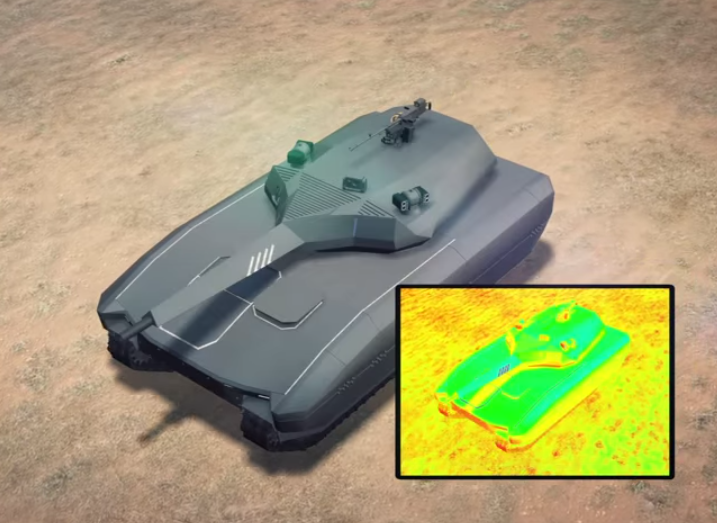
    Poland is making defense technology splashes lately with the arrival of its PL-01 Tank concept, thought to be one of the tanks of the future that governments are starting to move towards. The Polish Government, Orbrum, and BAE Systems are working jointly on this project. The PL-01 Tank has a major feature, that it is virtually invisible to radar and thermals, that distinguishes it from the traditional tanks. The PL-01 Tank is invisible to enemy thermal imaging, infrared, and radar which make it unique and an attractive buy for any nation’s Army.

    Launch of the PL-01 Tank:

    This proposed Polish PL-01 tank is mainly designed for the Polish military and is being developed jointly between Polish Defense Company Obrum and British conglomerate BAE Systems. It is a light armored tank and designed as a fighting vehicle. It was disclosed first at the International Defense Industry Exhibition at MSPO in Poland on 2 September 2013. The tank is estimated that a full sample will be completed in 2016 and if everything goes well, it will be in service for marketing immediately thereafter. Mass production is planned to commence in 2018.

    Key Specifications of the PL-01:

    The Polish PL-01 tank has some unique and distinctive features that make it different from other traditional concept of most modern tanks. The obvious specification is that it is a stealth tank as far as radar and thermals are concerned. Very significant technologies are integrated into the concept to help the tank reduce its infrared signature. Cooled wafers are used on the outside of the tank to perplex the tracking systems of anti-tank weapons on the battlefield. It has the capacity to avoid the enemy thermal imaging, infrared and radar. In addition, the tank has a 940hp diesel engine that has the special capability of dispersing the exhaust system to further reduce its infrared signature. This feature will allow it to blend in with the environment by confusing the electronic detection systems of the enemy. Special cooled wafers (like a cooling plate) on the outside of the tank are used to make the tank appear more like a car or other object when it is viewed in infrared or detected in the enemy thermal devices. The tank has an unmanned turret and a large auto loading cannon. The turret is very versatile and can do multiple different firing tasks from the same vehicle. The angles of the tank are intended to diminish its radar signature and it is enclosed with a radar permeable coating. The sum total weight of the tank is 30,000 kg (standard layout) and with additional armor panels, it is 35,000 kg. The length, width and height of this vehicle are respectably 7 m, 3.8 m and 2.8 m. It can facilitate a crew of three. The main armament of this tank constitutes 105 mm or 120 mm caliber main cannon and the secondary armament is 7.62 mm remote controlled machine gun as well as other active and passive countermeasures. This includes a 40 mm or 12.7 mm grenade launcher, heat and radar reduction. It is equipped with a 940 horse power diesel engine attached to a torque converter, automatic gearbox and driving assistant mechanism. The suspension torsion bar is based on seven wheels. The speed can vary from smooth road to rough territory. On paved roads, the tank is supposed to reach up to 70 kph and on rough terrain, it can reach up to 50 kph. The operational range is maximum 500 km on paved roads. The PL-01 tank can use steel or rubber tracks. It can move rapidly on and off roads and efficiently traverses water.

    English: This is the M1A2 TUSK Abrams Tank.
    English: This is the M1A2 TUSK Abrams Tank. (Photo credit: Wikipedia)

    PL-01 Tank Layout and Comparison:

    The design of PL-01 tank is akin to that of main battle tanks, with the driver located at the front of the vehicle and an unmanned turret mounted at the rear. There is a gunner and a commander within the hull and a crew of three soldiers can take their position in the rear part. The Combat Vehicle 90 is the model based on which the chassis of the tank is based. Currently the vehicle weighs in at about 33 tons and it is calculated that it will be about 39 tons with the additional armor. Russian T-90 main battle tank isn’t as light as the weight of the Polish tank. It is ten tons lighter than the Russian one and it is an advanced model of Abrams tank. There is a lot of criticism that the PL-01 is just another variation of the Polish Anders Tank. There are also some close similarities between the PL-01 tank and the Israeli tank Merkava – mainly that the engine-transmission compartment is located in the front part of both tanks.

    English: T-90 main battle tank.
    English: T-90 main battle tank. (Photo credit: Wikipedia)
    English: IDF Merkava Mk4 main battle tank עברי...
    English: IDF Merkava Mk4 main battle tank עברית: טנק מרכבה סימן 4 (Photo credit: Wikipedia)

    Future Planning for the PL-01 Tank:

    The Polish concept tank is currently on the stage of early development and on the verge of initialization. Designers confirm that in the future, there will be improvements to the concept to include possibly an “invisible” feature which causes the tank to appear to blend in with its surroundings to the naked eye. The designers would likely to use a system that has cameras and some type of displays on the outside of the tank. This will help the tank to match the image seen on the one side of the tank onto the video receivers on the other side of the tank. Having the tank be stealth and invisible would put it in an all new class of ground warfare that could change the battlefield forever.

    Thoughts About the PL-01 Tank:

    The Polish concept of PL-01 Tank is truly exciting and intriguing. It is quite interesting that the big budgets in the United States Military usually go into Aircraft (F-22 Raptor, F-35 Joint Strike Fighter) probably to help gain air superiority first. Sure they improve the ground vehicles, but not on the level of what Poland is trying to do. Poland has already conceded that it will not have air superiority against a Russian attack. So they are hoping to differentiate their forces by providing a tactical advantage with their armor. It is worth noting that there is no way Poland would have access to the stealth technology provided by BAE Systems without some kind of approval from the UK or US governments. In the end of the day, this same technology will probably make its way easily back to the United States and other NATO allies once it is fully developed and proven in Poland. The PL-01 Tank is definitely worth watching.

    Videos of the PL-01