Tag: Robert Gates

Robert Gates was the CIA Director from 1991 to 1993 during the George H.W. Bush administration and then became the Secretary of Defense from 2006 to 2011 in both George W. Bush and Barack Obama’s administrations.

Gates was recruited by the CIA in 1966. A year later, he resigned from the agency to serve as a second lieutenant in the US Air Force. After his short military stint, he went back to the CIA to work as an intelligence analyst. Eventually, he was promoted to the deputy director position and was nominated by Reagan as director. However, Gates did not pursue the nomination because of his involvement with the Iran-Contra affair. He was again nominated for the directorship by George H. W. Bush and was sworn in on November 6, 1991. For the record, he became the youngest director in the agency’s history, as well as the only entry-level employee to eventually be promoted as a director.

In 1993, Gates left the CIA to enter the academe. He was the President of the Texas A&M University, which is the country’s 7th largest. In 2006, then Secretary of Defense Donald Rumsfeld resigned after the blowout from the Bush administration’s handling of the war on Iraq. Gates was appointed by George W. Bush to replace Rumsfeld, and then was kept on by Obama. As secretary, Gates’ policy was to continue withdrawing the US troops still stationed in Iraq, and deploying more in Afghanistan.

Gates lifted the ban that prevented women from joining the submarines. He was also in favor for the overturning of the “Don’t ask, don’t tell” policy in the Army, which prohibited the military from being open about their sexual orientation.

Gates retired as Secretary of Defense in July 2, 2011. He was mostly known as having cut down a lot of unnecessary spending in the US military.

  • MQ-9 Reaper Drone – Death from Above

    MQ-9 Reaper Drone – Death from Above

    Before we get into the specifics of the MQ-9 Reaper Drone, one of the deadliest drones in the US arsenal, we must first cover some history.

    History of the Drone

    A third of the US Air Force’s aircraft is estimated to comprise of drones today. The concept of drones is not a new one. The history of drones or Unmanned Aerial Vehicles (UAVs) dates back to the 1930s with the development of the “Queen Bee” by the British Royal Navy. However, it was not until 1995, that concerted efforts were commenced by the United States to develop drones for military applications. The MQ-1 Predator (Predator A) was first put into use in 1995. It began as a surveillance vehicle and data gatherer, but was later fitted with Hellfire Missiles, for targeting suspected terrorists. It was created as a result of a directive from the Department of Defense for counter-insurgency measures at overseas locations.

    Reasons for MQ-9 Reaper Drone Development

    As a result of the war with Iraq, and in the aftermath of the 9/11 attacks, a need was felt to step up counter-terrorist measures by the US armed forces. The ongoing war with Afghanistan also reinforced this conviction. In 2007, the first test flights of the MQ-9 Reaper Drone were carried out at the Creech Air Force Base in Nevada. This new series of drones was first pressed into service in actual combat in Iraq and Afghanistan later during the same year. This was followed by successful missions in other countries like Ethiopia and Libya.

    English: An MQ-9 Reaper unmanned aerial vehicl...
    English: An MQ-9 Reaper unmanned aerial vehicle flies a combat mission over southern Afghanistan. (Photo credit: Wikipedia)

    MQ-9 Reaper Drone Technical Specifications

    The MQ-9 Reaper Drone (Predator B) was developed as an improvement to the MQ-1 Predator (Predator A). It is bigger and better than the MQ-1 Predator in terms of power and munitions delivery. The codification of the drone is as follows: “M” stands for Mulirole, “Q” for Unmanned Aerial Vehicle and “9” is the series designation.3

    This drone is described as an armed drone of medium, multi-mission, medium-altitude capabilities. Its primary function is that of intelligence collection and the secondary function is attack on dynamic execution targets.

    The MQ-9 Reaper is totally remote-controlled. It is fitted with a Multi-Spectral Targeted System, consisting of visual, infra-red and laser sensors. The munitions system is also laser-guided.  The suite of functions that the Reaper can perform is surveillance, reconnaissance, precision strike, search and rescue during combat, convoy/raid over-watch, air support, buddy-laser, and terminal air guidance, development of targets and clearance of routes. The aircraft is fully-equipped with sensors and weapons with a satellite link between the drone and the ground control station. The entire aircraft can be dismantled and transported in a C-17 transporter or larger, but is also capable of independent taking off and landing from a standard US airfield.

    Here is a summary of some of the specifications of the MQ-9 Reaper:

    Specifications

    Primary Function  Intelligence collection & reconnaissance
    Contractor General Atomics Aeronautical Systems, Inc.
    Power plant  Honeywell TPE331-10GD turboprop engine
    Thrust 900 shaft horsepower
    Wingspan  66 feet (20.1 meters)
    Length 36 feet (11 meters)
    Height  12.5 feet (3.8 meters)
    Weight 4,900 pounds (2,223 kilograms) empty
    Fuel Capacity 10,500 pounds (4,760 kilograms)
    Payload  4,000 pounds (602 gallons)
    Speed 3,750 pounds (1,701 kilograms)
    Range  Cruise speed approx. 230 mph
    Ceiling 1,150 miles (1,000 nautical miles)
    Armament Up to 50,000 feet (15,240 meters)
    Crew AGM-114 Hellfire missiles, GBU-12 Paveway II and GBU-38 Joint Direct Attack Munitions
    Unit Cost $56.5 million (4 aircraft with associated equipment)

    Other MQ-9 Reaper Drone Buyers

    The primary customer of the MQ-9 Reaper is the US Air Force and the US Government. However, the sale of this drone is not restricted to the US alone. In 2011, the US Department of Defense signed a contract with General Atomics Aeronautical Systems to supply 24 extra systems of the MQ-9 Reaper to the Italian Air Force. The total value of the contract was tagged at $15,053,926.

    In 2013, the Netherlands declared that it would be acquiring its own fleet of Reapers by the year 2017, amounting to 4. Today, France and the UK are also using MQ-9 Reapers, making this drone a global product.

    MQ-9 Reaper
    MQ-9 Reaper (Photo credit: Wikipedia)

    Future Plans of the MQ-9 Reaper Drone

    The MQ-9 Reaper has had a good tour of duty. However, it is likely to be replaced by the next generation of drones. The Army is now developing the successor to the Reaper – the Avenger (Predator – C), a sleeker and more robust design, compared to the Reaper. The main features which differentiate the Avenger from the Reaper is that the Avenger is jet-propelled and it is has stealth properties and the cruise speed is double that of the Reaper.

    MQ-9 Reaper Drone Final Analysis

    If we consider the track record of the MQ-9 Reaper, it would be fair to say that it has had a fairly successful journey. One thing is sure, and that is, unmanned aircraft will play a prominent role in the US Air Force in the future years. When Secretary of Defense, Robert M Gates addressed the Air Force Academy in 2011, he mentioned that although there will always be a need for manned flight in the US military, there is a great scope for the development of remotely piloted vehicles, for reconnaissance and strike. “I see no excuse for men in fighter planes to shoot down bombers,” he says, “The next Air Force is going to be built around scientists.”

    It appears the MQ-9 Reaper Drone will continue to see heavy use for many years to come, until such a time as it is fully replaced by the Predator 3 and future models.
  • Ground Combat Vehicle – The Bradley Replacement That Could Have Been

    Ground Combat Vehicle – The Bradley Replacement That Could Have Been

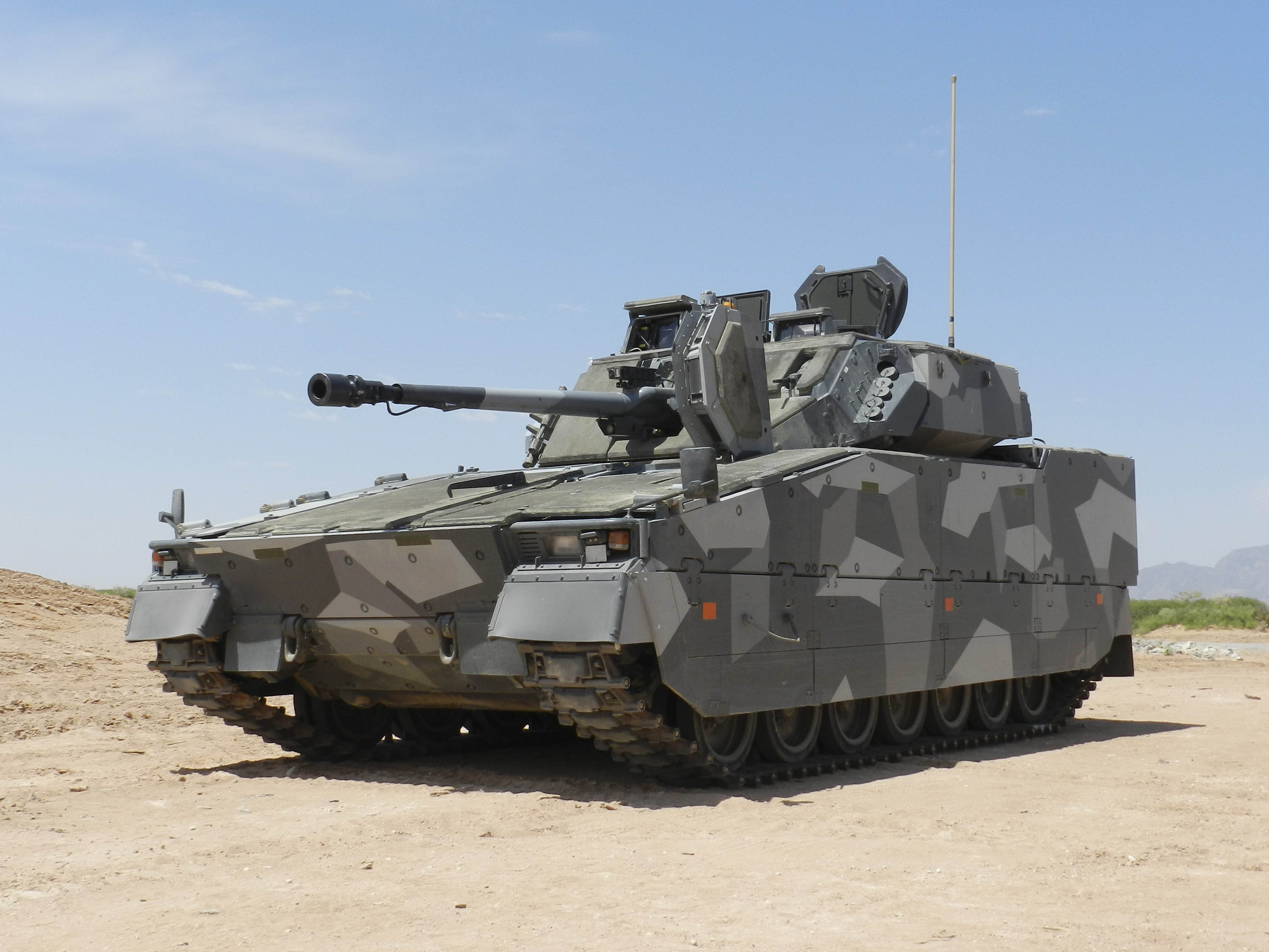
    Where did the Ground Combat Vehicle come from and what is it? In 2009, the US Army announced its intention to “significantly restructure” it’s Future Combat System” (FCS). This was formally announced by the Secretary of Defense, Robert Gates. The FCS was a program being developed since the year 2000. It was to be a multi-billion dollar program which would be implemented over a period of several years, and one of the salient features of this program was the Manned Ground Vehicle, (MGV).

    However, the development of the MGV was cancelled and replaced by another vehicle called the “Ground Combat Vehicle” (GCV), to replace the then existing M113s and the Bradley. The features were obviously planned to be better than the Bradley, in all respects.

    M2 Bradley IFV
    M2 Bradley IFV (Photo credit: Wikipedia)

    Features of the Ground Combat Vehicle

    The basic philosophy behind the GCV was that it should be possible to add capabilities on to it in the future, including development of armor. Further, the vehicle should be adaptable to both existing as well as future network capabilities like jammers, radar and sensors. Furthermore, it should be integrated with mature technologies. The vehicle was expected to be in the field by the year 2017, at the latest. The capacity was expected to be a total of 13 soldiers, which would have been more that the capacity of 9 in the M2 Bradley. A common chassis would enable variants to be built around the base structure. The vehicle would also have modular armor, which could be added and removed according to combat requirements. The propulsion system would be an E-X Drive hybrid electric that would deliver high power torque.

    Setbacks and Budget Cuts

    Originally, once the Analysis of Alternatives (AoA) had been carried out by the army, and no other alternative contractors had been located, two contracts of $439.7 million and $449.9 million were awarded to two contractors, General Dynamics and BAE Systems, Nothrop Grumman respectively. Firms like Lockheed Martin, MTU, Detroit Diesel, Raytheon, Rheinmetall Defence, Krauss-Maffei Wegmann, SAIC and Boeing were also in the fray.

    In 2010, a Request for Proposal (RFP) was issued. Under the deadlines of this RFP, companies were given up to January 2011 for proposals to be submitted for tracked or wheeled vehicles. The Army put a ceiling on the cost per vehicle to a range between $9 million to $10.5 million. The cost of each operational mile was to be $200. The vehicle was also required to fit on a C-17 transport aircraft. 1,874 vehicles had been planned, with the first ones being run off the production line in April 2018.

    However, there were several clauses that the Army introduced, that would put the companies in extremely deep water, if there were any glitches in the production. For instance, there was a $450 million ceiling per company and if there was any further rise in the cost, 100% of the additional cost would have to borne by the contractor.

    Further deterioration of the program occurred with Boeing protesting about its rejected proposals. The Army defended its case by stating that it had requested certain technical details from Boeing, but the company did not come forward. A total of 20 weaknesses of Boeing were identified, but according to the Army, the company did not address them adequately.

    The program was officially called off on 24 February 2014, as confirmed by the Secretary of Defense, Chuck Hagel.

    Potential of the Ground Combat Vehicle

    If the GCV had been continued, would it, and how would it have benefited the Army? In 2009, Maj. Gen. Robert H. Scales (Ret.) wrote an article for the Armed Forces Journal. In his article, A Vehicle for Modern Times, Scales brings to the fore the burning issue of the state of the US Army’s ground forces. He feels that the GCV would be able to bring about the much-needed modernization of the US Army’s ground forces. He feels that the GCV could influence the way all other support systems of the war machine work, like sensors, network, aircraft and fire support. Scales makes a lucid observation that it is unfortunate that drastic changes are usually brought in as a consequence to the death of soldiers.

    When the Stykers and Land Warriors were introduced, Scales says, they played different roles, such as long-range and short range transporters, firepower platforms, rally points or even rest centers. He says that the development of a land vehicle effectively resistant to Improvised Explosive Devices (IEDs) abundantly found in Afghanistan is far from satisfactory. He says that loading on armor has got its limitations; the balance has to be struck between offering sufficient protection and making the vehicle to unwieldy and overweight due to excessive armor. This is one good thing that the GCV has going for it.

    Scales hits the nail on the head by stating that Soldiers and Marines have paid a heavy price in Iraq and Afghanistan. The Ground Combat Vehicle program he feels, would give them back what they have lost. He concludes the article with a powerful summation by saying, “Let’s get on with giving them the fighting system they deserve.”