Northrop Grumman is a company that specializes in commercial aerospace and defense through its technological solutions and logistics. The company was formed in 1939 by Jack Northrop and was previously named as Northrop Aircraft, Inc. Just one year later, Northrop builds his first aircraft with the N-3PB for the Norwegian army.
In 1959, Northrop Grumman came out with the F-5, a supersonic aircraft that was cost-effective and user-friendly. This aircraft was adapted by the US Air Force and was used by more than 30 militaries from different countries. In 1994, during the company’s acquisition of the Grumman Corporation, it became the Northrop Grumman Corporation.
To date, the company is the main provider of the B2 stealth bomber fleet that is currently being used by the US Air Force. It is also the contractor for the Joint Surveillance Target Attack Radar System program, which is an advanced surveillance system on air used by both the US Air Force and US Army. The company also produces military radar systems, the E-2C Hawkeye aircraft, as well as unmanned drones and decoys. It is also one of the main suppliers for Boeing’s military aircraft. Aside from helping the military, Northrop Grumman also came up with civilian air traffic control systems for airports around the world.
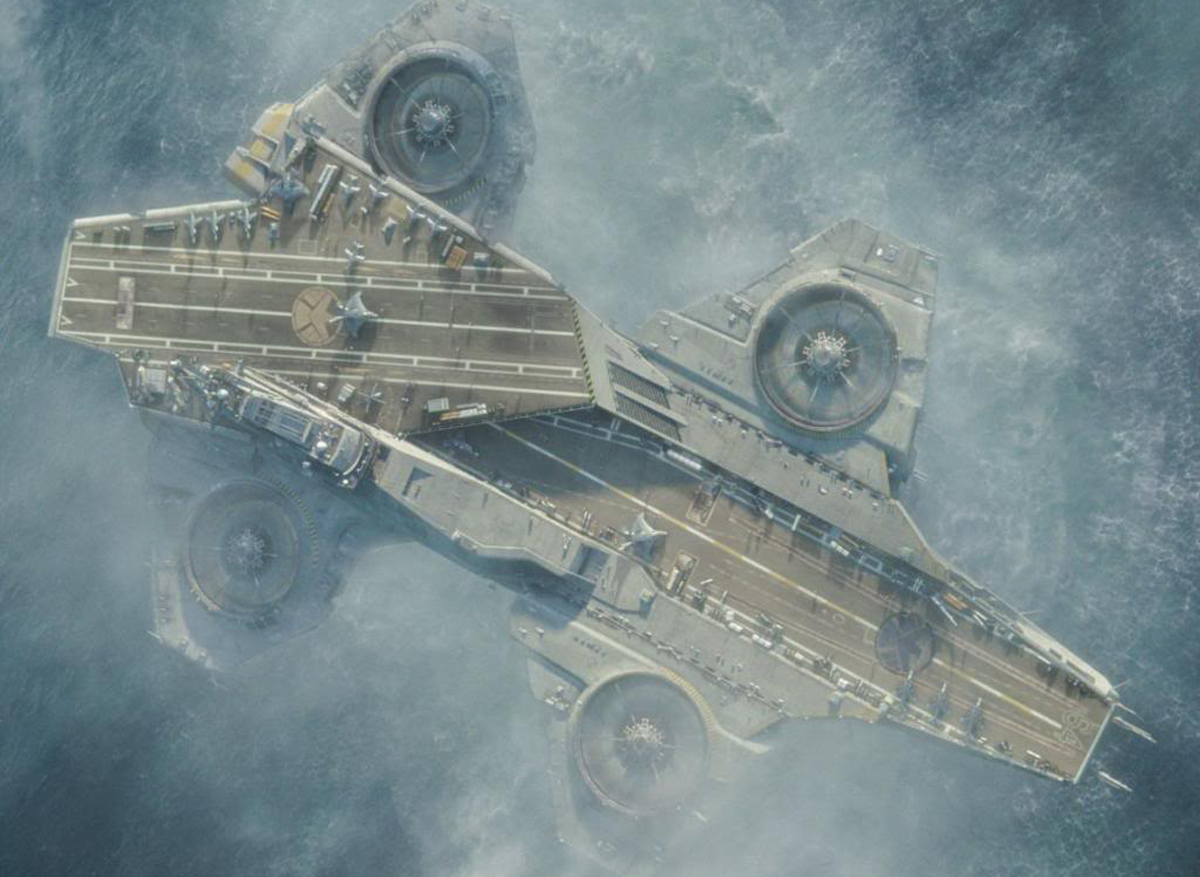
Enthusiasts from an aerospace community of flight hobbyists named Flite Test has recently developed the first ever successful drone helicarrier from which another drone can easily take off and with more appropriation can even land on it. They published this video on their Facebook page on 4th November 2014 showcasing their developed technology. However this is still in its final developing stage and has been developed to operate on small scale. But the engineers expect that the technology can be implemented in practical field of helicareer and drone development at an international scale. And the developed careers are likely to be able to serve as takeoff grounds for any wartime drone or other aircrafts that till now have to take off from the ground.
Flight Test offers a meeting place where all those who have a passion for flights, flying and aircraft engineering and development can come together to share their ideas and designs. In this video from them you can see a little toy sized drone taking off from the small rectangular remote controlled helicareer with two rotors on each side. This case study was showcased in the Horizon Indoor Electric Festival earlier this year.
This technology has major Department of Defense implications. Now that this tech has been dreamed up and put into a prototype, DARPA just might be calling Flite Test for something a little bigger. Or maybe Northrop Grumman, BAE, Boeing, or Lockheed Martin could be called on.
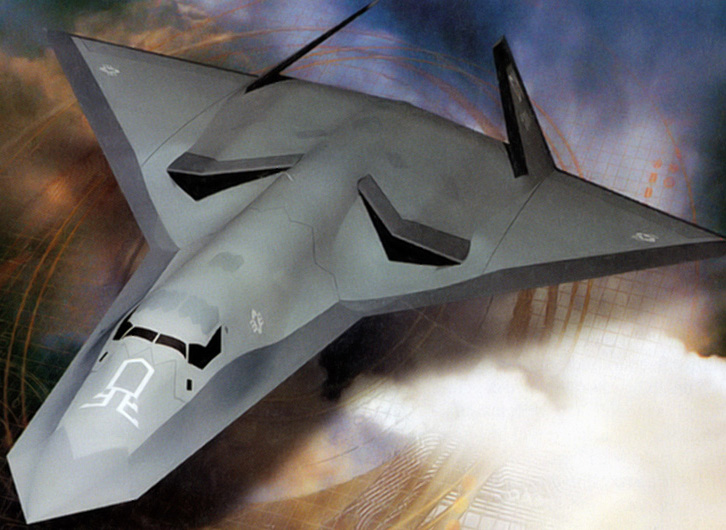
There is a new long range strike bomber being developed by the US Air Force. The aircraft program is under wraps to the extent that the Pentagon did not even admit that there is a program at all until recently, let alone giving out details about the project. A spokeswoman with the US Air Force was quoted as saying, “Specific LRS programmatic details are protected with enhanced security measures.”
Known Facts
Not much is known about the new long range strike bomber, except that there is an aircraft program called the “LRS-B” program, and it is highly classified. What is also known, is that money to the tune of $300 million has been allocated for the defense project for the fiscal year 2013-14, and the total money allocated so far from 2013 to 2017 is estimated to be about $6.3 billion. The B-3 bomber as it has come to be called will be long range, optionally-manned, and it will have stealth properties. This bomber aircraft will have a price tag of about $550 million apiece. The entire fleet of about 80 to 100 stealth bombers is expected to be commissioned by 2020.
The B-3 bomber is a replacement of the B-2 bomber, which in turn was a replacement for the B-1. So, let us take a look at the previous versions of the ‘B’ series of strike bombers.
A B-1B Lancer with wings swept full forward (Photo credit: Wikipedia)
The B-1 Bomber
The B-1 Bomber was introduced in 1986 as a replacement of the B-52 Stratofortress. This bomber aircraft was built by Rockwell International, and there were two versions. An initial version was actually in existence since 1974, called the B-1A. It was capable of carrying nuclear bombs, flew at twice the speed of sound at high altitudes and could also carry short-range attack missiles. It also had stealth features, meaning that it had the ability to lower its visibility on radar to 1/100th of the B52, but this also had an adverse effect on the speed of the aircraft. During the period of 1984 to 1988, the US Air Force built its B-1 Bomber aircraft fleet up to 100.
A U.S. Air Force Boeing B-52H Stratofortress static display with weapons, at Barksdale Air Force Base, Louisiana (USA), in 2006. (Photo credit: Wikipedia)
The second version, the B1-B is also supersonic, but its normal cruising speed is subsonic – about Mach 0.9 which is 670 miles per hour. It can fly at an altitude of as low as 200 feet above the ground. It can carry up to 24 nuclear bombs and has a flying range of 4,600 miles (7,400 kilometers) without having to refuel.
B-2A Block 10 (upgraded to Block 30) Spirit, 82-1069, “Spirit of Indiana”, of the Eighth Air Force 509th Bomb Wing (Photo credit: Wikipedia)
The B-2 Stealth Bomber
The specialty of the B-2 Stealth Bomber is that its development marked the integration of aerospace technologies with conventional aviation technology. It is a versatile aircraft, capable of delivering nuclear as well as conventional weapons.
The B-2 Bomber was developed by Northrop, Boeing in the late eighties, the first successful flight of the B-2 Bomber took place in July 1989. This bomber aircraft is built on the lines of the B-35 of the 1940s. The bodywork mostly consists of resin-impregnated graphite fiber.
More on the LRS-B Long Range Strike Bomber
Due to the utmost secrecy being maintained by the Pentagon, Northrop Grumman also seems to have been sidetracked and is non-committal on the matter (of the B-3 Bomber). Even though Northrop has not put in a bid yet, it is unknown whether they will now or will compete for the LRS-B contract at a later stage. It has been speculated that maybe it is just waiting for better terms, or a more defined scope of work on the project. Boeing and Lockheed Martin have joined hands in a bid to win the high-budget project and have been approached by the Pentagon. Boeing will be the main contractor and an announcement to this effect was made in October 2013.
The Downside of Secrecy
It has been said that excessive security can have a negative effect on development. In a recent article published in The Daily Beast, Bill Sweetman says this about the B-3 Stealth Bomber, “… almost everything about it is secret, and that’s not necessarily a good thing.” Sweetman goes on to point out that the secrecy associated with the Long Range Strike Bomber is the highest in the history of all similar projects since the 1980s. He says that while developing the B-2, certain features were developed, but never used and will never be used. Due to this reason, there were people working within a “security bubble”, who had a free hand in doing just as they pleased, as they were shielded from public scrutiny. The above reason is why some projects overrun their budgets.
Secrecy, to a point is acceptable, especially when a military weapon is being developed. But secrecy beyond reasonable limits can result in impractical technical development with a series of budget overruns, which could ultimately threaten the very existence of the project. An official announcement is expected sometime in 2015 regarding the confirmation of this aircraft program. Until then, the world will just have to rely on snippets about this much-needed, futuristic Long Range Strike bomber.
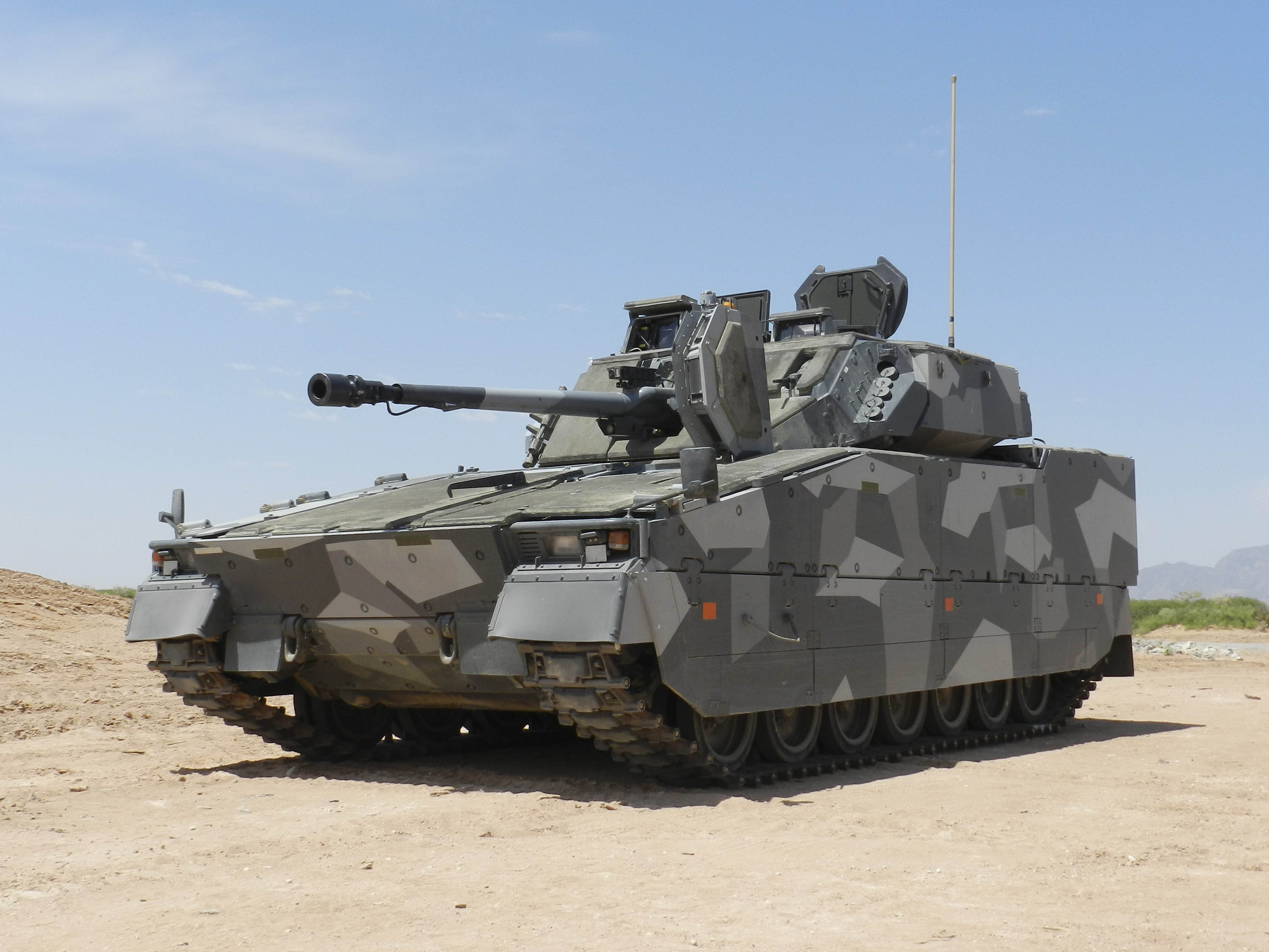
Where did the Ground Combat Vehicle come from and what is it? In 2009, the US Army announced its intention to “significantly restructure” it’s Future Combat System” (FCS). This was formally announced by the Secretary of Defense, Robert Gates. The FCS was a program being developed since the year 2000. It was to be a multi-billion dollar program which would be implemented over a period of several years, and one of the salient features of this program was the Manned Ground Vehicle, (MGV).
However, the development of the MGV was cancelled and replaced by another vehicle called the “Ground Combat Vehicle” (GCV), to replace the then existing M113s and the Bradley. The features were obviously planned to be better than the Bradley, in all respects.
M2 Bradley IFV (Photo credit: Wikipedia)
Features of the Ground Combat Vehicle
The basic philosophy behind the GCV was that it should be possible to add capabilities on to it in the future, including development of armor. Further, the vehicle should be adaptable to both existing as well as future network capabilities like jammers, radar and sensors. Furthermore, it should be integrated with mature technologies. The vehicle was expected to be in the field by the year 2017, at the latest. The capacity was expected to be a total of 13 soldiers, which would have been more that the capacity of 9 in the M2 Bradley. A common chassis would enable variants to be built around the base structure. The vehicle would also have modular armor, which could be added and removed according to combat requirements. The propulsion system would be an E-X Drive hybrid electric that would deliver high power torque.
Setbacks and Budget Cuts
Originally, once the Analysis of Alternatives (AoA) had been carried out by the army, and no other alternative contractors had been located, two contracts of $439.7 million and $449.9 million were awarded to two contractors, General Dynamics and BAE Systems, Nothrop Grumman respectively. Firms like Lockheed Martin, MTU, Detroit Diesel, Raytheon, Rheinmetall Defence, Krauss-Maffei Wegmann, SAIC and Boeing were also in the fray.
In 2010, a Request for Proposal (RFP) was issued. Under the deadlines of this RFP, companies were given up to January 2011 for proposals to be submitted for tracked or wheeled vehicles. The Army put a ceiling on the cost per vehicle to a range between $9 million to $10.5 million. The cost of each operational mile was to be $200. The vehicle was also required to fit on a C-17 transport aircraft. 1,874 vehicles had been planned, with the first ones being run off the production line in April 2018.
However, there were several clauses that the Army introduced, that would put the companies in extremely deep water, if there were any glitches in the production. For instance, there was a $450 million ceiling per company and if there was any further rise in the cost, 100% of the additional cost would have to borne by the contractor.
Further deterioration of the program occurred with Boeing protesting about its rejected proposals. The Army defended its case by stating that it had requested certain technical details from Boeing, but the company did not come forward. A total of 20 weaknesses of Boeing were identified, but according to the Army, the company did not address them adequately.
The program was officially called off on 24 February 2014, as confirmed by the Secretary of Defense, Chuck Hagel.
Potential of the Ground Combat Vehicle
If the GCV had been continued, would it, and how would it have benefited the Army? In 2009, Maj. Gen. Robert H. Scales (Ret.) wrote an article for the Armed Forces Journal. In his article, A Vehicle for Modern Times, Scales brings to the fore the burning issue of the state of the US Army’s ground forces. He feels that the GCV would be able to bring about the much-needed modernization of the US Army’s ground forces. He feels that the GCV could influence the way all other support systems of the war machine work, like sensors, network, aircraft and fire support. Scales makes a lucid observation that it is unfortunate that drastic changes are usually brought in as a consequence to the death of soldiers.
When the Stykers and Land Warriors were introduced, Scales says, they played different roles, such as long-range and short range transporters, firepower platforms, rally points or even rest centers. He says that the development of a land vehicle effectively resistant to Improvised Explosive Devices (IEDs) abundantly found in Afghanistan is far from satisfactory. He says that loading on armor has got its limitations; the balance has to be struck between offering sufficient protection and making the vehicle to unwieldy and overweight due to excessive armor. This is one good thing that the GCV has going for it.
Scales hits the nail on the head by stating that Soldiers and Marines have paid a heavy price in Iraq and Afghanistan. The Ground Combat Vehicle program he feels, would give them back what they have lost. He concludes the article with a powerful summation by saying, “Let’s get on with giving them the fighting system they deserve.”
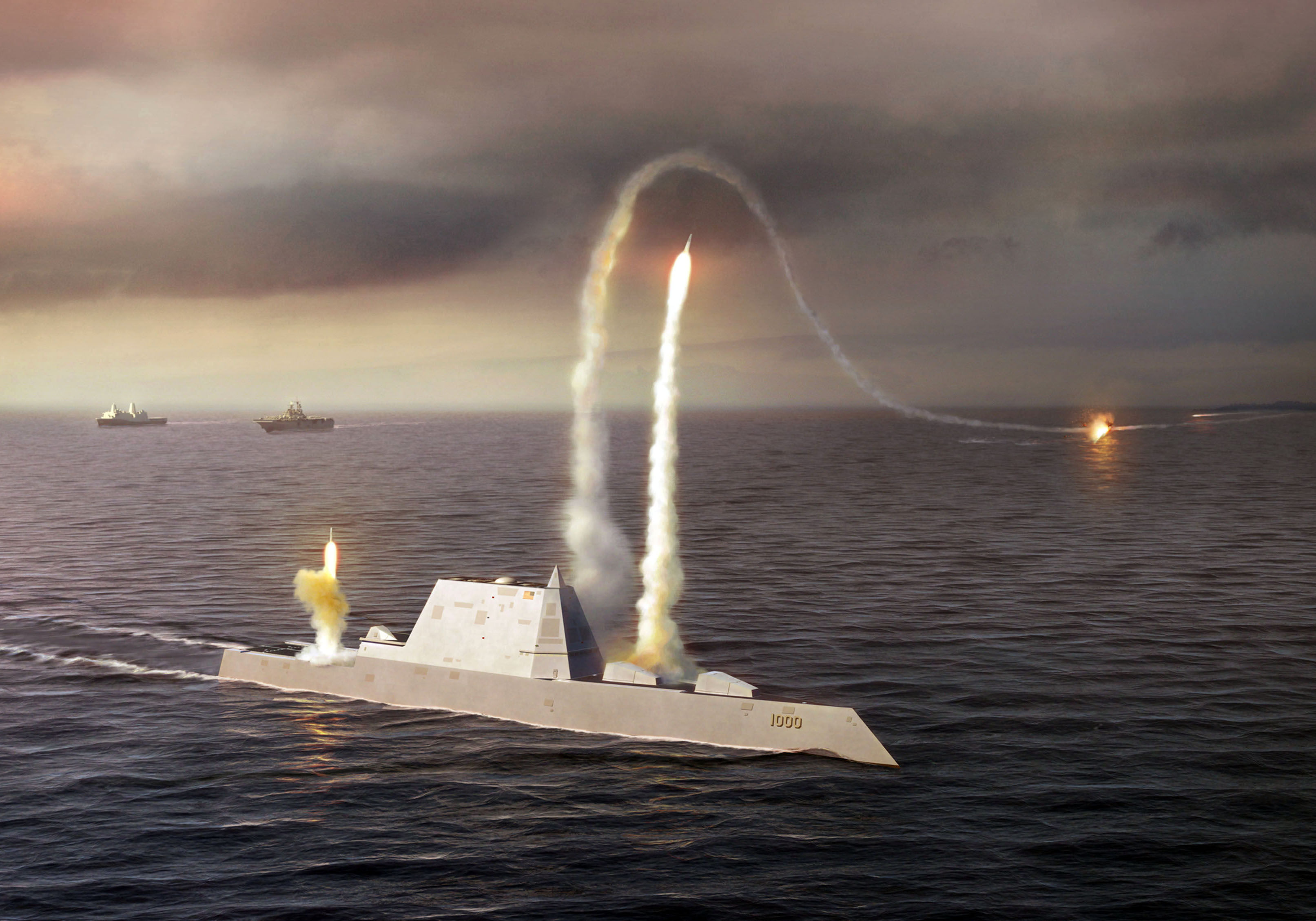
The latest darling of the US Navy is the USS Zumwalt Destroyer, a force to reckon with and on the top of the list of the US defense arsenal. Named after the renowned Chief of Naval Operations, Elmo Russell Zumwalt, Jr., the USS Zumwalt is the first in line of three such guided missile destroyers.
The origins of the ship’s basic features date back to 2001, as a result of Congressional defense cutbacks and the subsequent acquisition program. The source of the initial funding came from the National Defense Authorization Act of 2007. The summer of 2008 saw the formation of a construction timetable which was issued to the contractor, General Dynamics with a completion date targeted as March 2015. However, this deadline was later rescheduled to 2014. The first section of the ship was completed by the end of 2011. Despite much speculation about the commissioning being further delayed, the vessel was launched from Bath Iron Works on 29 October 2013.
More about the USS Zumwalt
The USS Zumwalt is a DDG-1000 class destroyer and it is one among a total of 3 destroyers of the same class, from the Bath Iron Works, the other two being the Michael Monsoor (DDG 1001) and Lyndon B. Johnson (DDG 1002) which are scheduled to be completed in 2015.
What makes the USS Zumwalt special is that it is the first of its kind to have some advanced features that were not available with previous ships. Although the bridge is constructed like any other regular ship’s bridge, the Zumwalt is fitted with software that enables the captain to control systems at any location onboard.
The Zumwalt is also equipped with some of the most advanced radar tracking systems, laser weapons and rail guns and a few gizmos that are still under test by the US Navy. However, the biggest asset of the Zumwalt is its stealth properties. The shielding is designed to make the ship show up as a mere fishing boat on enemy radar!
Other Special Features
The Zumwalt is fitted with Raytheon’s Integrated Indersea Warfare sonar, which is built from the type of sonar sensors which are used by sophisticated submarines. The high degree of computerization on board and the high level of automation cuts down manpower requirements drastically. In comparison the 210 sailors required to man an Arleigh-Burke-class destroyer, the USS Zumwalt only requires 130 personnel, with the addition of another 28 for aviation operations. There is a helipad on the ship which accommodates 2 helicopters and a vertical takeoff drone.
080214-N-0923G-005 WASHINGTON A model of the DDG 1000 Zumwalt Class destroyer to be built by Bath Iron Works and Northrop Grumman Shipbuilding is displayed during a contract signing ceremony at the Pentagon. Both companies signed $1.4 billion construction contracts with the Navy as part of the Navy dual lead-ship strategy to introduce the new class of destroyer that will deliver improved warfighting capabilities, continued forward presence and combat power for the surface Navy. ) (Photo credit: Wikipedia)
Budget Considerations
As can be well imagined, the cost of all the power and technology that is packed into the USS Zumwalt comes at a price, and a considerable one, at that. Originally, the projected budget of this ship was put at $3.8 billion. However, with all the added developmental costs involved, the original estimate has become inflated to $7 billion. The General Accounting Office initially felt that excessive technology was being pumped into a single vessel, more than required. Due to the huge size of the hull, General Dynamics had to spend $40 million on a building at the Bath Shipyard to accommodate it. It is a well-known fact that originally, 32 Zumwalt-class ships had been planned for, but when the initial estimates came out, this number was hurriedly chiseled down to 24, and the final number ended with just 3.
English: Zumwalt class destroyer (side view) (Photo credit: Wikipedia)
What it means to the US Navy
The basic objective behind the entire Zumwalt project, although not specifically spelt out by the US Navy, seems to be to show its military presence in the Pacific to counter China’s increasing military power in that area. It is a subtle or maybe not so subtle attempt at maintaining the balance of power in the region.
Future Plans
There are no plans to build more than 3 Zumwalt class ships. The US Navy will then revert back to building the traditional Arleigh Burke-class destroyers. It is estimated that even if extensive modernization is applied to these classical vessels, the costs will still be well below those incurred during the Zumwalt-class production line.
English: PACIFIC OCEAN (Aug. 16, 2009) The Arleigh Burke-class guided-missile destroyer USS Mustin (DDG 89) transits the western Pacific Ocean. Mustin is one of seven Arleigh Burke-class destroyers assigned to Destroyer Squadron (DESRON) 15 and operates from Yokosuka, Japan. (U.S. Navy photo by Mass Communication Specialist 2nd Class Bryan Reckard/Released) (Photo credit: Wikipedia)
Reflections on the Zumwalt
The USS Zumwalt and the other associated Zumwalt-class destroyers represent a shot in the arm for the US Navy. It is through these vessels that the American military presence can somewhat renew its strength. Here is a vessel which has a lot of power packed into its punch, and enough technology added to make the force of the US Navy felt. However, this class of Navy vessel cannot be sustained indefinitely in the cash-strapped American economy. A balance has to be struck at some point. We have seen the birth of the USS Zumwalt, but how sure can we be about the emergence of the remaining two ships? What can be confirmed however is that the USS Zumwalt is here to stay. It continues to be a proud feather in the cap of the US navy.