Lockheed Martin began in 1912, when its founder, Glenn L. Martin, created the Glenn L. Martin Company in Los Angeles, California. He created his first plane on a rented church, of all places, and was inspired and urged on by Orville Wright, one-half of the famous Wright brothers.
During the very same year, talented mechanics Allan and Malcolm Lockheed set up a shop from their own garage, constructed seaplanes, and created the Alco Hydro-Aeroplane Company, which later became the Lockheed Aircraft Company. These two companies merged in 1995 to form what is Lockheed Martin today – a company with interests in aerospace, defense, and security technology.
Its headquarters is located in Bethesda, Maryland. And with more than 116,000 employees worldwide, the company is considered as one of the largest defense contractors in the world.
Lockheed is divided into 5 business units, namely, Aeronautics, Information Systems & Global Solutions, Missile and Fire Control, Mission Systems and Training, and Space Systems. Most of its revenues come from the US government, but it also accepts foreign government and commercial contracts. In 2008, it has received $36 billion worth of government contracts. It works with a host of government agencies, such as the Department of Defense and Department of Energy. It is also involved in surveillance work with the CIA, NSA, and the Pentagon.
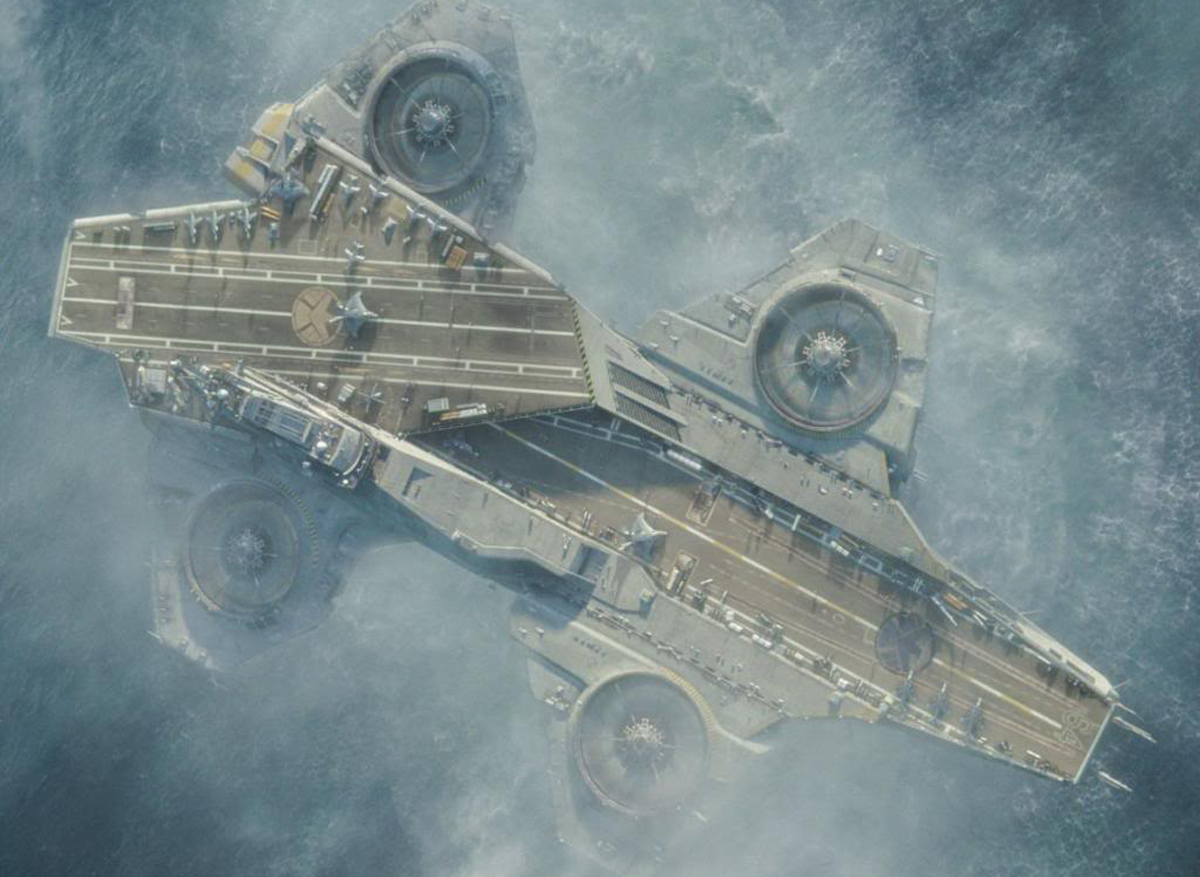
Enthusiasts from an aerospace community of flight hobbyists named Flite Test has recently developed the first ever successful drone helicarrier from which another drone can easily take off and with more appropriation can even land on it. They published this video on their Facebook page on 4th November 2014 showcasing their developed technology. However this is still in its final developing stage and has been developed to operate on small scale. But the engineers expect that the technology can be implemented in practical field of helicareer and drone development at an international scale. And the developed careers are likely to be able to serve as takeoff grounds for any wartime drone or other aircrafts that till now have to take off from the ground.
Flight Test offers a meeting place where all those who have a passion for flights, flying and aircraft engineering and development can come together to share their ideas and designs. In this video from them you can see a little toy sized drone taking off from the small rectangular remote controlled helicareer with two rotors on each side. This case study was showcased in the Horizon Indoor Electric Festival earlier this year.
This technology has major Department of Defense implications. Now that this tech has been dreamed up and put into a prototype, DARPA just might be calling Flite Test for something a little bigger. Or maybe Northrop Grumman, BAE, Boeing, or Lockheed Martin could be called on.
Lockheed Martin’s Skunk Works division is developing a fusion reactor that is small enough to go on an airplane, yet powerful enough to power a warship or space station. They are calling it the Compact Fusion Reactor, or the CFR. They believe they will test a CFR design in less than a year. If Lockheed Martin is successful, it will revolutionize the use of energy worldwide. Even if it remains expensive, it will still be small enough to power airplanes, space ships, trains, and other forms of transportation large enough to profit from an expensive unlimited power supply. A reactor like this could allow for travel to other star systems or even allow us to easily colonize other planets (from an energy standpoint)
Two concerns that come to mind would be security against terrorism or preventing a Fukushima type situation in a natural disaster. Could you imagine if there was an earthquake and hundreds of these mini-reactors would melt down? If Lockheed can include safeguards and the ability to shut it down on a moments notice or automatically, then there may be hope for civilian use. Others have brought up thorium reactors which are not dangerous at all. But the technology for thorium is not nearly as advanced as the Lockheed Fusion solution.
Here is the video talking about it from Lockheed Martin Skunk Works.
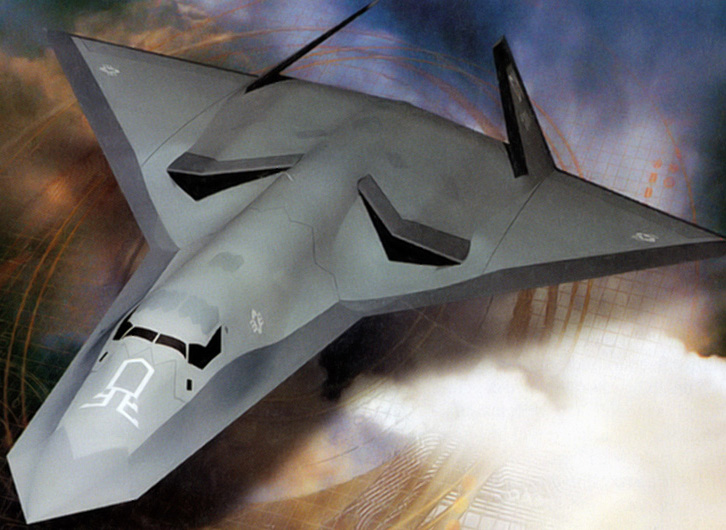
There is a new long range strike bomber being developed by the US Air Force. The aircraft program is under wraps to the extent that the Pentagon did not even admit that there is a program at all until recently, let alone giving out details about the project. A spokeswoman with the US Air Force was quoted as saying, “Specific LRS programmatic details are protected with enhanced security measures.”
Known Facts
Not much is known about the new long range strike bomber, except that there is an aircraft program called the “LRS-B” program, and it is highly classified. What is also known, is that money to the tune of $300 million has been allocated for the defense project for the fiscal year 2013-14, and the total money allocated so far from 2013 to 2017 is estimated to be about $6.3 billion. The B-3 bomber as it has come to be called will be long range, optionally-manned, and it will have stealth properties. This bomber aircraft will have a price tag of about $550 million apiece. The entire fleet of about 80 to 100 stealth bombers is expected to be commissioned by 2020.
The B-3 bomber is a replacement of the B-2 bomber, which in turn was a replacement for the B-1. So, let us take a look at the previous versions of the ‘B’ series of strike bombers.
A B-1B Lancer with wings swept full forward (Photo credit: Wikipedia)
The B-1 Bomber
The B-1 Bomber was introduced in 1986 as a replacement of the B-52 Stratofortress. This bomber aircraft was built by Rockwell International, and there were two versions. An initial version was actually in existence since 1974, called the B-1A. It was capable of carrying nuclear bombs, flew at twice the speed of sound at high altitudes and could also carry short-range attack missiles. It also had stealth features, meaning that it had the ability to lower its visibility on radar to 1/100th of the B52, but this also had an adverse effect on the speed of the aircraft. During the period of 1984 to 1988, the US Air Force built its B-1 Bomber aircraft fleet up to 100.
A U.S. Air Force Boeing B-52H Stratofortress static display with weapons, at Barksdale Air Force Base, Louisiana (USA), in 2006. (Photo credit: Wikipedia)
The second version, the B1-B is also supersonic, but its normal cruising speed is subsonic – about Mach 0.9 which is 670 miles per hour. It can fly at an altitude of as low as 200 feet above the ground. It can carry up to 24 nuclear bombs and has a flying range of 4,600 miles (7,400 kilometers) without having to refuel.
B-2A Block 10 (upgraded to Block 30) Spirit, 82-1069, “Spirit of Indiana”, of the Eighth Air Force 509th Bomb Wing (Photo credit: Wikipedia)
The B-2 Stealth Bomber
The specialty of the B-2 Stealth Bomber is that its development marked the integration of aerospace technologies with conventional aviation technology. It is a versatile aircraft, capable of delivering nuclear as well as conventional weapons.
The B-2 Bomber was developed by Northrop, Boeing in the late eighties, the first successful flight of the B-2 Bomber took place in July 1989. This bomber aircraft is built on the lines of the B-35 of the 1940s. The bodywork mostly consists of resin-impregnated graphite fiber.
More on the LRS-B Long Range Strike Bomber
Due to the utmost secrecy being maintained by the Pentagon, Northrop Grumman also seems to have been sidetracked and is non-committal on the matter (of the B-3 Bomber). Even though Northrop has not put in a bid yet, it is unknown whether they will now or will compete for the LRS-B contract at a later stage. It has been speculated that maybe it is just waiting for better terms, or a more defined scope of work on the project. Boeing and Lockheed Martin have joined hands in a bid to win the high-budget project and have been approached by the Pentagon. Boeing will be the main contractor and an announcement to this effect was made in October 2013.
The Downside of Secrecy
It has been said that excessive security can have a negative effect on development. In a recent article published in The Daily Beast, Bill Sweetman says this about the B-3 Stealth Bomber, “… almost everything about it is secret, and that’s not necessarily a good thing.” Sweetman goes on to point out that the secrecy associated with the Long Range Strike Bomber is the highest in the history of all similar projects since the 1980s. He says that while developing the B-2, certain features were developed, but never used and will never be used. Due to this reason, there were people working within a “security bubble”, who had a free hand in doing just as they pleased, as they were shielded from public scrutiny. The above reason is why some projects overrun their budgets.
Secrecy, to a point is acceptable, especially when a military weapon is being developed. But secrecy beyond reasonable limits can result in impractical technical development with a series of budget overruns, which could ultimately threaten the very existence of the project. An official announcement is expected sometime in 2015 regarding the confirmation of this aircraft program. Until then, the world will just have to rely on snippets about this much-needed, futuristic Long Range Strike bomber.
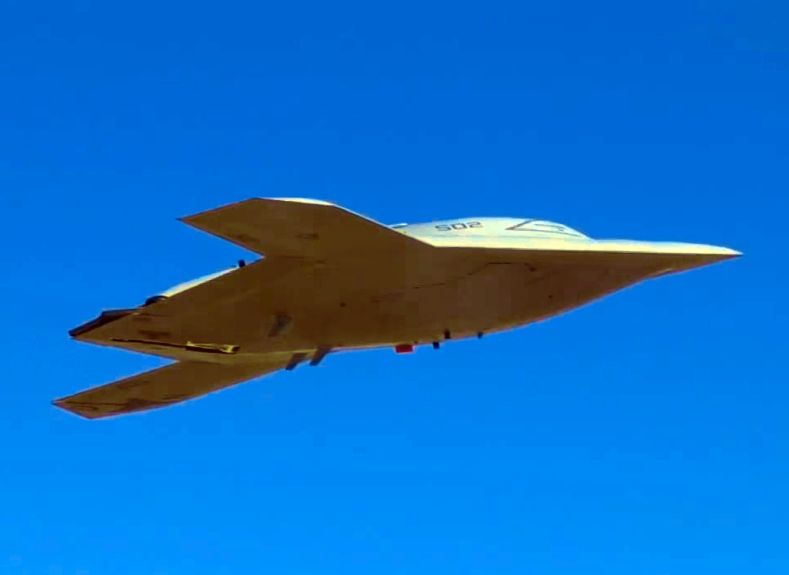
The US Air Force and the Pentagon have been pursuing their drone development program since 1995, the most prominent drone series being the Predator series (A, B & C). Today, it is a full-fledged operation. One of the latest projects now being pursued is the US Air Force’s RQ-170 Sentinel Drone, manufactured by Lockheed Martin. The US Air Force has not released much information about this drone. However, this US drone is known to be a stealth aircraft, fitted with reconnaissance equipment for the purpose of gathering data from non-cooperative countries such as Iran, Iraq and Afghanistan. It is being used since 2011, when it was launched during the ongoing war in Afghanistan, called “Operation Enduring Freedom”.
It is also worthwhile to note that this US drone was used quite effectively for tracking down Osama Bin Laden, the mastermind of the 9/11 attacks. The system is believed to have been set up in the Pakistani town of Abbottabad where the terrorist was believed to have been hiding, in a heavily guarded compound, with the full knowledge of the Pakistani authorities. It was through the data fed to the Navy SEALs from the Sentinel system that they were able to penetrate the compound and terminate this dreaded terrorist on the spot.
The RQ-170 Sentinel has also been used in South Korean airspace, which would have been obviously for the purpose of spying on activities in North Korea.
Lockheed Martin RQ-170 Sentinel (Photo credit: Wikipedia)
Duplication of the Sentinel
In December 2011, an RQ-170 Sentinel was sent into Iran on a reconnaissance mission. The Iranian armed forces intercepted the drone and hacked into its navigation systems, managing to capture it. They claimed that they had been able to duplicate it by decoding the software and using reverse engineering. Although, the claims were stated as being fake by a former Pentagon official, the Iranians stuck to their story and showed video footage of the drone.
The landing gear, however, was covered by a banner stating, “We’ll trample America underfoot” and “the US cannot do a damn thing.”
The RQ-170 Sentinel has also been copied by the Chinese who released pictures of the copied drone along with some other aircraft.
Specifications
The specifications the US drone described here are not official, as there are no official documents available, due to the highly classified nature of the RQ-170 Sentinel project, as it is being kept under wraps by the CIA and the Pentagon. However, what has been reproduced here, are as accurately-possible facts, which should give a fair picture about the Sentinel and its capabilities.
The RQ-170 Sentinel by Lockheed Martin is a rather new addition to the United States Air Force’s fleet of Unmanned Aerial Vehicles (UAVs). It is a stealth vehicle, which is supposed to be a cost-effective drone with added qualities put on to existing design features. The purpose of the Sentinel is for surveillance and reconnaissance of enemy territories from a high altitude. The drone is mostly connected to CIA missions, which is the reason most of the information on it remains classified by the Pentagon and unavailable to the general public.
A B-2 Spirit soars after a refueling mission over the Pacific Ocean on Tuesday, May 30, 2006. The B-2, from the 509th Bomb Wing at Whiteman Air Force Base, Mo., is part of a continuous bomber presence in the Asia-Pacific region. (U.S. Air Force photo/Staff Sgt. Bennie J. Davis III) (Photo credit: Wikipedia)
Looks-wise, the Sentinel is more of wing, with less of vertical tail surfaces. The wing structures are swept towards the rear of the aircraft, giving it the appearance of the B-2 Spirit Stealth Bomber. It is powered by a single General Electric TF34 series turbofan engine. The payload region is also located in the central area. The abundant wings serve the purpose of offering extra fuel storage. The undercarriage is in a regular tricycle configuration with two main landing wheels and a single landing gear in the nose section.
The aircraft is equipped with a full suite of cameras and sensors. There are full motion real-time cameras and radioactive isotope-detecting sensors for locating nuclear material. It is assumed that the drone is also armed with missiles, in the same way that the Predator is. It is also understood to have the latest infra-red and other optical devices fitted.
The maximum altitude observed by this drone is at least 50,000 feet. The wingspan is estimated at 26 meters, with a height of 1.84 meters and a length of 4.5 meters.
Future Prospects of the Sentinel
It would seem that the Sentinel has had a rather big setback with the copying of its design by the Iranians. Although there is no information forthcoming from the Department of Defense, the Pentagon, US Air Force or the CIA, there is no dearth of information emanating from Iran regarding the Sentinel and future plans. RT.com News published an article in May 2014 quotes a statement made by Iranian leaders who said that their engineers have managed to decode the drone’s technology and copy it. There will soon be a test flight, they promised.
From what we see, the RQ-170 Sentinel is definitely here to stay, but if the US military is to keep the technology to itself, it is going to have to figure out how to keep its classified secrets from falling into enemy hands, as has been the case in the recent past.
The PAK FA T-50 is in an entirely new league of fighter aircraft. PAK FA is short for Perspektivny Aviatsionny Kompleks Frontovoy Aviatsii. When translated into English, it means “Prospective Airborne Complex of Frontline Aviation” or “Future Air Complex – Tactical Air Forces”. It is being developed by Russia to be a fifth generation stealth fighter with capabilities rivaling and even exceeding in some areas those of the American Lockheed F-22A, the first fifth generation fighter in the world. The finished prototype belonging to the Russian Air Force possesses advanced features like supercruise and extreme maneuverability and is expected to enter into service by 2015.
In the 1980s, Russia sought to develop a multirole fighter that could serve as a replacement for the MiG-29s as well as for the, then recently deployed, Su-27s. The MiG 1.44 was created through the MFI program. The program encountered repeated delays. Its first flight was behind schedule by nine years. By then, Sukhoi had already started developing the technology required for the next generation aircraft even though it was not a part of the MFI program. The development of MiG 1.44 was officially scrapped due to the lack of funds ensuing from the collapse of Soviet Union. At that point, Sukhoi was, after winning the PAK FA competition, chosen to lead the designing of a new fifth generation aircraft.
T-50 ПАК-ФА (Photo credit: Wikipedia)
Since 2007, Russia and India have collaborated to jointly develop an Indian prototype of the T-50 stealth fighter. The program, initially known as FGFA (Fifth Generation Fighter Aircraft) is now jointly called the PMF (Perspective Multirole Fighter). India has agreed to bear half the cost of the projected $12 billion. Two separate prototypes are expected to be developed in the process – one each by India and Russia. India is expected to buy over 144 single seater PAK FAs while Russia is expected to order over 150.
Timeline for the PAK FA T-50
The initial design for PAK FA was completed in 2004.
The first public flight was in January 2010 and lasted 47 minutes.
In August 2012, flight testing of the AESA radar suite was started.
In June 2014, a prototype T-50 caught fire during landing. However, Sukhoi has stated that this incident “will not affect the timing of the T-50 test program”.
Sukhoi T-50 (Photo credit: Wikipedia)
PAK FA T-50 Design
Due to the secrecy surrounding PAK FA project, there is not much substantiated information available regarding the design and development of the T-50 prototype. However, it is clear that it will be the first aircraft in the Russian Air Force that is stealthy. Besides stealth, this fighter aircraft will also possess other advanced features. Among them is a highly advanced radar system called the advanced phase array radar that adds the capacity for both, forward looking as well as side scanning. Its sensor fusion capability will allow it to track and engage with multiple targets at the same time. The current PAK FA prototypes that are scheduled to go into service will use the izdeliye 117 engine. These powerful engines will allow the aircraft to supercruise; that is, sustain a supersonic flight without the use of afterburners.
The armament details of the PAK FA have been kept largely under wraps. However, it is believed that the current T50 prototype could be equipped with air to surface missiles, air to air missiles, anti ship missiles, anti radiation missiles, and guided bombs. When the prototype comes into service, it may use the in-service missiles. However, it is expected that over time special munitions will be developed specifically to be used in the PAK FA family.
In certain aspects of design, the PAK FA does resemble the existing American fifth generation F-22s, notably in its broad shape and long lines. Its advanced aerodynamic system gives it extreme agility, a trait that is somewhat lacking in the F-22s. The 25,000 lb internal fuel load gives it another edge over the F-22s when it comes to combat persistence.
The Political and Strategic Impact of the PAK FA
A technical analysis of the PAK FA shows that is clearly more advanced in agility and aerodynamic performance than any aircraft built by the USA, whether in service currently or in planning. Given the configuration of the PAK FA and its stealth parameters, it is believed that it will change the nature of missile combat. The missile will come into the combat at a closer range than before, and the timeline of actual engagement will be shorter as well. This means that stealth will be one of the most important features for fighter aircrafts in the time to come. The other factor most likely to affect the outcome of the air combat would be the ability of the fighters to supercruise for longer periods of time. As such, the advent of the mature production PAK FA could mean the end of line for the teen series generation aircrafts such as F-15 / F-16 / F/A-18.
Even when it comes to the current fifth generation American fighter F-22A, the United States will not have a clear and certain advantage when it comes to air strikes and will immediately lose the ability to impose air superiority rapidly. According to the tactical analysis, “Fights between the F-22A and the PAK FA will be close, high, fast and lethal …The outcome will be difficult to predict as it will depend a lot on the combat skills of the pilots and the capabilities of the missiles for end-game kills. There is no guarantee that the F-22 will prevail every time.”
Summary
PAK FA T-50 is believed to be the one of the foremost “game changers” in the field of fighter technology since T-10 & Su-27s. Its impact is not just limited to technology and politics, but rather it could have fundamental ramifications tactically, strategically, as well as operationally. Most importantly, it challenges the aerial advantage that the United States has held for many decades. Unless their planning for future air power tactics changes immediately and drastically, United States will have fewer strategic options going forward that are nonnuclear in nature. The PAK FA T-50 is certainly a counter punch that will cause the US to innovate an even better fighter than the F-35 and F-22.
Where did the Ground Combat Vehicle come from and what is it? In 2009, the US Army announced its intention to “significantly restructure” it’s Future Combat System” (FCS). This was formally announced by the Secretary of Defense, Robert Gates. The FCS was a program being developed since the year 2000. It was to be a multi-billion dollar program which would be implemented over a period of several years, and one of the salient features of this program was the Manned Ground Vehicle, (MGV).
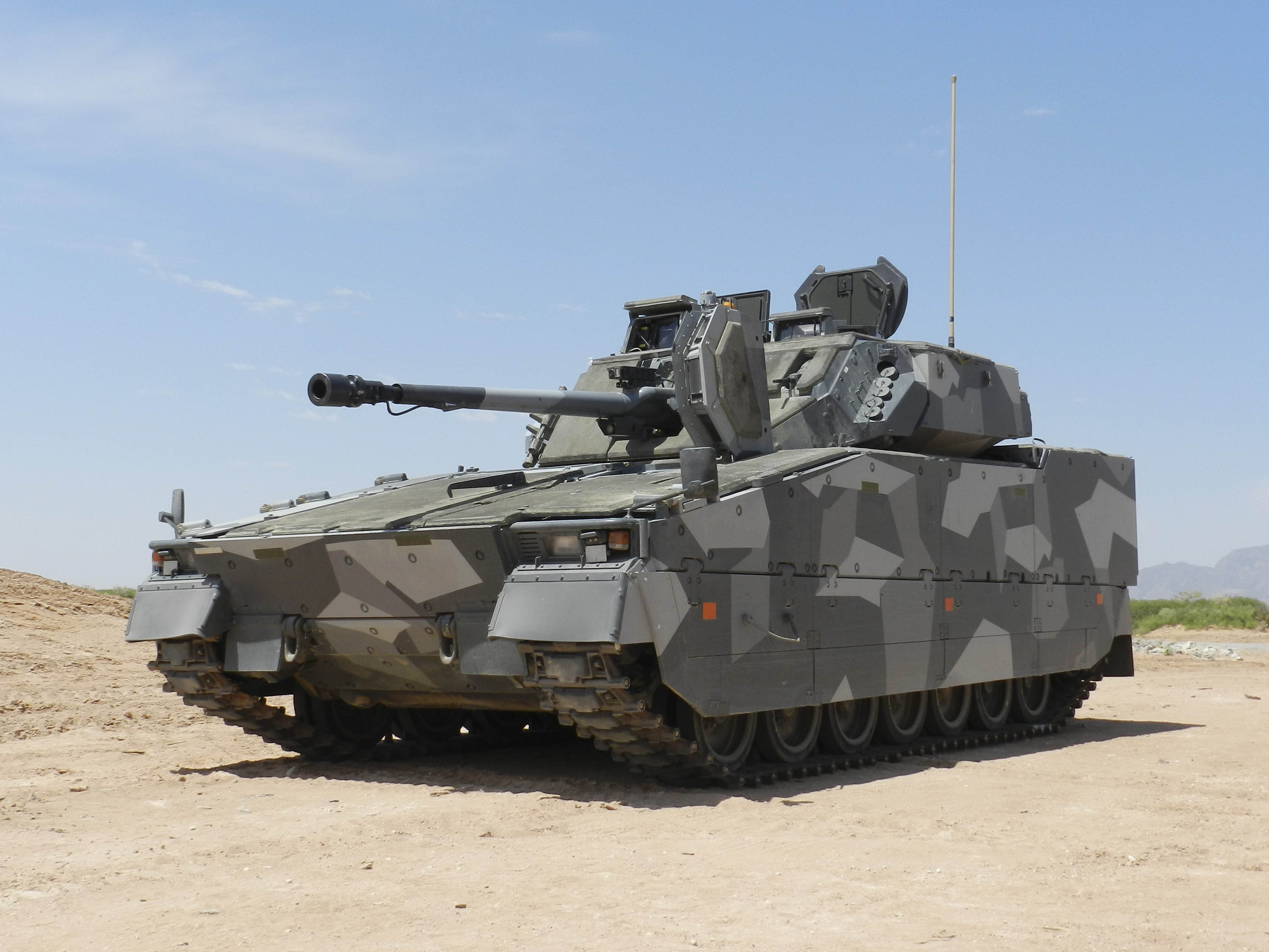
However, the development of the MGV was cancelled and replaced by another vehicle called the “Ground Combat Vehicle” (GCV), to replace the then existing M113s and the Bradley. The features were obviously planned to be better than the Bradley, in all respects.
M2 Bradley IFV (Photo credit: Wikipedia)
Features of the Ground Combat Vehicle
The basic philosophy behind the GCV was that it should be possible to add capabilities on to it in the future, including development of armor. Further, the vehicle should be adaptable to both existing as well as future network capabilities like jammers, radar and sensors. Furthermore, it should be integrated with mature technologies. The vehicle was expected to be in the field by the year 2017, at the latest. The capacity was expected to be a total of 13 soldiers, which would have been more that the capacity of 9 in the M2 Bradley. A common chassis would enable variants to be built around the base structure. The vehicle would also have modular armor, which could be added and removed according to combat requirements. The propulsion system would be an E-X Drive hybrid electric that would deliver high power torque.
Setbacks and Budget Cuts
Originally, once the Analysis of Alternatives (AoA) had been carried out by the army, and no other alternative contractors had been located, two contracts of $439.7 million and $449.9 million were awarded to two contractors, General Dynamics and BAE Systems, Nothrop Grumman respectively. Firms like Lockheed Martin, MTU, Detroit Diesel, Raytheon, Rheinmetall Defence, Krauss-Maffei Wegmann, SAIC and Boeing were also in the fray.
In 2010, a Request for Proposal (RFP) was issued. Under the deadlines of this RFP, companies were given up to January 2011 for proposals to be submitted for tracked or wheeled vehicles. The Army put a ceiling on the cost per vehicle to a range between $9 million to $10.5 million. The cost of each operational mile was to be $200. The vehicle was also required to fit on a C-17 transport aircraft. 1,874 vehicles had been planned, with the first ones being run off the production line in April 2018.
However, there were several clauses that the Army introduced, that would put the companies in extremely deep water, if there were any glitches in the production. For instance, there was a $450 million ceiling per company and if there was any further rise in the cost, 100% of the additional cost would have to borne by the contractor.
Further deterioration of the program occurred with Boeing protesting about its rejected proposals. The Army defended its case by stating that it had requested certain technical details from Boeing, but the company did not come forward. A total of 20 weaknesses of Boeing were identified, but according to the Army, the company did not address them adequately.
The program was officially called off on 24 February 2014, as confirmed by the Secretary of Defense, Chuck Hagel.
Potential of the Ground Combat Vehicle
If the GCV had been continued, would it, and how would it have benefited the Army? In 2009, Maj. Gen. Robert H. Scales (Ret.) wrote an article for the Armed Forces Journal. In his article, A Vehicle for Modern Times, Scales brings to the fore the burning issue of the state of the US Army’s ground forces. He feels that the GCV would be able to bring about the much-needed modernization of the US Army’s ground forces. He feels that the GCV could influence the way all other support systems of the war machine work, like sensors, network, aircraft and fire support. Scales makes a lucid observation that it is unfortunate that drastic changes are usually brought in as a consequence to the death of soldiers.
When the Stykers and Land Warriors were introduced, Scales says, they played different roles, such as long-range and short range transporters, firepower platforms, rally points or even rest centers. He says that the development of a land vehicle effectively resistant to Improvised Explosive Devices (IEDs) abundantly found in Afghanistan is far from satisfactory. He says that loading on armor has got its limitations; the balance has to be struck between offering sufficient protection and making the vehicle to unwieldy and overweight due to excessive armor. This is one good thing that the GCV has going for it.
Scales hits the nail on the head by stating that Soldiers and Marines have paid a heavy price in Iraq and Afghanistan. The Ground Combat Vehicle program he feels, would give them back what they have lost. He concludes the article with a powerful summation by saying, “Let’s get on with giving them the fighting system they deserve.”