We compiled some of the best Iraq and Afghan PT videos. We need people to choose which one they like the best. Comment below to choose or comment on our social sites.
Iraqi Jumping Jacks 1
Afghani Pushups
Afghani Jumping Jacks
The military arm of Afghanistan is called the Afghan Armed Forces, composed of the Afghan National Army (ANA) and the Afghan Air Force (AAF). Since it is a country that is enclosed by land, it has no navy. Its headquarters, called the National Military Command Center, are located in Kabul. The military currently has approximately 195,000 active military personnel.
In 2001, after the removal of the Taliban regime and the installment of the government headed by Hamid Karzai, there was a re-establishment of a unified Afghan Army with two official branches (ANA and AAF) with help from the United States and its allies.
The ANA was trained by the US Armed Forces. Men who wanted to enlist in the military have to enroll at the National Military Academy of Afghanistan, which is modeled after the US’ military academy in West Point. The Russian AK-47 is considered as the main service rifle of the Afghan army, as well as the American M16. It uses the BMP-1 and BMP-2 as its armored vehicles. As of 2012, the AAF is composed of 3600 people, 450 of which are pilots, and has approximately 100 renovated aircraft, which is composed of the C-27A Spartan, the Antonov AN-32, and the Mil Mi-17 and Mil Mi-24 helicopters.
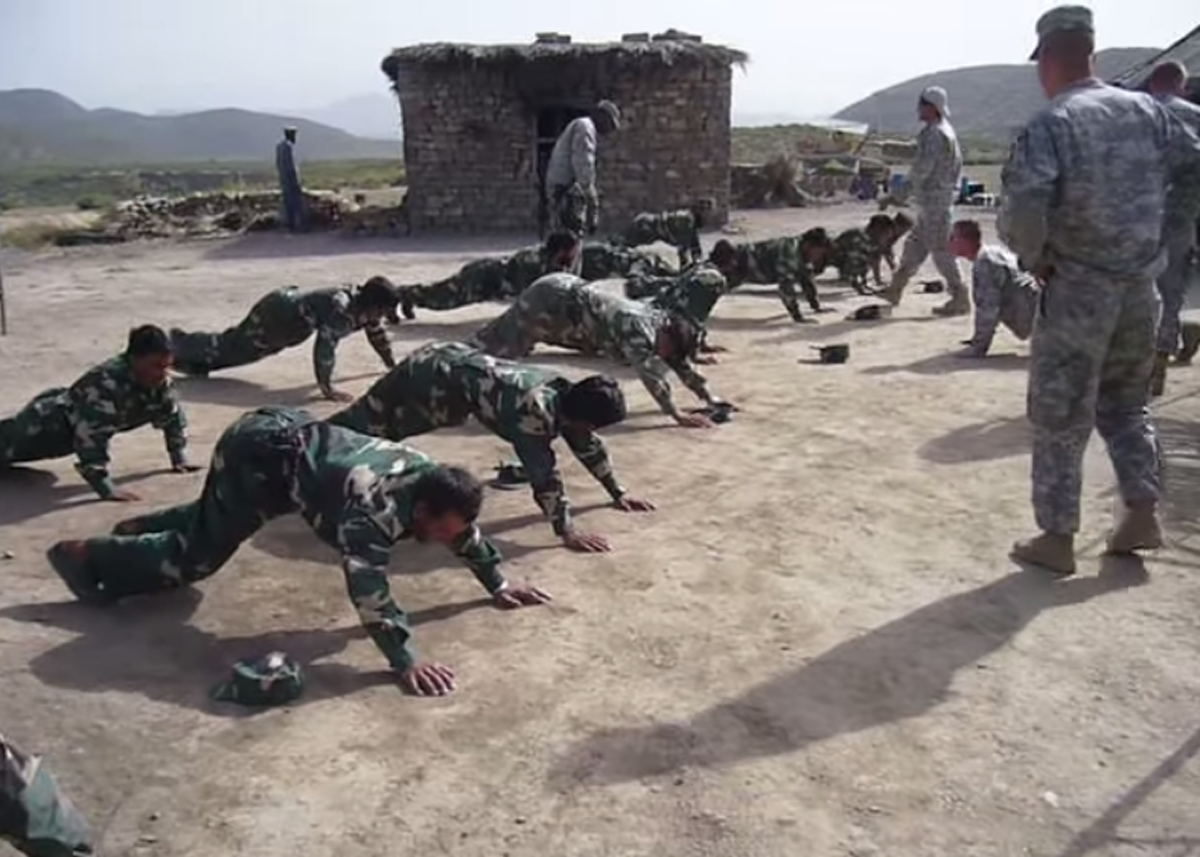
We compiled some of the best Iraq and Afghan PT videos. We need people to choose which one they like the best. Comment below to choose or comment on our social sites.
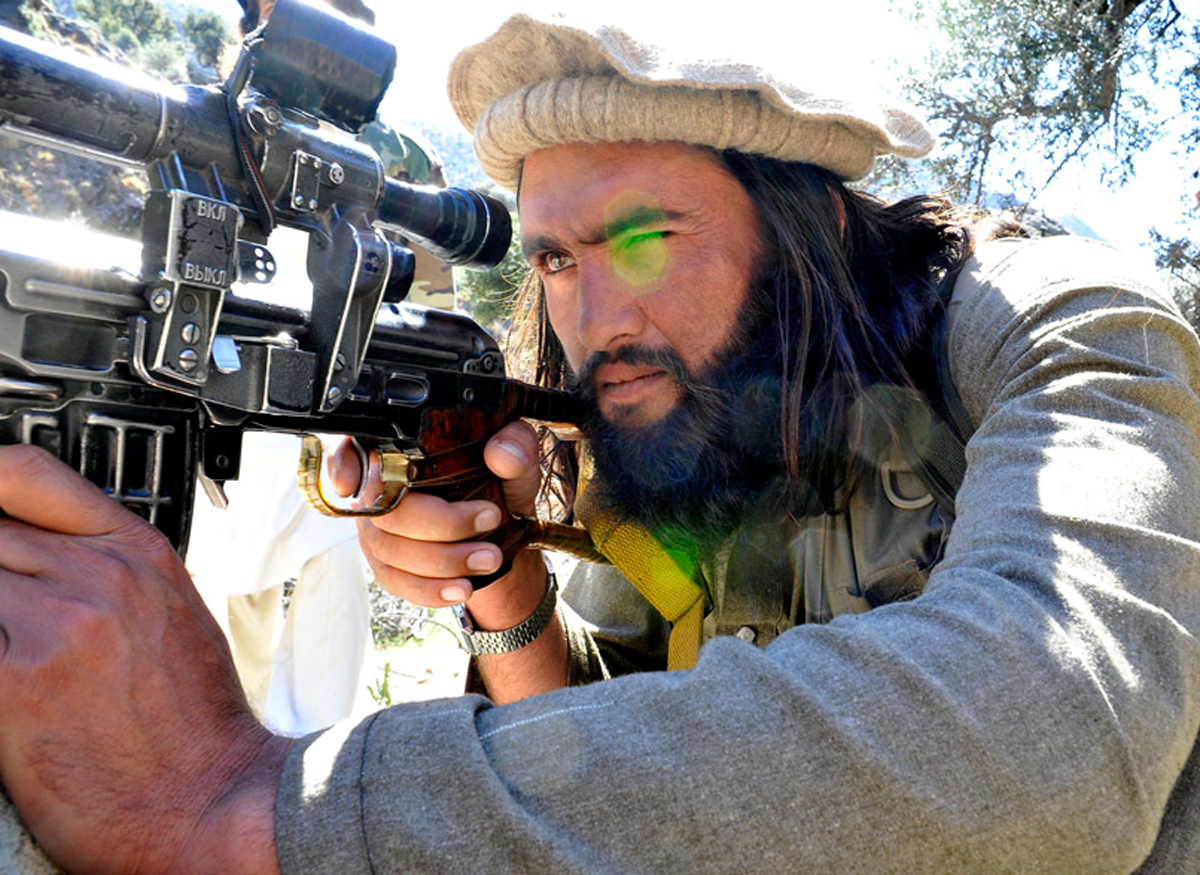
This is a video from the War in Afghanistan (Operation Enduring Freedom). Here we can see that a U.S. soldier from 1st ID, 1st Brigade, 2-34 Bravo Co, 3rd PLT REAPERS gets shot by a distant Taliban sniper but shockingly continues his fight. This is a helmet camera footage of the soldier himself that was shot and the incident occurred in Kandahar, Afghanistan in 2011. You can see that after being shot and falling dawn he again rises up and continues to move and fight. This video is a part of an ongoing online archive from Funker530.com. The purpose of the Youtube channel is to show the war through the raw combat footage of the war.
As a matter of fact, the fighting in Afghanistan began with the Afghan Civil War in 1978, with Soviet (USSR) involvement starting in 1979 and ending in 1989. Then the Taliban took control of the nation in 1994. However Operation Enduring Freedom, which started the US involvement in the country, began after the 9/11 attacks and the initiation of Operation Enduring Freedom by the President George W. Bush in 2001. Most of the US Forces are out of Afghanistan now, with small contingents still pressing on. The 1st Brigade, 1st ID, featured in this video, is stationed in Fort Riley, Kansans and is an Armored Brigade Combat Team usually equipped with M2 Bradleys, M1 Abrams Tanks, and Paladin 155mm Howitzers.
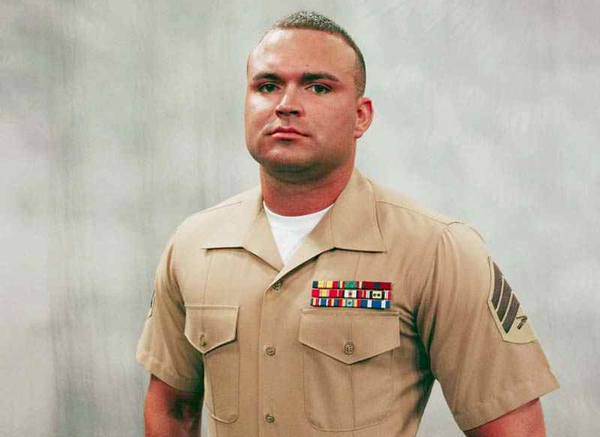
Sergeant Clifford Wooldridge was awarded the Navy Cross two years ago for his valor in Afghanistan. The Navy Cross is the second highest honor or military decoration that one can receive in the Navy, for an act of valor while in combat.
This medal was awarded to him for his actions on June 18, 2010 in Musa Qala, Afghanistan. When Wooldridge’s patrol vehicle came under fire, his team dismounted after he saw 15 fighters preparing to ambush them. Leading his team, he was able to kill eight people with his M249 Squad Automatic Weapon using 5.56mm rounds.
As his team slowly withdrew from the area, Wooldridge solely covered for his team. He then heard voices from a wall which he bravely faced, and saw two enemies. He managed to kill both. Crouching against the wall to reload his gun, he saw a barrel of a gun appear from the other side of the wall.
Wooldridge dropped his own weapon and grabbed the barrel of the machine gun. There was a struggle and the enemy reached for the pin of a grenade attached to Wooldridge’s vest. Wooldridge was able to grab the machine gun from the fighter and took a shot. When it did not work, he used the stock of the gun to pummel the insurgent to his death.
Because of these actions, the Navy awarded Sergeant Wooldridge the Navy Cross. An amazing story.
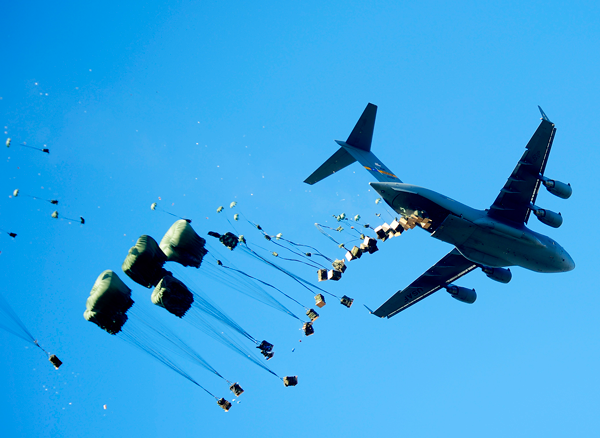
The office of the Inspector General has submitted a report of missing military equipment in Afghanistan. The supplies missing are worth an estimated $420 million and include weapons systems, communication equipment, and encryption technology. The missing supplies represent 1.5% of the total number of equipment that is currently in Afghanistan. The report has concluded that the missing equipment was due to lack of accounting and general oversight on the part of the Army officials who were based on the main American bases – Bagram and Kandahar – in Afghanistan.
The report does not indicate if the aforementioned missing supplies went into the wrong hands. Additionally, the report also said that 133,557 pieces of military equipment has been lost as well, with its value amounting to $238.4 million from 2006 – 2010. Because the military failed to report on these losses right away, it is highly unlikely that these supplies could ever be recovered.
This report could present a further challenge on the government’s military spending as it winds down its operations in Afghanistan. It has been reported that the Pentagon will still need an additional $7 billion in order to withdraw the US troops and conclude its operations in Afghanistan by the end of this year. Although around 10,000 soldiers are expected to stay behind after December.
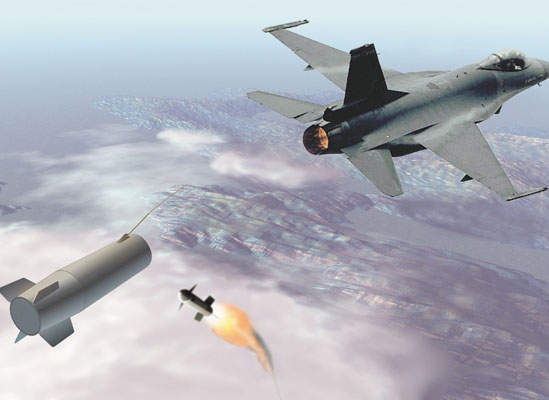
The ALE-50 Towed Decoy system, also known as “little Buddy,” is a state-of-the-art defense system designed by Raytheon. The main objective of the system is to create an effective countermeasure to defend American aircraft against radar-directed missiles. This anti-missile countermeasure decoy system is currently used for different U.S. Air Force, Navy, and Marine Corps aircraft, in addition to some other air forces.
The system has been used in various combats, where the ALE-50 Towed Decoy System successfully demonstrated its effectiveness in thwarting enemy missile attacks. Thus, there is now very little skepticism about what the “Little Buddy” can do.
The ALE-50 Towed Decoy System is the fruit of collaboration of an integrated product team containing experts from Raytheon, the U.S. Air Force, and the U.S. Navy. The team worked on this groundbreaking concept at a Goleta, California facility.
The first deployment of the system dates back to 1995. Nonetheless, the system is currently used on multiple aircraft that include the F/A-18E/F Super Hornet and the B-1B Lancer. Further, The system has also been incorporated into the innovative ALQ-184(V)9 ECM pod. This integration has helped the system become more vigilant towards threats, and it has also enabled it to be ready to be used on numerous platforms.

If the ALE-50 Towed Decoy System has been in service for more than ten years, now, it’s because it has efficaciously demonstrated its wide range of capabilities. When employed, the system shields the aircraft and crew against guided missiles (surface-to-air and air-to-air missiles). The system lures the missile toward a more attractive target and away from the intended one. The decoy that the system utilizes is used when required and cut free before landing. The “Little Buddy” offers the possibility of being operated manually as an independent device. However, it can also be incorporated and controlled by the ALE-47 Airborne Countermeasures Dispenser System (made by BAE Systems).
In 1999, the ALE-50 Towed Decoy System was tested in Yugoslavia. The results were reportedly very encouraging. Hence, Air Force Officials reported that the system locked down and diverted 10 of 30 surface-to-air missiles that had been fired at B-1 bombers in different parts of Yugoslavia.
United States Government Accountability Office (GAO) confirmed that planes that have the ALE-50 Towed Decoy System installed in them are more likely to escape fatal enemy attacks. In a report to Congressional Committees in 1997, the GAO expressed its satisfaction regarding how this system improves survivability, and stated that test results indicate the ALE-50 Towed Decoy System, “offers improved effectiveness against radar-controlled threats.” Based on these results, the GAO recommended further use of the system on other platforms such as the F/A-18C/D that the Navy uses.
As far as the specifications of the ALE-50 Towed Decoy System are concerned, the system is equipped with a launch controller, as well as a launcher that is usually installed on the plane’s wing pylon, in addition to one or more expandable towed decoys, which has a shelf-life of ten years.
When speaking about the ALE-50 Towed Decoy System, Pat Hurley, vice president and general manager of Raytheon Electronic Warfare Systems, reiterated that, throughout its 50 years of existence, the company has always been concerned with developing its systems in order to provide the military with high-performing products. In this regard, Hurley added that the permanence of the company’s business and of the ALE-50 Towed Decoy System is a valid testimony to the company’s “high-performing products,” as well as its “laser-like focus on serving the customer.”
Many experts consider Raytheon to be a leading provider of systems that offer pilots with the most precise information available. With its $22 billion of sales in 2005, the company is also regarded as a leader in defense systems, information technology as well as business and special mission aircraft. The company has a workforce of about 80,000 deployed throughout the world.
Raytheon manufactures and sells the ALE-50 expendable decoy at $22,000 per unit. In October 2010, the company made a delivery of its latest production run (1,048 units). The total number of units that Raytheon has produced is estimated at 35,000 units, increasing the company’s sales to more than $500 million.

Raytheon has now produced 25,682 units of the system. All of the units have been purchased by the US Department of Defense at a cost of $500 million ($22,000 per unit). The system was initially installed on F-16s only with plans of implementation on other platforms. Therefore, these plans have been carried out systematically and have now been completed successfully. Thus, the “Little Buddy” is currently installed on the B-1B bombers and F/A-18 aircraft.
In 2005, Raytheon received a production contract from the US Navy and the US Air Force. In late 2006, The US Air Force granted the manufacturing company a production contract for 862 decoys worth $21 million.
The system’s adaptability and reasonable cost enables it to be installed on a variety of aircraft. Thus, the ALE-50 Towed Decoy system now functions on many aircraft such as the F-16, F/A-18E/F, and B-1B aircraft.
The usefulness of the system has been proven in many situations. ALE-50 Towed Decoy System has shown its capabilities in every major war in which it was deployed. For instance, it considerably helped improve the survivability of aircraft and their crews in places like Kosovo, Afghanistan and Iraq.
In this regard, Col. Art Huber, commander of the 542nd Combat Sustainment Group at Warner Robins Air Logistics Center, which is in charge of the ALE-50 praised the ALE-50 Towed Decoy System by saying that it is “credited with numerous aircraft saves,” and that “our pilots depend on it.”
The “Little Buddy” is probably the best countermeasure in use, right now. Tests and actual use in wars have proven its efficacy. The ALE-50’s suitability and interoperability with other B-1B systems when installed in the B-1B bombers have been quite a success. Furthermore, the pricing is very encouraging, and the quality/price ratio has been a determining factor in making the system a must for every aircraft in service. This is why, many pilots who have been to war in different parts of the world have communicated that the ALE-50 Towed Decoy System has been critical in saving them and their aircraft from the dangers of guided missiles.
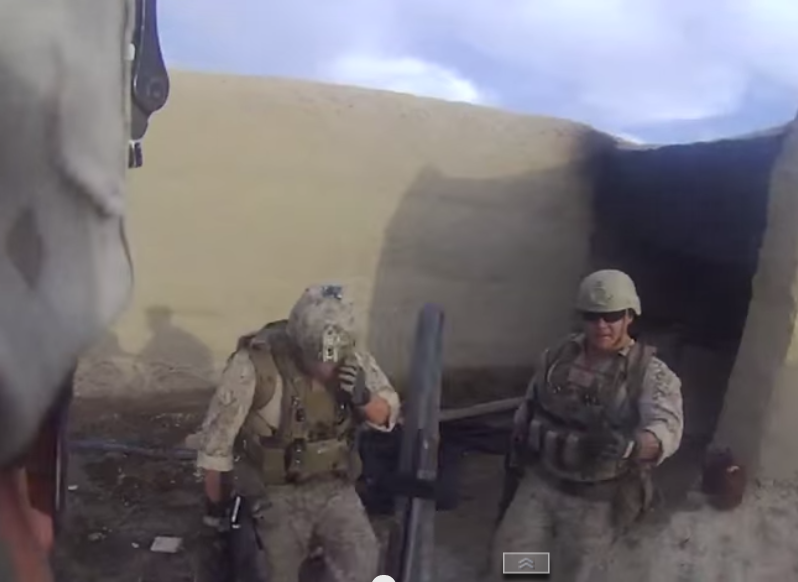
There is a Marine who is counting his blessings today because he survived a head shot from and Afghan Sniper. The Marines were maneuvering on an enemy position. After walking down a tunnel that one would think would be a secure place to go for infantry forces, an enemy round enters the tunnel and hits a Marine right in his helmet. The Marines bound back to a secure location and evaluate the possible injury. Only ears ringing and a minor headache are reported. Then the Marines interrupt the traffic on radio to inform their higher headquarters that there is an enemy sniper out there and everyone needs to be careful. The video ends with one of the Marines saying “let’s do something about this” and it appears they moved out to go kill the shooter.
Here is the video.
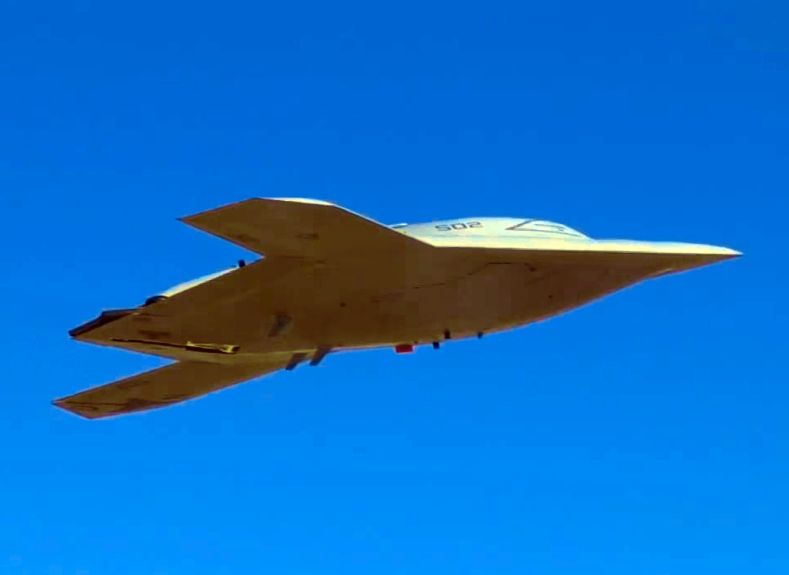
The US Air Force and the Pentagon have been pursuing their drone development program since 1995, the most prominent drone series being the Predator series (A, B & C). Today, it is a full-fledged operation. One of the latest projects now being pursued is the US Air Force’s RQ-170 Sentinel Drone, manufactured by Lockheed Martin. The US Air Force has not released much information about this drone. However, this US drone is known to be a stealth aircraft, fitted with reconnaissance equipment for the purpose of gathering data from non-cooperative countries such as Iran, Iraq and Afghanistan. It is being used since 2011, when it was launched during the ongoing war in Afghanistan, called “Operation Enduring Freedom”.
It is also worthwhile to note that this US drone was used quite effectively for tracking down Osama Bin Laden, the mastermind of the 9/11 attacks. The system is believed to have been set up in the Pakistani town of Abbottabad where the terrorist was believed to have been hiding, in a heavily guarded compound, with the full knowledge of the Pakistani authorities. It was through the data fed to the Navy SEALs from the Sentinel system that they were able to penetrate the compound and terminate this dreaded terrorist on the spot.
The RQ-170 Sentinel has also been used in South Korean airspace, which would have been obviously for the purpose of spying on activities in North Korea.

In December 2011, an RQ-170 Sentinel was sent into Iran on a reconnaissance mission. The Iranian armed forces intercepted the drone and hacked into its navigation systems, managing to capture it. They claimed that they had been able to duplicate it by decoding the software and using reverse engineering. Although, the claims were stated as being fake by a former Pentagon official, the Iranians stuck to their story and showed video footage of the drone.
The landing gear, however, was covered by a banner stating, “We’ll trample America underfoot” and “the US cannot do a damn thing.”
The RQ-170 Sentinel has also been copied by the Chinese who released pictures of the copied drone along with some other aircraft.
The specifications the US drone described here are not official, as there are no official documents available, due to the highly classified nature of the RQ-170 Sentinel project, as it is being kept under wraps by the CIA and the Pentagon. However, what has been reproduced here, are as accurately-possible facts, which should give a fair picture about the Sentinel and its capabilities.
The RQ-170 Sentinel by Lockheed Martin is a rather new addition to the United States Air Force’s fleet of Unmanned Aerial Vehicles (UAVs). It is a stealth vehicle, which is supposed to be a cost-effective drone with added qualities put on to existing design features. The purpose of the Sentinel is for surveillance and reconnaissance of enemy territories from a high altitude. The drone is mostly connected to CIA missions, which is the reason most of the information on it remains classified by the Pentagon and unavailable to the general public.

Looks-wise, the Sentinel is more of wing, with less of vertical tail surfaces. The wing structures are swept towards the rear of the aircraft, giving it the appearance of the B-2 Spirit Stealth Bomber. It is powered by a single General Electric TF34 series turbofan engine. The payload region is also located in the central area. The abundant wings serve the purpose of offering extra fuel storage. The undercarriage is in a regular tricycle configuration with two main landing wheels and a single landing gear in the nose section.
The aircraft is equipped with a full suite of cameras and sensors. There are full motion real-time cameras and radioactive isotope-detecting sensors for locating nuclear material. It is assumed that the drone is also armed with missiles, in the same way that the Predator is. It is also understood to have the latest infra-red and other optical devices fitted.
The maximum altitude observed by this drone is at least 50,000 feet. The wingspan is estimated at 26 meters, with a height of 1.84 meters and a length of 4.5 meters.
It would seem that the Sentinel has had a rather big setback with the copying of its design by the Iranians. Although there is no information forthcoming from the Department of Defense, the Pentagon, US Air Force or the CIA, there is no dearth of information emanating from Iran regarding the Sentinel and future plans. RT.com News published an article in May 2014 quotes a statement made by Iranian leaders who said that their engineers have managed to decode the drone’s technology and copy it. There will soon be a test flight, they promised.
From what we see, the RQ-170 Sentinel is definitely here to stay, but if the US military is to keep the technology to itself, it is going to have to figure out how to keep its classified secrets from falling into enemy hands, as has been the case in the recent past.
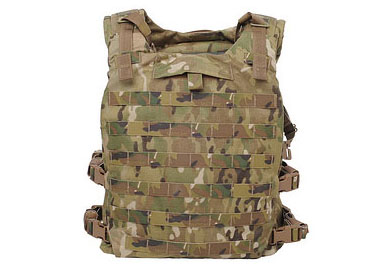
Engineers at BAE Systems are in the process of developing path-breaking body armor. The new armor is called “Liquid Armor” or “Liquid Body Armor” and hopefully, it will revolutionize the way armor is manufactured, used, and worn for decades to come.

Body armor is not a new concept. It has been around for centuries. The Romans used it extensively and it was also widely used in medieval Europe. The material used for body armor was mostly iron, steel and various metallic alloys. However, metallic body suits were heavy and unwieldy. Over the years, with the advancement of technology and progress in munitions, metallic armor was not practical. As a result of decades of research and development, several materials were evolved to replace metal in body armor. One of the most practical inventions was Kevlar, which is popularly used even today by the police and armed forces of countries all around the world.

Kevlar was invented by an American, Stephanie Kwolek in 1964. Kwolek was trying to invent fibers for lighter car tires amid predictions of a gasoline shortage. The result was Kevlar, which has numerous applications today, in suspension bridges, thermal gloves, and audio equipment, just to name a few. But the most widely-known application of Kevlar is for its use in body armor.

Although Kevlar body armor is flexible to some extent, it is still unwieldy, constricts movement and is generally uncomfortable. It also tends to block ventilation, increasing body heat and fatigue, especially in terrain where the ambient temperature tends to be high, like in Afghanistan.
The new innovation is to combine Kevlar with a “counter-intuitive liquid”, which makes liquid body armor combined with traditional armor. This combination results in body armor of 45% less thickness, while still retaining the protective properties of the armor. The material used in liquid armor is a shear thickening fluid called shear-thickening fluid (STF) which is basically polyethylene glycol, a non-toxic, temperature-resistant substance.
Head of Business Development for Design and Materials Technologies at BAE Systems, Stewart Penney explains. He says that the best way of understanding this technology is to think of how water gets stirred with a spoon. Initially, not much resistance is felt. However, if you start to stir more rapidly, the resistance seems to increase. There is a dual action in the case of liquid armor. When a bullet strikes the liquid at a high velocity, there is a great resistance and at the same time the liquid hardens, resulting in the impact energy gets absorbed.
In comparison, if a bullet hits Kevlar armor, a notable dent is caused in the region of the impact and the impact area is small. A soldier, who gets hit by a bullet while wearing Kevlar, may not get wounded, but it still hurts quite a lot. On the other hand, the impact of bullet in the case of liquid armor is spread over a wider area. The depth of penetration is also restricted, due to the fact that the liquid limits the flow of liquids and motion of the fabric. This causes negligible distortion in the armor and the liquid armor gets restored to its original flexible form.
The new liquid armor promises to cause a marked improvement in armed forces circles as well as with the police force. This material would be of special interest to bomb disposal squads. Soldiers in high-risk combat zones will get the best benefit from wearing uniforms reinforced with liquid armor. It is stirring up some serious discussions in US Army circles.
There is research being carried out on liquid armor at the US Army Research Laboratory in Maryland. The US Army has special interest in the development of this material for obvious reasons. Dr Eric Wetzel who works for the Weapons and Materials Research Directorate and leads the project team says that technology aims at development of new materials which are both cost-effective and lightweight and yet superior to Kevlar in its bullet-stopping properties. Moreover, it should also be thinner and more flexible.
Speaking on other uses of liquid armor, Wetzel says that prison staff could also enjoy the benefits of this technology. Prison staff he says is mostly susceptible to attacks with hand-crafted weapons, and liquid armor would provide effective resistance to stabbing attacks. Dr Eric Wetzel received the Paul A Simple Award along with his team in 2002. It is the highest award for scientific accomplishment in the US Army.
It goes without saying that this new technology is definitely going places. As of now, this new material is still in the laboratory testing stage. However, Wetzel says that the scope of liquid armor knows no bounds. He adds that initially, the material will be placed in body locations currently unprotected by bulletproof vests like pants, sleeves and boots. It could also be used to cover suspected bombs or even added to soldiers’ jump boots for shock absorption. Liquid armor is definitely a material of the future.

Before we get into the specifics of the MQ-9 Reaper Drone, one of the deadliest drones in the US arsenal, we must first cover some history.
A third of the US Air Force’s aircraft is estimated to comprise of drones today. The concept of drones is not a new one. The history of drones or Unmanned Aerial Vehicles (UAVs) dates back to the 1930s with the development of the “Queen Bee” by the British Royal Navy. However, it was not until 1995, that concerted efforts were commenced by the United States to develop drones for military applications. The MQ-1 Predator (Predator A) was first put into use in 1995. It began as a surveillance vehicle and data gatherer, but was later fitted with Hellfire Missiles, for targeting suspected terrorists. It was created as a result of a directive from the Department of Defense for counter-insurgency measures at overseas locations.
As a result of the war with Iraq, and in the aftermath of the 9/11 attacks, a need was felt to step up counter-terrorist measures by the US armed forces. The ongoing war with Afghanistan also reinforced this conviction. In 2007, the first test flights of the MQ-9 Reaper Drone were carried out at the Creech Air Force Base in Nevada. This new series of drones was first pressed into service in actual combat in Iraq and Afghanistan later during the same year. This was followed by successful missions in other countries like Ethiopia and Libya.

The MQ-9 Reaper Drone (Predator B) was developed as an improvement to the MQ-1 Predator (Predator A). It is bigger and better than the MQ-1 Predator in terms of power and munitions delivery. The codification of the drone is as follows: “M” stands for Mulirole, “Q” for Unmanned Aerial Vehicle and “9” is the series designation.3
This drone is described as an armed drone of medium, multi-mission, medium-altitude capabilities. Its primary function is that of intelligence collection and the secondary function is attack on dynamic execution targets.
The MQ-9 Reaper is totally remote-controlled. It is fitted with a Multi-Spectral Targeted System, consisting of visual, infra-red and laser sensors. The munitions system is also laser-guided. The suite of functions that the Reaper can perform is surveillance, reconnaissance, precision strike, search and rescue during combat, convoy/raid over-watch, air support, buddy-laser, and terminal air guidance, development of targets and clearance of routes. The aircraft is fully-equipped with sensors and weapons with a satellite link between the drone and the ground control station. The entire aircraft can be dismantled and transported in a C-17 transporter or larger, but is also capable of independent taking off and landing from a standard US airfield.
Here is a summary of some of the specifications of the MQ-9 Reaper:
Specifications
| Primary Function | Intelligence collection & reconnaissance |
| Contractor | General Atomics Aeronautical Systems, Inc. |
| Power plant | Honeywell TPE331-10GD turboprop engine |
| Thrust | 900 shaft horsepower |
| Wingspan | 66 feet (20.1 meters) |
| Length | 36 feet (11 meters) |
| Height | 12.5 feet (3.8 meters) |
| Weight | 4,900 pounds (2,223 kilograms) empty |
| Fuel Capacity | 10,500 pounds (4,760 kilograms) |
| Payload | 4,000 pounds (602 gallons) |
| Speed | 3,750 pounds (1,701 kilograms) |
| Range | Cruise speed approx. 230 mph |
| Ceiling | 1,150 miles (1,000 nautical miles) |
| Armament | Up to 50,000 feet (15,240 meters) |
| Crew | AGM-114 Hellfire missiles, GBU-12 Paveway II and GBU-38 Joint Direct Attack Munitions |
| Unit Cost | $56.5 million (4 aircraft with associated equipment) |
The primary customer of the MQ-9 Reaper is the US Air Force and the US Government. However, the sale of this drone is not restricted to the US alone. In 2011, the US Department of Defense signed a contract with General Atomics Aeronautical Systems to supply 24 extra systems of the MQ-9 Reaper to the Italian Air Force. The total value of the contract was tagged at $15,053,926.
In 2013, the Netherlands declared that it would be acquiring its own fleet of Reapers by the year 2017, amounting to 4. Today, France and the UK are also using MQ-9 Reapers, making this drone a global product.

The MQ-9 Reaper has had a good tour of duty. However, it is likely to be replaced by the next generation of drones. The Army is now developing the successor to the Reaper – the Avenger (Predator – C), a sleeker and more robust design, compared to the Reaper. The main features which differentiate the Avenger from the Reaper is that the Avenger is jet-propelled and it is has stealth properties and the cruise speed is double that of the Reaper.
If we consider the track record of the MQ-9 Reaper, it would be fair to say that it has had a fairly successful journey. One thing is sure, and that is, unmanned aircraft will play a prominent role in the US Air Force in the future years. When Secretary of Defense, Robert M Gates addressed the Air Force Academy in 2011, he mentioned that although there will always be a need for manned flight in the US military, there is a great scope for the development of remotely piloted vehicles, for reconnaissance and strike. “I see no excuse for men in fighter planes to shoot down bombers,” he says, “The next Air Force is going to be built around scientists.”
It appears the MQ-9 Reaper Drone will continue to see heavy use for many years to come, until such a time as it is fully replaced by the Predator 3 and future models.