General Dynamics is an aerospace and defense manufacturing company. With its headquarters in West Falls Church, Fairfax County, Virginia, it is the fifth largest defense supplier in the world based on sales revenues made in 2012.
The company started when John Philip Holland built a company that manufactures submarines from scratch, and named it as Holland Torpedo Boat Company. The submarine boat Holland VI was built here and was later sold off to the US Navy. It became the US Navy’s first ever submarine and was christened with the name USS Holland (SS-1). Due to lack of funds, Holland had to sell his shares of the company to Isaac Leopold Rice, who then renamed the company as Electric Boat Company. In 1952, the company was renamed to General Dynamics.
General Dynamics is composed of four business units, namely, Aerospace, Combat Systems, Information Systems and Technology, and Marine Systems. It has produced the F-111 Aardvark and the F-16 Fighting Falcon fighter aircrafts for the US Air Force and the RB-57F Canberra for weather reconnaissance and atmospheric pressure research. It has 4 subsidiaries in its Marine Systems: the American Overseas Marine Corporation, Bath Iron Works, National Steel and Shipbuilding Company, and Electric Boat. Among the missile systems that the company has created are the RIM-24 Tartar, FIM-43 Redey, and the Tomahawk.
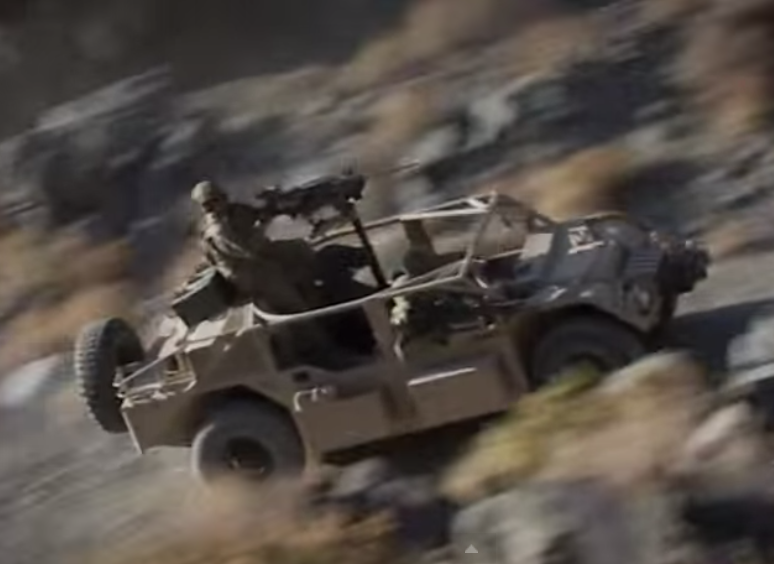
General Dynamics just released the new Flyer Advanced Light Strike Vehicle (ALSV). The ALSV is a reliable vehicle with innovative features and is created almost specifically for use in the most unforgiving terrains.
The Flyer can be transported to almost any combat zone because of its high trans-portability, which means that cargo planes can carry the strong vehicle. It’s made for the soldiers who are looking for numerous gun mounts on their vehicles, along with speed and maneuverability. The Flyer is perfectly capable of passing through rugged terrain, and can make every mission seem a little bit easier.
The vehicle can be modified according to your every need, and can be used in almost any way necessary. This means that it can be used for anything, from ambushes to rescue missions, simultaneously. It comes with an armored variant for greater protection, and every modification made on the car does not hamper its ability to be driven effectively.
With the Flyer Advanced Light Strike Vehicle, improved transportation comes without any loss of firearm compatibility, speed, or even maneuverability. Instead, you receive innovations for mission vehicles, such as a number of applicable modifications and high trans-portability, but at the same time it is practical and definitely usable.
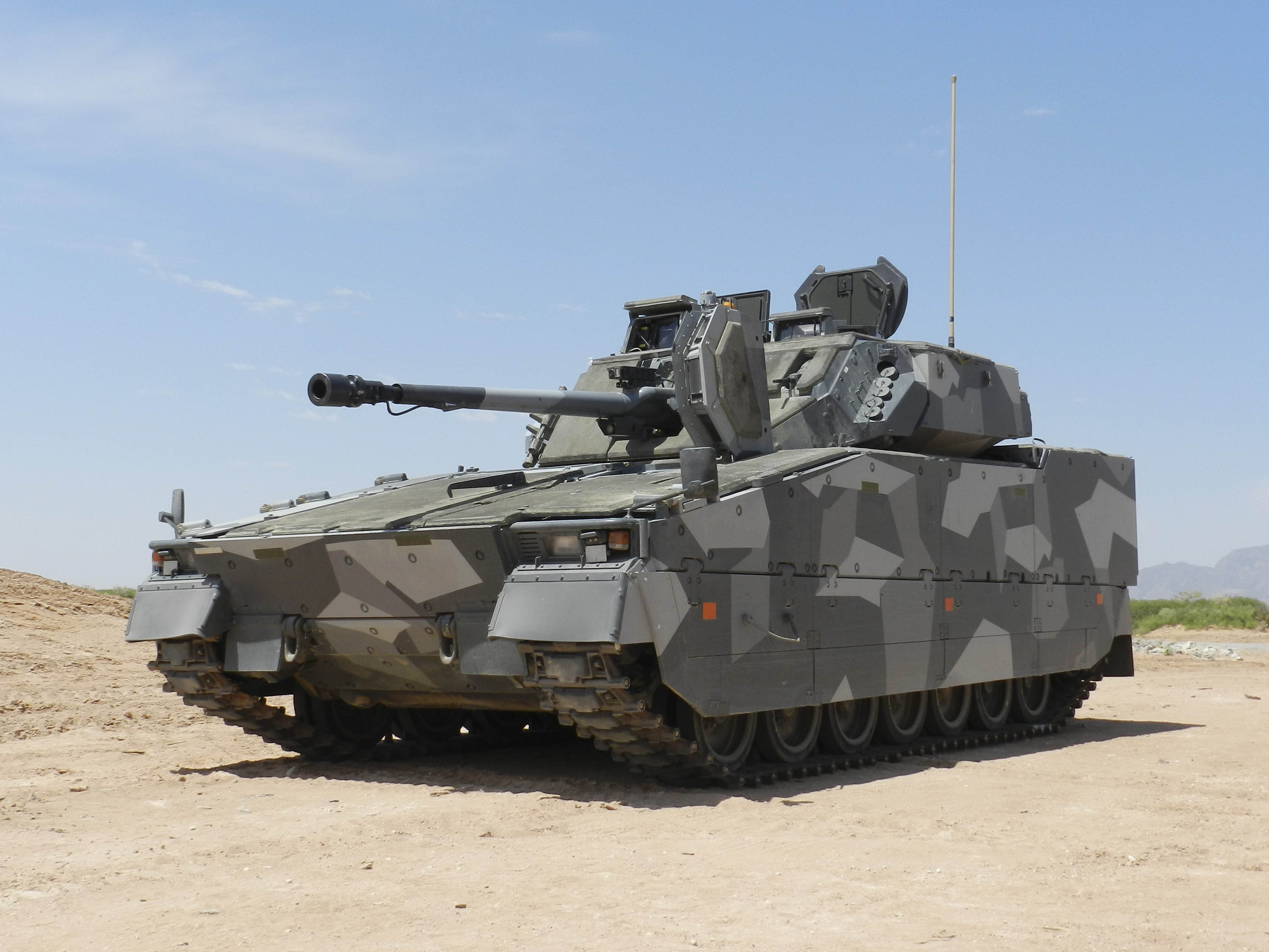
Where did the Ground Combat Vehicle come from and what is it? In 2009, the US Army announced its intention to “significantly restructure” it’s Future Combat System” (FCS). This was formally announced by the Secretary of Defense, Robert Gates. The FCS was a program being developed since the year 2000. It was to be a multi-billion dollar program which would be implemented over a period of several years, and one of the salient features of this program was the Manned Ground Vehicle, (MGV).
However, the development of the MGV was cancelled and replaced by another vehicle called the “Ground Combat Vehicle” (GCV), to replace the then existing M113s and the Bradley. The features were obviously planned to be better than the Bradley, in all respects.
M2 Bradley IFV (Photo credit: Wikipedia)
Features of the Ground Combat Vehicle
The basic philosophy behind the GCV was that it should be possible to add capabilities on to it in the future, including development of armor. Further, the vehicle should be adaptable to both existing as well as future network capabilities like jammers, radar and sensors. Furthermore, it should be integrated with mature technologies. The vehicle was expected to be in the field by the year 2017, at the latest. The capacity was expected to be a total of 13 soldiers, which would have been more that the capacity of 9 in the M2 Bradley. A common chassis would enable variants to be built around the base structure. The vehicle would also have modular armor, which could be added and removed according to combat requirements. The propulsion system would be an E-X Drive hybrid electric that would deliver high power torque.
Setbacks and Budget Cuts
Originally, once the Analysis of Alternatives (AoA) had been carried out by the army, and no other alternative contractors had been located, two contracts of $439.7 million and $449.9 million were awarded to two contractors, General Dynamics and BAE Systems, Nothrop Grumman respectively. Firms like Lockheed Martin, MTU, Detroit Diesel, Raytheon, Rheinmetall Defence, Krauss-Maffei Wegmann, SAIC and Boeing were also in the fray.
In 2010, a Request for Proposal (RFP) was issued. Under the deadlines of this RFP, companies were given up to January 2011 for proposals to be submitted for tracked or wheeled vehicles. The Army put a ceiling on the cost per vehicle to a range between $9 million to $10.5 million. The cost of each operational mile was to be $200. The vehicle was also required to fit on a C-17 transport aircraft. 1,874 vehicles had been planned, with the first ones being run off the production line in April 2018.
However, there were several clauses that the Army introduced, that would put the companies in extremely deep water, if there were any glitches in the production. For instance, there was a $450 million ceiling per company and if there was any further rise in the cost, 100% of the additional cost would have to borne by the contractor.
Further deterioration of the program occurred with Boeing protesting about its rejected proposals. The Army defended its case by stating that it had requested certain technical details from Boeing, but the company did not come forward. A total of 20 weaknesses of Boeing were identified, but according to the Army, the company did not address them adequately.
The program was officially called off on 24 February 2014, as confirmed by the Secretary of Defense, Chuck Hagel.
Potential of the Ground Combat Vehicle
If the GCV had been continued, would it, and how would it have benefited the Army? In 2009, Maj. Gen. Robert H. Scales (Ret.) wrote an article for the Armed Forces Journal. In his article, A Vehicle for Modern Times, Scales brings to the fore the burning issue of the state of the US Army’s ground forces. He feels that the GCV would be able to bring about the much-needed modernization of the US Army’s ground forces. He feels that the GCV could influence the way all other support systems of the war machine work, like sensors, network, aircraft and fire support. Scales makes a lucid observation that it is unfortunate that drastic changes are usually brought in as a consequence to the death of soldiers.
When the Stykers and Land Warriors were introduced, Scales says, they played different roles, such as long-range and short range transporters, firepower platforms, rally points or even rest centers. He says that the development of a land vehicle effectively resistant to Improvised Explosive Devices (IEDs) abundantly found in Afghanistan is far from satisfactory. He says that loading on armor has got its limitations; the balance has to be struck between offering sufficient protection and making the vehicle to unwieldy and overweight due to excessive armor. This is one good thing that the GCV has going for it.
Scales hits the nail on the head by stating that Soldiers and Marines have paid a heavy price in Iraq and Afghanistan. The Ground Combat Vehicle program he feels, would give them back what they have lost. He concludes the article with a powerful summation by saying, “Let’s get on with giving them the fighting system they deserve.”
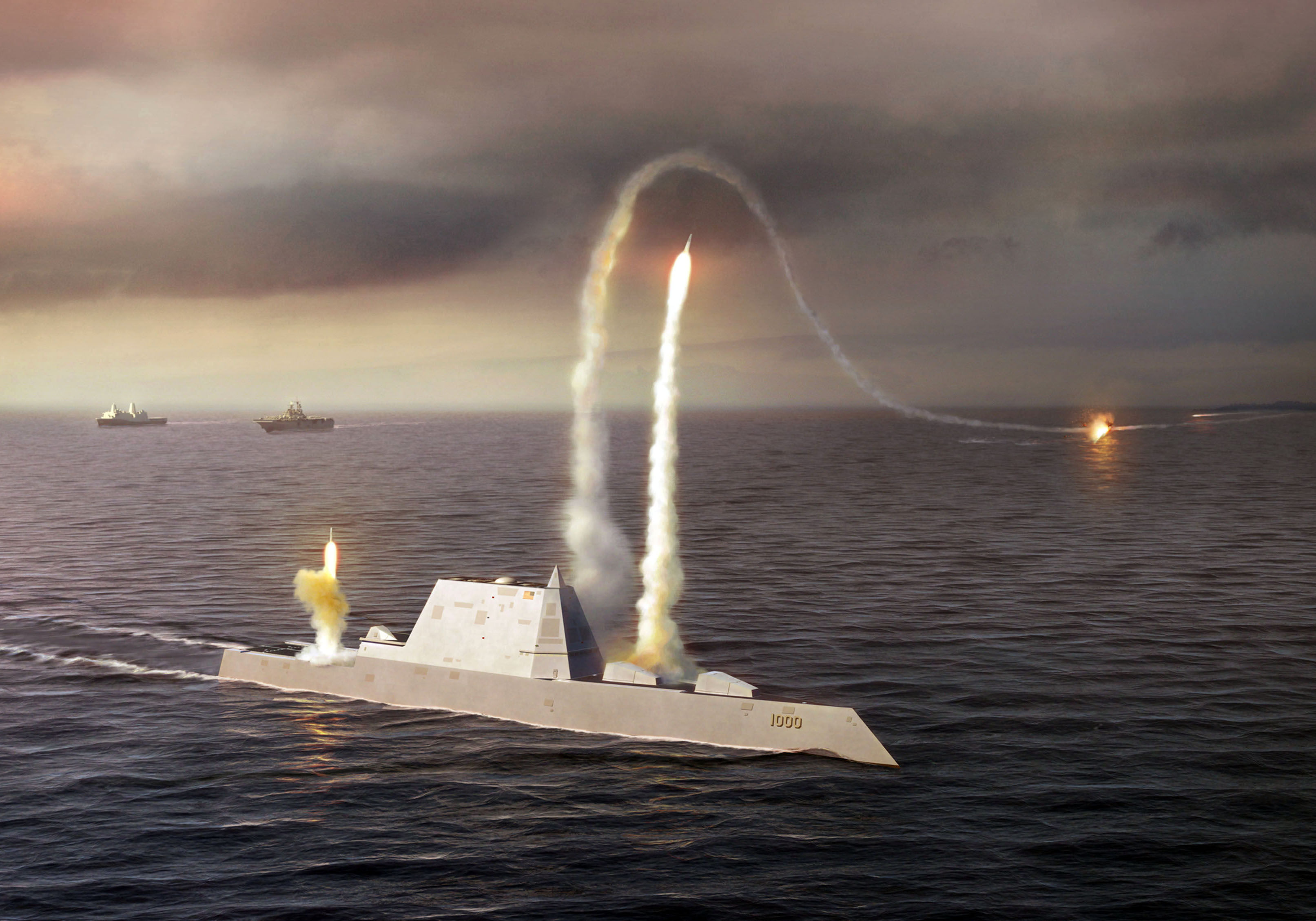
The latest darling of the US Navy is the USS Zumwalt Destroyer, a force to reckon with and on the top of the list of the US defense arsenal. Named after the renowned Chief of Naval Operations, Elmo Russell Zumwalt, Jr., the USS Zumwalt is the first in line of three such guided missile destroyers.
The origins of the ship’s basic features date back to 2001, as a result of Congressional defense cutbacks and the subsequent acquisition program. The source of the initial funding came from the National Defense Authorization Act of 2007. The summer of 2008 saw the formation of a construction timetable which was issued to the contractor, General Dynamics with a completion date targeted as March 2015. However, this deadline was later rescheduled to 2014. The first section of the ship was completed by the end of 2011. Despite much speculation about the commissioning being further delayed, the vessel was launched from Bath Iron Works on 29 October 2013.
More about the USS Zumwalt
The USS Zumwalt is a DDG-1000 class destroyer and it is one among a total of 3 destroyers of the same class, from the Bath Iron Works, the other two being the Michael Monsoor (DDG 1001) and Lyndon B. Johnson (DDG 1002) which are scheduled to be completed in 2015.
What makes the USS Zumwalt special is that it is the first of its kind to have some advanced features that were not available with previous ships. Although the bridge is constructed like any other regular ship’s bridge, the Zumwalt is fitted with software that enables the captain to control systems at any location onboard.
The Zumwalt is also equipped with some of the most advanced radar tracking systems, laser weapons and rail guns and a few gizmos that are still under test by the US Navy. However, the biggest asset of the Zumwalt is its stealth properties. The shielding is designed to make the ship show up as a mere fishing boat on enemy radar!
Other Special Features
The Zumwalt is fitted with Raytheon’s Integrated Indersea Warfare sonar, which is built from the type of sonar sensors which are used by sophisticated submarines. The high degree of computerization on board and the high level of automation cuts down manpower requirements drastically. In comparison the 210 sailors required to man an Arleigh-Burke-class destroyer, the USS Zumwalt only requires 130 personnel, with the addition of another 28 for aviation operations. There is a helipad on the ship which accommodates 2 helicopters and a vertical takeoff drone.
080214-N-0923G-005 WASHINGTON A model of the DDG 1000 Zumwalt Class destroyer to be built by Bath Iron Works and Northrop Grumman Shipbuilding is displayed during a contract signing ceremony at the Pentagon. Both companies signed $1.4 billion construction contracts with the Navy as part of the Navy dual lead-ship strategy to introduce the new class of destroyer that will deliver improved warfighting capabilities, continued forward presence and combat power for the surface Navy. ) (Photo credit: Wikipedia)
Budget Considerations
As can be well imagined, the cost of all the power and technology that is packed into the USS Zumwalt comes at a price, and a considerable one, at that. Originally, the projected budget of this ship was put at $3.8 billion. However, with all the added developmental costs involved, the original estimate has become inflated to $7 billion. The General Accounting Office initially felt that excessive technology was being pumped into a single vessel, more than required. Due to the huge size of the hull, General Dynamics had to spend $40 million on a building at the Bath Shipyard to accommodate it. It is a well-known fact that originally, 32 Zumwalt-class ships had been planned for, but when the initial estimates came out, this number was hurriedly chiseled down to 24, and the final number ended with just 3.
English: Zumwalt class destroyer (side view) (Photo credit: Wikipedia)
What it means to the US Navy
The basic objective behind the entire Zumwalt project, although not specifically spelt out by the US Navy, seems to be to show its military presence in the Pacific to counter China’s increasing military power in that area. It is a subtle or maybe not so subtle attempt at maintaining the balance of power in the region.
Future Plans
There are no plans to build more than 3 Zumwalt class ships. The US Navy will then revert back to building the traditional Arleigh Burke-class destroyers. It is estimated that even if extensive modernization is applied to these classical vessels, the costs will still be well below those incurred during the Zumwalt-class production line.
English: PACIFIC OCEAN (Aug. 16, 2009) The Arleigh Burke-class guided-missile destroyer USS Mustin (DDG 89) transits the western Pacific Ocean. Mustin is one of seven Arleigh Burke-class destroyers assigned to Destroyer Squadron (DESRON) 15 and operates from Yokosuka, Japan. (U.S. Navy photo by Mass Communication Specialist 2nd Class Bryan Reckard/Released) (Photo credit: Wikipedia)
Reflections on the Zumwalt
The USS Zumwalt and the other associated Zumwalt-class destroyers represent a shot in the arm for the US Navy. It is through these vessels that the American military presence can somewhat renew its strength. Here is a vessel which has a lot of power packed into its punch, and enough technology added to make the force of the US Navy felt. However, this class of Navy vessel cannot be sustained indefinitely in the cash-strapped American economy. A balance has to be struck at some point. We have seen the birth of the USS Zumwalt, but how sure can we be about the emergence of the remaining two ships? What can be confirmed however is that the USS Zumwalt is here to stay. It continues to be a proud feather in the cap of the US navy.