The United States Armed Forces uses ten classes of supply. These are ten roman numerals designed to categorize the different types of items one might need on the battlefield. These classes of supply are a great checklist to use when deciding if you need something or not.
So here is the list of the Army classes of supply directly out of the U.S. Army Field Manual 4-0:
- Class I Subsistence, including health and welfare items.
- Class II Clothing, individual equipment, tentage, tool sets and tool kits, hand tools, administrative, and housekeeping supplies and equipment (including maps). This includes items of equipment, other than major items, prescribed in authorization/allowance tables and items of supply (not including repair parts.
- Class III POL, petroleum and solid fuels, including bulk and packaged fuels, lubricating oils and lubricants, petroleum specialty products; solid fuels, coal, and related products.
- Class IV Construction materials, to include installed equipment and all fortification/barrier materials.
- Class V Ammunition of all types (including chemical, radiological, and special weapons), bombs,
- explosives, mines, fuses, detonators, pyrotechnics, missiles, rockets, propellants, and other associated items.
- Class VI Personal demand items (nonmilitary sales items.)
- Class VII Major items: A final combination of end products which is ready for its intended use: (principal item) for example, launchers, tanks, mobile machine shops, vehicles.
- Class VIII Medical materiel, including medical peculiar repair parts.
- Class IX Repair parts and components, including kits, assemblies and subassemblies, reparable and nonreparable, required for maintenance support of all equipment.
- Class X Material to support nonmilitary programs; such as, agricultural and economic development, not included in Class 1 through Class 9.
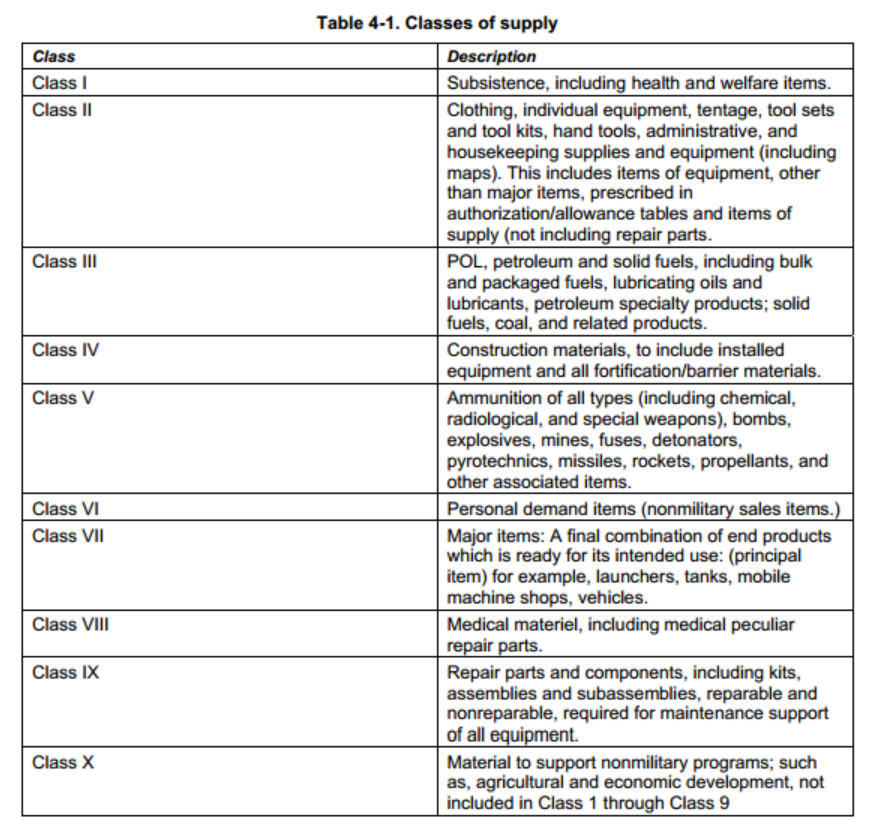
The above was the text version of it, now we are putting an image of them in case you want to print it out or use the image in a presentation etc. So here is the image:
Tips for Classes of Supply
They are a great mental checklist to run through prior to any mission. In your head, ask yourself each class of supply and see if your rucksack, M2 Bradley, and HMMWV has everything you need for upcoming missions. The mental check would go like this:
Class I – Do we have all the food, water, and hygiene items like MREs, Gatorade (for hydration), or ice if you are in a very hot vehicle in 110 degree heat in the middle of the desert.
Class II – Do we have enough toilet paper and changes of clothes?
Class III – There are 2 types of Class III. There is Class III(P) which is short for POL (meaning lubricants). Then there is Class III(B) which is short for bulk (meaning fuel). You would want to make sure you have both types of Class III prior to a mission. Gun cleaning oil and JP8 diesel fuel.
Class IV – Do we have concertina wire and building materials (sand bags) for any bunkers we need to build?
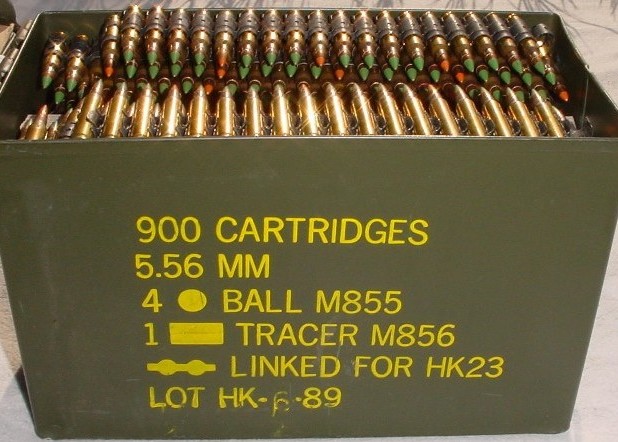
Class V – Do we have all of the kinds of ammunition, missiles, grenades, and flares we need?
Class VI – Do you have all entertainment items (smokes, frisbees, etc.) for the trip. This may sound trivial but you would be surprised how many DVDs deployed soldiers watch when not on duty. Also soccer balls were often handed out to kids to try and win hearts and minds.
Class VII – Do you have the right vehicle? In our unit we had both M2 Bradleys and HMMWVs we could take out. Sometimes when it was a major firefight we would take Bradleys, other times when we needed speed at long distances we would take the wheeled vehicles.
Class VIII – Do you have all medications, IVs, bandages, alcohol swabs, etc. you will need for the worst case scenerio?
Class IX – Do you have all the batteries and repair parts you need? You know what those pieces of equipment are that break often. Well sometimes stocking repair parts for items that break a lot will help you get your equipment fully mission capable quickly and it will save the day. So bring repair parts and batteries.
Class X – Anything else you may need that has nothing to do with the other classes of supply?