The Old and the New
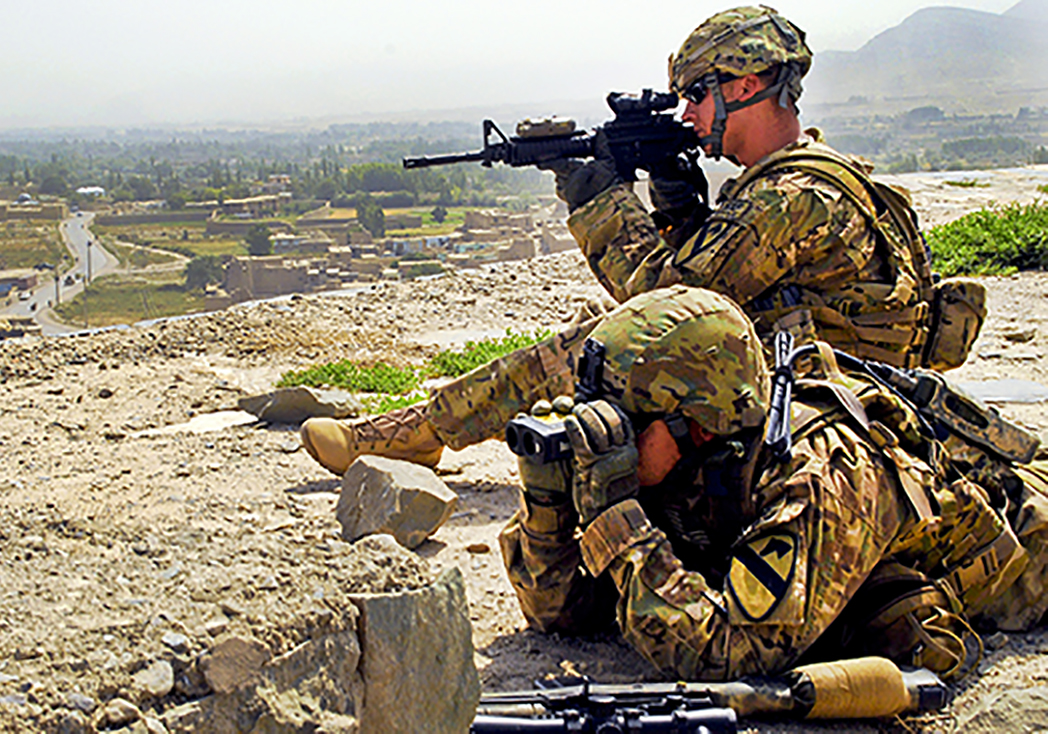
The latest buzz going around in US Army circles is about the new army uniforms, the Operational Camouflage Pattern (OCP), which are in the process of being rolled out; the entire conversion to the new uniform is expected to be completed by the summer of 2018. In 2004, the US Army decided to scrap the two versions of uniforms, to be replaced by a standardized model called the Army Combat Uniform (ACU). The cost of this conversion was $5 billion. The budget for the OCP has been estimated at $4 billion. According the army’s plan, the new uniform will be available in stores from next summer, and soldiers will have to replace their worn-out uniforms with the new ones.
The Battle Dress Uniform (BDU)
From the 1980s to the mid-2000s, this uniform was used by the US Army. This uniform is basically in shades for jungle camouflage, using olive green, tan and brown. It is similar to the type of uniform that was used during the Vietnam Era. These uniforms are also called ‘temperate weight uniforms’.
There existed several variations of the BDU such as ‘tropical weight’ BDU composed of 100% cotton rip-stop poplin cloth. Other BDU variants are the ‘temperate weather’ BDU, ‘hot weather BDU and the ‘enhanced hot weather’ BDU. The main feature that distinguishes each variation is the ratio of synthetic fiber to cotton fiber.
The Shortfalls of the ACUs
The ACUs were beset with flaws from the very start. In an attempt to modernize the uniform, an excessive amount of Velcro was used. In a combat situation where absolute silence is required, the Velcro fasteners have a tendency to open with a scraping sound, possibly giving the soldier’s position away to the enemy. Moreover, this Velcro restricts the movement of personnel, especially when brushing against each other with the Velcro strips adhering to each other’s uniforms.
The color scheme was another bone of contention, as the choice of colors was unsuitable for blending into the environment. Moreover, due to mass production of this uniform, there were several quality issues and the ACUs wore out faster. To put it bluntly, the troops hated the ACUs.
The Rise and Fall of MultiCam
In early 2010, a new version of army uniform was introduced known as the ‘MultiCam’ uniform. This was introduced as an interim arrangement, to remedy the flaws that existed in the ACU uniforms. It was intended to be suitable for use under different weather, elevations, light conditions and environmental conditions. MultiCam was a suitable choice for many technical reasons, the main advantage being that it blended well into multiple environments.
Commercially, the MultiCam uniform was a great choice as the design already existed in the market. This presented a cost-effective solution to the problems of the ACUs, as the huge outlay for creation of a new design was eliminated. Finally, the most relevant reason for the potential success of MultiCam – the troops loved it.
Unfortunately, it was commercial problems that led to the failure of MultiCam. The army asked the MultiCam manufacturer, Crye Precision, to reduce the licensing fees of the fabric printers, but owner Caleb Crye did not agree to this. The army then offered to buy the manufacturing rights from Crye, but was not willing to pay him the $24.8 million that he asked. This marked the last nail in the coffin of MultiCam, giving birth to the new army uniform which the US Army claims to be “very similar to MultiCam”, although not much is known about it yet. However, recent photographs of the uniform do show a resemblance with the old camouflage pattern of greens, yellows and browns.

The New Army Uniform
The new uniform pattern is called ‘Scorpion’. Senior US Army officials have started briefing their staff about it, although the army is playing this one rather close to the chest, possibly due to the flak that it has drawn from frequent and expensive changes in the recent and not so recent past. The new uniform has yet to be announced, but extensive field testing has been carried out over the last 4 to 5 years, using thousands of soldiers as volunteers for measurement of parameters like thermal reflection, level of concealment, comfort of wearing and general wear and tear.
Release Date
It appears that there is no official release date for the new Scorpion pattern style uniform. While it is being tested and the logistics are still being worked out, as soon as we know the release date we will post it here.
The Bottom Line
Whether the troops like the new army uniform or not, will largely depend on their actual experience from wearing the uniform, and that too, in combat situations. As the old adage goes, “The truth of the pudding is in the eating.” There has been a lot of skepticism in general about the uniform policy of the US Army. Billions of taxpayer’s dollars have been spent, often with little to show, as each version seemed to have its own set of issues, some newer versions being worse than the previous ones (see the ACU). The question that is in everyone’s mind now is as to whether this Catch-22 situation will continue, or will the US Army finally succeed in coming out with a good product that will win the approval of the final users, the soldiers themselves? This is something that remains to be seen (on in this case – hopefully “not seen” since it is supposed to be camouflaged).