Boeing is one of the largest aircraft manufacturing companies in the world. Aside from aircraft, the company also designs and sells commercial jetliners as well as military defense platforms and security systems. It was founded in Seattle, Washington, but its headquarters and corporate offices are located in the Fulton River District in Chicago, Illinois. It has more than 169,000 employees in 65 countries. The company is divided into two major business units: the Boeing Commercial Airplanes and the Boeing Defense, Space, and Security.
William Boeing began this company in 1910, when he bought a shipyard in the Duwamish River in Seattle and made an aircraft factory out of it. Boeing founded the company after the maiden flight of the Boeing Model 1 in June 15, 1916. This was the first Boeing product ever manufactured. During the next couple of years, the PW-9 and the Boeing P-12 were created, which established Boeing’s name as a leading manufacturer.
Aside from the Boeing aircraft, its well-known products from the Defense, Space, and Security unit are the following: the 702 satellites, the AH-64 Apache helicopter, the KC-46 refueling aircraft, the EA-18G electronic attack aircraft, the P-8 warfare aircraft, and the Phantom Eye unmanned aircraft system.
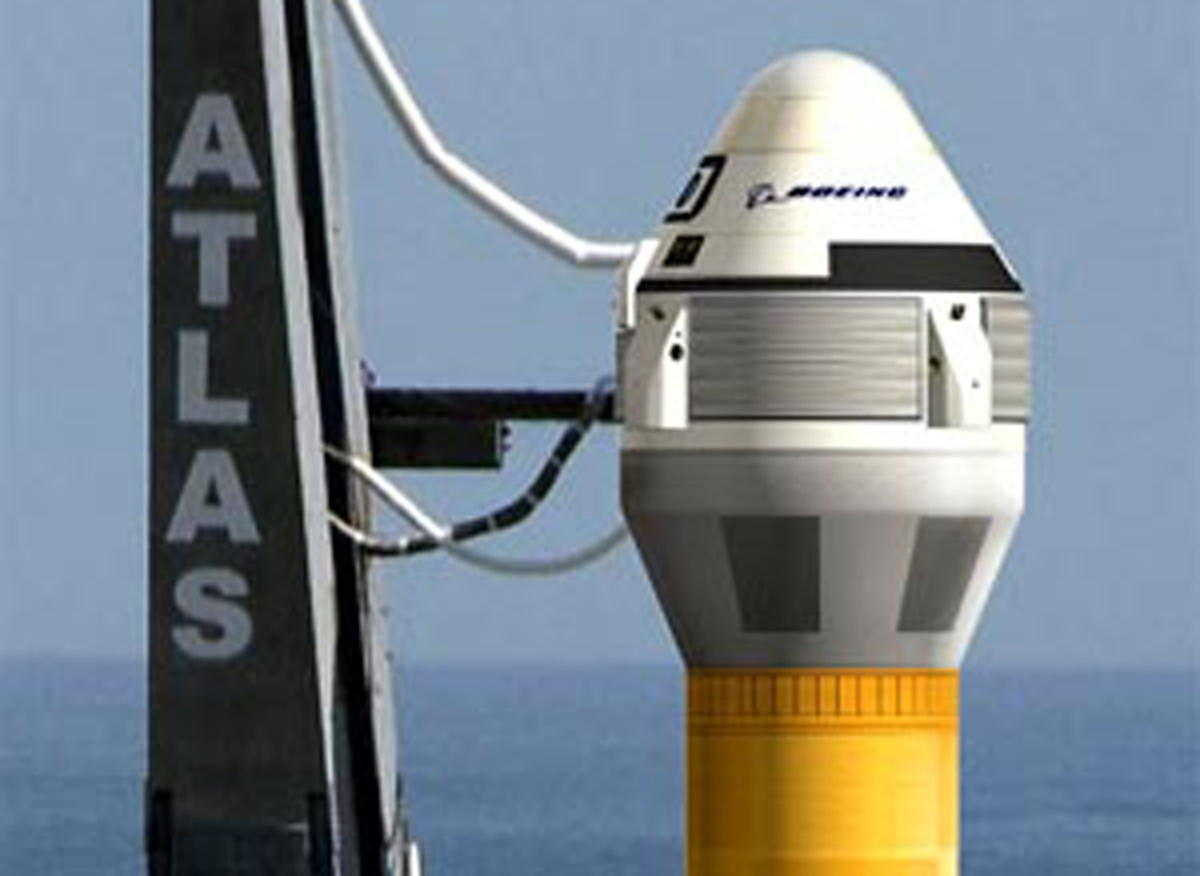
The American multinational aerospace vehicle designer and manufacturer Boeing recently showcased their first ever commercial space carrier, CST 100, which can carry up to 7 passengers. In this video you can have a detailed look at the design and the technology of this magnificent space craft. The Director of Crew of the company, Chris Ferguson, expresses his hope that within the next twenty years or so space travel is going to be a mainstream phenomenon due to the company’s innovations. Till now Boeing has built 10 satellites and 745 aircrafts. In 2013 Boeing estimated $86.623 billion in sales and it is the 26th on the “World’s Most Admired Companies” list of the same year.
This space taxi uses state of the art technology and is reusable. Yes, that’s true these space crafts can be literally made ready for another launch. Only the heat shield has to be changed after each journey. CST 100 has modern display technology and can take you to the international space station or any other lower orbit locations and can bring you back on earth safely. The interior of the craft is based upon the commercial Boeing aircrafts and also offers the neat and clean ease of such air crafts and air journey.
Enthusiasts from an aerospace community of flight hobbyists named Flite Test has recently developed the first ever successful drone helicarrier from which another drone can easily take off and with more appropriation can even land on it. They published this video on their Facebook page on 4th November 2014 showcasing their developed technology. However this is still in its final developing stage and has been developed to operate on small scale. But the engineers expect that the technology can be implemented in practical field of helicareer and drone development at an international scale. And the developed careers are likely to be able to serve as takeoff grounds for any wartime drone or other aircrafts that till now have to take off from the ground.
Flight Test offers a meeting place where all those who have a passion for flights, flying and aircraft engineering and development can come together to share their ideas and designs. In this video from them you can see a little toy sized drone taking off from the small rectangular remote controlled helicareer with two rotors on each side. This case study was showcased in the Horizon Indoor Electric Festival earlier this year.
This technology has major Department of Defense implications. Now that this tech has been dreamed up and put into a prototype, DARPA just might be calling Flite Test for something a little bigger. Or maybe Northrop Grumman, BAE, Boeing, or Lockheed Martin could be called on.
Boeing 737-800, while on its way to New Delhi, India was stopped in the middle of its take off in Surat’s airport after encountering a stray buffalo on the runway. The airplane was supposed to fly out to New Delhi, carrying 146 people on board. All of them were safe and sound, but the aircraft suffered major damage, especially in its left engine. The water buffalo, unfortunately, did not survive the accident. According to a representative from the airline, the animal was virtually invisible in the dark background. All 146 people were later on transferred to another SpiceJet aircraft.
As a result of this incident, SpiceJet’s operations from New Delhi to Surat and vice versa have been suspended. Sanjiv Kapoor, the Chief Operating Officer of SpiceJet, went on Twitter and blamed the incident on the airport’s lack of security.
Most of the major airports in India are secured with perimeter fences; however, there are still some airports, especially those that are located in faraway provinces, that are not, and these have gone through security breaches. A news agency has reported that the Surat airport has only been in operation for two years and handles only 3 flights per day. Its operations are being handled by the state-run Airports Authority of India.
You can read more of the story and see more pictures about it here.
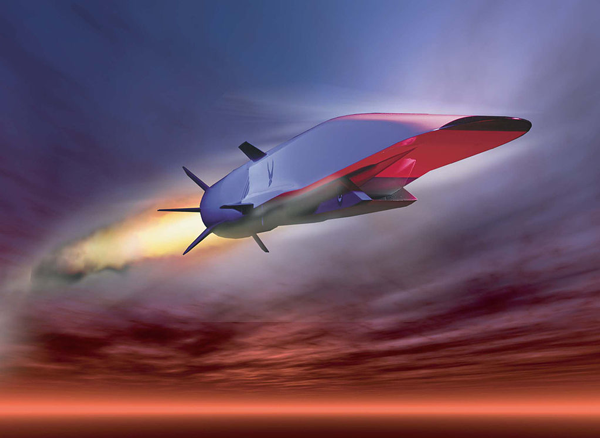
This video talks about scramjet engine and its capability of travelling in hypersonic speed (meaning greater than Mach 5). Joseph Vogel, the Director of Hypersonics of Boeing Defense, Space & Security talks about X-51A WaveRider, an unmanned scramjet powered demonstration aircraft for hypersonic flight testing. The aim of the aircraft is to travel at Mach 6 or 4000 miles per hour. As this aircraft uses its shock wave for adding lift it has been named WaveRider. The X-51A WaveRider has the capability of travelling across the United States in less than one hour. This aircraft is a result of the Waverider program which is run jointly by Boeing, the Air Force Research Laboratory, DARPA and Pratt & Whitney Rocketdyne. This X-51 technology is going to be used in a Mach 5+ missile named High Speed Strike Weapon (HSSW) which is planned to be launched in 2020.
The X-51A WaveRider is chiefly designed to demonstrate various aspects of hypersonic flight. It completed its first ever flight on 26 May 2010 and in June the second test flight took place. With a goal of achieving Mach 6 for 300 seconds, a test flight was conducted in August 2012. But the aircraft crushed after 16 seconds due to some troubles in the control fin. After all these failed attempts, X-51A completed its first successful flight on May 1 2013. In that flight X-51A achieved hypersonic speed above Mach 5 for 210 seconds.
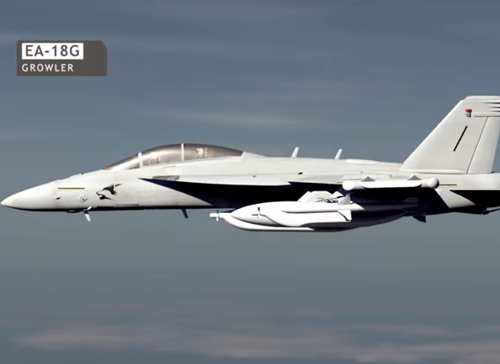
This video introduces Boeing EA-18G Growler. Scott Radke, the Avionics Integration Engineer of EA-18G Program is seen taking about Boeing’s new electronic warfare aircraft EA-18G Growler.
Boeing EA-18G Growler an American electronic warfare aircraft developed for the United States Navy. It is a customized version of combat proven Boeing F/A-18F Super Hornet incorporating more developed AEA avionics for enhancing SEAD (Suppression of Enemy Air Defenses) capability and performing non-traditional electronic attacks. The chief feature of Boeing Growler is that it is capable of jamming enemy radars and thus effective in helping aircrews to reach targets without being detected.
Boeing Growler is capable of encountering enemy air defenses by using pre-emptive as well as reactive jamming techniques. Along with its capability of being greatly effective for stand-off jamming missions, it is also capable of performing escorting role with the agility and speed of the Super Hornet. With its uninterrupted communications and advanced situational awareness Boeing Growler is capable of achieving effective integration with ground operations than before. The use of Advanced Electronically Scanned Array (AESA) radar, air-to-air missiles and digital data link provide the aircraft with self-protection capability and makes it effective for target identifications and prosecution as well.
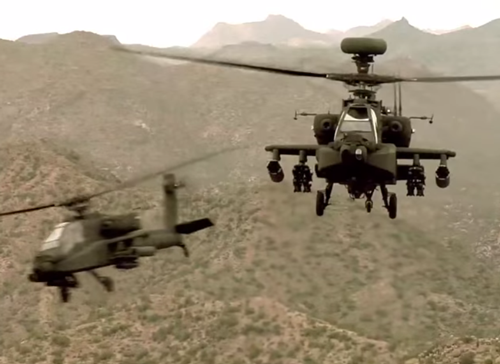
In this video John Schibler, the Boeing Chief Engineer of US Attack Helicopter Programs talks about the effectiveness of Boeing Defense, Space & Security’s newest model of Apache helicopter, AH-64E Guardian and tells how it acts as a safeguard for the soldiers serving on the ground.
Apache AH-64E Guardian like all the previous models has two engines, four blades and carries one pilot and one co pilot gunner. With a speed of 164 knots and range of 250 nautical miles it carries an aerial rocket system, automatic gun of 30 mm, hellfire missiles and an M239E1 chain gun. It is different from its predecessors in many ways. Not only it flies farther and faster than other Apache models but also it has more enhanced communication systems. The main feature that makes it different from others is that it is inter-operable with unmanned aircraft systems that enables the pilot to control the UAS sensors, weapon system and flight path (meaning it can control UAVs from the cockpit).
Apache helicopters are evidently known as deadliest helicopters for their destructive features, but Apache Guardian is more than that. Its “eye-in-the-sky” technology makes it yet more effective to keep the soldiers safe. It is capable of seeking and eliminating threats that otherwise would have remained undetectable and therefore makes it easy and safe for the soldiers to complete their assigned missions. So the name “Guardian” aptly suits this newest model of Apache as when it is around, the soldiers can have a breath of relief.
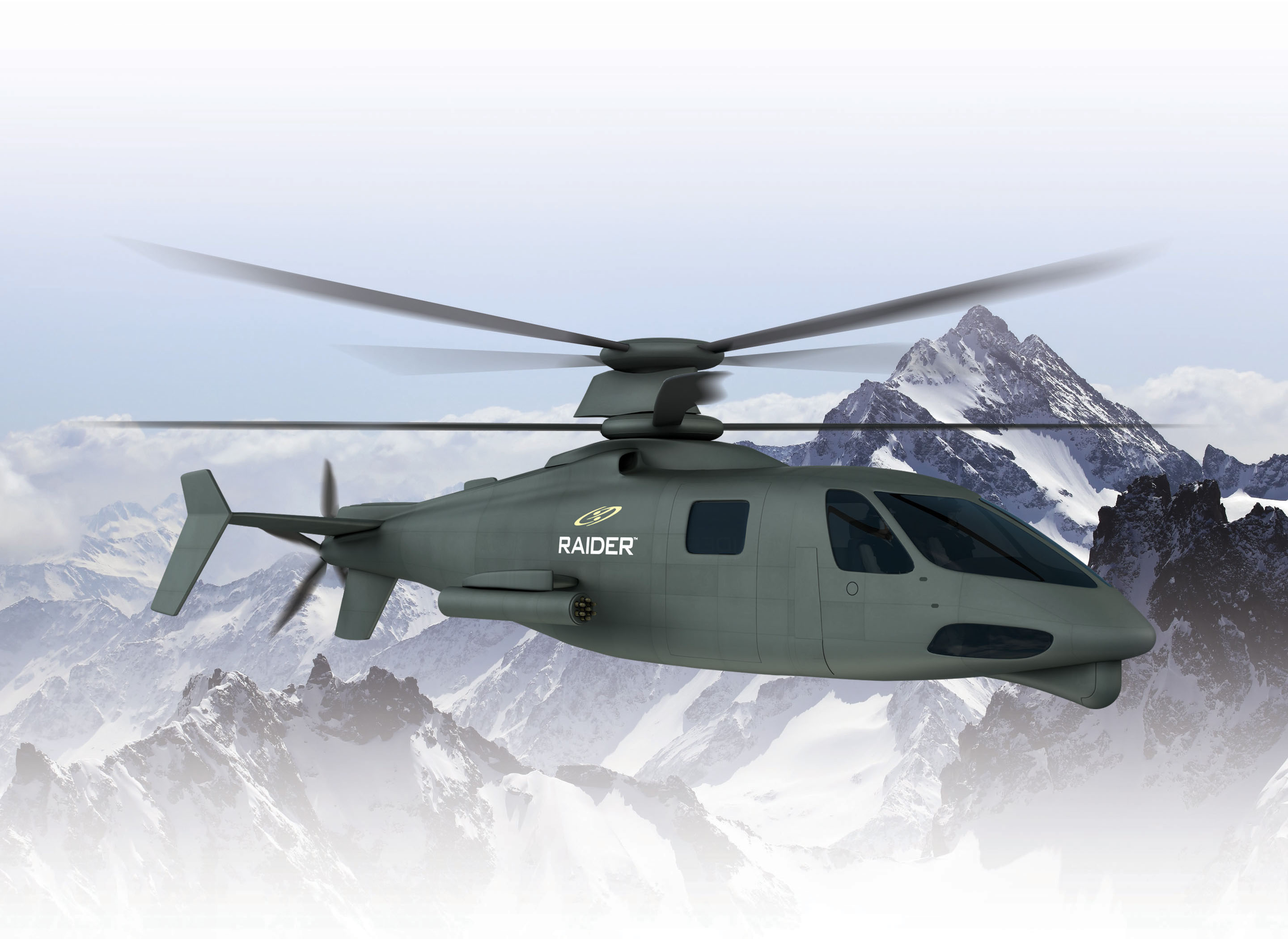
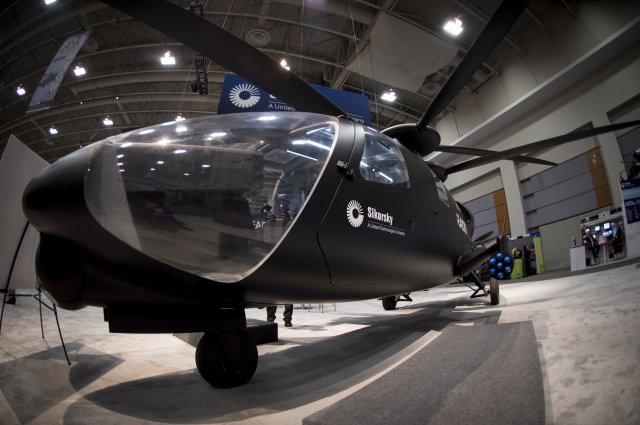
In March 2010, the Armed Aerial Scout program made a request for information for an advanced helicopter, and the result was the Sikorsky S-97 Raider as proposed by Sikorsky. Four years later, the company finally unveiled the first full production model of the groundbreaking scout and attack helicopter in the company’s facility in West Palm Beach, Florida.
The objective set for the new aircraft is to replace the army’s OH-58D Kiowa Warrior. However, specialists think that if the manufacturer’s claims about the Sikorsky S-97 Raider capabilities are true, it is almost certain that this helicopter’s reach will grow to cover a much wider audience. For instance, if the Sikorsky S-97 Raider proves useful, it might be used to replace other US Army military helicopters such as the MH-6 Little Bird used by the U.S. Special Operations Command. In addition to its expected military roles, The Sikorsky S-97 Raider could also be adapted to carry out civilian missions.
Sikorsky Raider at AUSA
Cost of the Sikorsky S-97 Raider
Up to now, Sikorsky and its various suppliers have invested in as much as $200 million on the two first prototypes of the helicopter. The company hopes to be able to produce this revolutionary helicopter at $15 million per unit.
The Sikorsky S-97 Raider is set to fly for the first time on December 2014. However, the aircraft’s first flight and its first demonstration of capabilities won’t take place until mid-2015.
Sikorsky S-97 Raider Design
Design is one of the most eye-catching attributes of the Sikorsky S-97 Raider. Being a compound helicopter, the Sikorsky S-97 Raider includes variable speed coaxial main rotors and a variable pitch pusher propeller. The helicopter is large enough for 6 passengers to fit in, and the side-by-side cockpit can contain two pilots. However, the S-97 is also designed so that it can fly autonomously.
Sikorsky UH-60M Black Hawk, Radom 2007 (Photo credit: Wikipedia)
As far as the engine is concerned, it is based on the Sikorsky X2 demonstrator. Until now, The Sikorsky S-97 is equipped with the same engine used in the UH-60M Black Hawk. Nonetheless, the company foresees the development of an improved engine for its new helicopter.
Key Dates
Here is a timeline of the key dates since Sikorsky first launched its X2 Technology Demonstrator in August 2008. These key dates are in conformity with the information provided by Sikorsky on their Sikorsky S-97 Raider website.
August 2008: X2 Technology Demonstrator™first flight
September 2010: X2 Technology Demonstrator reaches 250 knots
October 2010: S97 Raider™ launched
July 2011: X2 Technology Demonstrator final flight
January 2012: Initial Raider supplier team announced
March 2013: Raider Critical Design Review completed
September 2013: Raider aircraft #1 delivered, airframe final assembly begun
January 2014:Raider Systems Integrations Lab (SIL) fully operational
May 2014: Raider electrical power on achieved
October 2014: Raider Rollout Ceremony
December 2014: Raider first flight
2015:Raider flight test and Raider capability demonstrations
General Characteristics
The Sikorsky S-97 Raider has a capacity for six troopers including up to two pilots. The space inside the helicopter can be adjusted according to needs. Thus, if need be, the space in the cockpit of the aircraft can be used to store additional equipment or ammunition.
According to the information disclosed by Sikorsky, the S-97 Raider is 36ft long and weighs 8,945 lb. Its maximum takeoff weight is 11,400 lb. It is equipped with one General Electric YT706 powerplant, and its main rotor diameter is of 34 ft. The aircraft is 6-bladed variable pitch and clutchable pusher propellers.
Sikorsky S-97 Raider Performance
The S-97 has a staggering Never exceed speed of 276 mph (240kn), and a cruising speed of 253 mph (200kn) external weapons included. The weapons include 50 cal guns w/500 rounds and a seven shot rockets pod, Hellfire missiles and 2.75” rockets. The range exceeds 600 km, and it has an endurance mean of 2.7 hours on standard fuel. In addition, the S-97 is also capable of aerial refueling.
An OH-58D Kiowa Warrior from 1st Battalion (ATTACK), 25th Aviation Regiment, 25th Infantry Division (L), “Lightning Attack”, patrols the skies over , . Lightning Attack deployed from Schofield Barracks, Hawaii to Iraq in January and is conducting aerial reconnaissance, close combat attacks and security missions for the 1st Armored Division and the 1st Cavalry Division in support of Operation Iraqi Freedom. (Original caption) (Photo credit: Wikipedia)
Comparisons
As a matter of fact, the new and futuristic Sikorsky S-97 Raider is produced in order to replace the army’s OH-58D Kiowa Warrior, an aircraft that has been in service since the 1960’s and which has been used in many wars by the US Army such as the Iraq and Afghanistan wars. Thus, while, there are some similarities between the two helicopters, the Sikorsky S-97 Raider is clearly much more advanced at all levels.
In his article published in The Aviationist website, David Cenciotti compares the new Sikorsky S-97 Raider with the “mysterious stealth” aircraft that was used in the raid on Osama Bin Laden.
Cenciotti states, “it is safe to believe that Sikorsky has embedded some of the features developed for the secret, radar evading US Army Stealth Black Hawk used by the Navy SEALs at Abbottabad in May 2011,”
Future Plans for the Sikorsky S-97 Raider
Sikorsky seems to be leading the way and setting an example to other companies on how to get things done. Not only does Sikorsky build state-of-the-art machines, but it also invests in future development opportunities. For example, as recently as in May 2014, Sikorsky won a U.S. Navy deal for the President’s Marine One helicopters. According to Reuters, the company “won an initial $1.24 billion contract to develop and build six new U.S. presidential helicopters, the first step toward a fleet of 21 new aircraft by 2023.”
Other future plans of the company include teaming up with other leading companies such as Boeing and Aurora Flight Sciences to manufacture new aircraft. In addition to all these recent successes, Sikorsky and Boeing have also been chosen to work hand in hand in order to produce the SB>1 Defiant, which is a “medium-lift-sized demonstrator.” The demonstrator is built for Future Vertical Lift and is expected to fly in 2017 as advanced by Sikorsky in a press release.
Final Thoughts
It is probably safe to say that during its 90 years of existence, Sikorsky is now stronger than ever. The rumors about the company’s divestiture have calmed down especially after the company was awarded a $1.24 billion deal to build the presidential helicopters. Therefore, although the Sikorsky S-97 Raider is one of the least revenue generating units belonging to United Technologies, the company isn’t thinking about selling it or spinning it off.
If Sikorsky continues its innovative efforts, it will eventually find more and more reliable customers than the US Army. This idea of using helicopters for civilian duties might be an interesting alternative, and selling the Sikorsky S-97 Raider to American allies could also help widen the company’s business opportunities.
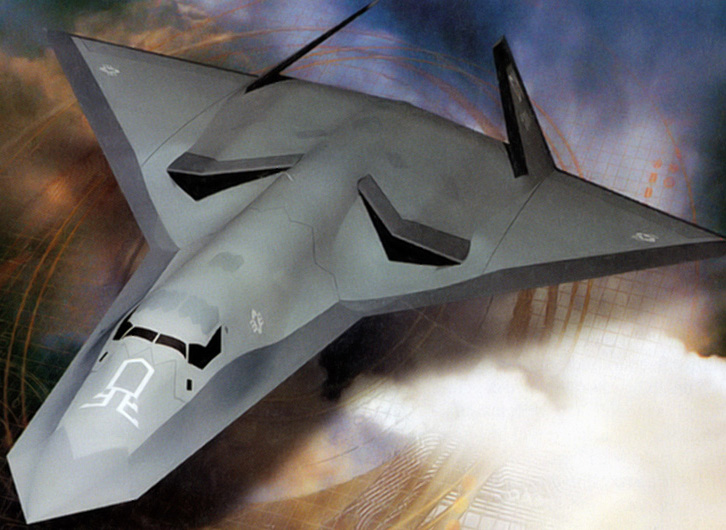
There is a new long range strike bomber being developed by the US Air Force. The aircraft program is under wraps to the extent that the Pentagon did not even admit that there is a program at all until recently, let alone giving out details about the project. A spokeswoman with the US Air Force was quoted as saying, “Specific LRS programmatic details are protected with enhanced security measures.”
Known Facts
Not much is known about the new long range strike bomber, except that there is an aircraft program called the “LRS-B” program, and it is highly classified. What is also known, is that money to the tune of $300 million has been allocated for the defense project for the fiscal year 2013-14, and the total money allocated so far from 2013 to 2017 is estimated to be about $6.3 billion. The B-3 bomber as it has come to be called will be long range, optionally-manned, and it will have stealth properties. This bomber aircraft will have a price tag of about $550 million apiece. The entire fleet of about 80 to 100 stealth bombers is expected to be commissioned by 2020.
The B-3 bomber is a replacement of the B-2 bomber, which in turn was a replacement for the B-1. So, let us take a look at the previous versions of the ‘B’ series of strike bombers.
A B-1B Lancer with wings swept full forward (Photo credit: Wikipedia)
The B-1 Bomber
The B-1 Bomber was introduced in 1986 as a replacement of the B-52 Stratofortress. This bomber aircraft was built by Rockwell International, and there were two versions. An initial version was actually in existence since 1974, called the B-1A. It was capable of carrying nuclear bombs, flew at twice the speed of sound at high altitudes and could also carry short-range attack missiles. It also had stealth features, meaning that it had the ability to lower its visibility on radar to 1/100th of the B52, but this also had an adverse effect on the speed of the aircraft. During the period of 1984 to 1988, the US Air Force built its B-1 Bomber aircraft fleet up to 100.
A U.S. Air Force Boeing B-52H Stratofortress static display with weapons, at Barksdale Air Force Base, Louisiana (USA), in 2006. (Photo credit: Wikipedia)
The second version, the B1-B is also supersonic, but its normal cruising speed is subsonic – about Mach 0.9 which is 670 miles per hour. It can fly at an altitude of as low as 200 feet above the ground. It can carry up to 24 nuclear bombs and has a flying range of 4,600 miles (7,400 kilometers) without having to refuel.
B-2A Block 10 (upgraded to Block 30) Spirit, 82-1069, “Spirit of Indiana”, of the Eighth Air Force 509th Bomb Wing (Photo credit: Wikipedia)
The B-2 Stealth Bomber
The specialty of the B-2 Stealth Bomber is that its development marked the integration of aerospace technologies with conventional aviation technology. It is a versatile aircraft, capable of delivering nuclear as well as conventional weapons.
The B-2 Bomber was developed by Northrop, Boeing in the late eighties, the first successful flight of the B-2 Bomber took place in July 1989. This bomber aircraft is built on the lines of the B-35 of the 1940s. The bodywork mostly consists of resin-impregnated graphite fiber.
More on the LRS-B Long Range Strike Bomber
Due to the utmost secrecy being maintained by the Pentagon, Northrop Grumman also seems to have been sidetracked and is non-committal on the matter (of the B-3 Bomber). Even though Northrop has not put in a bid yet, it is unknown whether they will now or will compete for the LRS-B contract at a later stage. It has been speculated that maybe it is just waiting for better terms, or a more defined scope of work on the project. Boeing and Lockheed Martin have joined hands in a bid to win the high-budget project and have been approached by the Pentagon. Boeing will be the main contractor and an announcement to this effect was made in October 2013.
The Downside of Secrecy
It has been said that excessive security can have a negative effect on development. In a recent article published in The Daily Beast, Bill Sweetman says this about the B-3 Stealth Bomber, “… almost everything about it is secret, and that’s not necessarily a good thing.” Sweetman goes on to point out that the secrecy associated with the Long Range Strike Bomber is the highest in the history of all similar projects since the 1980s. He says that while developing the B-2, certain features were developed, but never used and will never be used. Due to this reason, there were people working within a “security bubble”, who had a free hand in doing just as they pleased, as they were shielded from public scrutiny. The above reason is why some projects overrun their budgets.
Secrecy, to a point is acceptable, especially when a military weapon is being developed. But secrecy beyond reasonable limits can result in impractical technical development with a series of budget overruns, which could ultimately threaten the very existence of the project. An official announcement is expected sometime in 2015 regarding the confirmation of this aircraft program. Until then, the world will just have to rely on snippets about this much-needed, futuristic Long Range Strike bomber.
The US Army’s New Defense System “High Energy Laser Mobile Demonstrator” Wields its Power
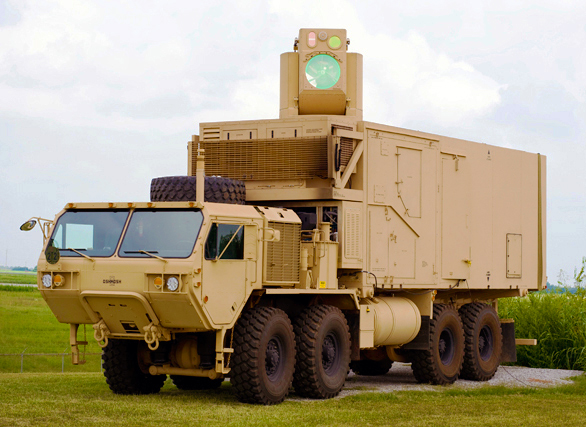
The High Energy Laser Mobile Demonstrator (HEL-MD) is a top-notch laser-based defense weapon being developed by the American Army’s Space and Missile Defense Command, in collaboration with Boeing.
The HEL-MD’s role is to display the potential of directed-energy technology for shielding US Army troops against rockets, artillery and mortars. The first successful trials took place between November 18th and December 10th, 2013 in the White Sands Missile Range, New Mexico. However, the complete integration with a Heavy Expanded Mobility Tactical Truck (HEMTT) was during the summer of 2011, and the first low-power tests of this laser weapon took place during the fall and winter of the same year.
Historical Overview of the HEL-MD
In 1980, US President Ronald Raegan advanced the most prominent propositions for the use of laser guns to destroy flying targets before they could land. The project was called the Strategic Defense Initiative (SDI), which people also referred to as “Star Wars.” However, most of the laser weapon projects were overlooked regardless of the fact that the strategic missile defense concept has never ceased to exist.
Boeing, on the other hand, continued working on the concept, and in February 2010, the company successfully tested one of its Directed-Energy weapons.
YAL-1A Airborne Laser in flight with the mirror unstowed (Photo credit: Wikipedia)
How Does the HEL MD Compare to Other Defense Systems?
The HEL MD is not the first defensive system that the US army devised in order to defend the American operating bases with laser weapons in Iraq and Afghanistan. Similar systems include the Boeing YAL-1 Airborne Laser Testbed and the Phalanx-based Counter Rocket, Artillery and Mortar (C-RAM).
Unlike the HEL MD, the defense system known as the Boeing YAL-1 Airborne Laser Testbed was mounted inside a modified Boeing 747-400F and was, therefore, not mounted on a ground vehicle. However, due to some test failures, the funding for this system was cut in 2010, before the US Army decided to cancel the whole system in 2011.
C-RAM, on the other hand, proved efficient to some extent. The system successfully detected and destroyed rockets, artillery and mortars. Nonetheless, some attacks in both Iraq and Afghanistan still succeeded to get through, which is not the case with the HEL MD system as proved during testing in 2012 and 2014.
Another area where HEL MD outperforms C-RAM is the number of rounds in the magazine. The HEL MD system has a “near-infinite magazine” because it is a laser, unlike C-RAM that has a finite number of rounds.
Blaine Beardsley, HEL MD program manager at Boeing, explained, “Even while you’re utilizing the magazine and engaging targets, you’re charging that magazine.” Therefore, unlike its counterparts, the HEL MD laser gun uses electrical power to produce lethal effects. Mark Gunzinger, a Senior Fellow at the Center for Strategic and Budgetary Assessments (CSBA), further illustrated this when he said, “As long as they have a source of electricity and cooling, they can keep firing.”
Furthermore, this laser weapon enjoys the very useful attribution of mobility, hence the name “MOBILE Demonstrator.” In this regard Beardsley added, “You can drive it out to any location and emplace it quickly and be able to set it up with full 360-degree coverage.”
HEMTT wrecker (M984, front) and cargo (M977). Photo taken at Bagram Airfield in Afghanistan. (Photo credit: Wikipedia)
Capabilities and Specifications of the HEL MD
The latest tests of this laser weapon by the US Army in New Mexico are considered to be the first successful demonstration of the capabilities of the HEL-MD mounted on a Heavy Expanded Mobility Tactical Truck (HEMTT). The current system uses a 10-kilowatt laser. However, the system’s power is expected to be upgraded to 50 or 60-kilowatt laser. Later, the laser will be increased to 100-Kilowatts.
In addition to the tests in New Mexico, the system was tested again on 4 September 2014 at the Eglin Air Force Base in Florida. The HEL MD proved very successful even in maritime conditions. The defense system successfully managed to target a variety of aerial targets, even under windy, rainy and foggy weather conditions.
When commenting on this success, Dave DeYoung, Boeing Directed Energy Systems director, said, “As proven at White Sands Missile Range in New Mexico in 2013 and at Eglin Air Force Base this spring, HEL MD is reliable and capable of consistently acquiring, tracking and engaging a variety of targets in different environments, demonstrating the potential military utility of directed energy systems”.
Although other systems such as C-RAM have proven their reliability, the latest trials of the HEL MD laser weapon system by the US Army in Florida helped the system gain a considerable margin over all of its competitors.
What follows is a brief summary of some of the specifications of the current HEL MD defense system:
BCS – 50 cm aperture retracting telescope, 300 W target illuminator, low jitter precise pointing tracking system
Acquisition & Track Sensors – IR based WFOV for target acquisition coupled with NFOV for engagement
WMI – For a control of the entire system-based on a standard air defense and Avenger C4I interface
BMC4I – Modular design to enable the interface with current and future fielded BMC4I systems
Electrical Power – One set of lithium ion batteries to provide extremely stable power to the laser. Battery charging and another subsystem power from single 60 kW diesel generator, mounted on HEMTT
Thermal Management – Two-loop chilled water system for the laser and standard air conditioner for all other subsystems
Future Plans
Though the current primary use for the HEL MD laser gun system is for the US Army, plans include using this laser defense system to protect the planet from asteroids. There has been a drastic rise in the interest of using this technology since an asteroid hit Central Russia on February 15, 2013. The incident injured more than 1,000 people, which experts regarded as a serious warning about the need for a defensive system that would protect the Earth from any similar asteroid attacks.
Final Analysis
The (HEL MD) laser weapon system has gained fame as a revolutionary defense system for the US Army. It is the only system that proved successful even under foggy, rainy and in maritime conditions. Hence, although other systems like C-RAM will not cease to exist, it is doubtless that the US Army’s New Defense System, the High Energy Laser Mobile Demonstrator HEL MD, will constitute a threshold for more sophisticated directed-energy weapons, especially that those future plans also include saving the planet from asteroids.
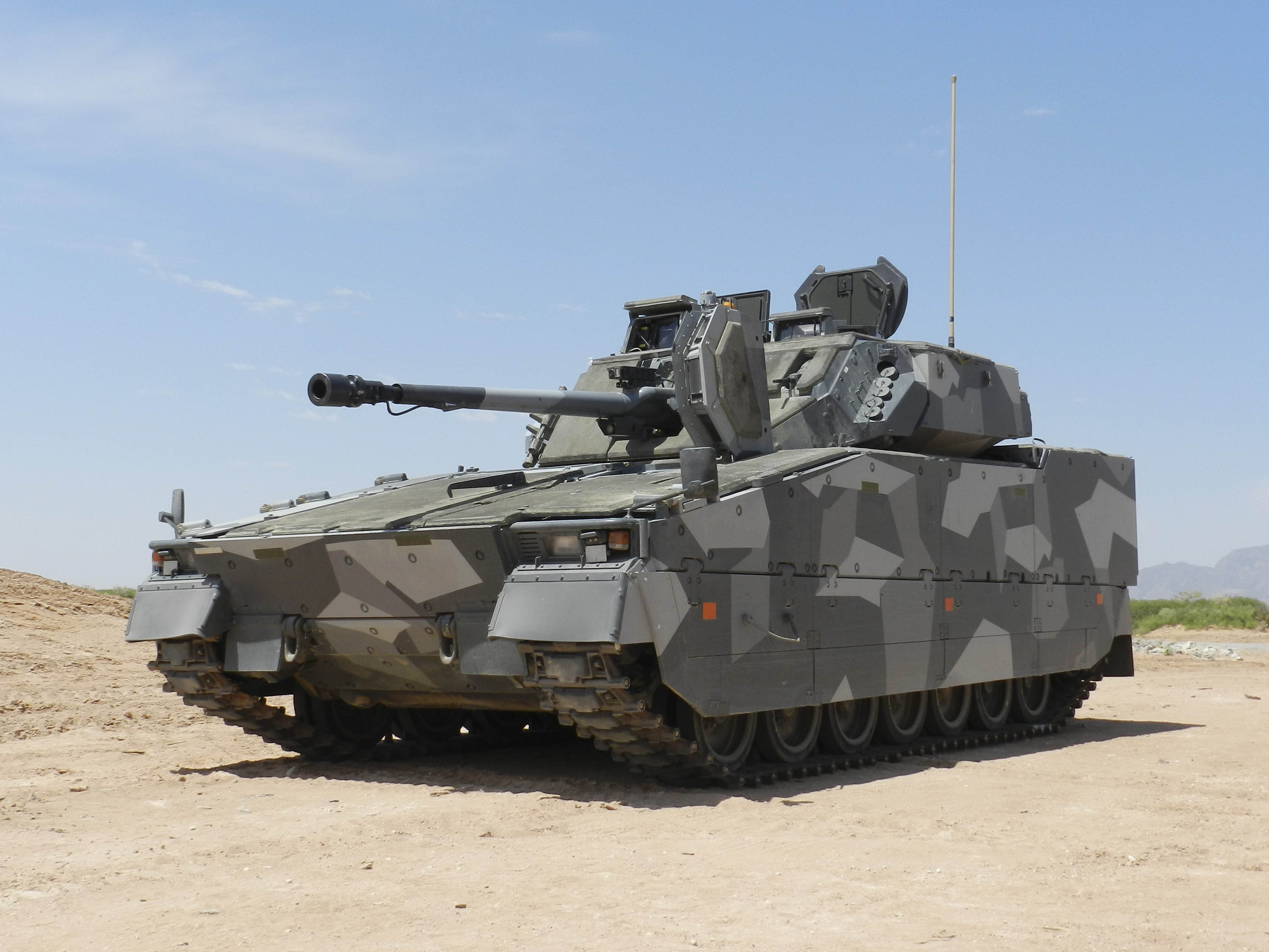
Where did the Ground Combat Vehicle come from and what is it? In 2009, the US Army announced its intention to “significantly restructure” it’s Future Combat System” (FCS). This was formally announced by the Secretary of Defense, Robert Gates. The FCS was a program being developed since the year 2000. It was to be a multi-billion dollar program which would be implemented over a period of several years, and one of the salient features of this program was the Manned Ground Vehicle, (MGV).
However, the development of the MGV was cancelled and replaced by another vehicle called the “Ground Combat Vehicle” (GCV), to replace the then existing M113s and the Bradley. The features were obviously planned to be better than the Bradley, in all respects.
M2 Bradley IFV (Photo credit: Wikipedia)
Features of the Ground Combat Vehicle
The basic philosophy behind the GCV was that it should be possible to add capabilities on to it in the future, including development of armor. Further, the vehicle should be adaptable to both existing as well as future network capabilities like jammers, radar and sensors. Furthermore, it should be integrated with mature technologies. The vehicle was expected to be in the field by the year 2017, at the latest. The capacity was expected to be a total of 13 soldiers, which would have been more that the capacity of 9 in the M2 Bradley. A common chassis would enable variants to be built around the base structure. The vehicle would also have modular armor, which could be added and removed according to combat requirements. The propulsion system would be an E-X Drive hybrid electric that would deliver high power torque.
Setbacks and Budget Cuts
Originally, once the Analysis of Alternatives (AoA) had been carried out by the army, and no other alternative contractors had been located, two contracts of $439.7 million and $449.9 million were awarded to two contractors, General Dynamics and BAE Systems, Nothrop Grumman respectively. Firms like Lockheed Martin, MTU, Detroit Diesel, Raytheon, Rheinmetall Defence, Krauss-Maffei Wegmann, SAIC and Boeing were also in the fray.
In 2010, a Request for Proposal (RFP) was issued. Under the deadlines of this RFP, companies were given up to January 2011 for proposals to be submitted for tracked or wheeled vehicles. The Army put a ceiling on the cost per vehicle to a range between $9 million to $10.5 million. The cost of each operational mile was to be $200. The vehicle was also required to fit on a C-17 transport aircraft. 1,874 vehicles had been planned, with the first ones being run off the production line in April 2018.
However, there were several clauses that the Army introduced, that would put the companies in extremely deep water, if there were any glitches in the production. For instance, there was a $450 million ceiling per company and if there was any further rise in the cost, 100% of the additional cost would have to borne by the contractor.
Further deterioration of the program occurred with Boeing protesting about its rejected proposals. The Army defended its case by stating that it had requested certain technical details from Boeing, but the company did not come forward. A total of 20 weaknesses of Boeing were identified, but according to the Army, the company did not address them adequately.
The program was officially called off on 24 February 2014, as confirmed by the Secretary of Defense, Chuck Hagel.
Potential of the Ground Combat Vehicle
If the GCV had been continued, would it, and how would it have benefited the Army? In 2009, Maj. Gen. Robert H. Scales (Ret.) wrote an article for the Armed Forces Journal. In his article, A Vehicle for Modern Times, Scales brings to the fore the burning issue of the state of the US Army’s ground forces. He feels that the GCV would be able to bring about the much-needed modernization of the US Army’s ground forces. He feels that the GCV could influence the way all other support systems of the war machine work, like sensors, network, aircraft and fire support. Scales makes a lucid observation that it is unfortunate that drastic changes are usually brought in as a consequence to the death of soldiers.
When the Stykers and Land Warriors were introduced, Scales says, they played different roles, such as long-range and short range transporters, firepower platforms, rally points or even rest centers. He says that the development of a land vehicle effectively resistant to Improvised Explosive Devices (IEDs) abundantly found in Afghanistan is far from satisfactory. He says that loading on armor has got its limitations; the balance has to be struck between offering sufficient protection and making the vehicle to unwieldy and overweight due to excessive armor. This is one good thing that the GCV has going for it.
Scales hits the nail on the head by stating that Soldiers and Marines have paid a heavy price in Iraq and Afghanistan. The Ground Combat Vehicle program he feels, would give them back what they have lost. He concludes the article with a powerful summation by saying, “Let’s get on with giving them the fighting system they deserve.”