Considered as one of the largest defense contractors in the world for the military industry, BAE Systems is a company established and incorporated in the United Kingdom. It provides defense, security, and aerospace products. In fact, it is one of the six largest suppliers of arms for the United States’ Department of Defense, with 95% of its total sales revenue being military-related.
BAE Systems was founded on November 30, 1999, when Marconi Electronic Systems, a General Electric subsidiary, and British Aerospace emerged. The company is comprised of five major groups: Electronic Systems, Platforms & Services (UK), Platforms & Services (United States), Platforms & Services (International), and Cyber & Intelligence. Along the way, the company has acquired a host of other companies, including Armor Holdings, United Defense, and Tenix Defence.
Currently, it is actively handling several projects, including the Eurofighter Typhoon, F-35 Lightning II, and the Astute-class submarine. BAE Systems is headquartered in Westminster, London, but the US, the UK, Australia, India, and Saudi Arabia are some of its main markets. BAE System’s best-selling products of all time are the Typhoon and Tornado fighter, the Hawk jet aircraft, the M2 and M3 Bradley vehicles, the M109 Paladin, and the Advanced Gun System of the US Navy.
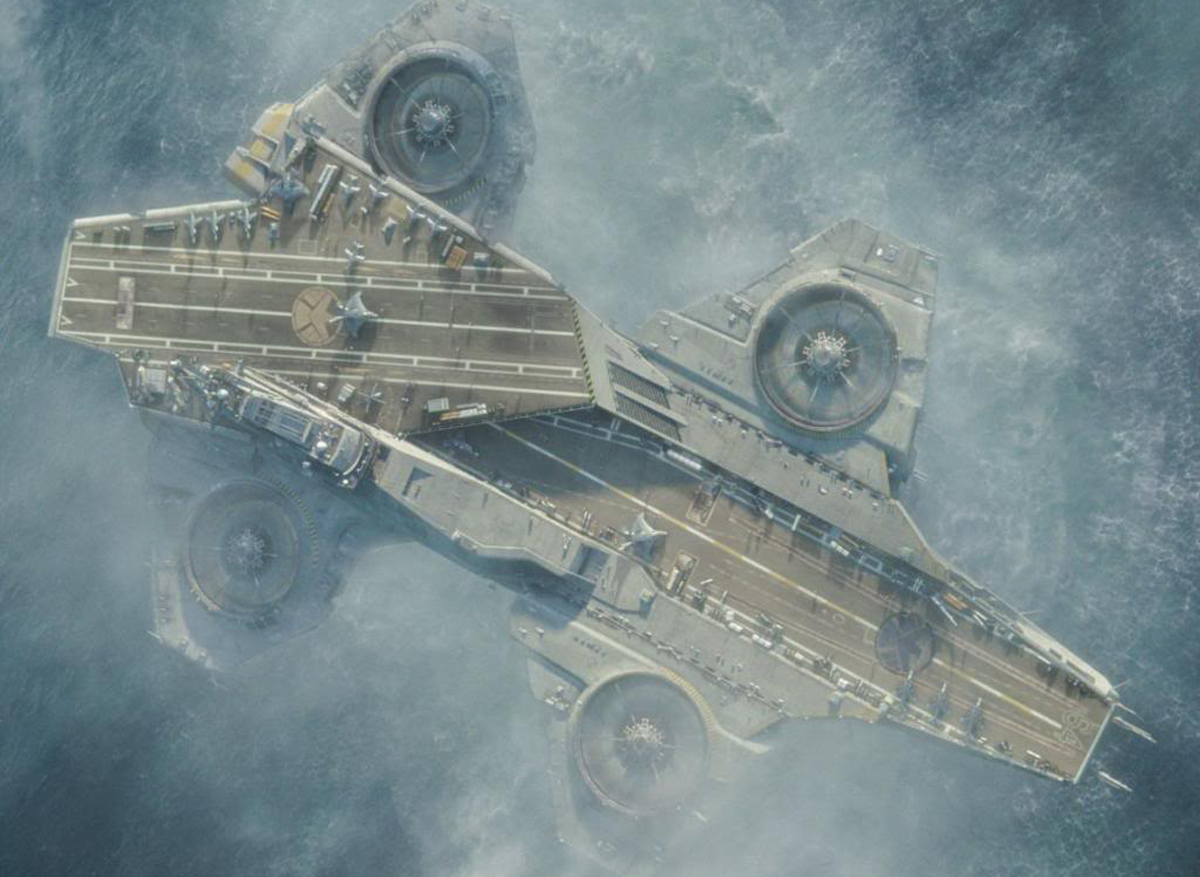
Enthusiasts from an aerospace community of flight hobbyists named Flite Test has recently developed the first ever successful drone helicarrier from which another drone can easily take off and with more appropriation can even land on it. They published this video on their Facebook page on 4th November 2014 showcasing their developed technology. However this is still in its final developing stage and has been developed to operate on small scale. But the engineers expect that the technology can be implemented in practical field of helicareer and drone development at an international scale. And the developed careers are likely to be able to serve as takeoff grounds for any wartime drone or other aircrafts that till now have to take off from the ground.
Flight Test offers a meeting place where all those who have a passion for flights, flying and aircraft engineering and development can come together to share their ideas and designs. In this video from them you can see a little toy sized drone taking off from the small rectangular remote controlled helicareer with two rotors on each side. This case study was showcased in the Horizon Indoor Electric Festival earlier this year.
This technology has major Department of Defense implications. Now that this tech has been dreamed up and put into a prototype, DARPA just might be calling Flite Test for something a little bigger. Or maybe Northrop Grumman, BAE, Boeing, or Lockheed Martin could be called on.
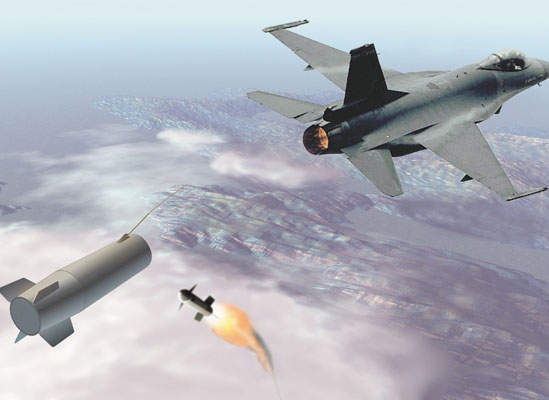
The ALE-50 Towed Decoy system, also known as “little Buddy,” is a state-of-the-art defense system designed by Raytheon. The main objective of the system is to create an effective countermeasure to defend American aircraft against radar-directed missiles. This anti-missile countermeasure decoy system is currently used for different U.S. Air Force, Navy, and Marine Corps aircraft, in addition to some other air forces.
The system has been used in various combats, where the ALE-50 Towed Decoy System successfully demonstrated its effectiveness in thwarting enemy missile attacks. Thus, there is now very little skepticism about what the “Little Buddy” can do.
Development of the ALE-50 Towed Decoy System
The ALE-50 Towed Decoy System is the fruit of collaboration of an integrated product team containing experts from Raytheon, the U.S. Air Force, and the U.S. Navy. The team worked on this groundbreaking concept at a Goleta, California facility.
The first deployment of the system dates back to 1995. Nonetheless, the system is currently used on multiple aircraft that include the F/A-18E/F Super Hornet and the B-1B Lancer. Further, The system has also been incorporated into the innovative ALQ-184(V)9 ECM pod. This integration has helped the system become more vigilant towards threats, and it has also enabled it to be ready to be used on numerous platforms.
An F/A-18F Super Hornet aircraft assigned to Strike Fighter Squadron One Zero Two fuels an F/A-18E Super Hornet aircraft from Strike Fighter Squadron Two Seven during exercise Malabar 07-2 while over the Bay of Bengal Sept. 7, 2007. More than 20,000 personnel from five different countries are participating in the multinational exercise that includes naval forces from India, Australia, Japan, Singapore and the United States. (Photo credit: Wikipedia)
Capabilities
If the ALE-50 Towed Decoy System has been in service for more than ten years, now, it’s because it has efficaciously demonstrated its wide range of capabilities. When employed, the system shields the aircraft and crew against guided missiles (surface-to-air and air-to-air missiles). The system lures the missile toward a more attractive target and away from the intended one. The decoy that the system utilizes is used when required and cut free before landing. The “Little Buddy” offers the possibility of being operated manually as an independent device. However, it can also be incorporated and controlled by the ALE-47 Airborne Countermeasures Dispenser System (made by BAE Systems).
In 1999, the ALE-50 Towed Decoy System was tested in Yugoslavia. The results were reportedly very encouraging. Hence, Air Force Officials reported that the system locked down and diverted 10 of 30 surface-to-air missiles that had been fired at B-1 bombers in different parts of Yugoslavia.
United States Government Accountability Office (GAO) confirmed that planes that have the ALE-50 Towed Decoy System installed in them are more likely to escape fatal enemy attacks. In a report to Congressional Committees in 1997, the GAO expressed its satisfaction regarding how this system improves survivability, and stated that test results indicate the ALE-50 Towed Decoy System, “offers improved effectiveness against radar-controlled threats.” Based on these results, the GAO recommended further use of the system on other platforms such as the F/A-18C/D that the Navy uses.
As far as the specifications of the ALE-50 Towed Decoy System are concerned, the system is equipped with a launch controller, as well as a launcher that is usually installed on the plane’s wing pylon, in addition to one or more expandable towed decoys, which has a shelf-life of ten years.
When speaking about the ALE-50 Towed Decoy System, Pat Hurley, vice president and general manager of Raytheon Electronic Warfare Systems, reiterated that, throughout its 50 years of existence, the company has always been concerned with developing its systems in order to provide the military with high-performing products. In this regard, Hurley added that the permanence of the company’s business and of the ALE-50 Towed Decoy System is a valid testimony to the company’s “high-performing products,” as well as its “laser-like focus on serving the customer.”
ALE-50 Towed Decoy System – Pricing
Many experts consider Raytheon to be a leading provider of systems that offer pilots with the most precise information available. With its $22 billion of sales in 2005, the company is also regarded as a leader in defense systems, information technology as well as business and special mission aircraft. The company has a workforce of about 80,000 deployed throughout the world.
Raytheon manufactures and sells the ALE-50 expendable decoy at $22,000 per unit. In October 2010, the company made a delivery of its latest production run (1,048 units). The total number of units that Raytheon has produced is estimated at 35,000 units, increasing the company’s sales to more than $500 million.
Soaring OVER THE PACIFIC OCEAN — A B-1B Lancer drops back after air refueling training Sept. 30. The B-1B is deployed to Andersen Air Force Base, Guam, as part of the Pacific Command’s continuous bomber presence in the Asia-Pacific region, enhancing regional security and the United States commitment to the Western Pacific. The B-1 is from the 28th Bomb Wing, Ellsworth AFB, South Dakota.http://www.af.mil/photos/index.asp?galleryID=12&page=2 (Photo credit: Wikipedia)
Issuance to the Military (Quantities)
Raytheon has now produced 25,682 units of the system. All of the units have been purchased by the US Department of Defense at a cost of $500 million ($22,000 per unit). The system was initially installed on F-16s only with plans of implementation on other platforms. Therefore, these plans have been carried out systematically and have now been completed successfully. Thus, the “Little Buddy” is currently installed on the B-1B bombers and F/A-18 aircraft.
In 2005, Raytheon received a production contract from the US Navy and the US Air Force. In late 2006, The US Air Force granted the manufacturing company a production contract for 862 decoys worth $21 million.
Use in War:
The system’s adaptability and reasonable cost enables it to be installed on a variety of aircraft. Thus, the ALE-50 Towed Decoy system now functions on many aircraft such as the F-16, F/A-18E/F, and B-1B aircraft.
The usefulness of the system has been proven in many situations. ALE-50 Towed Decoy System has shown its capabilities in every major war in which it was deployed. For instance, it considerably helped improve the survivability of aircraft and their crews in places like Kosovo, Afghanistan and Iraq.
In this regard, Col. Art Huber, commander of the 542nd Combat Sustainment Group at Warner Robins Air Logistics Center, which is in charge of the ALE-50 praised the ALE-50 Towed Decoy System by saying that it is “credited with numerous aircraft saves,” and that “our pilots depend on it.”
Final Analysis of the ALE-50 Towed Decoy System
The “Little Buddy” is probably the best countermeasure in use, right now. Tests and actual use in wars have proven its efficacy. The ALE-50’s suitability and interoperability with other B-1B systems when installed in the B-1B bombers have been quite a success. Furthermore, the pricing is very encouraging, and the quality/price ratio has been a determining factor in making the system a must for every aircraft in service. This is why, many pilots who have been to war in different parts of the world have communicated that the ALE-50 Towed Decoy System has been critical in saving them and their aircraft from the dangers of guided missiles.
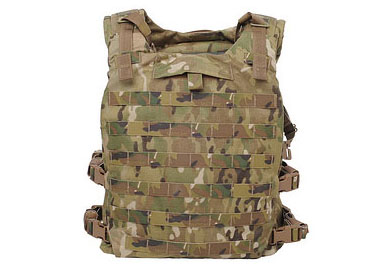
Engineers at BAE Systems are in the process of developing path-breaking body armor. The new armor is called “Liquid Armor” or “Liquid Body Armor” and hopefully, it will revolutionize the way armor is manufactured, used, and worn for decades to come.
Photo: Body armor of the Livonian Order. (Photo credit: Wikipedia)
Body armor is not a new concept. It has been around for centuries. The Romans used it extensively and it was also widely used in medieval Europe. The material used for body armor was mostly iron, steel and various metallic alloys. However, metallic body suits were heavy and unwieldy. Over the years, with the advancement of technology and progress in munitions, metallic armor was not practical. As a result of decades of research and development, several materials were evolved to replace metal in body armor. One of the most practical inventions was Kevlar, which is popularly used even today by the police and armed forces of countries all around the world.
Front view of a UH-60 Black Hawk helicopter door gunner’s kevlar helmet with painted facemask. Balad Air Base, Iraq (April 2005). Photo by Peter Rimar. (Photo credit: Wikipedia)
History of Liquid Body Armor
Kevlar was invented by an American, Stephanie Kwolek in 1964. Kwolek was trying to invent fibers for lighter car tires amid predictions of a gasoline shortage. The result was Kevlar, which has numerous applications today, in suspension bridges, thermal gloves, and audio equipment, just to name a few. But the most widely-known application of Kevlar is for its use in body armor.
Soldiers from the 2nd Infantry Division conduct an area reconnaissance mission in . (Photo credit: Wikipedia)
Although Kevlar body armor is flexible to some extent, it is still unwieldy, constricts movement and is generally uncomfortable. It also tends to block ventilation, increasing body heat and fatigue, especially in terrain where the ambient temperature tends to be high, like in Afghanistan.
The new innovation is to combine Kevlar with a “counter-intuitive liquid”, which makes liquid body armor combined with traditional armor. This combination results in body armor of 45% less thickness, while still retaining the protective properties of the armor. The material used in liquid armor is a shear thickening fluid called shear-thickening fluid (STF) which is basically polyethylene glycol, a non-toxic, temperature-resistant substance.
How Liquid Body Armor Works
Head of Business Development for Design and Materials Technologies at BAE Systems, Stewart Penney explains. He says that the best way of understanding this technology is to think of how water gets stirred with a spoon. Initially, not much resistance is felt. However, if you start to stir more rapidly, the resistance seems to increase. There is a dual action in the case of liquid armor. When a bullet strikes the liquid at a high velocity, there is a great resistance and at the same time the liquid hardens, resulting in the impact energy gets absorbed.
In comparison, if a bullet hits Kevlar armor, a notable dent is caused in the region of the impact and the impact area is small. A soldier, who gets hit by a bullet while wearing Kevlar, may not get wounded, but it still hurts quite a lot. On the other hand, the impact of bullet in the case of liquid armor is spread over a wider area. The depth of penetration is also restricted, due to the fact that the liquid limits the flow of liquids and motion of the fabric. This causes negligible distortion in the armor and the liquid armor gets restored to its original flexible form.
Uses and Users
The new liquid armor promises to cause a marked improvement in armed forces circles as well as with the police force. This material would be of special interest to bomb disposal squads. Soldiers in high-risk combat zones will get the best benefit from wearing uniforms reinforced with liquid armor. It is stirring up some serious discussions in US Army circles.
There is research being carried out on liquid armor at the US Army Research Laboratory in Maryland. The US Army has special interest in the development of this material for obvious reasons. Dr Eric Wetzel who works for the Weapons and Materials Research Directorate and leads the project team says that technology aims at development of new materials which are both cost-effective and lightweight and yet superior to Kevlar in its bullet-stopping properties. Moreover, it should also be thinner and more flexible.
Speaking on other uses of liquid armor, Wetzel says that prison staff could also enjoy the benefits of this technology. Prison staff he says is mostly susceptible to attacks with hand-crafted weapons, and liquid armor would provide effective resistance to stabbing attacks. Dr Eric Wetzel received the Paul A Simple Award along with his team in 2002. It is the highest award for scientific accomplishment in the US Army.
The Future of Liquid Body Armor
It goes without saying that this new technology is definitely going places. As of now, this new material is still in the laboratory testing stage. However, Wetzel says that the scope of liquid armor knows no bounds. He adds that initially, the material will be placed in body locations currently unprotected by bulletproof vests like pants, sleeves and boots. It could also be used to cover suspected bombs or even added to soldiers’ jump boots for shock absorption. Liquid armor is definitely a material of the future.
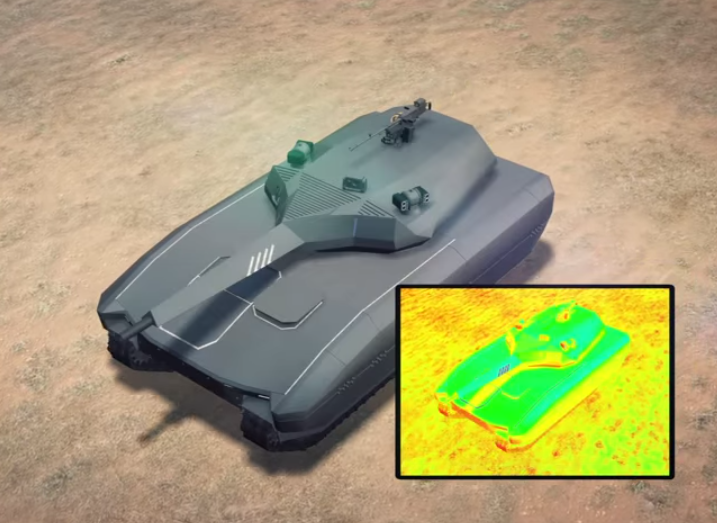
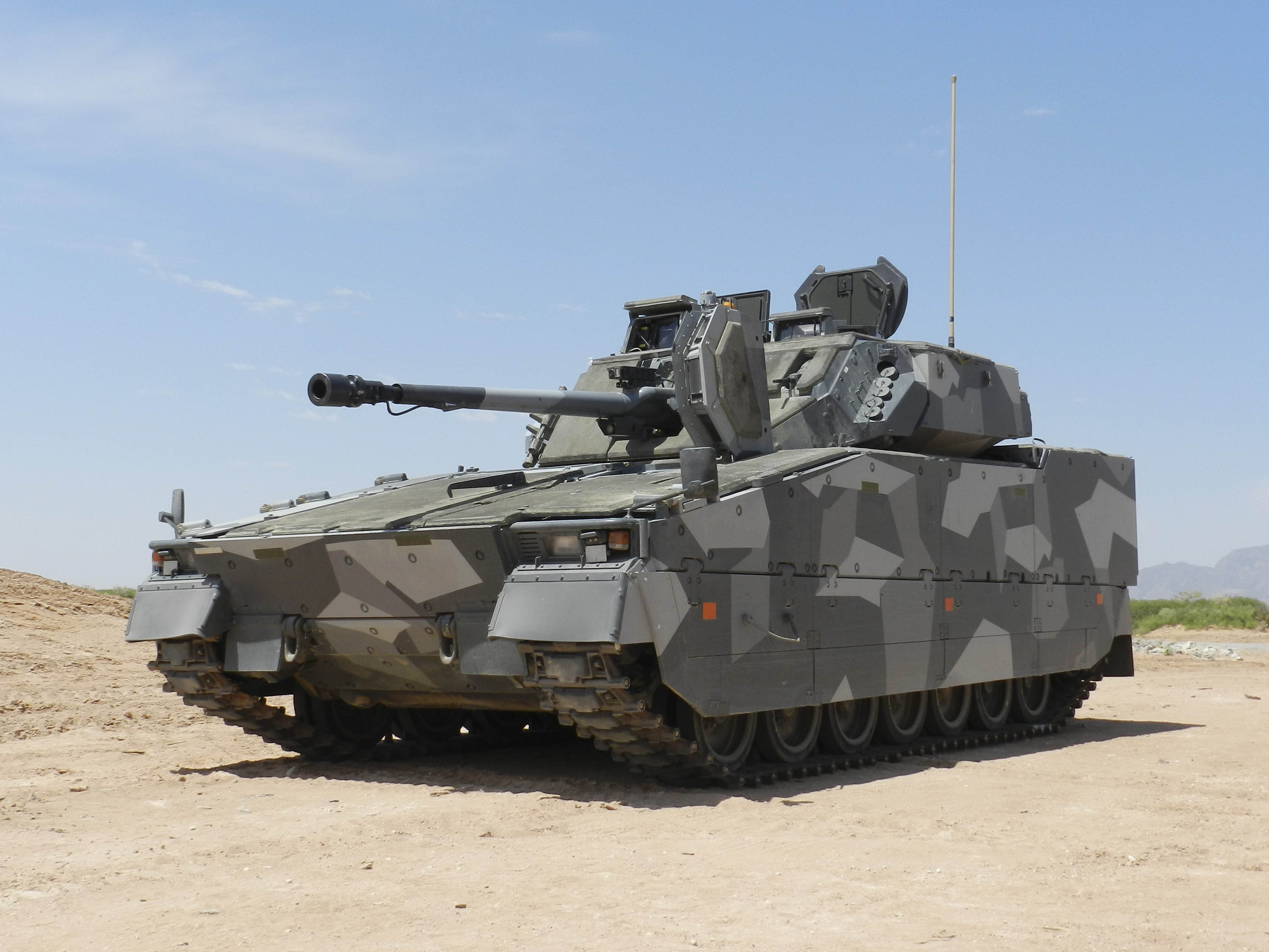
Poland is making defense technology splashes lately with the arrival of its PL-01 Tank concept, thought to be one of the tanks of the future that governments are starting to move towards. The Polish Government, Orbrum, and BAE Systems are working jointly on this project. The PL-01 Tank has a major feature, that it is virtually invisible to radar and thermals, that distinguishes it from the traditional tanks. The PL-01 Tank is invisible to enemy thermal imaging, infrared, and radar which make it unique and an attractive buy for any nation’s Army.
Launch of the PL-01 Tank:
This proposed Polish PL-01 tank is mainly designed for the Polish military and is being developed jointly between Polish Defense Company Obrum and British conglomerate BAE Systems. It is a light armored tank and designed as a fighting vehicle. It was disclosed first at the International Defense Industry Exhibition at MSPO in Poland on 2 September 2013. The tank is estimated that a full sample will be completed in 2016 and if everything goes well, it will be in service for marketing immediately thereafter. Mass production is planned to commence in 2018.
Key Specifications of the PL-01:
The Polish PL-01 tank has some unique and distinctive features that make it different from other traditional concept of most modern tanks. The obvious specification is that it is a stealth tank as far as radar and thermals are concerned. Very significant technologies are integrated into the concept to help the tank reduce its infrared signature. Cooled wafers are used on the outside of the tank to perplex the tracking systems of anti-tank weapons on the battlefield. It has the capacity to avoid the enemy thermal imaging, infrared and radar. In addition, the tank has a 940hp diesel engine that has the special capability of dispersing the exhaust system to further reduce its infrared signature. This feature will allow it to blend in with the environment by confusing the electronic detection systems of the enemy. Special cooled wafers (like a cooling plate) on the outside of the tank are used to make the tank appear more like a car or other object when it is viewed in infrared or detected in the enemy thermal devices. The tank has an unmanned turret and a large auto loading cannon. The turret is very versatile and can do multiple different firing tasks from the same vehicle. The angles of the tank are intended to diminish its radar signature and it is enclosed with a radar permeable coating. The sum total weight of the tank is 30,000 kg (standard layout) and with additional armor panels, it is 35,000 kg. The length, width and height of this vehicle are respectably 7 m, 3.8 m and 2.8 m. It can facilitate a crew of three. The main armament of this tank constitutes 105 mm or 120 mm caliber main cannon and the secondary armament is 7.62 mm remote controlled machine gun as well as other active and passive countermeasures. This includes a 40 mm or 12.7 mm grenade launcher, heat and radar reduction. It is equipped with a 940 horse power diesel engine attached to a torque converter, automatic gearbox and driving assistant mechanism. The suspension torsion bar is based on seven wheels. The speed can vary from smooth road to rough territory. On paved roads, the tank is supposed to reach up to 70 kph and on rough terrain, it can reach up to 50 kph. The operational range is maximum 500 km on paved roads. The PL-01 tank can use steel or rubber tracks. It can move rapidly on and off roads and efficiently traverses water.
English: This is the M1A2 TUSK Abrams Tank. (Photo credit: Wikipedia)
PL-01 Tank Layout and Comparison:
The design of PL-01 tank is akin to that of main battle tanks, with the driver located at the front of the vehicle and an unmanned turret mounted at the rear. There is a gunner and a commander within the hull and a crew of three soldiers can take their position in the rear part. The Combat Vehicle 90 is the model based on which the chassis of the tank is based. Currently the vehicle weighs in at about 33 tons and it is calculated that it will be about 39 tons with the additional armor. Russian T-90 main battle tank isn’t as light as the weight of the Polish tank. It is ten tons lighter than the Russian one and it is an advanced model of Abrams tank. There is a lot of criticism that the PL-01 is just another variation of the Polish Anders Tank. There are also some close similarities between the PL-01 tank and the Israeli tank Merkava – mainly that the engine-transmission compartment is located in the front part of both tanks.
English: T-90 main battle tank. (Photo credit: Wikipedia)English: IDF Merkava Mk4 main battle tank עברית: טנק מרכבה סימן 4 (Photo credit: Wikipedia)
Future Planning for the PL-01 Tank:
The Polish concept tank is currently on the stage of early development and on the verge of initialization. Designers confirm that in the future, there will be improvements to the concept to include possibly an “invisible” feature which causes the tank to appear to blend in with its surroundings to the naked eye. The designers would likely to use a system that has cameras and some type of displays on the outside of the tank. This will help the tank to match the image seen on the one side of the tank onto the video receivers on the other side of the tank. Having the tank be stealth and invisible would put it in an all new class of ground warfare that could change the battlefield forever.
Thoughts About the PL-01 Tank:
The Polish concept of PL-01 Tank is truly exciting and intriguing. It is quite interesting that the big budgets in the United States Military usually go into Aircraft (F-22 Raptor, F-35 Joint Strike Fighter) probably to help gain air superiority first. Sure they improve the ground vehicles, but not on the level of what Poland is trying to do. Poland has already conceded that it will not have air superiority against a Russian attack. So they are hoping to differentiate their forces by providing a tactical advantage with their armor. It is worth noting that there is no way Poland would have access to the stealth technology provided by BAE Systems without some kind of approval from the UK or US governments. In the end of the day, this same technology will probably make its way easily back to the United States and other NATO allies once it is fully developed and proven in Poland. The PL-01 Tank is definitely worth watching.
Where did the Ground Combat Vehicle come from and what is it? In 2009, the US Army announced its intention to “significantly restructure” it’s Future Combat System” (FCS). This was formally announced by the Secretary of Defense, Robert Gates. The FCS was a program being developed since the year 2000. It was to be a multi-billion dollar program which would be implemented over a period of several years, and one of the salient features of this program was the Manned Ground Vehicle, (MGV).
However, the development of the MGV was cancelled and replaced by another vehicle called the “Ground Combat Vehicle” (GCV), to replace the then existing M113s and the Bradley. The features were obviously planned to be better than the Bradley, in all respects.
M2 Bradley IFV (Photo credit: Wikipedia)
Features of the Ground Combat Vehicle
The basic philosophy behind the GCV was that it should be possible to add capabilities on to it in the future, including development of armor. Further, the vehicle should be adaptable to both existing as well as future network capabilities like jammers, radar and sensors. Furthermore, it should be integrated with mature technologies. The vehicle was expected to be in the field by the year 2017, at the latest. The capacity was expected to be a total of 13 soldiers, which would have been more that the capacity of 9 in the M2 Bradley. A common chassis would enable variants to be built around the base structure. The vehicle would also have modular armor, which could be added and removed according to combat requirements. The propulsion system would be an E-X Drive hybrid electric that would deliver high power torque.
Setbacks and Budget Cuts
Originally, once the Analysis of Alternatives (AoA) had been carried out by the army, and no other alternative contractors had been located, two contracts of $439.7 million and $449.9 million were awarded to two contractors, General Dynamics and BAE Systems, Nothrop Grumman respectively. Firms like Lockheed Martin, MTU, Detroit Diesel, Raytheon, Rheinmetall Defence, Krauss-Maffei Wegmann, SAIC and Boeing were also in the fray.
In 2010, a Request for Proposal (RFP) was issued. Under the deadlines of this RFP, companies were given up to January 2011 for proposals to be submitted for tracked or wheeled vehicles. The Army put a ceiling on the cost per vehicle to a range between $9 million to $10.5 million. The cost of each operational mile was to be $200. The vehicle was also required to fit on a C-17 transport aircraft. 1,874 vehicles had been planned, with the first ones being run off the production line in April 2018.
However, there were several clauses that the Army introduced, that would put the companies in extremely deep water, if there were any glitches in the production. For instance, there was a $450 million ceiling per company and if there was any further rise in the cost, 100% of the additional cost would have to borne by the contractor.
Further deterioration of the program occurred with Boeing protesting about its rejected proposals. The Army defended its case by stating that it had requested certain technical details from Boeing, but the company did not come forward. A total of 20 weaknesses of Boeing were identified, but according to the Army, the company did not address them adequately.
The program was officially called off on 24 February 2014, as confirmed by the Secretary of Defense, Chuck Hagel.
Potential of the Ground Combat Vehicle
If the GCV had been continued, would it, and how would it have benefited the Army? In 2009, Maj. Gen. Robert H. Scales (Ret.) wrote an article for the Armed Forces Journal. In his article, A Vehicle for Modern Times, Scales brings to the fore the burning issue of the state of the US Army’s ground forces. He feels that the GCV would be able to bring about the much-needed modernization of the US Army’s ground forces. He feels that the GCV could influence the way all other support systems of the war machine work, like sensors, network, aircraft and fire support. Scales makes a lucid observation that it is unfortunate that drastic changes are usually brought in as a consequence to the death of soldiers.
When the Stykers and Land Warriors were introduced, Scales says, they played different roles, such as long-range and short range transporters, firepower platforms, rally points or even rest centers. He says that the development of a land vehicle effectively resistant to Improvised Explosive Devices (IEDs) abundantly found in Afghanistan is far from satisfactory. He says that loading on armor has got its limitations; the balance has to be struck between offering sufficient protection and making the vehicle to unwieldy and overweight due to excessive armor. This is one good thing that the GCV has going for it.
Scales hits the nail on the head by stating that Soldiers and Marines have paid a heavy price in Iraq and Afghanistan. The Ground Combat Vehicle program he feels, would give them back what they have lost. He concludes the article with a powerful summation by saying, “Let’s get on with giving them the fighting system they deserve.”