Tag: B-1 Bomber

  • ALE-50 Towed Decoy System – The “Little Buddy” of the Skies

    ALE-50 Towed Decoy System – The “Little Buddy” of the Skies

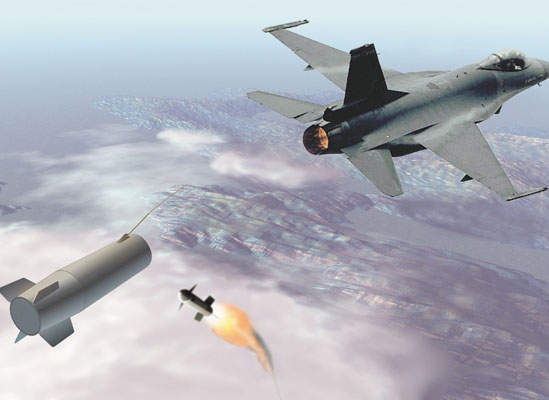
    The ALE-50 Towed Decoy system, also known as “little Buddy,” is a state-of-the-art defense system designed by Raytheon. The main objective of the system is to create an effective countermeasure to defend American aircraft against radar-directed missiles.  This anti-missile countermeasure decoy system is currently used for different U.S. Air Force, Navy, and Marine Corps aircraft, in addition to some other air forces.

    The system has been used in various combats, where the ALE-50 Towed Decoy System successfully demonstrated its effectiveness in thwarting enemy missile attacks. Thus, there is now very little skepticism about what the “Little Buddy” can do.

    Development of the ALE-50 Towed Decoy System

    The ALE-50 Towed Decoy System is the fruit of collaboration of an integrated product team containing experts from Raytheon, the U.S. Air Force, and the U.S. Navy. The team worked on this groundbreaking concept at a Goleta, California facility.

    The first deployment of the system dates back to 1995. Nonetheless, the system is currently used on multiple aircraft that include the F/A-18E/F Super Hornet and the B-1B Lancer. Further, The system has also been incorporated into the innovative ALQ-184(V)9 ECM pod. This integration has helped the system become more vigilant towards threats, and it has also enabled it to be ready to be used on numerous platforms.

    An F/A-18F Super Hornet aircraft assigned to S...
    An F/A-18F Super Hornet aircraft assigned to Strike Fighter Squadron One Zero Two fuels an F/A-18E Super Hornet aircraft from Strike Fighter Squadron Two Seven during exercise Malabar 07-2 while over the Bay of Bengal Sept. 7, 2007. More than 20,000 personnel from five different countries are participating in the multinational exercise that includes naval forces from India, Australia, Japan, Singapore and the United States. (Photo credit: Wikipedia)

    Capabilities

    If the ALE-50 Towed Decoy System has been in service for more than ten years, now, it’s because it has efficaciously demonstrated its wide range of capabilities. When employed, the system shields the aircraft and crew against guided missiles (surface-to-air and air-to-air missiles). The system lures the missile toward a more attractive target and away from the intended one. The decoy that the system utilizes is used when required and cut free before landing. The “Little Buddy” offers the possibility of being operated manually as an independent device. However, it can also be incorporated and controlled by the ALE-47 Airborne Countermeasures Dispenser System (made by BAE Systems).

    In 1999, the ALE-50 Towed Decoy System was tested in Yugoslavia. The results were reportedly very encouraging. Hence, Air Force Officials reported that the system locked down and diverted 10 of 30 surface-to-air missiles that had been fired at B-1 bombers in different parts of Yugoslavia.

    United States Government Accountability Office (GAO) confirmed that planes that have the ALE-50 Towed Decoy System installed in them are more likely to escape fatal enemy attacks. In a report to Congressional Committees in 1997, the GAO expressed its satisfaction regarding how this system improves survivability, and stated that test results indicate the ALE-50 Towed Decoy System, “offers improved effectiveness against radar-controlled threats.” Based on these results, the GAO recommended further use of the system on other platforms such as the F/A-18C/D that the Navy uses.

    As far as the specifications of the ALE-50 Towed Decoy System are concerned, the system is equipped with a launch controller, as well as a launcher that is usually installed on the plane’s wing pylon, in addition to one or more expandable towed decoys, which has a shelf-life of ten years.

    When speaking about the ALE-50 Towed Decoy System, Pat Hurley, vice president and general manager of Raytheon Electronic Warfare Systems, reiterated that, throughout its 50 years of existence, the company has always been concerned with developing its systems in order to provide the military with high-performing products.  In this regard, Hurley added that the permanence of the company’s business and of the ALE-50 Towed Decoy System is a valid testimony to the company’s “high-performing products,” as well as its “laser-like focus on serving the customer.”

    ALE-50 Towed Decoy System – Pricing

    Many experts consider Raytheon to be a leading provider of systems that offer pilots with the most precise information available. With its $22 billion of sales in 2005, the company is also regarded as a leader in defense systems, information technology as well as business and special mission aircraft. The company has a workforce of about 80,000 deployed throughout the world.

    Raytheon manufactures and sells the ALE-50 expendable decoy at $22,000 per unit. In October 2010, the company made a delivery of its latest production run (1,048 units). The total number of units that Raytheon has produced is estimated at 35,000 units, increasing the company’s sales to more than $500 million.

    Soaring OVER THE PACIFIC OCEAN -- A B-1B Lance...
    Soaring OVER THE PACIFIC OCEAN — A B-1B Lancer drops back after air refueling training Sept. 30. The B-1B is deployed to Andersen Air Force Base, Guam, as part of the Pacific Command’s continuous bomber presence in the Asia-Pacific region, enhancing regional security and the United States commitment to the Western Pacific. The B-1 is from the 28th Bomb Wing, Ellsworth AFB, South Dakota.http://www.af.mil/photos/index.asp?galleryID=12&page=2 (Photo credit: Wikipedia)

    Issuance to the Military (Quantities)

    Raytheon has now produced 25,682 units of the system. All of the units have been purchased by the US Department of Defense at a cost of $500 million ($22,000 per unit). The system was initially installed on F-16s only with plans of implementation on other platforms. Therefore, these plans have been carried out systematically and have now been completed successfully. Thus, the “Little Buddy” is currently installed on the B-1B bombers and F/A-18 aircraft.

    In 2005, Raytheon received a production contract from the US Navy and the US Air Force.  In late 2006, The US Air Force granted the manufacturing company a production contract for 862 decoys worth $21 million.

    Use in War:

    The system’s adaptability and reasonable cost enables it to be installed on a variety of aircraft. Thus, the ALE-50 Towed Decoy system now functions on many aircraft such as the F-16, F/A-18E/F, and B-1B aircraft.

    The usefulness of the system has been proven in many situations. ALE-50 Towed Decoy System has shown its capabilities in every major war in which it was deployed. For instance, it considerably helped improve the survivability of aircraft and their crews in places like Kosovo, Afghanistan and Iraq.

    In this regard, Col. Art Huber, commander of the 542nd Combat Sustainment Group at Warner Robins Air Logistics Center, which is in charge of the ALE-50 praised the ALE-50 Towed Decoy System by saying that it is “credited with numerous aircraft saves,” and that “our pilots depend on it.”

    Final Analysis of the ALE-50 Towed Decoy System

    The “Little Buddy” is probably the best countermeasure in use, right now. Tests and actual use in wars have proven its efficacy. The ALE-50’s suitability and interoperability with other B-1B systems when installed in the B-1B bombers have been quite a success. Furthermore, the pricing is very encouraging, and the quality/price ratio has been a determining factor in making the system a must for every aircraft in service. This is why, many pilots who have been to war in different parts of the world have communicated that the ALE-50 Towed Decoy System has been critical in saving them and their aircraft from the dangers of guided missiles.
  • Long Range Strike Bomber – USAF Plays Close to the Chest

    Long Range Strike Bomber – USAF Plays Close to the Chest

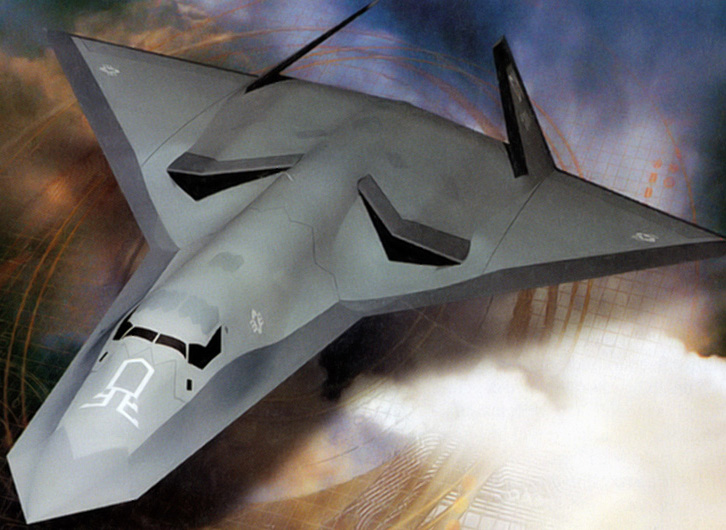
    There is a new long range strike bomber being developed by the US Air Force. The aircraft program is under wraps to the extent that the Pentagon did not even admit that there is a program at all until recently, let alone giving out details about the project. A spokeswoman with the US Air Force was quoted as saying, “Specific LRS programmatic details are protected with enhanced security measures.”

    Known Facts

    Not much is known about the new long range strike bomber, except that there is an aircraft program called the “LRS-B” program, and it is highly classified. What is also known, is that money to the tune of $300 million has been allocated for the defense project for the fiscal year 2013-14, and the total money allocated so far from 2013 to 2017 is estimated to be about $6.3 billion. The B-3 bomber as it has come to be called will be long range, optionally-manned, and it will have stealth properties. This bomber aircraft will have a price tag of about $550 million apiece. The entire fleet of about 80 to 100 stealth bombers is expected to be commissioned by 2020.

    The B-3 bomber is a replacement of the B-2 bomber, which in turn was a replacement for the B-1. So, let us take a look at the previous versions of the ‘B’ series of strike bombers.

    A B-1B Lancer with wings swept full forward
    A B-1B Lancer with wings swept full forward (Photo credit: Wikipedia)

    The B-1 Bomber

    The B-1 Bomber was introduced in 1986 as a replacement of the B-52 Stratofortress. This bomber aircraft was built by Rockwell International, and there were two versions. An initial version was actually in existence since 1974, called the B-1A. It was capable of carrying nuclear bombs, flew at twice the speed of sound at high altitudes and could also carry short-range attack missiles. It also had stealth features, meaning that it had the ability to lower its visibility on radar to 1/100th of the B52, but this also had an adverse effect on the speed of the aircraft. During the period of 1984 to 1988, the US Air Force built its B-1 Bomber aircraft fleet up to 100.

    A U.S. Air Force Boeing B-52H Stratofortress s...
    A U.S. Air Force Boeing B-52H Stratofortress static display with weapons, at Barksdale Air Force Base, Louisiana (USA), in 2006. (Photo credit: Wikipedia)

    The second version, the B1-B is also supersonic, but its normal cruising speed is subsonic – about Mach 0.9 which is 670 miles per hour. It can fly at an altitude of as low as 200 feet above the ground. It can carry up to 24 nuclear bombs and has a flying range of 4,600 miles (7,400 kilometers) without having to refuel.

    B-2A Block 10 (upgraded to Block 30) Spirit, 8...
    B-2A Block 10 (upgraded to Block 30) Spirit, 82-1069, “Spirit of Indiana”, of the Eighth Air Force 509th Bomb Wing (Photo credit: Wikipedia)

    The B-2 Stealth Bomber

    The specialty of the B-2 Stealth Bomber is that its development marked the integration of aerospace technologies with conventional aviation technology. It is a versatile aircraft, capable of delivering nuclear as well as conventional weapons.

    The B-2 Bomber was developed by Northrop, Boeing in the late eighties, the first successful flight of the B-2 Bomber took place in July 1989. This bomber aircraft is built on the lines of the B-35 of the 1940s. The bodywork mostly consists of resin-impregnated graphite fiber.

    More on the LRS-B Long Range Strike Bomber

    Due to the utmost secrecy being maintained by the Pentagon, Northrop Grumman also seems to have been sidetracked and is non-committal on the matter (of the B-3 Bomber). Even though Northrop has not put in a bid yet, it is unknown whether they will now or will compete for the LRS-B contract at a later stage. It has been speculated that maybe it is just waiting for better terms, or a more defined scope of work on the project. Boeing and Lockheed Martin have joined hands in a bid to win the high-budget project and have been approached by the Pentagon. Boeing will be the main contractor and an announcement to this effect was made in October 2013.

    The Downside of Secrecy

    It has been said that excessive security can have a negative effect on development. In a recent article published in The Daily Beast, Bill Sweetman says this about the B-3 Stealth Bomber, “… almost everything about it is secret, and that’s not necessarily a good thing.” Sweetman goes on to point out that the secrecy associated with the Long Range Strike Bomber is the highest in the history of all similar projects since the 1980s. He says that while developing the B-2, certain features were developed, but never used and will never be used. Due to this reason, there were people working within a “security bubble”, who had a free hand in doing just as they pleased, as they were shielded from public scrutiny. The above reason is why some projects overrun their budgets.

    Secrecy, to a point is acceptable, especially when a military weapon is being developed. But secrecy beyond reasonable limits can result in impractical technical development with a series of budget overruns, which could ultimately threaten the very existence of the project. An official announcement is expected sometime in 2015 regarding the confirmation of this aircraft program. Until then, the world will just have to rely on snippets about this much-needed, futuristic Long Range Strike bomber.