The ongoing ISIS movement and its repercussion from the coalition forces have been in the news for some time now and is a very controversial issue in America and in the Middle East today. The spotlight is on Islamic Terrorism and the Syrian Civil War. This video shows one tank being destroyed and another shot with most probably an RPG. This particular video is not ISIS in Iraq, but that of the Free Syrian Army attacking a Syrian government convoy back in 2012.
Whatever may be the real case behind the scene, the scene sure is one of the rare real life shots captured related to the ongoing Syrian Civil War. The war began in 2011 as a chain reaction to the so called Arab Spring and now being led by the various groups within Syria and Iraq. ISIS, FSA and YPG are three of the major Middle Eastern factions, opposing the present Syrian government, that are involved in the war along with the intervention from the western coalition forces. ISIS is also against the government of Iraq and Iran, causing strange bedfellows. Nontheless, this video of tanks blowing up is great to watch.
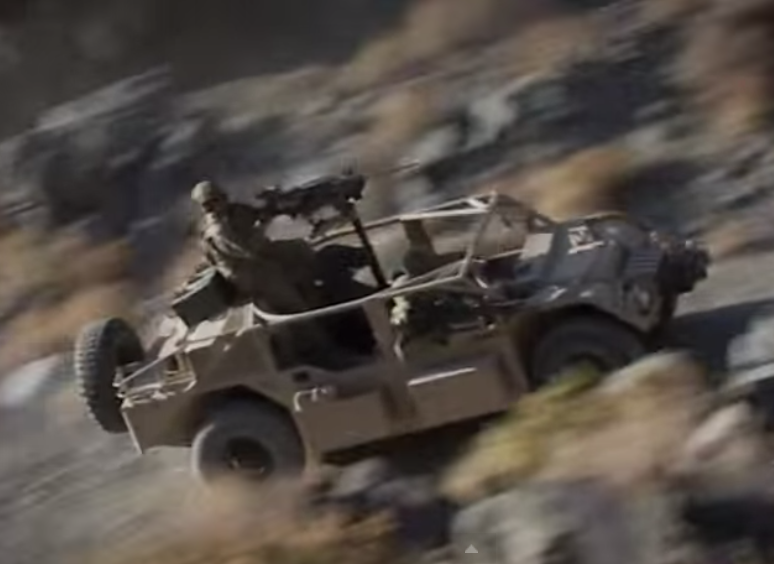
General Dynamics just released the new Flyer Advanced Light Strike Vehicle (ALSV). The ALSV is a reliable vehicle with innovative features and is created almost specifically for use in the most unforgiving terrains.
The Flyer can be transported to almost any combat zone because of its high trans-portability, which means that cargo planes can carry the strong vehicle. It’s made for the soldiers who are looking for numerous gun mounts on their vehicles, along with speed and maneuverability. The Flyer is perfectly capable of passing through rugged terrain, and can make every mission seem a little bit easier.
The vehicle can be modified according to your every need, and can be used in almost any way necessary. This means that it can be used for anything, from ambushes to rescue missions, simultaneously. It comes with an armored variant for greater protection, and every modification made on the car does not hamper its ability to be driven effectively.
With the Flyer Advanced Light Strike Vehicle, improved transportation comes without any loss of firearm compatibility, speed, or even maneuverability. Instead, you receive innovations for mission vehicles, such as a number of applicable modifications and high trans-portability, but at the same time it is practical and definitely usable.
The US Army’s New Defense System “High Energy Laser Mobile Demonstrator” Wields its Power
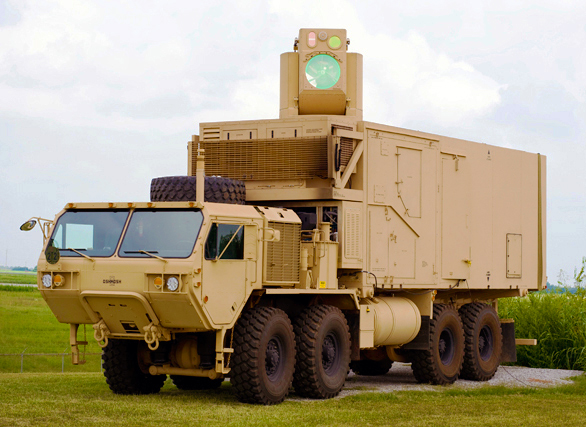
The High Energy Laser Mobile Demonstrator (HEL-MD) is a top-notch laser-based defense weapon being developed by the American Army’s Space and Missile Defense Command, in collaboration with Boeing.
The HEL-MD’s role is to display the potential of directed-energy technology for shielding US Army troops against rockets, artillery and mortars. The first successful trials took place between November 18th and December 10th, 2013 in the White Sands Missile Range, New Mexico. However, the complete integration with a Heavy Expanded Mobility Tactical Truck (HEMTT) was during the summer of 2011, and the first low-power tests of this laser weapon took place during the fall and winter of the same year.
Historical Overview of the HEL-MD
In 1980, US President Ronald Raegan advanced the most prominent propositions for the use of laser guns to destroy flying targets before they could land. The project was called the Strategic Defense Initiative (SDI), which people also referred to as “Star Wars.” However, most of the laser weapon projects were overlooked regardless of the fact that the strategic missile defense concept has never ceased to exist.
Boeing, on the other hand, continued working on the concept, and in February 2010, the company successfully tested one of its Directed-Energy weapons.
YAL-1A Airborne Laser in flight with the mirror unstowed (Photo credit: Wikipedia)
How Does the HEL MD Compare to Other Defense Systems?
The HEL MD is not the first defensive system that the US army devised in order to defend the American operating bases with laser weapons in Iraq and Afghanistan. Similar systems include the Boeing YAL-1 Airborne Laser Testbed and the Phalanx-based Counter Rocket, Artillery and Mortar (C-RAM).
Unlike the HEL MD, the defense system known as the Boeing YAL-1 Airborne Laser Testbed was mounted inside a modified Boeing 747-400F and was, therefore, not mounted on a ground vehicle. However, due to some test failures, the funding for this system was cut in 2010, before the US Army decided to cancel the whole system in 2011.
C-RAM, on the other hand, proved efficient to some extent. The system successfully detected and destroyed rockets, artillery and mortars. Nonetheless, some attacks in both Iraq and Afghanistan still succeeded to get through, which is not the case with the HEL MD system as proved during testing in 2012 and 2014.
Another area where HEL MD outperforms C-RAM is the number of rounds in the magazine. The HEL MD system has a “near-infinite magazine” because it is a laser, unlike C-RAM that has a finite number of rounds.
Blaine Beardsley, HEL MD program manager at Boeing, explained, “Even while you’re utilizing the magazine and engaging targets, you’re charging that magazine.” Therefore, unlike its counterparts, the HEL MD laser gun uses electrical power to produce lethal effects. Mark Gunzinger, a Senior Fellow at the Center for Strategic and Budgetary Assessments (CSBA), further illustrated this when he said, “As long as they have a source of electricity and cooling, they can keep firing.”
Furthermore, this laser weapon enjoys the very useful attribution of mobility, hence the name “MOBILE Demonstrator.” In this regard Beardsley added, “You can drive it out to any location and emplace it quickly and be able to set it up with full 360-degree coverage.”
HEMTT wrecker (M984, front) and cargo (M977). Photo taken at Bagram Airfield in Afghanistan. (Photo credit: Wikipedia)
Capabilities and Specifications of the HEL MD
The latest tests of this laser weapon by the US Army in New Mexico are considered to be the first successful demonstration of the capabilities of the HEL-MD mounted on a Heavy Expanded Mobility Tactical Truck (HEMTT). The current system uses a 10-kilowatt laser. However, the system’s power is expected to be upgraded to 50 or 60-kilowatt laser. Later, the laser will be increased to 100-Kilowatts.
In addition to the tests in New Mexico, the system was tested again on 4 September 2014 at the Eglin Air Force Base in Florida. The HEL MD proved very successful even in maritime conditions. The defense system successfully managed to target a variety of aerial targets, even under windy, rainy and foggy weather conditions.
When commenting on this success, Dave DeYoung, Boeing Directed Energy Systems director, said, “As proven at White Sands Missile Range in New Mexico in 2013 and at Eglin Air Force Base this spring, HEL MD is reliable and capable of consistently acquiring, tracking and engaging a variety of targets in different environments, demonstrating the potential military utility of directed energy systems”.
Although other systems such as C-RAM have proven their reliability, the latest trials of the HEL MD laser weapon system by the US Army in Florida helped the system gain a considerable margin over all of its competitors.
What follows is a brief summary of some of the specifications of the current HEL MD defense system:
BCS – 50 cm aperture retracting telescope, 300 W target illuminator, low jitter precise pointing tracking system
Acquisition & Track Sensors – IR based WFOV for target acquisition coupled with NFOV for engagement
WMI – For a control of the entire system-based on a standard air defense and Avenger C4I interface
BMC4I – Modular design to enable the interface with current and future fielded BMC4I systems
Electrical Power – One set of lithium ion batteries to provide extremely stable power to the laser. Battery charging and another subsystem power from single 60 kW diesel generator, mounted on HEMTT
Thermal Management – Two-loop chilled water system for the laser and standard air conditioner for all other subsystems
Future Plans
Though the current primary use for the HEL MD laser gun system is for the US Army, plans include using this laser defense system to protect the planet from asteroids. There has been a drastic rise in the interest of using this technology since an asteroid hit Central Russia on February 15, 2013. The incident injured more than 1,000 people, which experts regarded as a serious warning about the need for a defensive system that would protect the Earth from any similar asteroid attacks.
Final Analysis
The (HEL MD) laser weapon system has gained fame as a revolutionary defense system for the US Army. It is the only system that proved successful even under foggy, rainy and in maritime conditions. Hence, although other systems like C-RAM will not cease to exist, it is doubtless that the US Army’s New Defense System, the High Energy Laser Mobile Demonstrator HEL MD, will constitute a threshold for more sophisticated directed-energy weapons, especially that those future plans also include saving the planet from asteroids.
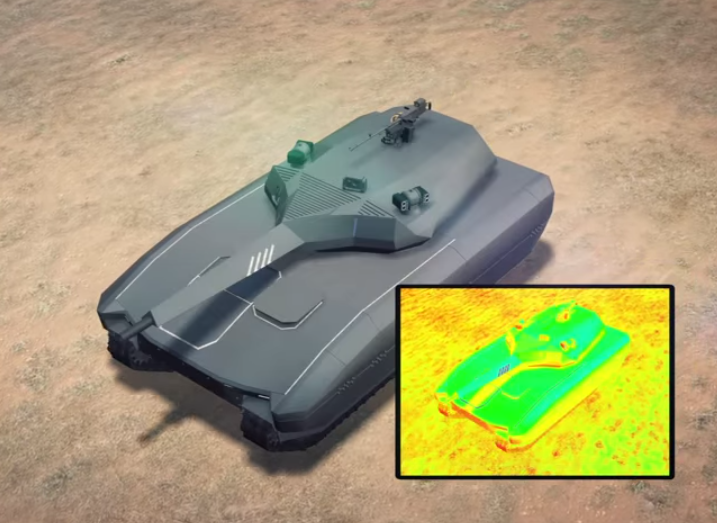
Poland is making defense technology splashes lately with the arrival of its PL-01 Tank concept, thought to be one of the tanks of the future that governments are starting to move towards. The Polish Government, Orbrum, and BAE Systems are working jointly on this project. The PL-01 Tank has a major feature, that it is virtually invisible to radar and thermals, that distinguishes it from the traditional tanks. The PL-01 Tank is invisible to enemy thermal imaging, infrared, and radar which make it unique and an attractive buy for any nation’s Army.
Launch of the PL-01 Tank:
This proposed Polish PL-01 tank is mainly designed for the Polish military and is being developed jointly between Polish Defense Company Obrum and British conglomerate BAE Systems. It is a light armored tank and designed as a fighting vehicle. It was disclosed first at the International Defense Industry Exhibition at MSPO in Poland on 2 September 2013. The tank is estimated that a full sample will be completed in 2016 and if everything goes well, it will be in service for marketing immediately thereafter. Mass production is planned to commence in 2018.
Key Specifications of the PL-01:
The Polish PL-01 tank has some unique and distinctive features that make it different from other traditional concept of most modern tanks. The obvious specification is that it is a stealth tank as far as radar and thermals are concerned. Very significant technologies are integrated into the concept to help the tank reduce its infrared signature. Cooled wafers are used on the outside of the tank to perplex the tracking systems of anti-tank weapons on the battlefield. It has the capacity to avoid the enemy thermal imaging, infrared and radar. In addition, the tank has a 940hp diesel engine that has the special capability of dispersing the exhaust system to further reduce its infrared signature. This feature will allow it to blend in with the environment by confusing the electronic detection systems of the enemy. Special cooled wafers (like a cooling plate) on the outside of the tank are used to make the tank appear more like a car or other object when it is viewed in infrared or detected in the enemy thermal devices. The tank has an unmanned turret and a large auto loading cannon. The turret is very versatile and can do multiple different firing tasks from the same vehicle. The angles of the tank are intended to diminish its radar signature and it is enclosed with a radar permeable coating. The sum total weight of the tank is 30,000 kg (standard layout) and with additional armor panels, it is 35,000 kg. The length, width and height of this vehicle are respectably 7 m, 3.8 m and 2.8 m. It can facilitate a crew of three. The main armament of this tank constitutes 105 mm or 120 mm caliber main cannon and the secondary armament is 7.62 mm remote controlled machine gun as well as other active and passive countermeasures. This includes a 40 mm or 12.7 mm grenade launcher, heat and radar reduction. It is equipped with a 940 horse power diesel engine attached to a torque converter, automatic gearbox and driving assistant mechanism. The suspension torsion bar is based on seven wheels. The speed can vary from smooth road to rough territory. On paved roads, the tank is supposed to reach up to 70 kph and on rough terrain, it can reach up to 50 kph. The operational range is maximum 500 km on paved roads. The PL-01 tank can use steel or rubber tracks. It can move rapidly on and off roads and efficiently traverses water.
English: This is the M1A2 TUSK Abrams Tank. (Photo credit: Wikipedia)
PL-01 Tank Layout and Comparison:
The design of PL-01 tank is akin to that of main battle tanks, with the driver located at the front of the vehicle and an unmanned turret mounted at the rear. There is a gunner and a commander within the hull and a crew of three soldiers can take their position in the rear part. The Combat Vehicle 90 is the model based on which the chassis of the tank is based. Currently the vehicle weighs in at about 33 tons and it is calculated that it will be about 39 tons with the additional armor. Russian T-90 main battle tank isn’t as light as the weight of the Polish tank. It is ten tons lighter than the Russian one and it is an advanced model of Abrams tank. There is a lot of criticism that the PL-01 is just another variation of the Polish Anders Tank. There are also some close similarities between the PL-01 tank and the Israeli tank Merkava – mainly that the engine-transmission compartment is located in the front part of both tanks.
English: T-90 main battle tank. (Photo credit: Wikipedia)English: IDF Merkava Mk4 main battle tank עברית: טנק מרכבה סימן 4 (Photo credit: Wikipedia)
Future Planning for the PL-01 Tank:
The Polish concept tank is currently on the stage of early development and on the verge of initialization. Designers confirm that in the future, there will be improvements to the concept to include possibly an “invisible” feature which causes the tank to appear to blend in with its surroundings to the naked eye. The designers would likely to use a system that has cameras and some type of displays on the outside of the tank. This will help the tank to match the image seen on the one side of the tank onto the video receivers on the other side of the tank. Having the tank be stealth and invisible would put it in an all new class of ground warfare that could change the battlefield forever.
Thoughts About the PL-01 Tank:
The Polish concept of PL-01 Tank is truly exciting and intriguing. It is quite interesting that the big budgets in the United States Military usually go into Aircraft (F-22 Raptor, F-35 Joint Strike Fighter) probably to help gain air superiority first. Sure they improve the ground vehicles, but not on the level of what Poland is trying to do. Poland has already conceded that it will not have air superiority against a Russian attack. So they are hoping to differentiate their forces by providing a tactical advantage with their armor. It is worth noting that there is no way Poland would have access to the stealth technology provided by BAE Systems without some kind of approval from the UK or US governments. In the end of the day, this same technology will probably make its way easily back to the United States and other NATO allies once it is fully developed and proven in Poland. The PL-01 Tank is definitely worth watching.
DARPA has been busy with the advancement of Ground X-Vehicle Technology.
English: This was the most up-to-date DARPA logo as of January 2009. It is obsolete now. (Photo credit: Wikipedia)
There has been a consistent formula which applies to mechanized warfare for at least a century, with regards to the protection of land-based armored vehicles and those who occupy them which is, the more the armor, the more the protection. The difficulty that has developed in the recent years is that with the increased armored protection, there has been an even higher increase in the penetration power of weaponry. As a result, there has been an exponential increase in the armor on such vehicles. This decreases the mobility of these vehicles while at the same time, it shoots up the manufacturing cost. This also restricts the access of such vehicles to roads only, and it becomes next to impossible for them to gain access into restricted spaces.
Size of the Ground X-Vehicle Technology Does Matter
On looking at any US Army armored division, the first thing that one notices is that the tanks are really, really big, and expensive. For instance, a British Challenger 2 weighs 68.9 tons and comes with a price tag of $7 million. There is no escape because, with the increasing power of antitank weapons, the tanks have to be increased in size accordingly. If we take a look back into history, during the First World War, the tanks were no larger than an average-sized SUV. However, over the years, tanks began to get loaded with heavier artillery and more sophisticated armor. To compound matters further, there was a lot of technology being loaded onto these tanks. This resulted in bigger tanks – much bigger.
All this led to the US military taking a closer look at the way armored vehicles are being produced and there was a serious doubt as to whether “The more the armor, the more the protection” was the only solution to the problem. With this in mind, the Defense Advanced Research Projects Agency (DARPA) put into force the Ground X-Vehicle Technology (GXV-T) program for addressing this issue and streamlining the way mechanized warfare is executed. Under the new program, instead of adding on armor, there would be a different approach to resisting and avoiding direct hits on armored vehicles, thus increasing mobility and survivability.
Ground X-Vehicle Technology
Specifications Ground X-Vehicle Technology
Here is a product that is not quite on the drawing board yet. However the Ground X-Vehicle Technology is being pursued single-mindedly by DARPA. Here is a brief description of the technology that DARPA is trying to implement in the years to come.
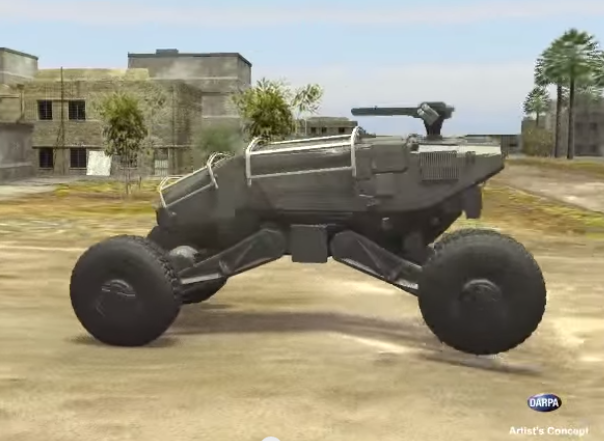
The main aim of the Ground X-Vehicle Technology is to produce tanks which are “half as heavy and twice as fast.” The program stresses on agility of the vehicles which should have capabilities of swiftly reacting to an attack by say, shifting the location of armor around within a split second. At the same time it should be able to effect a rapid change in direction in a bid to avoid a direct attack. DARPA also requires that the vehicles should have the capability of literally “dodging” bullets and rockets aimed at them.
The concept of the Ground X-Vehicle Technology program is to entirely remove the dependency on excessive armor once and for all. Kevin Massey, a DARPA program manager cites the example of the X-plane programs where more efficient aircraft was developed but, while at the same time, drastically reducing the size. The GXV-T program aims at manufacturing vehicles which are 50% smaller, thereby reducing the size of the crews and at the same time doubling the speed. These vehicles should be accessible to more than 95% of the terrain, increasing the difficulty in locating and engaging them.
What all this means is that methods have to be devised for producing tanks which are capable of off-road movements, similar to the way rally cars operate, and should be capable of dodging enemy attacks, while at the same time exhibiting stealth properties, shielding them from detection through infrared and electromagnetic sensors. In line with all these requirements, DARPA is hopeful of the emergence of these new GVX-T technologies within two years of awarding the contracts to successful bidders which is scheduled for April 2015.
DARPA Proposers’ Day
The need for bringing in fresh technology to realize the requirements of the Ground X-Vehicle Technology was expressed in the form of “Proposers Day” held on 5 September 2014. The aim of this gathering was to get prospective contractors together at one place, where they could put forth ideas, backed with the related technologies for the development of ground-based vehicles in line with the requirements of the Ground X-Vehicle Technology.
Order of Things to come
With the aggressive campaign of DARPA to create the Ground X-Vehicle Technology, it is going to be interesting to watch and see which way the wind blows. Budgets permitting, it does seem that the US Army is headed for a technological revolution in terms of ground-based vehicles. Although it is early days yet, when the technology finally does come into the field, it will probably change the way land-based army combat operations are executed. Until then, we can only wait and see what emerges with Ground X-Vehicle Technology.
A video of the Ground X-Vehicle Technology concept can be found here:
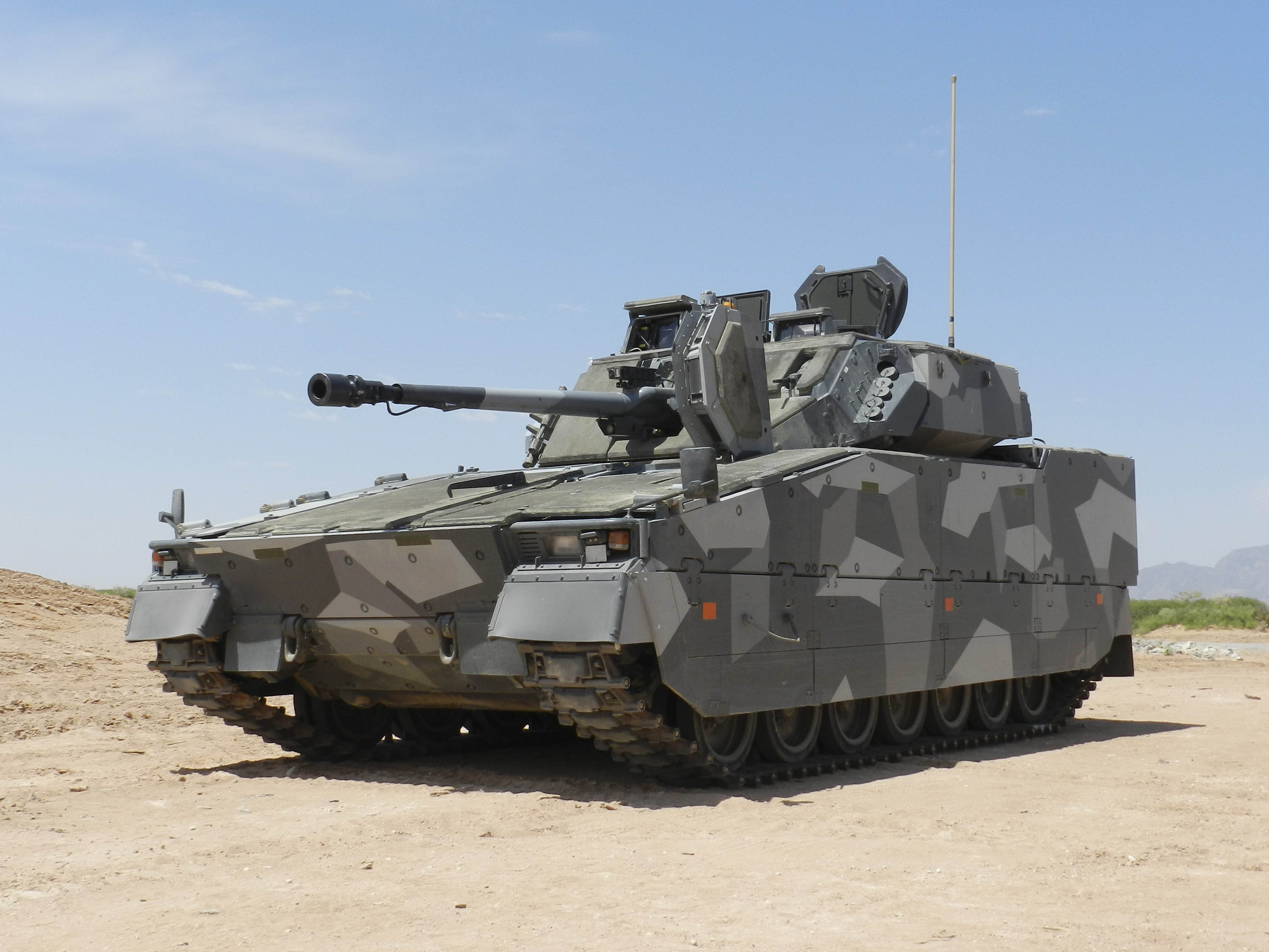
Where did the Ground Combat Vehicle come from and what is it? In 2009, the US Army announced its intention to “significantly restructure” it’s Future Combat System” (FCS). This was formally announced by the Secretary of Defense, Robert Gates. The FCS was a program being developed since the year 2000. It was to be a multi-billion dollar program which would be implemented over a period of several years, and one of the salient features of this program was the Manned Ground Vehicle, (MGV).
However, the development of the MGV was cancelled and replaced by another vehicle called the “Ground Combat Vehicle” (GCV), to replace the then existing M113s and the Bradley. The features were obviously planned to be better than the Bradley, in all respects.
M2 Bradley IFV (Photo credit: Wikipedia)
Features of the Ground Combat Vehicle
The basic philosophy behind the GCV was that it should be possible to add capabilities on to it in the future, including development of armor. Further, the vehicle should be adaptable to both existing as well as future network capabilities like jammers, radar and sensors. Furthermore, it should be integrated with mature technologies. The vehicle was expected to be in the field by the year 2017, at the latest. The capacity was expected to be a total of 13 soldiers, which would have been more that the capacity of 9 in the M2 Bradley. A common chassis would enable variants to be built around the base structure. The vehicle would also have modular armor, which could be added and removed according to combat requirements. The propulsion system would be an E-X Drive hybrid electric that would deliver high power torque.
Setbacks and Budget Cuts
Originally, once the Analysis of Alternatives (AoA) had been carried out by the army, and no other alternative contractors had been located, two contracts of $439.7 million and $449.9 million were awarded to two contractors, General Dynamics and BAE Systems, Nothrop Grumman respectively. Firms like Lockheed Martin, MTU, Detroit Diesel, Raytheon, Rheinmetall Defence, Krauss-Maffei Wegmann, SAIC and Boeing were also in the fray.
In 2010, a Request for Proposal (RFP) was issued. Under the deadlines of this RFP, companies were given up to January 2011 for proposals to be submitted for tracked or wheeled vehicles. The Army put a ceiling on the cost per vehicle to a range between $9 million to $10.5 million. The cost of each operational mile was to be $200. The vehicle was also required to fit on a C-17 transport aircraft. 1,874 vehicles had been planned, with the first ones being run off the production line in April 2018.
However, there were several clauses that the Army introduced, that would put the companies in extremely deep water, if there were any glitches in the production. For instance, there was a $450 million ceiling per company and if there was any further rise in the cost, 100% of the additional cost would have to borne by the contractor.
Further deterioration of the program occurred with Boeing protesting about its rejected proposals. The Army defended its case by stating that it had requested certain technical details from Boeing, but the company did not come forward. A total of 20 weaknesses of Boeing were identified, but according to the Army, the company did not address them adequately.
The program was officially called off on 24 February 2014, as confirmed by the Secretary of Defense, Chuck Hagel.
Potential of the Ground Combat Vehicle
If the GCV had been continued, would it, and how would it have benefited the Army? In 2009, Maj. Gen. Robert H. Scales (Ret.) wrote an article for the Armed Forces Journal. In his article, A Vehicle for Modern Times, Scales brings to the fore the burning issue of the state of the US Army’s ground forces. He feels that the GCV would be able to bring about the much-needed modernization of the US Army’s ground forces. He feels that the GCV could influence the way all other support systems of the war machine work, like sensors, network, aircraft and fire support. Scales makes a lucid observation that it is unfortunate that drastic changes are usually brought in as a consequence to the death of soldiers.
When the Stykers and Land Warriors were introduced, Scales says, they played different roles, such as long-range and short range transporters, firepower platforms, rally points or even rest centers. He says that the development of a land vehicle effectively resistant to Improvised Explosive Devices (IEDs) abundantly found in Afghanistan is far from satisfactory. He says that loading on armor has got its limitations; the balance has to be struck between offering sufficient protection and making the vehicle to unwieldy and overweight due to excessive armor. This is one good thing that the GCV has going for it.
Scales hits the nail on the head by stating that Soldiers and Marines have paid a heavy price in Iraq and Afghanistan. The Ground Combat Vehicle program he feels, would give them back what they have lost. He concludes the article with a powerful summation by saying, “Let’s get on with giving them the fighting system they deserve.”