The Kiowa has played an important reconnaissance and supporting role for the ground troops, Apache Attack helicopters, and commanders on the ground over the past 40+ years when it was initially produced in 1969. The helicopter continued to be fielded until 1989, then it began a series of upgrades to keep it modern. The military brass is looking for a more modern air frame that can handle the support requirements of the Army, while trying to cut costs due to the declining budgets and lack of overseas combat missions.
The OH-58D’s being decommissioned will go to Davis-Monthan Air Force Base, AZ where they will either be scrapped, stored, or prepped for sale to civilian law enforcement for local and state support roles. Each Kiowa Warrior cost the Army roughly $5-$6 million initially, and $1.2 million to retrofit with upgrades. Over the years, the maintenance costs from personnel, storage, and parts has been very expensive as well. The true cost to maintain the fleet will never be known, but each helicopter would easily be in the millions over the lifetime of its use. It is also important to note that maintaining a Kiowa is vastly less in cost than maintaining the advanced AH-64D Apache.
English: The Louisiana National Guards two new UH-72 Lakotas touch down for the first time at Esler Field in Pineville, La. (Photo credit: Wikipedia)
The first Eurocopter UH-72 Lakotas entered production in 2006 with 300 being made initially. More are on the way and will eventually replace all OH-58Ds for the light scout role, but that is potentially several years out and there is nothing set in stone yet. The AH64-D and AH-64E are the Army’s main attack helicopters, which can also perform a scouting role. So the Army has opted to let the Apache “sub in” for the Kiowa until more Lakotas or another variant can be produced on a larger scale.
The Kiowas at Fort Rucker, AL (the Army’s main training base for helicopters) are being replaced by Lakotas right now.
Parting Thoughts
Overall, it does not sound like a good plan. Why would the Army get rid of an entire fleet of helicopters that cost around $5 million and replace their role with an attack helicopter that costs $35 million? Sure there are Lakotas that can help fill the gap, but there are only 300 Lakotas and those can only fill so many gaps of the nearly 2,200 Kiowas that are being phased out. The downsize is premature and a lot of good pilots are having to relearn different air frames. The Army’s primary scout capability via air is non-existent. Sure you can use drones to help fill the gap, but it just isn’t the same as a Kiowa with a rocket or hell fire package that can change the entire battle with one Kiowa team.
Just look at any scenario where there were Apaches needed to help ground troops – they were not always available. With an asymmetric battlefield and troops in contact in many places in the same day all over the battlefield, the Army needs a light scouting capability via air. With Kiowas, you can send 7 Kiowas for the price of 1 Apache. The Army scrapped the RAH-66 Comanche several years ago, causing even more upheaval in the air requirements. And with congress talking about scrapping the A-10 Warthog, the Air Force’s ground support aircraft, the forecast does not look good.
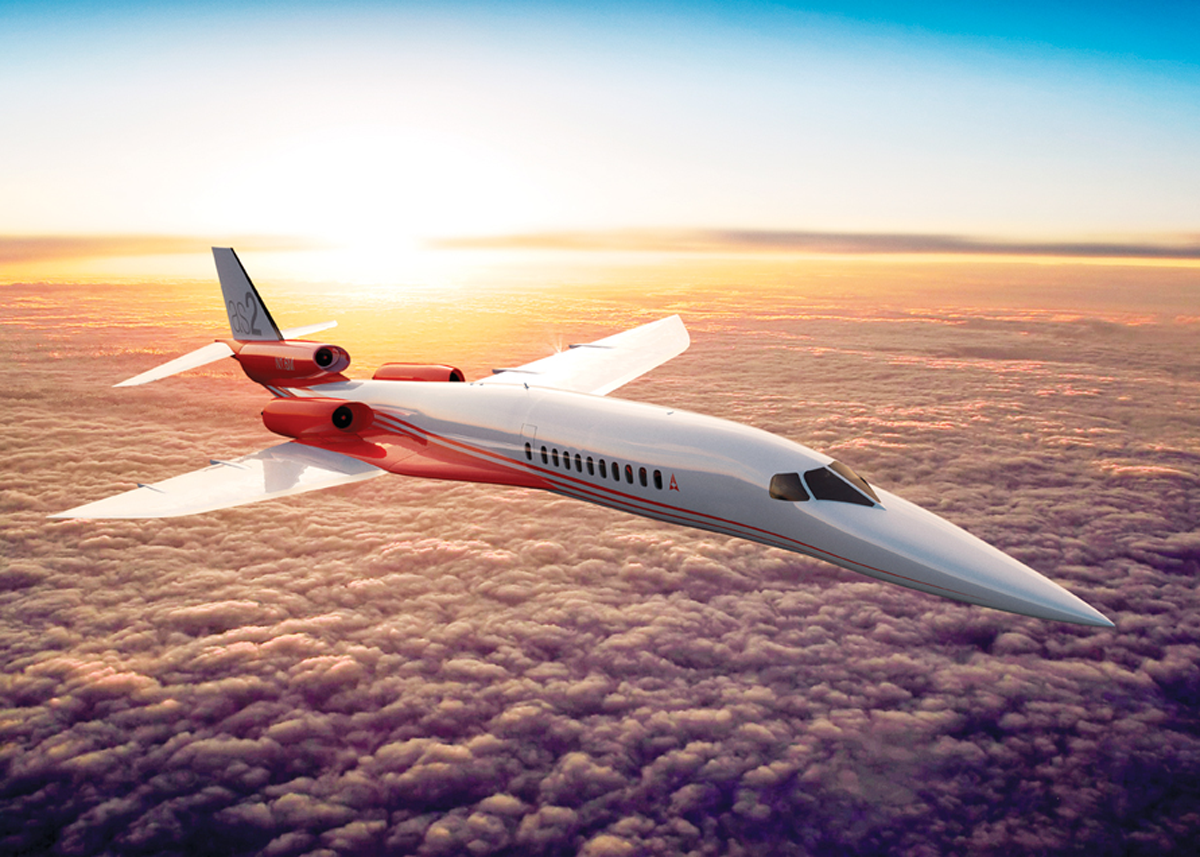
Behold what is to be the fastest moving passenger jet in the world. Aerion Corporation (aka Aerion Supersonic) is almost ready to launch Aerion AS2 and it is expected launch the first passenger flight in 2019. However the design is complete and the promotion is on for the world’s fastest supersonic passenger jet which will provide service to businessmen and entrepreneurs to whom the extraordinary speed matters the most. In these videos you will be able to see the design and appearance of the AS2 in detail. Keep in mind that until now, the fastest moving passenger jet was the Concorde, which left service in 2003.
Using Supersonic Natural Laminar Flow (SNLF) wing technology, Aerion AS2 will be able to transport passengers at a maximum speed of Mach 1.6. However it wouldn’t be able to fly over land with that much speed due to prohibition of supersonic flights due to producing a sonic boom which is very disturbing for residential neighborhoods and office complexes. So over land it will fly at a scaled down performance and speed of Mach .95. Then over water it will jump to Mach 1.6. With this speed it will be able to reach Tokyo, Japan from the United States in just 6 hours where usually it takes 10 hours 25 minutes now.
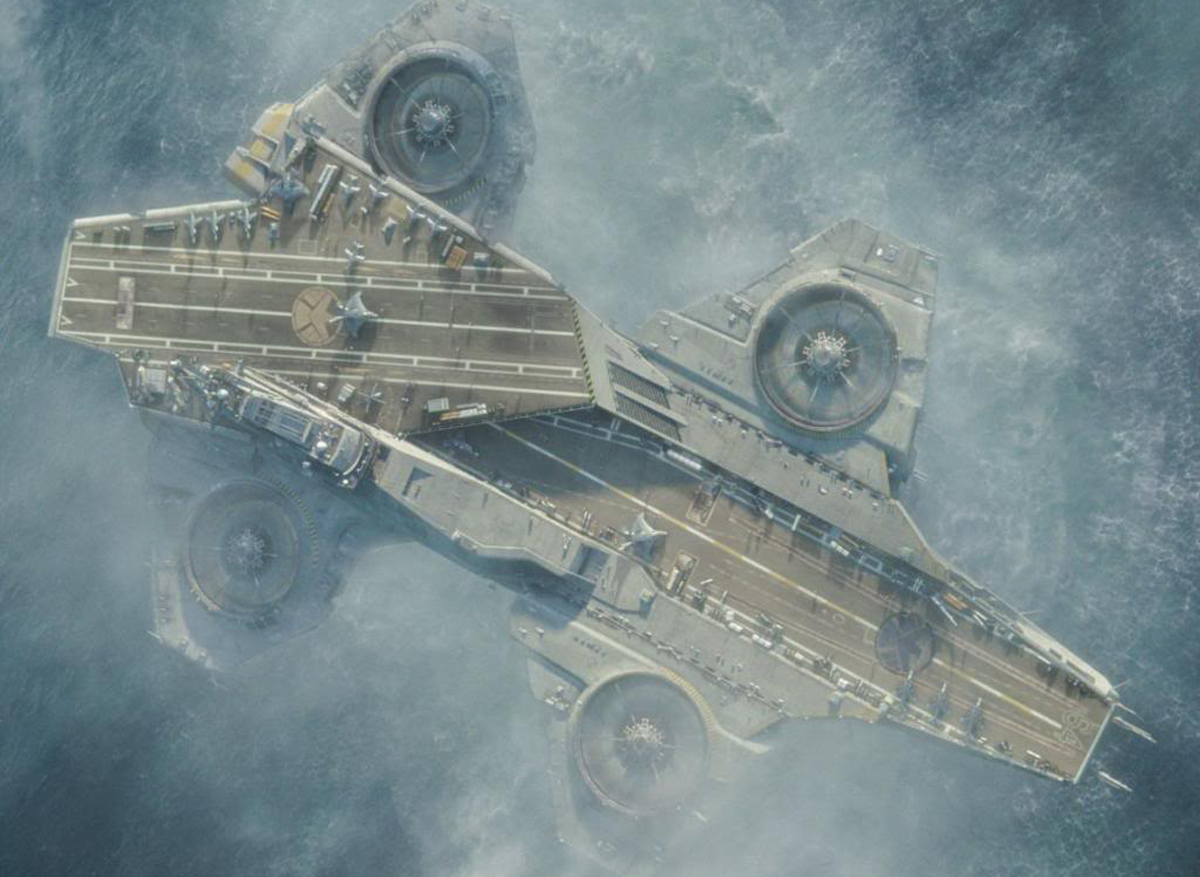
Enthusiasts from an aerospace community of flight hobbyists named Flite Test has recently developed the first ever successful drone helicarrier from which another drone can easily take off and with more appropriation can even land on it. They published this video on their Facebook page on 4th November 2014 showcasing their developed technology. However this is still in its final developing stage and has been developed to operate on small scale. But the engineers expect that the technology can be implemented in practical field of helicareer and drone development at an international scale. And the developed careers are likely to be able to serve as takeoff grounds for any wartime drone or other aircrafts that till now have to take off from the ground.
Flight Test offers a meeting place where all those who have a passion for flights, flying and aircraft engineering and development can come together to share their ideas and designs. In this video from them you can see a little toy sized drone taking off from the small rectangular remote controlled helicareer with two rotors on each side. This case study was showcased in the Horizon Indoor Electric Festival earlier this year.
This technology has major Department of Defense implications. Now that this tech has been dreamed up and put into a prototype, DARPA just might be calling Flite Test for something a little bigger. Or maybe Northrop Grumman, BAE, Boeing, or Lockheed Martin could be called on.
Boeing 737-800, while on its way to New Delhi, India was stopped in the middle of its take off in Surat’s airport after encountering a stray buffalo on the runway. The airplane was supposed to fly out to New Delhi, carrying 146 people on board. All of them were safe and sound, but the aircraft suffered major damage, especially in its left engine. The water buffalo, unfortunately, did not survive the accident. According to a representative from the airline, the animal was virtually invisible in the dark background. All 146 people were later on transferred to another SpiceJet aircraft.
As a result of this incident, SpiceJet’s operations from New Delhi to Surat and vice versa have been suspended. Sanjiv Kapoor, the Chief Operating Officer of SpiceJet, went on Twitter and blamed the incident on the airport’s lack of security.
Most of the major airports in India are secured with perimeter fences; however, there are still some airports, especially those that are located in faraway provinces, that are not, and these have gone through security breaches. A news agency has reported that the Surat airport has only been in operation for two years and handles only 3 flights per day. Its operations are being handled by the state-run Airports Authority of India.
You can read more of the story and see more pictures about it here.
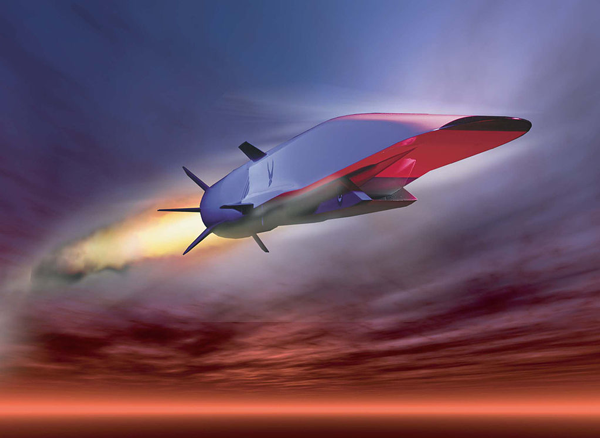
This video talks about scramjet engine and its capability of travelling in hypersonic speed (meaning greater than Mach 5). Joseph Vogel, the Director of Hypersonics of Boeing Defense, Space & Security talks about X-51A WaveRider, an unmanned scramjet powered demonstration aircraft for hypersonic flight testing. The aim of the aircraft is to travel at Mach 6 or 4000 miles per hour. As this aircraft uses its shock wave for adding lift it has been named WaveRider. The X-51A WaveRider has the capability of travelling across the United States in less than one hour. This aircraft is a result of the Waverider program which is run jointly by Boeing, the Air Force Research Laboratory, DARPA and Pratt & Whitney Rocketdyne. This X-51 technology is going to be used in a Mach 5+ missile named High Speed Strike Weapon (HSSW) which is planned to be launched in 2020.
The X-51A WaveRider is chiefly designed to demonstrate various aspects of hypersonic flight. It completed its first ever flight on 26 May 2010 and in June the second test flight took place. With a goal of achieving Mach 6 for 300 seconds, a test flight was conducted in August 2012. But the aircraft crushed after 16 seconds due to some troubles in the control fin. After all these failed attempts, X-51A completed its first successful flight on May 1 2013. In that flight X-51A achieved hypersonic speed above Mach 5 for 210 seconds.
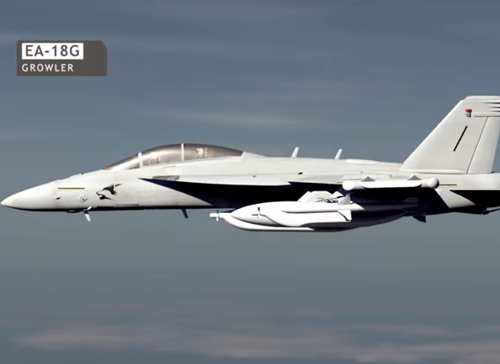
This video introduces Boeing EA-18G Growler. Scott Radke, the Avionics Integration Engineer of EA-18G Program is seen taking about Boeing’s new electronic warfare aircraft EA-18G Growler.
Boeing EA-18G Growler an American electronic warfare aircraft developed for the United States Navy. It is a customized version of combat proven Boeing F/A-18F Super Hornet incorporating more developed AEA avionics for enhancing SEAD (Suppression of Enemy Air Defenses) capability and performing non-traditional electronic attacks. The chief feature of Boeing Growler is that it is capable of jamming enemy radars and thus effective in helping aircrews to reach targets without being detected.
Boeing Growler is capable of encountering enemy air defenses by using pre-emptive as well as reactive jamming techniques. Along with its capability of being greatly effective for stand-off jamming missions, it is also capable of performing escorting role with the agility and speed of the Super Hornet. With its uninterrupted communications and advanced situational awareness Boeing Growler is capable of achieving effective integration with ground operations than before. The use of Advanced Electronically Scanned Array (AESA) radar, air-to-air missiles and digital data link provide the aircraft with self-protection capability and makes it effective for target identifications and prosecution as well.
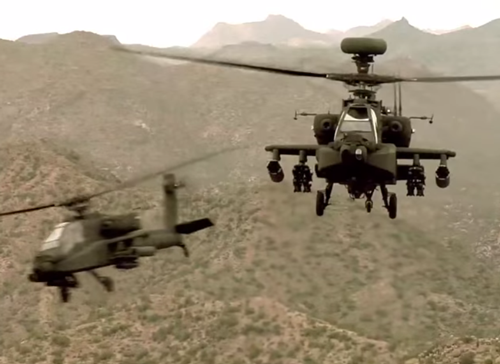
In this video John Schibler, the Boeing Chief Engineer of US Attack Helicopter Programs talks about the effectiveness of Boeing Defense, Space & Security’s newest model of Apache helicopter, AH-64E Guardian and tells how it acts as a safeguard for the soldiers serving on the ground.
Apache AH-64E Guardian like all the previous models has two engines, four blades and carries one pilot and one co pilot gunner. With a speed of 164 knots and range of 250 nautical miles it carries an aerial rocket system, automatic gun of 30 mm, hellfire missiles and an M239E1 chain gun. It is different from its predecessors in many ways. Not only it flies farther and faster than other Apache models but also it has more enhanced communication systems. The main feature that makes it different from others is that it is inter-operable with unmanned aircraft systems that enables the pilot to control the UAS sensors, weapon system and flight path (meaning it can control UAVs from the cockpit).
Apache helicopters are evidently known as deadliest helicopters for their destructive features, but Apache Guardian is more than that. Its “eye-in-the-sky” technology makes it yet more effective to keep the soldiers safe. It is capable of seeking and eliminating threats that otherwise would have remained undetectable and therefore makes it easy and safe for the soldiers to complete their assigned missions. So the name “Guardian” aptly suits this newest model of Apache as when it is around, the soldiers can have a breath of relief.
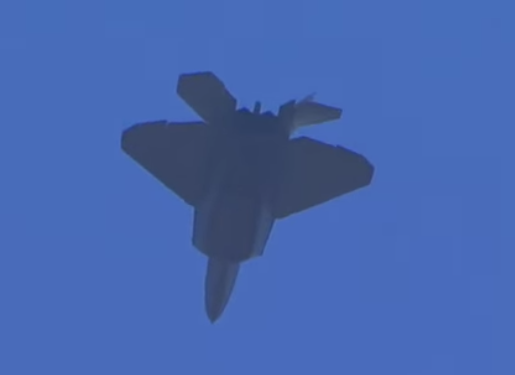
This video shows a demonstration by F-22 Raptor fighter aircraft on the third and last day of MCAS Miramar Air Show, 2012 held at Miramar, CA from 12-14 October.
MACAS Air Show is an air show that Marine Corps Air Station (MCAS), the home of Third Marine Aircraft Wing puts every year with a view to showcasing the air power of US Marine Corps. F-22 Raptor is a double-engine, single seat and all weather stealth mode enabled fighter aircraft primarily designed for the United States Air Force.
In this video, the F-22 Raptor demonstration has been shown with the whole process. The demonstration has been performed by Major Henry “Schadow” Schantz. The process of the demonstration starts with the starting up of the engine. Then after completing the control surface test the aircraft taxies and with the take- off, the demonstration starts. Major Henry ”Schadow” Schantz performs a solo demonstration which showcases the supersonic speed and other features of F-22 Raptor. After completing the solo demonstration, the F-22 joins a P-51 Mustang for the United States Air Force (USAF) Heritage Flight. In the Heritage Flight the two fighter aircrafts represent separate eras of operations. The fly-past is accompanied by the heritage flight song “We Remember” by Dwayne O’Brien.
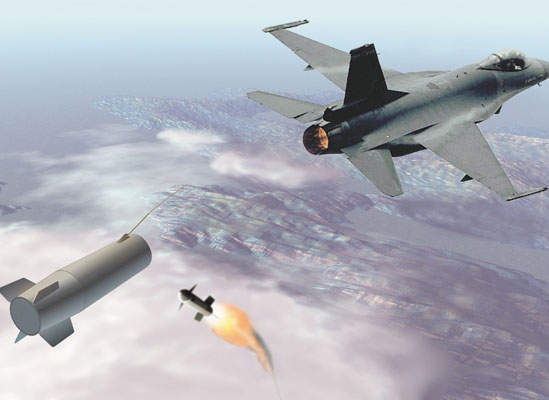
The ALE-50 Towed Decoy system, also known as “little Buddy,” is a state-of-the-art defense system designed by Raytheon. The main objective of the system is to create an effective countermeasure to defend American aircraft against radar-directed missiles. This anti-missile countermeasure decoy system is currently used for different U.S. Air Force, Navy, and Marine Corps aircraft, in addition to some other air forces.
The system has been used in various combats, where the ALE-50 Towed Decoy System successfully demonstrated its effectiveness in thwarting enemy missile attacks. Thus, there is now very little skepticism about what the “Little Buddy” can do.
Development of the ALE-50 Towed Decoy System
The ALE-50 Towed Decoy System is the fruit of collaboration of an integrated product team containing experts from Raytheon, the U.S. Air Force, and the U.S. Navy. The team worked on this groundbreaking concept at a Goleta, California facility.
The first deployment of the system dates back to 1995. Nonetheless, the system is currently used on multiple aircraft that include the F/A-18E/F Super Hornet and the B-1B Lancer. Further, The system has also been incorporated into the innovative ALQ-184(V)9 ECM pod. This integration has helped the system become more vigilant towards threats, and it has also enabled it to be ready to be used on numerous platforms.
An F/A-18F Super Hornet aircraft assigned to Strike Fighter Squadron One Zero Two fuels an F/A-18E Super Hornet aircraft from Strike Fighter Squadron Two Seven during exercise Malabar 07-2 while over the Bay of Bengal Sept. 7, 2007. More than 20,000 personnel from five different countries are participating in the multinational exercise that includes naval forces from India, Australia, Japan, Singapore and the United States. (Photo credit: Wikipedia)
Capabilities
If the ALE-50 Towed Decoy System has been in service for more than ten years, now, it’s because it has efficaciously demonstrated its wide range of capabilities. When employed, the system shields the aircraft and crew against guided missiles (surface-to-air and air-to-air missiles). The system lures the missile toward a more attractive target and away from the intended one. The decoy that the system utilizes is used when required and cut free before landing. The “Little Buddy” offers the possibility of being operated manually as an independent device. However, it can also be incorporated and controlled by the ALE-47 Airborne Countermeasures Dispenser System (made by BAE Systems).
In 1999, the ALE-50 Towed Decoy System was tested in Yugoslavia. The results were reportedly very encouraging. Hence, Air Force Officials reported that the system locked down and diverted 10 of 30 surface-to-air missiles that had been fired at B-1 bombers in different parts of Yugoslavia.
United States Government Accountability Office (GAO) confirmed that planes that have the ALE-50 Towed Decoy System installed in them are more likely to escape fatal enemy attacks. In a report to Congressional Committees in 1997, the GAO expressed its satisfaction regarding how this system improves survivability, and stated that test results indicate the ALE-50 Towed Decoy System, “offers improved effectiveness against radar-controlled threats.” Based on these results, the GAO recommended further use of the system on other platforms such as the F/A-18C/D that the Navy uses.
As far as the specifications of the ALE-50 Towed Decoy System are concerned, the system is equipped with a launch controller, as well as a launcher that is usually installed on the plane’s wing pylon, in addition to one or more expandable towed decoys, which has a shelf-life of ten years.
When speaking about the ALE-50 Towed Decoy System, Pat Hurley, vice president and general manager of Raytheon Electronic Warfare Systems, reiterated that, throughout its 50 years of existence, the company has always been concerned with developing its systems in order to provide the military with high-performing products. In this regard, Hurley added that the permanence of the company’s business and of the ALE-50 Towed Decoy System is a valid testimony to the company’s “high-performing products,” as well as its “laser-like focus on serving the customer.”
ALE-50 Towed Decoy System – Pricing
Many experts consider Raytheon to be a leading provider of systems that offer pilots with the most precise information available. With its $22 billion of sales in 2005, the company is also regarded as a leader in defense systems, information technology as well as business and special mission aircraft. The company has a workforce of about 80,000 deployed throughout the world.
Raytheon manufactures and sells the ALE-50 expendable decoy at $22,000 per unit. In October 2010, the company made a delivery of its latest production run (1,048 units). The total number of units that Raytheon has produced is estimated at 35,000 units, increasing the company’s sales to more than $500 million.
Soaring OVER THE PACIFIC OCEAN — A B-1B Lancer drops back after air refueling training Sept. 30. The B-1B is deployed to Andersen Air Force Base, Guam, as part of the Pacific Command’s continuous bomber presence in the Asia-Pacific region, enhancing regional security and the United States commitment to the Western Pacific. The B-1 is from the 28th Bomb Wing, Ellsworth AFB, South Dakota.http://www.af.mil/photos/index.asp?galleryID=12&page=2 (Photo credit: Wikipedia)
Issuance to the Military (Quantities)
Raytheon has now produced 25,682 units of the system. All of the units have been purchased by the US Department of Defense at a cost of $500 million ($22,000 per unit). The system was initially installed on F-16s only with plans of implementation on other platforms. Therefore, these plans have been carried out systematically and have now been completed successfully. Thus, the “Little Buddy” is currently installed on the B-1B bombers and F/A-18 aircraft.
In 2005, Raytheon received a production contract from the US Navy and the US Air Force. In late 2006, The US Air Force granted the manufacturing company a production contract for 862 decoys worth $21 million.
Use in War:
The system’s adaptability and reasonable cost enables it to be installed on a variety of aircraft. Thus, the ALE-50 Towed Decoy system now functions on many aircraft such as the F-16, F/A-18E/F, and B-1B aircraft.
The usefulness of the system has been proven in many situations. ALE-50 Towed Decoy System has shown its capabilities in every major war in which it was deployed. For instance, it considerably helped improve the survivability of aircraft and their crews in places like Kosovo, Afghanistan and Iraq.
In this regard, Col. Art Huber, commander of the 542nd Combat Sustainment Group at Warner Robins Air Logistics Center, which is in charge of the ALE-50 praised the ALE-50 Towed Decoy System by saying that it is “credited with numerous aircraft saves,” and that “our pilots depend on it.”
Final Analysis of the ALE-50 Towed Decoy System
The “Little Buddy” is probably the best countermeasure in use, right now. Tests and actual use in wars have proven its efficacy. The ALE-50’s suitability and interoperability with other B-1B systems when installed in the B-1B bombers have been quite a success. Furthermore, the pricing is very encouraging, and the quality/price ratio has been a determining factor in making the system a must for every aircraft in service. This is why, many pilots who have been to war in different parts of the world have communicated that the ALE-50 Towed Decoy System has been critical in saving them and their aircraft from the dangers of guided missiles.
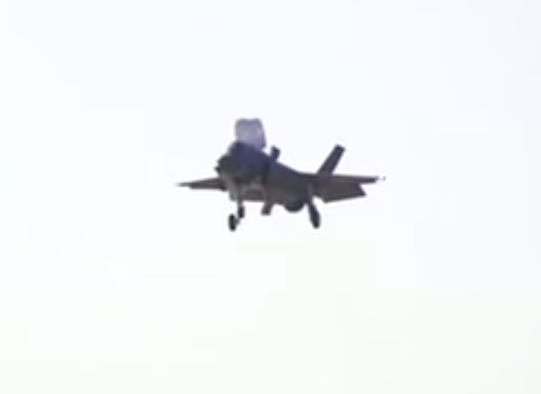
The video captured the first ever hover performance of a B-model aircraft at the Fort Worth, Texas. The aircraft was named F-35B, which aside from having the capability to hover like a helicopter – as demonstrated in the video – also features a short takeoff/vertical landing (STOVL) ability. The aircraft’s predecessor models were modified to better satisfy more modern security needs, and in order to allow it to operate on other landscapes, on or off land.
The STOVL operation of the aircraft works on the Rolls-Royce patented shaft-driven LiftFan system, paired with an engine with a 90 degree swivel feature during short takeoff/vertical landing mode. The said Rolls-Royce LiftSystem is the first ever to facilitate Short Take Off and Vertical Landing operations for fighter jets. The aircraft is able to be propelled vertically by a 3BSM which can easily swivel ninety-five degrees in two and a half seconds, managed to direct up to 18,000 pounds of engine exhaust towards the ground, sending the vehicle upwards.
All mechanisms come together in this jet and work together like a perfectly oiled machine. It allows for easy piloting and a quick response time, all with easy controls like switching to STOVL mode with a simple press of a button.
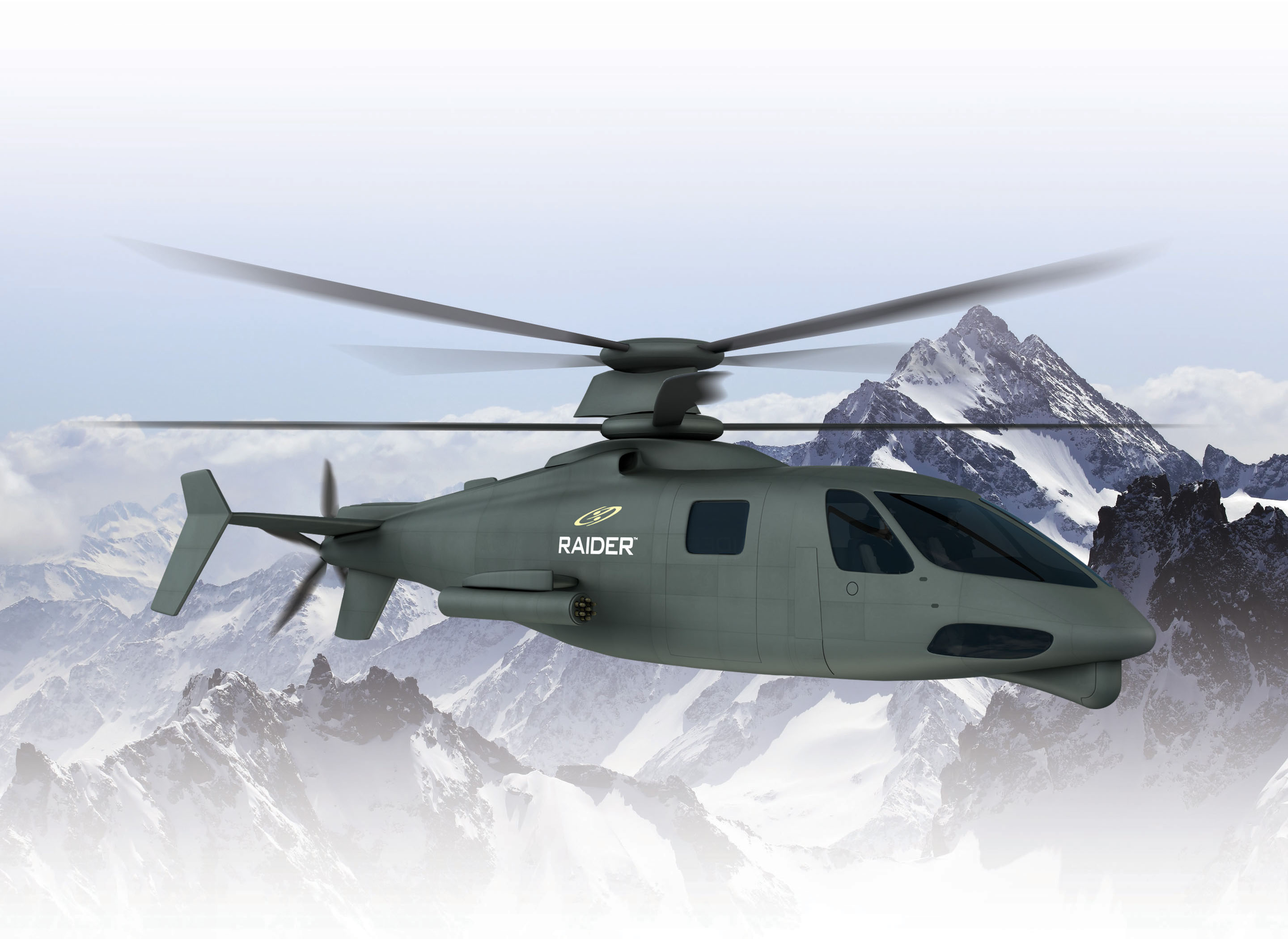
In March 2010, the Armed Aerial Scout program made a request for information for an advanced helicopter, and the result was the Sikorsky S-97 Raider as proposed by Sikorsky. Four years later, the company finally unveiled the first full production model of the groundbreaking scout and attack helicopter in the company’s facility in West Palm Beach, Florida.
The objective set for the new aircraft is to replace the army’s OH-58D Kiowa Warrior. However, specialists think that if the manufacturer’s claims about the Sikorsky S-97 Raider capabilities are true, it is almost certain that this helicopter’s reach will grow to cover a much wider audience. For instance, if the Sikorsky S-97 Raider proves useful, it might be used to replace other US Army military helicopters such as the MH-6 Little Bird used by the U.S. Special Operations Command. In addition to its expected military roles, The Sikorsky S-97 Raider could also be adapted to carry out civilian missions.
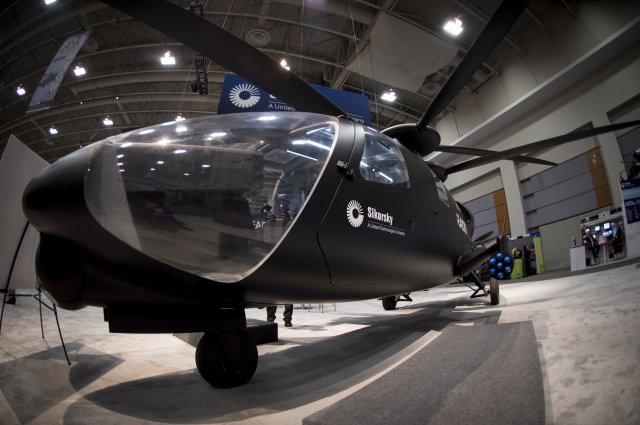
Sikorsky Raider at AUSA
Cost of the Sikorsky S-97 Raider
Up to now, Sikorsky and its various suppliers have invested in as much as $200 million on the two first prototypes of the helicopter. The company hopes to be able to produce this revolutionary helicopter at $15 million per unit.
The Sikorsky S-97 Raider is set to fly for the first time on December 2014. However, the aircraft’s first flight and its first demonstration of capabilities won’t take place until mid-2015.
Sikorsky S-97 Raider Design
Design is one of the most eye-catching attributes of the Sikorsky S-97 Raider. Being a compound helicopter, the Sikorsky S-97 Raider includes variable speed coaxial main rotors and a variable pitch pusher propeller. The helicopter is large enough for 6 passengers to fit in, and the side-by-side cockpit can contain two pilots. However, the S-97 is also designed so that it can fly autonomously.
Sikorsky UH-60M Black Hawk, Radom 2007 (Photo credit: Wikipedia)
As far as the engine is concerned, it is based on the Sikorsky X2 demonstrator. Until now, The Sikorsky S-97 is equipped with the same engine used in the UH-60M Black Hawk. Nonetheless, the company foresees the development of an improved engine for its new helicopter.
Key Dates
Here is a timeline of the key dates since Sikorsky first launched its X2 Technology Demonstrator in August 2008. These key dates are in conformity with the information provided by Sikorsky on their Sikorsky S-97 Raider website.
August 2008: X2 Technology Demonstrator™first flight
September 2010: X2 Technology Demonstrator reaches 250 knots
October 2010: S97 Raider™ launched
July 2011: X2 Technology Demonstrator final flight
January 2012: Initial Raider supplier team announced
March 2013: Raider Critical Design Review completed
September 2013: Raider aircraft #1 delivered, airframe final assembly begun
January 2014:Raider Systems Integrations Lab (SIL) fully operational
May 2014: Raider electrical power on achieved
October 2014: Raider Rollout Ceremony
December 2014: Raider first flight
2015:Raider flight test and Raider capability demonstrations
General Characteristics
The Sikorsky S-97 Raider has a capacity for six troopers including up to two pilots. The space inside the helicopter can be adjusted according to needs. Thus, if need be, the space in the cockpit of the aircraft can be used to store additional equipment or ammunition.
According to the information disclosed by Sikorsky, the S-97 Raider is 36ft long and weighs 8,945 lb. Its maximum takeoff weight is 11,400 lb. It is equipped with one General Electric YT706 powerplant, and its main rotor diameter is of 34 ft. The aircraft is 6-bladed variable pitch and clutchable pusher propellers.
Sikorsky S-97 Raider Performance
The S-97 has a staggering Never exceed speed of 276 mph (240kn), and a cruising speed of 253 mph (200kn) external weapons included. The weapons include 50 cal guns w/500 rounds and a seven shot rockets pod, Hellfire missiles and 2.75” rockets. The range exceeds 600 km, and it has an endurance mean of 2.7 hours on standard fuel. In addition, the S-97 is also capable of aerial refueling.
An OH-58D Kiowa Warrior from 1st Battalion (ATTACK), 25th Aviation Regiment, 25th Infantry Division (L), “Lightning Attack”, patrols the skies over , . Lightning Attack deployed from Schofield Barracks, Hawaii to Iraq in January and is conducting aerial reconnaissance, close combat attacks and security missions for the 1st Armored Division and the 1st Cavalry Division in support of Operation Iraqi Freedom. (Original caption) (Photo credit: Wikipedia)
Comparisons
As a matter of fact, the new and futuristic Sikorsky S-97 Raider is produced in order to replace the army’s OH-58D Kiowa Warrior, an aircraft that has been in service since the 1960’s and which has been used in many wars by the US Army such as the Iraq and Afghanistan wars. Thus, while, there are some similarities between the two helicopters, the Sikorsky S-97 Raider is clearly much more advanced at all levels.
In his article published in The Aviationist website, David Cenciotti compares the new Sikorsky S-97 Raider with the “mysterious stealth” aircraft that was used in the raid on Osama Bin Laden.
Cenciotti states, “it is safe to believe that Sikorsky has embedded some of the features developed for the secret, radar evading US Army Stealth Black Hawk used by the Navy SEALs at Abbottabad in May 2011,”
Future Plans for the Sikorsky S-97 Raider
Sikorsky seems to be leading the way and setting an example to other companies on how to get things done. Not only does Sikorsky build state-of-the-art machines, but it also invests in future development opportunities. For example, as recently as in May 2014, Sikorsky won a U.S. Navy deal for the President’s Marine One helicopters. According to Reuters, the company “won an initial $1.24 billion contract to develop and build six new U.S. presidential helicopters, the first step toward a fleet of 21 new aircraft by 2023.”
Other future plans of the company include teaming up with other leading companies such as Boeing and Aurora Flight Sciences to manufacture new aircraft. In addition to all these recent successes, Sikorsky and Boeing have also been chosen to work hand in hand in order to produce the SB>1 Defiant, which is a “medium-lift-sized demonstrator.” The demonstrator is built for Future Vertical Lift and is expected to fly in 2017 as advanced by Sikorsky in a press release.
Final Thoughts
It is probably safe to say that during its 90 years of existence, Sikorsky is now stronger than ever. The rumors about the company’s divestiture have calmed down especially after the company was awarded a $1.24 billion deal to build the presidential helicopters. Therefore, although the Sikorsky S-97 Raider is one of the least revenue generating units belonging to United Technologies, the company isn’t thinking about selling it or spinning it off.
If Sikorsky continues its innovative efforts, it will eventually find more and more reliable customers than the US Army. This idea of using helicopters for civilian duties might be an interesting alternative, and selling the Sikorsky S-97 Raider to American allies could also help widen the company’s business opportunities.
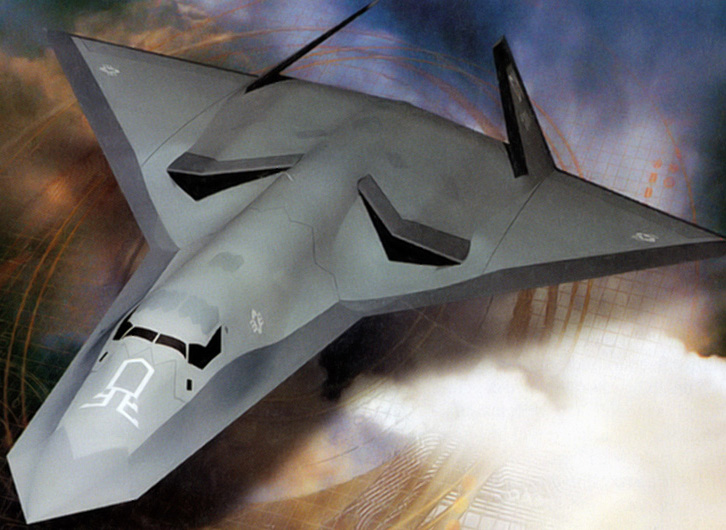
There is a new long range strike bomber being developed by the US Air Force. The aircraft program is under wraps to the extent that the Pentagon did not even admit that there is a program at all until recently, let alone giving out details about the project. A spokeswoman with the US Air Force was quoted as saying, “Specific LRS programmatic details are protected with enhanced security measures.”
Known Facts
Not much is known about the new long range strike bomber, except that there is an aircraft program called the “LRS-B” program, and it is highly classified. What is also known, is that money to the tune of $300 million has been allocated for the defense project for the fiscal year 2013-14, and the total money allocated so far from 2013 to 2017 is estimated to be about $6.3 billion. The B-3 bomber as it has come to be called will be long range, optionally-manned, and it will have stealth properties. This bomber aircraft will have a price tag of about $550 million apiece. The entire fleet of about 80 to 100 stealth bombers is expected to be commissioned by 2020.
The B-3 bomber is a replacement of the B-2 bomber, which in turn was a replacement for the B-1. So, let us take a look at the previous versions of the ‘B’ series of strike bombers.
A B-1B Lancer with wings swept full forward (Photo credit: Wikipedia)
The B-1 Bomber
The B-1 Bomber was introduced in 1986 as a replacement of the B-52 Stratofortress. This bomber aircraft was built by Rockwell International, and there were two versions. An initial version was actually in existence since 1974, called the B-1A. It was capable of carrying nuclear bombs, flew at twice the speed of sound at high altitudes and could also carry short-range attack missiles. It also had stealth features, meaning that it had the ability to lower its visibility on radar to 1/100th of the B52, but this also had an adverse effect on the speed of the aircraft. During the period of 1984 to 1988, the US Air Force built its B-1 Bomber aircraft fleet up to 100.
A U.S. Air Force Boeing B-52H Stratofortress static display with weapons, at Barksdale Air Force Base, Louisiana (USA), in 2006. (Photo credit: Wikipedia)
The second version, the B1-B is also supersonic, but its normal cruising speed is subsonic – about Mach 0.9 which is 670 miles per hour. It can fly at an altitude of as low as 200 feet above the ground. It can carry up to 24 nuclear bombs and has a flying range of 4,600 miles (7,400 kilometers) without having to refuel.
B-2A Block 10 (upgraded to Block 30) Spirit, 82-1069, “Spirit of Indiana”, of the Eighth Air Force 509th Bomb Wing (Photo credit: Wikipedia)
The B-2 Stealth Bomber
The specialty of the B-2 Stealth Bomber is that its development marked the integration of aerospace technologies with conventional aviation technology. It is a versatile aircraft, capable of delivering nuclear as well as conventional weapons.
The B-2 Bomber was developed by Northrop, Boeing in the late eighties, the first successful flight of the B-2 Bomber took place in July 1989. This bomber aircraft is built on the lines of the B-35 of the 1940s. The bodywork mostly consists of resin-impregnated graphite fiber.
More on the LRS-B Long Range Strike Bomber
Due to the utmost secrecy being maintained by the Pentagon, Northrop Grumman also seems to have been sidetracked and is non-committal on the matter (of the B-3 Bomber). Even though Northrop has not put in a bid yet, it is unknown whether they will now or will compete for the LRS-B contract at a later stage. It has been speculated that maybe it is just waiting for better terms, or a more defined scope of work on the project. Boeing and Lockheed Martin have joined hands in a bid to win the high-budget project and have been approached by the Pentagon. Boeing will be the main contractor and an announcement to this effect was made in October 2013.
The Downside of Secrecy
It has been said that excessive security can have a negative effect on development. In a recent article published in The Daily Beast, Bill Sweetman says this about the B-3 Stealth Bomber, “… almost everything about it is secret, and that’s not necessarily a good thing.” Sweetman goes on to point out that the secrecy associated with the Long Range Strike Bomber is the highest in the history of all similar projects since the 1980s. He says that while developing the B-2, certain features were developed, but never used and will never be used. Due to this reason, there were people working within a “security bubble”, who had a free hand in doing just as they pleased, as they were shielded from public scrutiny. The above reason is why some projects overrun their budgets.
Secrecy, to a point is acceptable, especially when a military weapon is being developed. But secrecy beyond reasonable limits can result in impractical technical development with a series of budget overruns, which could ultimately threaten the very existence of the project. An official announcement is expected sometime in 2015 regarding the confirmation of this aircraft program. Until then, the world will just have to rely on snippets about this much-needed, futuristic Long Range Strike bomber.
The US Air Force and the Pentagon have been pursuing their drone development program since 1995, the most prominent drone series being the Predator series (A, B & C). Today, it is a full-fledged operation. One of the latest projects now being pursued is the US Air Force’s RQ-170 Sentinel Drone, manufactured by Lockheed Martin. The US Air Force has not released much information about this drone. However, this US drone is known to be a stealth aircraft, fitted with reconnaissance equipment for the purpose of gathering data from non-cooperative countries such as Iran, Iraq and Afghanistan. It is being used since 2011, when it was launched during the ongoing war in Afghanistan, called “Operation Enduring Freedom”.
It is also worthwhile to note that this US drone was used quite effectively for tracking down Osama Bin Laden, the mastermind of the 9/11 attacks. The system is believed to have been set up in the Pakistani town of Abbottabad where the terrorist was believed to have been hiding, in a heavily guarded compound, with the full knowledge of the Pakistani authorities. It was through the data fed to the Navy SEALs from the Sentinel system that they were able to penetrate the compound and terminate this dreaded terrorist on the spot.
The RQ-170 Sentinel has also been used in South Korean airspace, which would have been obviously for the purpose of spying on activities in North Korea.
Lockheed Martin RQ-170 Sentinel (Photo credit: Wikipedia)
Duplication of the Sentinel
In December 2011, an RQ-170 Sentinel was sent into Iran on a reconnaissance mission. The Iranian armed forces intercepted the drone and hacked into its navigation systems, managing to capture it. They claimed that they had been able to duplicate it by decoding the software and using reverse engineering. Although, the claims were stated as being fake by a former Pentagon official, the Iranians stuck to their story and showed video footage of the drone.
The landing gear, however, was covered by a banner stating, “We’ll trample America underfoot” and “the US cannot do a damn thing.”
The RQ-170 Sentinel has also been copied by the Chinese who released pictures of the copied drone along with some other aircraft.
Specifications
The specifications the US drone described here are not official, as there are no official documents available, due to the highly classified nature of the RQ-170 Sentinel project, as it is being kept under wraps by the CIA and the Pentagon. However, what has been reproduced here, are as accurately-possible facts, which should give a fair picture about the Sentinel and its capabilities.
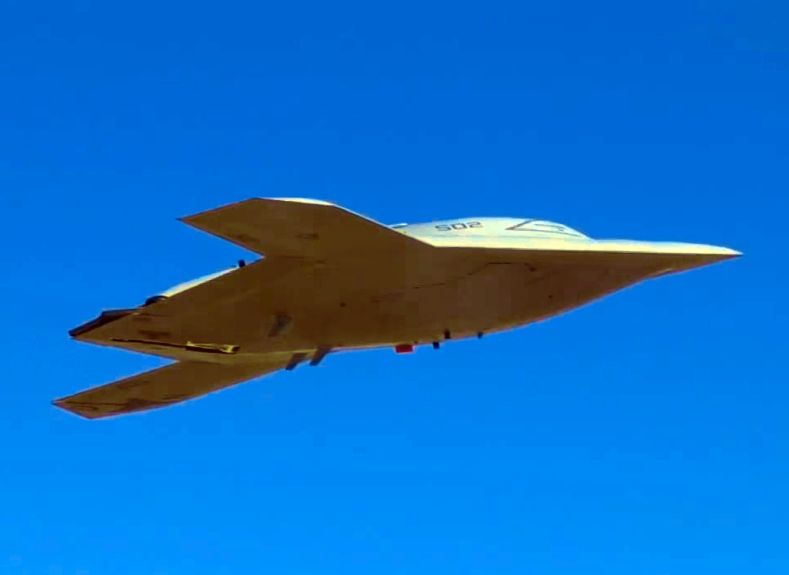
The RQ-170 Sentinel by Lockheed Martin is a rather new addition to the United States Air Force’s fleet of Unmanned Aerial Vehicles (UAVs). It is a stealth vehicle, which is supposed to be a cost-effective drone with added qualities put on to existing design features. The purpose of the Sentinel is for surveillance and reconnaissance of enemy territories from a high altitude. The drone is mostly connected to CIA missions, which is the reason most of the information on it remains classified by the Pentagon and unavailable to the general public.
A B-2 Spirit soars after a refueling mission over the Pacific Ocean on Tuesday, May 30, 2006. The B-2, from the 509th Bomb Wing at Whiteman Air Force Base, Mo., is part of a continuous bomber presence in the Asia-Pacific region. (U.S. Air Force photo/Staff Sgt. Bennie J. Davis III) (Photo credit: Wikipedia)
Looks-wise, the Sentinel is more of wing, with less of vertical tail surfaces. The wing structures are swept towards the rear of the aircraft, giving it the appearance of the B-2 Spirit Stealth Bomber. It is powered by a single General Electric TF34 series turbofan engine. The payload region is also located in the central area. The abundant wings serve the purpose of offering extra fuel storage. The undercarriage is in a regular tricycle configuration with two main landing wheels and a single landing gear in the nose section.
The aircraft is equipped with a full suite of cameras and sensors. There are full motion real-time cameras and radioactive isotope-detecting sensors for locating nuclear material. It is assumed that the drone is also armed with missiles, in the same way that the Predator is. It is also understood to have the latest infra-red and other optical devices fitted.
The maximum altitude observed by this drone is at least 50,000 feet. The wingspan is estimated at 26 meters, with a height of 1.84 meters and a length of 4.5 meters.
Future Prospects of the Sentinel
It would seem that the Sentinel has had a rather big setback with the copying of its design by the Iranians. Although there is no information forthcoming from the Department of Defense, the Pentagon, US Air Force or the CIA, there is no dearth of information emanating from Iran regarding the Sentinel and future plans. RT.com News published an article in May 2014 quotes a statement made by Iranian leaders who said that their engineers have managed to decode the drone’s technology and copy it. There will soon be a test flight, they promised.
From what we see, the RQ-170 Sentinel is definitely here to stay, but if the US military is to keep the technology to itself, it is going to have to figure out how to keep its classified secrets from falling into enemy hands, as has been the case in the recent past.
The PAK FA T-50 is in an entirely new league of fighter aircraft. PAK FA is short for Perspektivny Aviatsionny Kompleks Frontovoy Aviatsii. When translated into English, it means “Prospective Airborne Complex of Frontline Aviation” or “Future Air Complex – Tactical Air Forces”. It is being developed by Russia to be a fifth generation stealth fighter with capabilities rivaling and even exceeding in some areas those of the American Lockheed F-22A, the first fifth generation fighter in the world. The finished prototype belonging to the Russian Air Force possesses advanced features like supercruise and extreme maneuverability and is expected to enter into service by 2015.
In the 1980s, Russia sought to develop a multirole fighter that could serve as a replacement for the MiG-29s as well as for the, then recently deployed, Su-27s. The MiG 1.44 was created through the MFI program. The program encountered repeated delays. Its first flight was behind schedule by nine years. By then, Sukhoi had already started developing the technology required for the next generation aircraft even though it was not a part of the MFI program. The development of MiG 1.44 was officially scrapped due to the lack of funds ensuing from the collapse of Soviet Union. At that point, Sukhoi was, after winning the PAK FA competition, chosen to lead the designing of a new fifth generation aircraft.
T-50 ПАК-ФА (Photo credit: Wikipedia)
Since 2007, Russia and India have collaborated to jointly develop an Indian prototype of the T-50 stealth fighter. The program, initially known as FGFA (Fifth Generation Fighter Aircraft) is now jointly called the PMF (Perspective Multirole Fighter). India has agreed to bear half the cost of the projected $12 billion. Two separate prototypes are expected to be developed in the process – one each by India and Russia. India is expected to buy over 144 single seater PAK FAs while Russia is expected to order over 150.
Timeline for the PAK FA T-50
The initial design for PAK FA was completed in 2004.
The first public flight was in January 2010 and lasted 47 minutes.
In August 2012, flight testing of the AESA radar suite was started.
In June 2014, a prototype T-50 caught fire during landing. However, Sukhoi has stated that this incident “will not affect the timing of the T-50 test program”.
Sukhoi T-50 (Photo credit: Wikipedia)
PAK FA T-50 Design
Due to the secrecy surrounding PAK FA project, there is not much substantiated information available regarding the design and development of the T-50 prototype. However, it is clear that it will be the first aircraft in the Russian Air Force that is stealthy. Besides stealth, this fighter aircraft will also possess other advanced features. Among them is a highly advanced radar system called the advanced phase array radar that adds the capacity for both, forward looking as well as side scanning. Its sensor fusion capability will allow it to track and engage with multiple targets at the same time. The current PAK FA prototypes that are scheduled to go into service will use the izdeliye 117 engine. These powerful engines will allow the aircraft to supercruise; that is, sustain a supersonic flight without the use of afterburners.
The armament details of the PAK FA have been kept largely under wraps. However, it is believed that the current T50 prototype could be equipped with air to surface missiles, air to air missiles, anti ship missiles, anti radiation missiles, and guided bombs. When the prototype comes into service, it may use the in-service missiles. However, it is expected that over time special munitions will be developed specifically to be used in the PAK FA family.
In certain aspects of design, the PAK FA does resemble the existing American fifth generation F-22s, notably in its broad shape and long lines. Its advanced aerodynamic system gives it extreme agility, a trait that is somewhat lacking in the F-22s. The 25,000 lb internal fuel load gives it another edge over the F-22s when it comes to combat persistence.
The Political and Strategic Impact of the PAK FA
A technical analysis of the PAK FA shows that is clearly more advanced in agility and aerodynamic performance than any aircraft built by the USA, whether in service currently or in planning. Given the configuration of the PAK FA and its stealth parameters, it is believed that it will change the nature of missile combat. The missile will come into the combat at a closer range than before, and the timeline of actual engagement will be shorter as well. This means that stealth will be one of the most important features for fighter aircrafts in the time to come. The other factor most likely to affect the outcome of the air combat would be the ability of the fighters to supercruise for longer periods of time. As such, the advent of the mature production PAK FA could mean the end of line for the teen series generation aircrafts such as F-15 / F-16 / F/A-18.
Even when it comes to the current fifth generation American fighter F-22A, the United States will not have a clear and certain advantage when it comes to air strikes and will immediately lose the ability to impose air superiority rapidly. According to the tactical analysis, “Fights between the F-22A and the PAK FA will be close, high, fast and lethal …The outcome will be difficult to predict as it will depend a lot on the combat skills of the pilots and the capabilities of the missiles for end-game kills. There is no guarantee that the F-22 will prevail every time.”
Summary
PAK FA T-50 is believed to be the one of the foremost “game changers” in the field of fighter technology since T-10 & Su-27s. Its impact is not just limited to technology and politics, but rather it could have fundamental ramifications tactically, strategically, as well as operationally. Most importantly, it challenges the aerial advantage that the United States has held for many decades. Unless their planning for future air power tactics changes immediately and drastically, United States will have fewer strategic options going forward that are nonnuclear in nature. The PAK FA T-50 is certainly a counter punch that will cause the US to innovate an even better fighter than the F-35 and F-22.
Before we get into the specifics of the MQ-9 Reaper Drone, one of the deadliest drones in the US arsenal, we must first cover some history.
History of the Drone
A third of the US Air Force’s aircraft is estimated to comprise of drones today. The concept of drones is not a new one. The history of drones or Unmanned Aerial Vehicles (UAVs) dates back to the 1930s with the development of the “Queen Bee” by the British Royal Navy.However, it was not until 1995, that concerted efforts were commenced by the United States to develop drones for military applications. The MQ-1 Predator (Predator A) was first put into use in 1995. It began as a surveillance vehicle and data gatherer, but was later fitted with Hellfire Missiles, for targeting suspected terrorists. It was created as a result of a directive from the Department of Defense for counter-insurgency measures at overseas locations.
Reasons for MQ-9 Reaper Drone Development
As a result of the war with Iraq, and in the aftermath of the 9/11 attacks, a need was felt to step up counter-terrorist measures by the US armed forces. The ongoing war with Afghanistan also reinforced this conviction. In 2007, the first test flights of the MQ-9 Reaper Drone were carried out at the Creech Air Force Base in Nevada. This new series of drones was first pressed into service in actual combat in Iraq and Afghanistan later during the same year. This was followed by successful missions in other countries like Ethiopia and Libya.
English: An MQ-9 Reaper unmanned aerial vehicle flies a combat mission over southern Afghanistan. (Photo credit: Wikipedia)
MQ-9 Reaper Drone Technical Specifications
The MQ-9 Reaper Drone (Predator B) was developed as an improvement to the MQ-1 Predator (Predator A). It is bigger and better than the MQ-1 Predator in terms of power and munitions delivery. The codification of the drone is as follows: “M” stands for Mulirole, “Q” for Unmanned Aerial Vehicle and “9” is the series designation.3
This drone is described as an armed drone of medium, multi-mission, medium-altitude capabilities. Its primary function is that of intelligence collection and the secondary function is attack on dynamic execution targets.
The MQ-9 Reaper is totally remote-controlled. It is fitted with a Multi-Spectral Targeted System, consisting of visual, infra-red and laser sensors. The munitions system is also laser-guided. The suite of functions that the Reaper can perform is surveillance, reconnaissance, precision strike, search and rescue during combat, convoy/raid over-watch, air support, buddy-laser, and terminal air guidance, development of targets and clearance of routes. The aircraft is fully-equipped with sensors and weapons with a satellite link between the drone and the ground control station. The entire aircraft can be dismantled and transported in a C-17 transporter or larger, but is also capable of independent taking off and landing from a standard US airfield.
Here is a summary of some of the specifications of the MQ-9 Reaper:
$56.5 million (4 aircraft with associated equipment)
Other MQ-9 Reaper Drone Buyers
The primary customer of the MQ-9 Reaper is the US Air Force and the US Government. However, the sale of this drone is not restricted to the US alone. In 2011, the US Department of Defense signed a contract with General Atomics Aeronautical Systems to supply 24 extra systems of the MQ-9 Reaper to the Italian Air Force. The total value of the contract was tagged at $15,053,926.
In 2013, the Netherlands declared that it would be acquiring its own fleet of Reapers by the year 2017, amounting to 4. Today, France and the UK are also using MQ-9 Reapers, making this drone a global product.
MQ-9 Reaper (Photo credit: Wikipedia)
Future Plans of the MQ-9 Reaper Drone
The MQ-9 Reaper has had a good tour of duty. However, it is likely to be replaced by the next generation of drones. The Army is now developing the successor to the Reaper – the Avenger (Predator – C), a sleeker and more robust design, compared to the Reaper. The main features which differentiate the Avenger from the Reaper is that the Avenger is jet-propelled and it is has stealth properties and the cruise speed is double that of the Reaper.
MQ-9 Reaper Drone Final Analysis
If we consider the track record of the MQ-9 Reaper, it would be fair to say that it has had a fairly successful journey. One thing is sure, and that is, unmanned aircraft will play a prominent role in the US Air Force in the future years. When Secretary of Defense, Robert M Gates addressed the Air Force Academy in 2011, he mentioned that although there will always be a need for manned flight in the US military, there is a great scope for the development of remotely piloted vehicles, for reconnaissance and strike. “I see no excuse for men in fighter planes to shoot down bombers,” he says, “The next Air Force is going to be built around scientists.”
It appears the MQ-9 Reaper Drone will continue to see heavy use for many years to come, until such a time as it is fully replaced by the Predator 3 and future models.