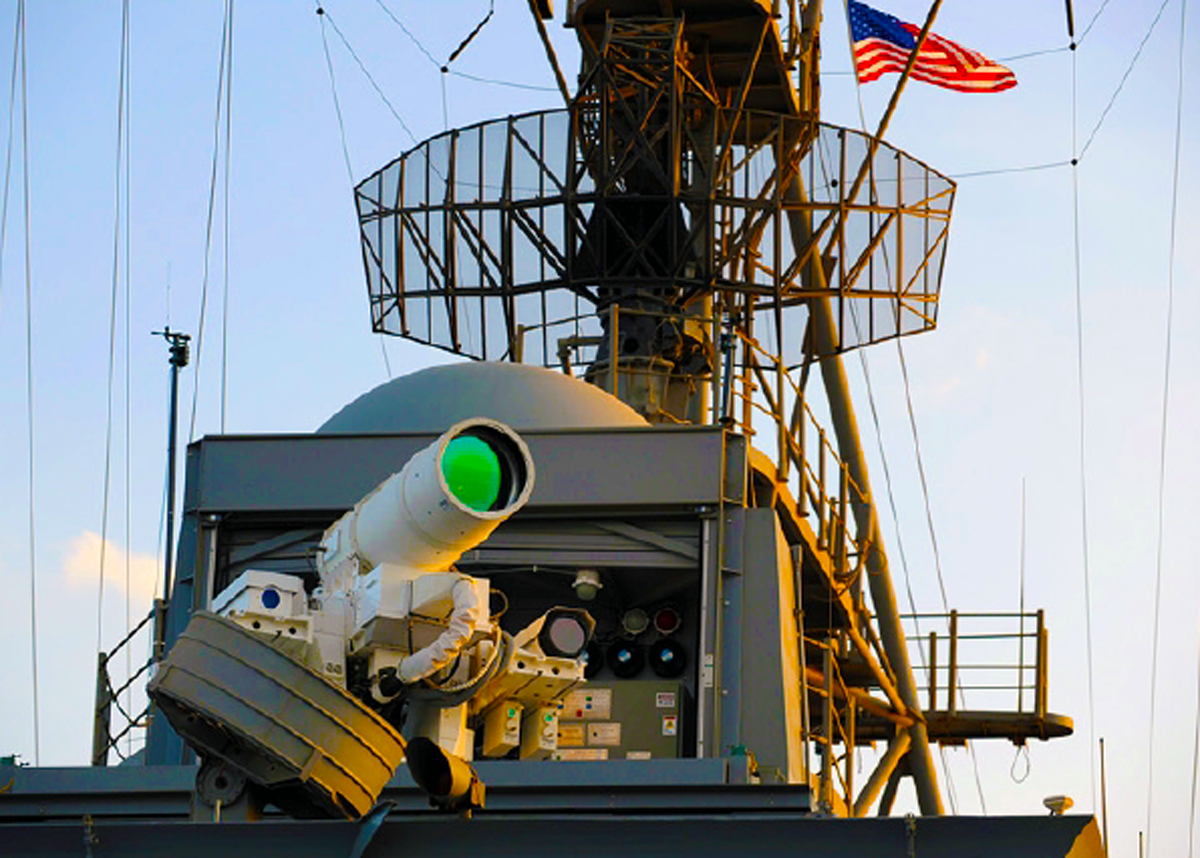
The USS Ponce (LPD-15) fired a laser beam destroying aerial and naval targets for the first time in history. The office of Naval Research conducted the test. Never before has a laser beam of this size been able to do so much damage from a ship.
The way the weapon works is similar to a video game controller. Just point and shoot. Instantly the target receives a laser beam at the speed of light and the target is destroyed.
The USS Ponce is a member of the 5th Fleet out of Bahrain, commanded by Captain Dale W. Maxey.
The Kiowa has played an important reconnaissance and supporting role for the ground troops, Apache Attack helicopters, and commanders on the ground over the past 40+ years when it was initially produced in 1969. The helicopter continued to be fielded until 1989, then it began a series of upgrades to keep it modern. The military brass is looking for a more modern air frame that can handle the support requirements of the Army, while trying to cut costs due to the declining budgets and lack of overseas combat missions.
The OH-58D’s being decommissioned will go to Davis-Monthan Air Force Base, AZ where they will either be scrapped, stored, or prepped for sale to civilian law enforcement for local and state support roles. Each Kiowa Warrior cost the Army roughly $5-$6 million initially, and $1.2 million to retrofit with upgrades. Over the years, the maintenance costs from personnel, storage, and parts has been very expensive as well. The true cost to maintain the fleet will never be known, but each helicopter would easily be in the millions over the lifetime of its use. It is also important to note that maintaining a Kiowa is vastly less in cost than maintaining the advanced AH-64D Apache.
English: The Louisiana National Guards two new UH-72 Lakotas touch down for the first time at Esler Field in Pineville, La. (Photo credit: Wikipedia)
The first Eurocopter UH-72 Lakotas entered production in 2006 with 300 being made initially. More are on the way and will eventually replace all OH-58Ds for the light scout role, but that is potentially several years out and there is nothing set in stone yet. The AH64-D and AH-64E are the Army’s main attack helicopters, which can also perform a scouting role. So the Army has opted to let the Apache “sub in” for the Kiowa until more Lakotas or another variant can be produced on a larger scale.
The Kiowas at Fort Rucker, AL (the Army’s main training base for helicopters) are being replaced by Lakotas right now.
Parting Thoughts
Overall, it does not sound like a good plan. Why would the Army get rid of an entire fleet of helicopters that cost around $5 million and replace their role with an attack helicopter that costs $35 million? Sure there are Lakotas that can help fill the gap, but there are only 300 Lakotas and those can only fill so many gaps of the nearly 2,200 Kiowas that are being phased out. The downsize is premature and a lot of good pilots are having to relearn different air frames. The Army’s primary scout capability via air is non-existent. Sure you can use drones to help fill the gap, but it just isn’t the same as a Kiowa with a rocket or hell fire package that can change the entire battle with one Kiowa team.
Just look at any scenario where there were Apaches needed to help ground troops – they were not always available. With an asymmetric battlefield and troops in contact in many places in the same day all over the battlefield, the Army needs a light scouting capability via air. With Kiowas, you can send 7 Kiowas for the price of 1 Apache. The Army scrapped the RAH-66 Comanche several years ago, causing even more upheaval in the air requirements. And with congress talking about scrapping the A-10 Warthog, the Air Force’s ground support aircraft, the forecast does not look good.
Behold what is to be the fastest moving passenger jet in the world. Aerion Corporation (aka Aerion Supersonic) is almost ready to launch Aerion AS2 and it is expected launch the first passenger flight in 2019. However the design is complete and the promotion is on for the world’s fastest supersonic passenger jet which will provide service to businessmen and entrepreneurs to whom the extraordinary speed matters the most. In these videos you will be able to see the design and appearance of the AS2 in detail. Keep in mind that until now, the fastest moving passenger jet was the Concorde, which left service in 2003.
Using Supersonic Natural Laminar Flow (SNLF) wing technology, Aerion AS2 will be able to transport passengers at a maximum speed of Mach 1.6. However it wouldn’t be able to fly over land with that much speed due to prohibition of supersonic flights due to producing a sonic boom which is very disturbing for residential neighborhoods and office complexes. So over land it will fly at a scaled down performance and speed of Mach .95. Then over water it will jump to Mach 1.6. With this speed it will be able to reach Tokyo, Japan from the United States in just 6 hours where usually it takes 10 hours 25 minutes now.
The American multinational aerospace vehicle designer and manufacturer Boeing recently showcased their first ever commercial space carrier, CST 100, which can carry up to 7 passengers. In this video you can have a detailed look at the design and the technology of this magnificent space craft. The Director of Crew of the company, Chris Ferguson, expresses his hope that within the next twenty years or so space travel is going to be a mainstream phenomenon due to the company’s innovations. Till now Boeing has built 10 satellites and 745 aircrafts. In 2013 Boeing estimated $86.623 billion in sales and it is the 26th on the “World’s Most Admired Companies” list of the same year.
This space taxi uses state of the art technology and is reusable. Yes, that’s true these space crafts can be literally made ready for another launch. Only the heat shield has to be changed after each journey. CST 100 has modern display technology and can take you to the international space station or any other lower orbit locations and can bring you back on earth safely. The interior of the craft is based upon the commercial Boeing aircrafts and also offers the neat and clean ease of such air crafts and air journey.
The ongoing ISIS movement and its repercussion from the coalition forces have been in the news for some time now and is a very controversial issue in America and in the Middle East today. The spotlight is on Islamic Terrorism and the Syrian Civil War. This video shows one tank being destroyed and another shot with most probably an RPG. This particular video is not ISIS in Iraq, but that of the Free Syrian Army attacking a Syrian government convoy back in 2012.
Whatever may be the real case behind the scene, the scene sure is one of the rare real life shots captured related to the ongoing Syrian Civil War. The war began in 2011 as a chain reaction to the so called Arab Spring and now being led by the various groups within Syria and Iraq. ISIS, FSA and YPG are three of the major Middle Eastern factions, opposing the present Syrian government, that are involved in the war along with the intervention from the western coalition forces. ISIS is also against the government of Iraq and Iran, causing strange bedfellows. Nontheless, this video of tanks blowing up is great to watch.
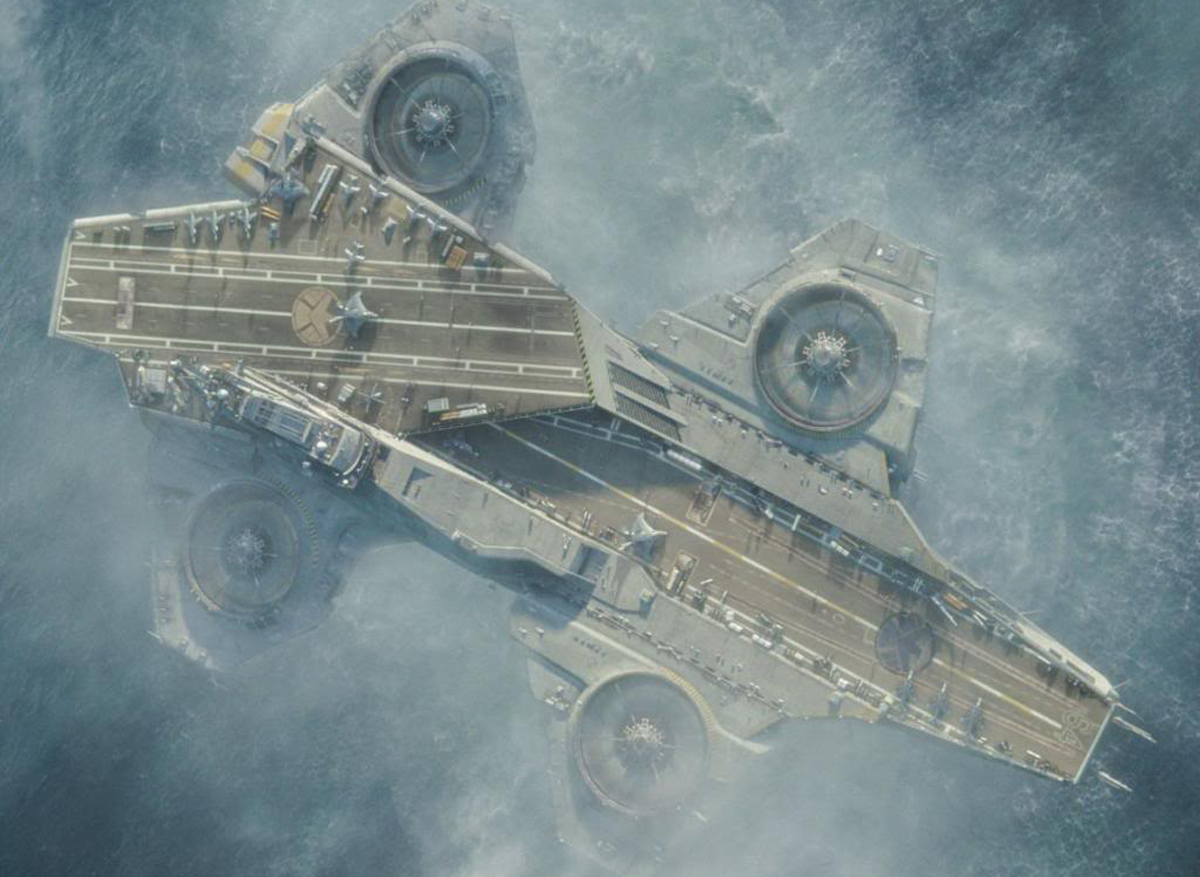
Enthusiasts from an aerospace community of flight hobbyists named Flite Test has recently developed the first ever successful drone helicarrier from which another drone can easily take off and with more appropriation can even land on it. They published this video on their Facebook page on 4th November 2014 showcasing their developed technology. However this is still in its final developing stage and has been developed to operate on small scale. But the engineers expect that the technology can be implemented in practical field of helicareer and drone development at an international scale. And the developed careers are likely to be able to serve as takeoff grounds for any wartime drone or other aircrafts that till now have to take off from the ground.
Flight Test offers a meeting place where all those who have a passion for flights, flying and aircraft engineering and development can come together to share their ideas and designs. In this video from them you can see a little toy sized drone taking off from the small rectangular remote controlled helicareer with two rotors on each side. This case study was showcased in the Horizon Indoor Electric Festival earlier this year.
This technology has major Department of Defense implications. Now that this tech has been dreamed up and put into a prototype, DARPA just might be calling Flite Test for something a little bigger. Or maybe Northrop Grumman, BAE, Boeing, or Lockheed Martin could be called on.
Boeing 737-800, while on its way to New Delhi, India was stopped in the middle of its take off in Surat’s airport after encountering a stray buffalo on the runway. The airplane was supposed to fly out to New Delhi, carrying 146 people on board. All of them were safe and sound, but the aircraft suffered major damage, especially in its left engine. The water buffalo, unfortunately, did not survive the accident. According to a representative from the airline, the animal was virtually invisible in the dark background. All 146 people were later on transferred to another SpiceJet aircraft.
As a result of this incident, SpiceJet’s operations from New Delhi to Surat and vice versa have been suspended. Sanjiv Kapoor, the Chief Operating Officer of SpiceJet, went on Twitter and blamed the incident on the airport’s lack of security.
Most of the major airports in India are secured with perimeter fences; however, there are still some airports, especially those that are located in faraway provinces, that are not, and these have gone through security breaches. A news agency has reported that the Surat airport has only been in operation for two years and handles only 3 flights per day. Its operations are being handled by the state-run Airports Authority of India.
You can read more of the story and see more pictures about it here.
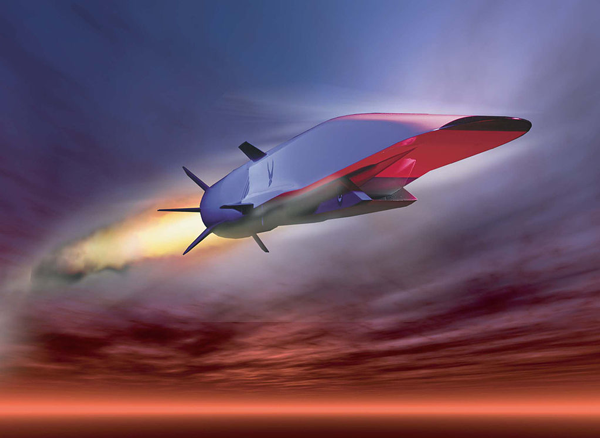
This video talks about scramjet engine and its capability of travelling in hypersonic speed (meaning greater than Mach 5). Joseph Vogel, the Director of Hypersonics of Boeing Defense, Space & Security talks about X-51A WaveRider, an unmanned scramjet powered demonstration aircraft for hypersonic flight testing. The aim of the aircraft is to travel at Mach 6 or 4000 miles per hour. As this aircraft uses its shock wave for adding lift it has been named WaveRider. The X-51A WaveRider has the capability of travelling across the United States in less than one hour. This aircraft is a result of the Waverider program which is run jointly by Boeing, the Air Force Research Laboratory, DARPA and Pratt & Whitney Rocketdyne. This X-51 technology is going to be used in a Mach 5+ missile named High Speed Strike Weapon (HSSW) which is planned to be launched in 2020.
The X-51A WaveRider is chiefly designed to demonstrate various aspects of hypersonic flight. It completed its first ever flight on 26 May 2010 and in June the second test flight took place. With a goal of achieving Mach 6 for 300 seconds, a test flight was conducted in August 2012. But the aircraft crushed after 16 seconds due to some troubles in the control fin. After all these failed attempts, X-51A completed its first successful flight on May 1 2013. In that flight X-51A achieved hypersonic speed above Mach 5 for 210 seconds.
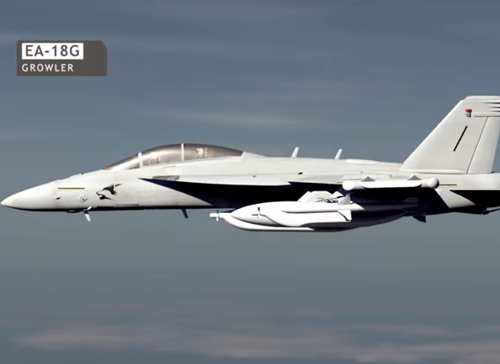
This video introduces Boeing EA-18G Growler. Scott Radke, the Avionics Integration Engineer of EA-18G Program is seen taking about Boeing’s new electronic warfare aircraft EA-18G Growler.
Boeing EA-18G Growler an American electronic warfare aircraft developed for the United States Navy. It is a customized version of combat proven Boeing F/A-18F Super Hornet incorporating more developed AEA avionics for enhancing SEAD (Suppression of Enemy Air Defenses) capability and performing non-traditional electronic attacks. The chief feature of Boeing Growler is that it is capable of jamming enemy radars and thus effective in helping aircrews to reach targets without being detected.
Boeing Growler is capable of encountering enemy air defenses by using pre-emptive as well as reactive jamming techniques. Along with its capability of being greatly effective for stand-off jamming missions, it is also capable of performing escorting role with the agility and speed of the Super Hornet. With its uninterrupted communications and advanced situational awareness Boeing Growler is capable of achieving effective integration with ground operations than before. The use of Advanced Electronically Scanned Array (AESA) radar, air-to-air missiles and digital data link provide the aircraft with self-protection capability and makes it effective for target identifications and prosecution as well.
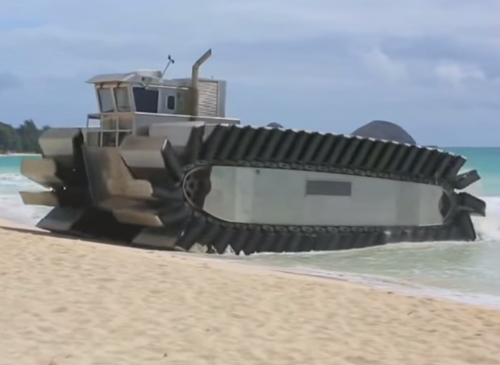
The video displays a prototype of US Marine Corps’ new amphibious vehicle UHAC (Ultra Heavy-lift Amphibious Connector) at its demonstration in Hawaii on 11 July 2014 during a Marine Corps Advanced Warfighting Experiment during RIMPAC 2014. In this demonstration the prototype of UHAC carries an assault vehicle from Rushmore to the shore.
Developed by the Office of Naval Research and Navatek Ltd., this amphibious vehicle is capable of travelling both on sea and land and meant to replace US Marine Corps’ Landing Craft Air Cushion which is being used in operations for more than 20 years.
This prototype is a half-scale version of the full scale UHAC which is made of aluminum and air-filled blocks of foam for giving the vehicle appropriate propulsion. The prototype is 13 metres (42 feet) long, 8 metres (26 feet) wide and 5 metres (17 feet) high. The full-scale UHAC is going to be much bigger and will be able to carry more loads than this half scale prototype. The final UHAC would be 25 (84 feet) metres in length, 10 (34 feet) metres in width and will have a range of 320 kilometres (200 miles). It will be capable of carrying up to 200 tons weight at the speed of 40 kilometers (20 miles) per hour and will be able to scale 3 meters ( 10 feet) high obstacles like sea walls.
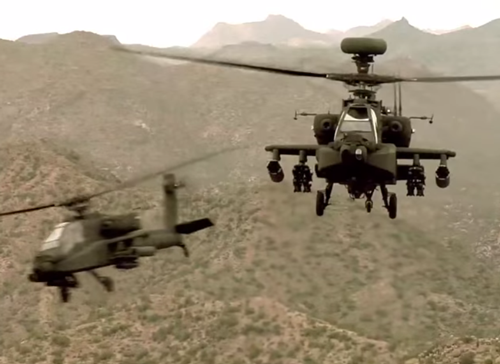
In this video John Schibler, the Boeing Chief Engineer of US Attack Helicopter Programs talks about the effectiveness of Boeing Defense, Space & Security’s newest model of Apache helicopter, AH-64E Guardian and tells how it acts as a safeguard for the soldiers serving on the ground.
Apache AH-64E Guardian like all the previous models has two engines, four blades and carries one pilot and one co pilot gunner. With a speed of 164 knots and range of 250 nautical miles it carries an aerial rocket system, automatic gun of 30 mm, hellfire missiles and an M239E1 chain gun. It is different from its predecessors in many ways. Not only it flies farther and faster than other Apache models but also it has more enhanced communication systems. The main feature that makes it different from others is that it is inter-operable with unmanned aircraft systems that enables the pilot to control the UAS sensors, weapon system and flight path (meaning it can control UAVs from the cockpit).
Apache helicopters are evidently known as deadliest helicopters for their destructive features, but Apache Guardian is more than that. Its “eye-in-the-sky” technology makes it yet more effective to keep the soldiers safe. It is capable of seeking and eliminating threats that otherwise would have remained undetectable and therefore makes it easy and safe for the soldiers to complete their assigned missions. So the name “Guardian” aptly suits this newest model of Apache as when it is around, the soldiers can have a breath of relief.
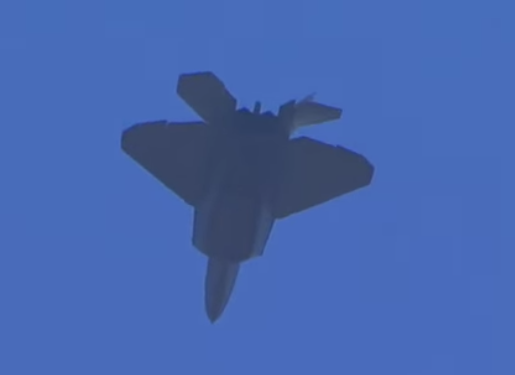
This video shows a demonstration by F-22 Raptor fighter aircraft on the third and last day of MCAS Miramar Air Show, 2012 held at Miramar, CA from 12-14 October.
MACAS Air Show is an air show that Marine Corps Air Station (MCAS), the home of Third Marine Aircraft Wing puts every year with a view to showcasing the air power of US Marine Corps. F-22 Raptor is a double-engine, single seat and all weather stealth mode enabled fighter aircraft primarily designed for the United States Air Force.
In this video, the F-22 Raptor demonstration has been shown with the whole process. The demonstration has been performed by Major Henry “Schadow” Schantz. The process of the demonstration starts with the starting up of the engine. Then after completing the control surface test the aircraft taxies and with the take- off, the demonstration starts. Major Henry ”Schadow” Schantz performs a solo demonstration which showcases the supersonic speed and other features of F-22 Raptor. After completing the solo demonstration, the F-22 joins a P-51 Mustang for the United States Air Force (USAF) Heritage Flight. In the Heritage Flight the two fighter aircrafts represent separate eras of operations. The fly-past is accompanied by the heritage flight song “We Remember” by Dwayne O’Brien.
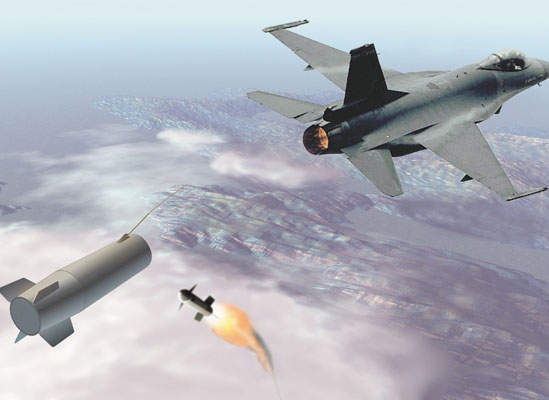
The ALE-50 Towed Decoy system, also known as “little Buddy,” is a state-of-the-art defense system designed by Raytheon. The main objective of the system is to create an effective countermeasure to defend American aircraft against radar-directed missiles. This anti-missile countermeasure decoy system is currently used for different U.S. Air Force, Navy, and Marine Corps aircraft, in addition to some other air forces.
The system has been used in various combats, where the ALE-50 Towed Decoy System successfully demonstrated its effectiveness in thwarting enemy missile attacks. Thus, there is now very little skepticism about what the “Little Buddy” can do.
Development of the ALE-50 Towed Decoy System
The ALE-50 Towed Decoy System is the fruit of collaboration of an integrated product team containing experts from Raytheon, the U.S. Air Force, and the U.S. Navy. The team worked on this groundbreaking concept at a Goleta, California facility.
The first deployment of the system dates back to 1995. Nonetheless, the system is currently used on multiple aircraft that include the F/A-18E/F Super Hornet and the B-1B Lancer. Further, The system has also been incorporated into the innovative ALQ-184(V)9 ECM pod. This integration has helped the system become more vigilant towards threats, and it has also enabled it to be ready to be used on numerous platforms.
An F/A-18F Super Hornet aircraft assigned to Strike Fighter Squadron One Zero Two fuels an F/A-18E Super Hornet aircraft from Strike Fighter Squadron Two Seven during exercise Malabar 07-2 while over the Bay of Bengal Sept. 7, 2007. More than 20,000 personnel from five different countries are participating in the multinational exercise that includes naval forces from India, Australia, Japan, Singapore and the United States. (Photo credit: Wikipedia)
Capabilities
If the ALE-50 Towed Decoy System has been in service for more than ten years, now, it’s because it has efficaciously demonstrated its wide range of capabilities. When employed, the system shields the aircraft and crew against guided missiles (surface-to-air and air-to-air missiles). The system lures the missile toward a more attractive target and away from the intended one. The decoy that the system utilizes is used when required and cut free before landing. The “Little Buddy” offers the possibility of being operated manually as an independent device. However, it can also be incorporated and controlled by the ALE-47 Airborne Countermeasures Dispenser System (made by BAE Systems).
In 1999, the ALE-50 Towed Decoy System was tested in Yugoslavia. The results were reportedly very encouraging. Hence, Air Force Officials reported that the system locked down and diverted 10 of 30 surface-to-air missiles that had been fired at B-1 bombers in different parts of Yugoslavia.
United States Government Accountability Office (GAO) confirmed that planes that have the ALE-50 Towed Decoy System installed in them are more likely to escape fatal enemy attacks. In a report to Congressional Committees in 1997, the GAO expressed its satisfaction regarding how this system improves survivability, and stated that test results indicate the ALE-50 Towed Decoy System, “offers improved effectiveness against radar-controlled threats.” Based on these results, the GAO recommended further use of the system on other platforms such as the F/A-18C/D that the Navy uses.
As far as the specifications of the ALE-50 Towed Decoy System are concerned, the system is equipped with a launch controller, as well as a launcher that is usually installed on the plane’s wing pylon, in addition to one or more expandable towed decoys, which has a shelf-life of ten years.
When speaking about the ALE-50 Towed Decoy System, Pat Hurley, vice president and general manager of Raytheon Electronic Warfare Systems, reiterated that, throughout its 50 years of existence, the company has always been concerned with developing its systems in order to provide the military with high-performing products. In this regard, Hurley added that the permanence of the company’s business and of the ALE-50 Towed Decoy System is a valid testimony to the company’s “high-performing products,” as well as its “laser-like focus on serving the customer.”
ALE-50 Towed Decoy System – Pricing
Many experts consider Raytheon to be a leading provider of systems that offer pilots with the most precise information available. With its $22 billion of sales in 2005, the company is also regarded as a leader in defense systems, information technology as well as business and special mission aircraft. The company has a workforce of about 80,000 deployed throughout the world.
Raytheon manufactures and sells the ALE-50 expendable decoy at $22,000 per unit. In October 2010, the company made a delivery of its latest production run (1,048 units). The total number of units that Raytheon has produced is estimated at 35,000 units, increasing the company’s sales to more than $500 million.
Soaring OVER THE PACIFIC OCEAN — A B-1B Lancer drops back after air refueling training Sept. 30. The B-1B is deployed to Andersen Air Force Base, Guam, as part of the Pacific Command’s continuous bomber presence in the Asia-Pacific region, enhancing regional security and the United States commitment to the Western Pacific. The B-1 is from the 28th Bomb Wing, Ellsworth AFB, South Dakota.http://www.af.mil/photos/index.asp?galleryID=12&page=2 (Photo credit: Wikipedia)
Issuance to the Military (Quantities)
Raytheon has now produced 25,682 units of the system. All of the units have been purchased by the US Department of Defense at a cost of $500 million ($22,000 per unit). The system was initially installed on F-16s only with plans of implementation on other platforms. Therefore, these plans have been carried out systematically and have now been completed successfully. Thus, the “Little Buddy” is currently installed on the B-1B bombers and F/A-18 aircraft.
In 2005, Raytheon received a production contract from the US Navy and the US Air Force. In late 2006, The US Air Force granted the manufacturing company a production contract for 862 decoys worth $21 million.
Use in War:
The system’s adaptability and reasonable cost enables it to be installed on a variety of aircraft. Thus, the ALE-50 Towed Decoy system now functions on many aircraft such as the F-16, F/A-18E/F, and B-1B aircraft.
The usefulness of the system has been proven in many situations. ALE-50 Towed Decoy System has shown its capabilities in every major war in which it was deployed. For instance, it considerably helped improve the survivability of aircraft and their crews in places like Kosovo, Afghanistan and Iraq.
In this regard, Col. Art Huber, commander of the 542nd Combat Sustainment Group at Warner Robins Air Logistics Center, which is in charge of the ALE-50 praised the ALE-50 Towed Decoy System by saying that it is “credited with numerous aircraft saves,” and that “our pilots depend on it.”
Final Analysis of the ALE-50 Towed Decoy System
The “Little Buddy” is probably the best countermeasure in use, right now. Tests and actual use in wars have proven its efficacy. The ALE-50’s suitability and interoperability with other B-1B systems when installed in the B-1B bombers have been quite a success. Furthermore, the pricing is very encouraging, and the quality/price ratio has been a determining factor in making the system a must for every aircraft in service. This is why, many pilots who have been to war in different parts of the world have communicated that the ALE-50 Towed Decoy System has been critical in saving them and their aircraft from the dangers of guided missiles.
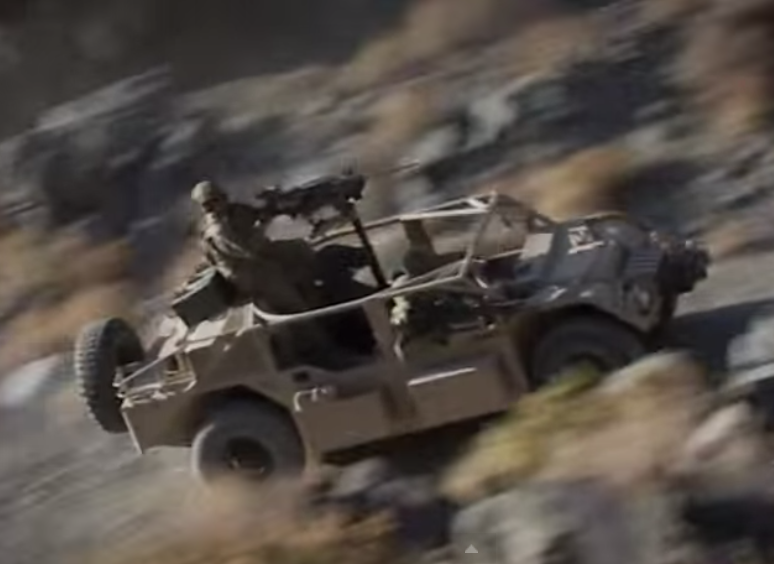
General Dynamics just released the new Flyer Advanced Light Strike Vehicle (ALSV). The ALSV is a reliable vehicle with innovative features and is created almost specifically for use in the most unforgiving terrains.
The Flyer can be transported to almost any combat zone because of its high trans-portability, which means that cargo planes can carry the strong vehicle. It’s made for the soldiers who are looking for numerous gun mounts on their vehicles, along with speed and maneuverability. The Flyer is perfectly capable of passing through rugged terrain, and can make every mission seem a little bit easier.
The vehicle can be modified according to your every need, and can be used in almost any way necessary. This means that it can be used for anything, from ambushes to rescue missions, simultaneously. It comes with an armored variant for greater protection, and every modification made on the car does not hamper its ability to be driven effectively.
With the Flyer Advanced Light Strike Vehicle, improved transportation comes without any loss of firearm compatibility, speed, or even maneuverability. Instead, you receive innovations for mission vehicles, such as a number of applicable modifications and high trans-portability, but at the same time it is practical and definitely usable.
The video captured the first ever hover performance of a B-model aircraft at the Fort Worth, Texas. The aircraft was named F-35B, which aside from having the capability to hover like a helicopter – as demonstrated in the video – also features a short takeoff/vertical landing (STOVL) ability. The aircraft’s predecessor models were modified to better satisfy more modern security needs, and in order to allow it to operate on other landscapes, on or off land.
The STOVL operation of the aircraft works on the Rolls-Royce patented shaft-driven LiftFan system, paired with an engine with a 90 degree swivel feature during short takeoff/vertical landing mode. The said Rolls-Royce LiftSystem is the first ever to facilitate Short Take Off and Vertical Landing operations for fighter jets. The aircraft is able to be propelled vertically by a 3BSM which can easily swivel ninety-five degrees in two and a half seconds, managed to direct up to 18,000 pounds of engine exhaust towards the ground, sending the vehicle upwards.
All mechanisms come together in this jet and work together like a perfectly oiled machine. It allows for easy piloting and a quick response time, all with easy controls like switching to STOVL mode with a simple press of a button.
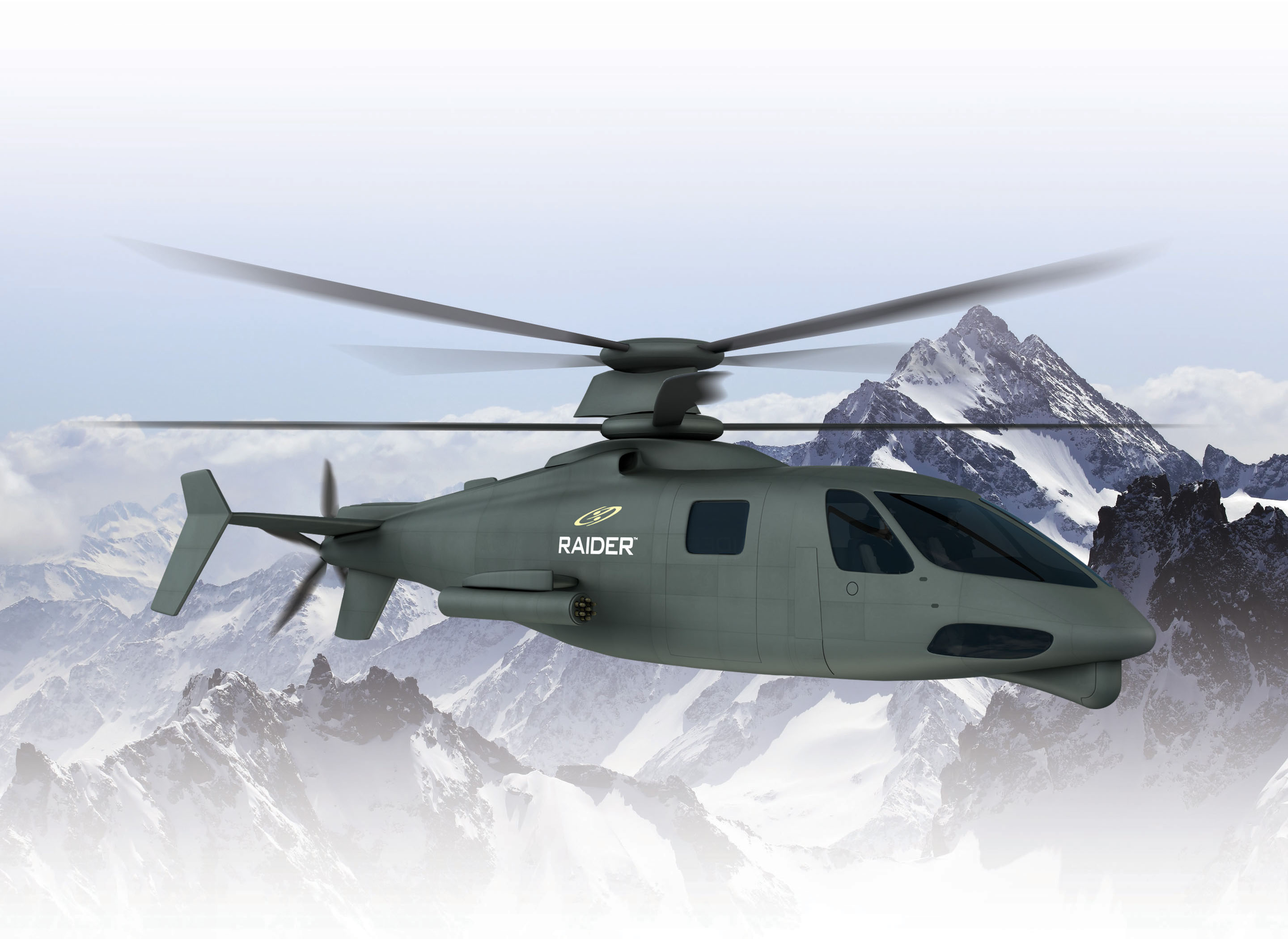
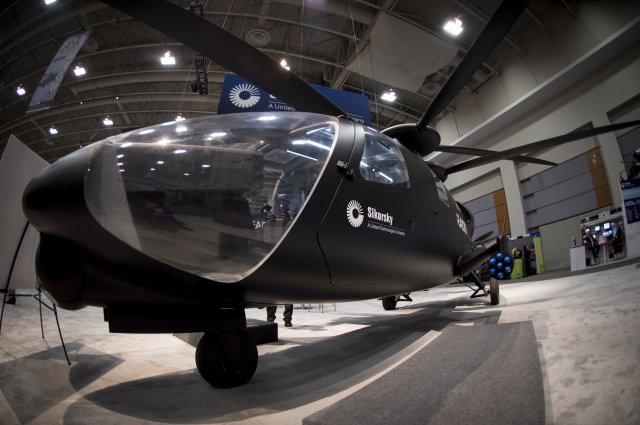
In March 2010, the Armed Aerial Scout program made a request for information for an advanced helicopter, and the result was the Sikorsky S-97 Raider as proposed by Sikorsky. Four years later, the company finally unveiled the first full production model of the groundbreaking scout and attack helicopter in the company’s facility in West Palm Beach, Florida.
The objective set for the new aircraft is to replace the army’s OH-58D Kiowa Warrior. However, specialists think that if the manufacturer’s claims about the Sikorsky S-97 Raider capabilities are true, it is almost certain that this helicopter’s reach will grow to cover a much wider audience. For instance, if the Sikorsky S-97 Raider proves useful, it might be used to replace other US Army military helicopters such as the MH-6 Little Bird used by the U.S. Special Operations Command. In addition to its expected military roles, The Sikorsky S-97 Raider could also be adapted to carry out civilian missions.
Sikorsky Raider at AUSA
Cost of the Sikorsky S-97 Raider
Up to now, Sikorsky and its various suppliers have invested in as much as $200 million on the two first prototypes of the helicopter. The company hopes to be able to produce this revolutionary helicopter at $15 million per unit.
The Sikorsky S-97 Raider is set to fly for the first time on December 2014. However, the aircraft’s first flight and its first demonstration of capabilities won’t take place until mid-2015.
Sikorsky S-97 Raider Design
Design is one of the most eye-catching attributes of the Sikorsky S-97 Raider. Being a compound helicopter, the Sikorsky S-97 Raider includes variable speed coaxial main rotors and a variable pitch pusher propeller. The helicopter is large enough for 6 passengers to fit in, and the side-by-side cockpit can contain two pilots. However, the S-97 is also designed so that it can fly autonomously.
Sikorsky UH-60M Black Hawk, Radom 2007 (Photo credit: Wikipedia)
As far as the engine is concerned, it is based on the Sikorsky X2 demonstrator. Until now, The Sikorsky S-97 is equipped with the same engine used in the UH-60M Black Hawk. Nonetheless, the company foresees the development of an improved engine for its new helicopter.
Key Dates
Here is a timeline of the key dates since Sikorsky first launched its X2 Technology Demonstrator in August 2008. These key dates are in conformity with the information provided by Sikorsky on their Sikorsky S-97 Raider website.
August 2008: X2 Technology Demonstrator™first flight
September 2010: X2 Technology Demonstrator reaches 250 knots
October 2010: S97 Raider™ launched
July 2011: X2 Technology Demonstrator final flight
January 2012: Initial Raider supplier team announced
March 2013: Raider Critical Design Review completed
September 2013: Raider aircraft #1 delivered, airframe final assembly begun
January 2014:Raider Systems Integrations Lab (SIL) fully operational
May 2014: Raider electrical power on achieved
October 2014: Raider Rollout Ceremony
December 2014: Raider first flight
2015:Raider flight test and Raider capability demonstrations
General Characteristics
The Sikorsky S-97 Raider has a capacity for six troopers including up to two pilots. The space inside the helicopter can be adjusted according to needs. Thus, if need be, the space in the cockpit of the aircraft can be used to store additional equipment or ammunition.
According to the information disclosed by Sikorsky, the S-97 Raider is 36ft long and weighs 8,945 lb. Its maximum takeoff weight is 11,400 lb. It is equipped with one General Electric YT706 powerplant, and its main rotor diameter is of 34 ft. The aircraft is 6-bladed variable pitch and clutchable pusher propellers.
Sikorsky S-97 Raider Performance
The S-97 has a staggering Never exceed speed of 276 mph (240kn), and a cruising speed of 253 mph (200kn) external weapons included. The weapons include 50 cal guns w/500 rounds and a seven shot rockets pod, Hellfire missiles and 2.75” rockets. The range exceeds 600 km, and it has an endurance mean of 2.7 hours on standard fuel. In addition, the S-97 is also capable of aerial refueling.
An OH-58D Kiowa Warrior from 1st Battalion (ATTACK), 25th Aviation Regiment, 25th Infantry Division (L), “Lightning Attack”, patrols the skies over , . Lightning Attack deployed from Schofield Barracks, Hawaii to Iraq in January and is conducting aerial reconnaissance, close combat attacks and security missions for the 1st Armored Division and the 1st Cavalry Division in support of Operation Iraqi Freedom. (Original caption) (Photo credit: Wikipedia)
Comparisons
As a matter of fact, the new and futuristic Sikorsky S-97 Raider is produced in order to replace the army’s OH-58D Kiowa Warrior, an aircraft that has been in service since the 1960’s and which has been used in many wars by the US Army such as the Iraq and Afghanistan wars. Thus, while, there are some similarities between the two helicopters, the Sikorsky S-97 Raider is clearly much more advanced at all levels.
In his article published in The Aviationist website, David Cenciotti compares the new Sikorsky S-97 Raider with the “mysterious stealth” aircraft that was used in the raid on Osama Bin Laden.
Cenciotti states, “it is safe to believe that Sikorsky has embedded some of the features developed for the secret, radar evading US Army Stealth Black Hawk used by the Navy SEALs at Abbottabad in May 2011,”
Future Plans for the Sikorsky S-97 Raider
Sikorsky seems to be leading the way and setting an example to other companies on how to get things done. Not only does Sikorsky build state-of-the-art machines, but it also invests in future development opportunities. For example, as recently as in May 2014, Sikorsky won a U.S. Navy deal for the President’s Marine One helicopters. According to Reuters, the company “won an initial $1.24 billion contract to develop and build six new U.S. presidential helicopters, the first step toward a fleet of 21 new aircraft by 2023.”
Other future plans of the company include teaming up with other leading companies such as Boeing and Aurora Flight Sciences to manufacture new aircraft. In addition to all these recent successes, Sikorsky and Boeing have also been chosen to work hand in hand in order to produce the SB>1 Defiant, which is a “medium-lift-sized demonstrator.” The demonstrator is built for Future Vertical Lift and is expected to fly in 2017 as advanced by Sikorsky in a press release.
Final Thoughts
It is probably safe to say that during its 90 years of existence, Sikorsky is now stronger than ever. The rumors about the company’s divestiture have calmed down especially after the company was awarded a $1.24 billion deal to build the presidential helicopters. Therefore, although the Sikorsky S-97 Raider is one of the least revenue generating units belonging to United Technologies, the company isn’t thinking about selling it or spinning it off.
If Sikorsky continues its innovative efforts, it will eventually find more and more reliable customers than the US Army. This idea of using helicopters for civilian duties might be an interesting alternative, and selling the Sikorsky S-97 Raider to American allies could also help widen the company’s business opportunities.
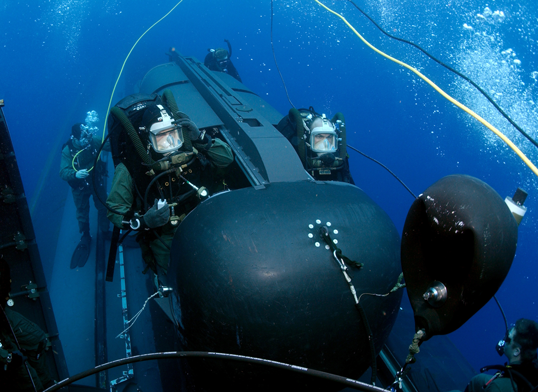
During a promotional video showing multiple Naval ships and assets, the Navy showcases their ability to strike on land in a covert fashion. The Navy SEALs are seen maneuvering a submarine-launched SDV (SEAL Delivery Vehicle). The SDV launches from a Dry Deck Shelter off of the top of a submerged submarine. With these kinds of capabilities at the U.S. Navy’s disposal, there is not type of sea-to-ground requirements they can not accomplish. With this capability, the Navy can literally show up and destroy any target without being detected and by limiting the danger to the SEALs when doing so. A fast boat has nothing on the SDV. Rumor has it that SDVs have been in operation for decades. They were first used starting in 1952 under a different name – “Swimmer Delivery Vehicles”. The SDVs have evolved over the years adding technology and launch capability like the Dry Deck Shelter among other communication, detection-prevention, weaponry, reconnaissance and navigation technology.
At 6:22 pm ET on October 28th, 2014, a rocket on a resupply mission to the International Space Station took off and subsequently blew up shortly after take off. It is a major setback, especially in light of NASAs recent decision to get rid of the Space Shuttle. The Russians have even issued a statement that they are willing to help us resupply the Space Station. It is a little ironic since the Russians have been posturing to be a super power again. NASA says they will regroup and learn from this experience. Fortunately, it was an unmanned space craft so no crew members were hurt. William Gerstenmaier, one of NASA’s top people in charge of this program, issued a statement:
The following statement is from William Gerstenmaier, Associate Administrator of NASA’s Human Exploration and Operations Directorate, regarding the launch failure that occurred at Pad 0A of the Mid-Atlantic Regional Spaceport at NASA’s Wallops Flight Facility in Virginia during the attempted launch of Orbital Sciences Corp’s Antares rocket and Cygnus cargo spacecraft at 6:22 p.m. Tuesday, Oct. 28.
“While NASA is disappointed that Orbital Sciences’ third contracted resupply mission to the International Space Station was not successful today, we will continue to move forward toward the next attempt once we fully understand today’s mishap. The crew of the International Space Station is in no danger of running out of food or other critical supplies.
“Orbital has demonstrated extraordinary capabilities in its first two missions to the station earlier this year, and we know they can replicate that success. Launching rockets is an incredibly difficult undertaking, and we learn from each success and each setback. Today’s launch attempt will not deter us from our work to expand our already successful capability to launch cargo from American shores to the International Space Station.”
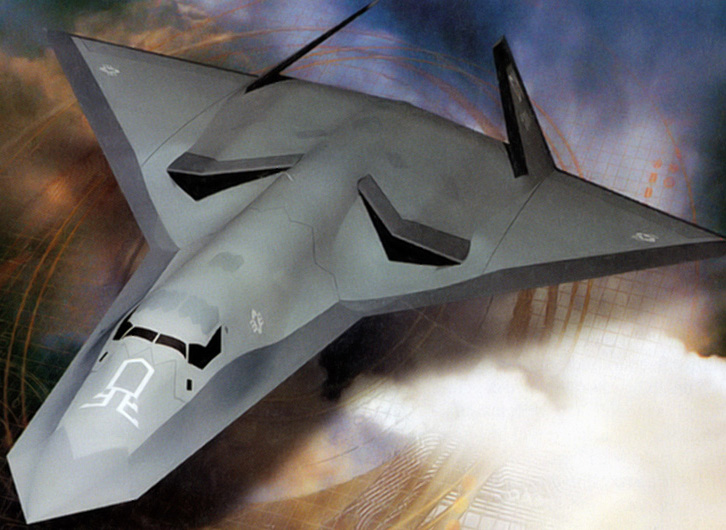
There is a new long range strike bomber being developed by the US Air Force. The aircraft program is under wraps to the extent that the Pentagon did not even admit that there is a program at all until recently, let alone giving out details about the project. A spokeswoman with the US Air Force was quoted as saying, “Specific LRS programmatic details are protected with enhanced security measures.”
Known Facts
Not much is known about the new long range strike bomber, except that there is an aircraft program called the “LRS-B” program, and it is highly classified. What is also known, is that money to the tune of $300 million has been allocated for the defense project for the fiscal year 2013-14, and the total money allocated so far from 2013 to 2017 is estimated to be about $6.3 billion. The B-3 bomber as it has come to be called will be long range, optionally-manned, and it will have stealth properties. This bomber aircraft will have a price tag of about $550 million apiece. The entire fleet of about 80 to 100 stealth bombers is expected to be commissioned by 2020.
The B-3 bomber is a replacement of the B-2 bomber, which in turn was a replacement for the B-1. So, let us take a look at the previous versions of the ‘B’ series of strike bombers.
A B-1B Lancer with wings swept full forward (Photo credit: Wikipedia)
The B-1 Bomber
The B-1 Bomber was introduced in 1986 as a replacement of the B-52 Stratofortress. This bomber aircraft was built by Rockwell International, and there were two versions. An initial version was actually in existence since 1974, called the B-1A. It was capable of carrying nuclear bombs, flew at twice the speed of sound at high altitudes and could also carry short-range attack missiles. It also had stealth features, meaning that it had the ability to lower its visibility on radar to 1/100th of the B52, but this also had an adverse effect on the speed of the aircraft. During the period of 1984 to 1988, the US Air Force built its B-1 Bomber aircraft fleet up to 100.
A U.S. Air Force Boeing B-52H Stratofortress static display with weapons, at Barksdale Air Force Base, Louisiana (USA), in 2006. (Photo credit: Wikipedia)
The second version, the B1-B is also supersonic, but its normal cruising speed is subsonic – about Mach 0.9 which is 670 miles per hour. It can fly at an altitude of as low as 200 feet above the ground. It can carry up to 24 nuclear bombs and has a flying range of 4,600 miles (7,400 kilometers) without having to refuel.
B-2A Block 10 (upgraded to Block 30) Spirit, 82-1069, “Spirit of Indiana”, of the Eighth Air Force 509th Bomb Wing (Photo credit: Wikipedia)
The B-2 Stealth Bomber
The specialty of the B-2 Stealth Bomber is that its development marked the integration of aerospace technologies with conventional aviation technology. It is a versatile aircraft, capable of delivering nuclear as well as conventional weapons.
The B-2 Bomber was developed by Northrop, Boeing in the late eighties, the first successful flight of the B-2 Bomber took place in July 1989. This bomber aircraft is built on the lines of the B-35 of the 1940s. The bodywork mostly consists of resin-impregnated graphite fiber.
More on the LRS-B Long Range Strike Bomber
Due to the utmost secrecy being maintained by the Pentagon, Northrop Grumman also seems to have been sidetracked and is non-committal on the matter (of the B-3 Bomber). Even though Northrop has not put in a bid yet, it is unknown whether they will now or will compete for the LRS-B contract at a later stage. It has been speculated that maybe it is just waiting for better terms, or a more defined scope of work on the project. Boeing and Lockheed Martin have joined hands in a bid to win the high-budget project and have been approached by the Pentagon. Boeing will be the main contractor and an announcement to this effect was made in October 2013.
The Downside of Secrecy
It has been said that excessive security can have a negative effect on development. In a recent article published in The Daily Beast, Bill Sweetman says this about the B-3 Stealth Bomber, “… almost everything about it is secret, and that’s not necessarily a good thing.” Sweetman goes on to point out that the secrecy associated with the Long Range Strike Bomber is the highest in the history of all similar projects since the 1980s. He says that while developing the B-2, certain features were developed, but never used and will never be used. Due to this reason, there were people working within a “security bubble”, who had a free hand in doing just as they pleased, as they were shielded from public scrutiny. The above reason is why some projects overrun their budgets.
Secrecy, to a point is acceptable, especially when a military weapon is being developed. But secrecy beyond reasonable limits can result in impractical technical development with a series of budget overruns, which could ultimately threaten the very existence of the project. An official announcement is expected sometime in 2015 regarding the confirmation of this aircraft program. Until then, the world will just have to rely on snippets about this much-needed, futuristic Long Range Strike bomber.
The US Army’s New Defense System “High Energy Laser Mobile Demonstrator” Wields its Power
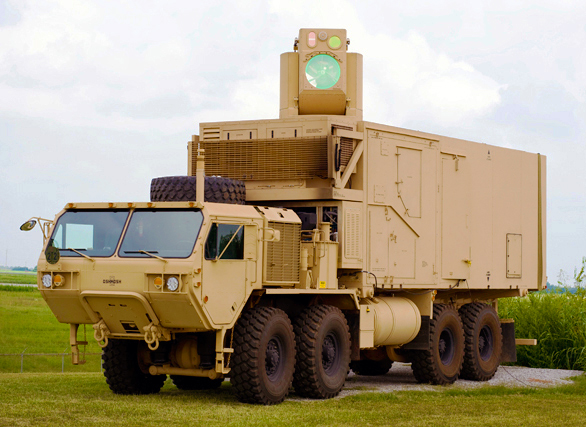
The High Energy Laser Mobile Demonstrator (HEL-MD) is a top-notch laser-based defense weapon being developed by the American Army’s Space and Missile Defense Command, in collaboration with Boeing.
The HEL-MD’s role is to display the potential of directed-energy technology for shielding US Army troops against rockets, artillery and mortars. The first successful trials took place between November 18th and December 10th, 2013 in the White Sands Missile Range, New Mexico. However, the complete integration with a Heavy Expanded Mobility Tactical Truck (HEMTT) was during the summer of 2011, and the first low-power tests of this laser weapon took place during the fall and winter of the same year.
Historical Overview of the HEL-MD
In 1980, US President Ronald Raegan advanced the most prominent propositions for the use of laser guns to destroy flying targets before they could land. The project was called the Strategic Defense Initiative (SDI), which people also referred to as “Star Wars.” However, most of the laser weapon projects were overlooked regardless of the fact that the strategic missile defense concept has never ceased to exist.
Boeing, on the other hand, continued working on the concept, and in February 2010, the company successfully tested one of its Directed-Energy weapons.
YAL-1A Airborne Laser in flight with the mirror unstowed (Photo credit: Wikipedia)
How Does the HEL MD Compare to Other Defense Systems?
The HEL MD is not the first defensive system that the US army devised in order to defend the American operating bases with laser weapons in Iraq and Afghanistan. Similar systems include the Boeing YAL-1 Airborne Laser Testbed and the Phalanx-based Counter Rocket, Artillery and Mortar (C-RAM).
Unlike the HEL MD, the defense system known as the Boeing YAL-1 Airborne Laser Testbed was mounted inside a modified Boeing 747-400F and was, therefore, not mounted on a ground vehicle. However, due to some test failures, the funding for this system was cut in 2010, before the US Army decided to cancel the whole system in 2011.
C-RAM, on the other hand, proved efficient to some extent. The system successfully detected and destroyed rockets, artillery and mortars. Nonetheless, some attacks in both Iraq and Afghanistan still succeeded to get through, which is not the case with the HEL MD system as proved during testing in 2012 and 2014.
Another area where HEL MD outperforms C-RAM is the number of rounds in the magazine. The HEL MD system has a “near-infinite magazine” because it is a laser, unlike C-RAM that has a finite number of rounds.
Blaine Beardsley, HEL MD program manager at Boeing, explained, “Even while you’re utilizing the magazine and engaging targets, you’re charging that magazine.” Therefore, unlike its counterparts, the HEL MD laser gun uses electrical power to produce lethal effects. Mark Gunzinger, a Senior Fellow at the Center for Strategic and Budgetary Assessments (CSBA), further illustrated this when he said, “As long as they have a source of electricity and cooling, they can keep firing.”
Furthermore, this laser weapon enjoys the very useful attribution of mobility, hence the name “MOBILE Demonstrator.” In this regard Beardsley added, “You can drive it out to any location and emplace it quickly and be able to set it up with full 360-degree coverage.”
HEMTT wrecker (M984, front) and cargo (M977). Photo taken at Bagram Airfield in Afghanistan. (Photo credit: Wikipedia)
Capabilities and Specifications of the HEL MD
The latest tests of this laser weapon by the US Army in New Mexico are considered to be the first successful demonstration of the capabilities of the HEL-MD mounted on a Heavy Expanded Mobility Tactical Truck (HEMTT). The current system uses a 10-kilowatt laser. However, the system’s power is expected to be upgraded to 50 or 60-kilowatt laser. Later, the laser will be increased to 100-Kilowatts.
In addition to the tests in New Mexico, the system was tested again on 4 September 2014 at the Eglin Air Force Base in Florida. The HEL MD proved very successful even in maritime conditions. The defense system successfully managed to target a variety of aerial targets, even under windy, rainy and foggy weather conditions.
When commenting on this success, Dave DeYoung, Boeing Directed Energy Systems director, said, “As proven at White Sands Missile Range in New Mexico in 2013 and at Eglin Air Force Base this spring, HEL MD is reliable and capable of consistently acquiring, tracking and engaging a variety of targets in different environments, demonstrating the potential military utility of directed energy systems”.
Although other systems such as C-RAM have proven their reliability, the latest trials of the HEL MD laser weapon system by the US Army in Florida helped the system gain a considerable margin over all of its competitors.
What follows is a brief summary of some of the specifications of the current HEL MD defense system:
BCS – 50 cm aperture retracting telescope, 300 W target illuminator, low jitter precise pointing tracking system
Acquisition & Track Sensors – IR based WFOV for target acquisition coupled with NFOV for engagement
WMI – For a control of the entire system-based on a standard air defense and Avenger C4I interface
BMC4I – Modular design to enable the interface with current and future fielded BMC4I systems
Electrical Power – One set of lithium ion batteries to provide extremely stable power to the laser. Battery charging and another subsystem power from single 60 kW diesel generator, mounted on HEMTT
Thermal Management – Two-loop chilled water system for the laser and standard air conditioner for all other subsystems
Future Plans
Though the current primary use for the HEL MD laser gun system is for the US Army, plans include using this laser defense system to protect the planet from asteroids. There has been a drastic rise in the interest of using this technology since an asteroid hit Central Russia on February 15, 2013. The incident injured more than 1,000 people, which experts regarded as a serious warning about the need for a defensive system that would protect the Earth from any similar asteroid attacks.
Final Analysis
The (HEL MD) laser weapon system has gained fame as a revolutionary defense system for the US Army. It is the only system that proved successful even under foggy, rainy and in maritime conditions. Hence, although other systems like C-RAM will not cease to exist, it is doubtless that the US Army’s New Defense System, the High Energy Laser Mobile Demonstrator HEL MD, will constitute a threshold for more sophisticated directed-energy weapons, especially that those future plans also include saving the planet from asteroids.
The US Air Force and the Pentagon have been pursuing their drone development program since 1995, the most prominent drone series being the Predator series (A, B & C). Today, it is a full-fledged operation. One of the latest projects now being pursued is the US Air Force’s RQ-170 Sentinel Drone, manufactured by Lockheed Martin. The US Air Force has not released much information about this drone. However, this US drone is known to be a stealth aircraft, fitted with reconnaissance equipment for the purpose of gathering data from non-cooperative countries such as Iran, Iraq and Afghanistan. It is being used since 2011, when it was launched during the ongoing war in Afghanistan, called “Operation Enduring Freedom”.
It is also worthwhile to note that this US drone was used quite effectively for tracking down Osama Bin Laden, the mastermind of the 9/11 attacks. The system is believed to have been set up in the Pakistani town of Abbottabad where the terrorist was believed to have been hiding, in a heavily guarded compound, with the full knowledge of the Pakistani authorities. It was through the data fed to the Navy SEALs from the Sentinel system that they were able to penetrate the compound and terminate this dreaded terrorist on the spot.
The RQ-170 Sentinel has also been used in South Korean airspace, which would have been obviously for the purpose of spying on activities in North Korea.
Lockheed Martin RQ-170 Sentinel (Photo credit: Wikipedia)
Duplication of the Sentinel
In December 2011, an RQ-170 Sentinel was sent into Iran on a reconnaissance mission. The Iranian armed forces intercepted the drone and hacked into its navigation systems, managing to capture it. They claimed that they had been able to duplicate it by decoding the software and using reverse engineering. Although, the claims were stated as being fake by a former Pentagon official, the Iranians stuck to their story and showed video footage of the drone.
The landing gear, however, was covered by a banner stating, “We’ll trample America underfoot” and “the US cannot do a damn thing.”
The RQ-170 Sentinel has also been copied by the Chinese who released pictures of the copied drone along with some other aircraft.
Specifications
The specifications the US drone described here are not official, as there are no official documents available, due to the highly classified nature of the RQ-170 Sentinel project, as it is being kept under wraps by the CIA and the Pentagon. However, what has been reproduced here, are as accurately-possible facts, which should give a fair picture about the Sentinel and its capabilities.
The RQ-170 Sentinel by Lockheed Martin is a rather new addition to the United States Air Force’s fleet of Unmanned Aerial Vehicles (UAVs). It is a stealth vehicle, which is supposed to be a cost-effective drone with added qualities put on to existing design features. The purpose of the Sentinel is for surveillance and reconnaissance of enemy territories from a high altitude. The drone is mostly connected to CIA missions, which is the reason most of the information on it remains classified by the Pentagon and unavailable to the general public.
A B-2 Spirit soars after a refueling mission over the Pacific Ocean on Tuesday, May 30, 2006. The B-2, from the 509th Bomb Wing at Whiteman Air Force Base, Mo., is part of a continuous bomber presence in the Asia-Pacific region. (U.S. Air Force photo/Staff Sgt. Bennie J. Davis III) (Photo credit: Wikipedia)
Looks-wise, the Sentinel is more of wing, with less of vertical tail surfaces. The wing structures are swept towards the rear of the aircraft, giving it the appearance of the B-2 Spirit Stealth Bomber. It is powered by a single General Electric TF34 series turbofan engine. The payload region is also located in the central area. The abundant wings serve the purpose of offering extra fuel storage. The undercarriage is in a regular tricycle configuration with two main landing wheels and a single landing gear in the nose section.
The aircraft is equipped with a full suite of cameras and sensors. There are full motion real-time cameras and radioactive isotope-detecting sensors for locating nuclear material. It is assumed that the drone is also armed with missiles, in the same way that the Predator is. It is also understood to have the latest infra-red and other optical devices fitted.
The maximum altitude observed by this drone is at least 50,000 feet. The wingspan is estimated at 26 meters, with a height of 1.84 meters and a length of 4.5 meters.
Future Prospects of the Sentinel
It would seem that the Sentinel has had a rather big setback with the copying of its design by the Iranians. Although there is no information forthcoming from the Department of Defense, the Pentagon, US Air Force or the CIA, there is no dearth of information emanating from Iran regarding the Sentinel and future plans. RT.com News published an article in May 2014 quotes a statement made by Iranian leaders who said that their engineers have managed to decode the drone’s technology and copy it. There will soon be a test flight, they promised.
From what we see, the RQ-170 Sentinel is definitely here to stay, but if the US military is to keep the technology to itself, it is going to have to figure out how to keep its classified secrets from falling into enemy hands, as has been the case in the recent past.
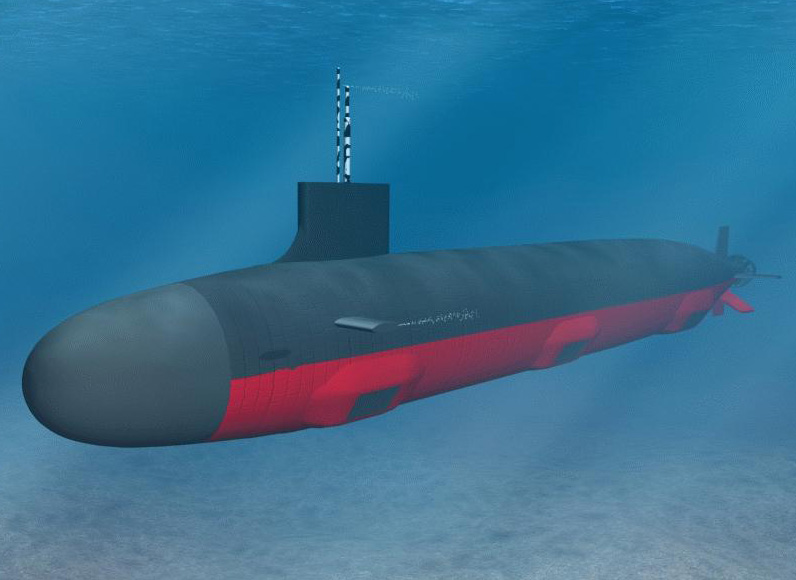
In April 2014, the US Navy made public its latest intention to contract 10 new submarines (the Virginia Class submarine). This contract consists of Block III of the 3-block supply schedule. Blocks I and II have already been delivered. The total value of the contract is estimated to be $17.645 billion. The model is SSN 774 Virginia-class, and they are nuclear power attack submarines. The contract has been awarded to two companies – General Dynamics Electric Boat and Huntington Ingalls Newport News Shipbuilding. The supply will commence in 2018, with two subs each year, one from each yard, for a period of 5 years, until the year 2023.
English: GROTON, Conn. (June 21, 2008) Pre-commissioning Unit New Hampshire (SSN 778) sits moored to the pier at General Dynamics Electric Boat shipyard moments before her christening ceremony commenced. New Hampshire, the fifth Virginia class submarine built, was officially christened by sponsor Cheryl McGuinness. U.S. Navy photo by John Narewski (Released) (Photo credit: Wikipedia)
Impact of the Contract
This contract has literally created waves in the Navy and shipbuilding circles. Financially, it is considered the biggest contract ever to be awarded in the history of the US Navy. Rear Adm. Dave Johnson who is the executive officer for submarines at Naval Sea Command (NAVSEA) is all praise for the contract. He says that it reinforces a solid relationship between the Navy and industry as far as the Virginia-Class program is concerned. He has called this program “a model of acquisition excellence.”
Shipbuilders also had their say by stating that it is the largest contract till date in terms of number of boats ordered in a single contract, which is especially unique in today’s scenario, considering the current economic and political situation. The president of the Electric Boat, Jeffrey Geiger, says that if they are able to supply two ships a year, it will greatly enhance the US Navy’s undersea dominance.
The hull numbers are designated SSN 792 to SSN 801, but these submarines have not yet been named. The US Navy already has 10 Virginia-class submarines. There are another eight in the process of being built. Almost all contracts for Virginia-class subs have been awarded on the basis of multiyear contracts which creating cost-efficiency in the long run.
Virginia (SSN 774) returns to the General Dynamics Electric Boat shipyard following the successful completion of its “alpha” sea trials in 2004. (Photo credit: Wikipedia)
Specifications and Costs of the Virginia Class Submarine
Although the amount quoted in the contract is for $17,645,580,644, there are options for on-board repair parts, so the total value of the contract could touch $17,827,808,738.
Even though some foreign competitors had more sophisticated models in their proposals; these 10 Virginia-class submarines will basically contain all the existing features of this class, but with some new ones added on. Incremental integration of new technologies will be added to the main structure.
Submerged, each sub displaces 7,800 tons. The hull is 377 feet long and 34 feet in diameter. The submarines will be able to reach speeds in excess of 25 knots and the diving depth will be over 800 feet. Each submarine will carry Mark 48 advanced capability torpedoes, along with Tomahawk missiles and also unmanned underwater vehicles.
So, let us take a closer look at the specs of the Virginia-class Submarines of the US Navy. In addition to the points mentioned above, the hull has structurally integrated enclosures. Designed for easy repair, maintenance and upgrade. It has modular deck structures, which makes it easy to install and maintain. The diving control and steering of the submarine is accessed through a joystick of 4 buttons and a double axis. Being a stealth vessel, the submarine has a low acoustic signature which is achieved through anechoic coatings and a specially-modified engine.
USS North Dakota (SSN-784) (Photo credit: Wikipedia)
What’s New in the Block III Submarines?
One major difference in the Block III submarines is in the payload tubes. They are designed to reduce cost and at the same time, increase the scope of missile-firing capabilities. Up till now, a Virginia Class submarine has 12 separate vertical launch tubes with a diameter of 21 inches for firing Tomahawk missiles. The Block III submarines, however, have only two tubes of 87 inches in diameter, where each tube has the capability of launching 6 Tomahawk missiles.
Although the main motivation behind the modification of the launch tubes is cost-reduction, it also increases the possibility of future missiles and launching of off-board sensors from these tubes. The Virginia Class Submarines also have the special characteristic of fly-by-wire technology, where the entire controls are computerized, and the submarines are driven by the touch of a button or touchscreen controls. This is unlike the earlier versions of submarines which used to run on mechanized hydraulics.
The Large Aperture Bow array of the Block III submarines also establishes an advanced sonar system in the boat’s bow, known as the conformal sonar system.3
The LAB array is an improvement over the previous spherical arrays which enable enhanced passive listening capabilities. There is also a medium-frequency active array added to the LAB array. The hydrophones are based on previous designs and serve the usual functions of either locating active reflected sounds or incoming passive sounds.
USS Florida launching a Tomahawk cruise missile (Photo credit: Wikipedia)
Future Plans for the Virginia Class Submarine
The US Navy has great plans on the anvil, and the Block III submarines are likely to receive the new technology as it is handed out. There is talk of the development of futuristic weapons by the US Navy like Laser weapons, which are being currently tested in the Persian Gulf and electromagnetic rail guns which uses electromagnetic force to send a missile over a long range at mind-boggling speeds. The Virginia Class Submarine will change the way undersea battles are fought.
The PAK FA T-50 is in an entirely new league of fighter aircraft. PAK FA is short for Perspektivny Aviatsionny Kompleks Frontovoy Aviatsii. When translated into English, it means “Prospective Airborne Complex of Frontline Aviation” or “Future Air Complex – Tactical Air Forces”. It is being developed by Russia to be a fifth generation stealth fighter with capabilities rivaling and even exceeding in some areas those of the American Lockheed F-22A, the first fifth generation fighter in the world. The finished prototype belonging to the Russian Air Force possesses advanced features like supercruise and extreme maneuverability and is expected to enter into service by 2015.
In the 1980s, Russia sought to develop a multirole fighter that could serve as a replacement for the MiG-29s as well as for the, then recently deployed, Su-27s. The MiG 1.44 was created through the MFI program. The program encountered repeated delays. Its first flight was behind schedule by nine years. By then, Sukhoi had already started developing the technology required for the next generation aircraft even though it was not a part of the MFI program. The development of MiG 1.44 was officially scrapped due to the lack of funds ensuing from the collapse of Soviet Union. At that point, Sukhoi was, after winning the PAK FA competition, chosen to lead the designing of a new fifth generation aircraft.
T-50 ПАК-ФА (Photo credit: Wikipedia)
Since 2007, Russia and India have collaborated to jointly develop an Indian prototype of the T-50 stealth fighter. The program, initially known as FGFA (Fifth Generation Fighter Aircraft) is now jointly called the PMF (Perspective Multirole Fighter). India has agreed to bear half the cost of the projected $12 billion. Two separate prototypes are expected to be developed in the process – one each by India and Russia. India is expected to buy over 144 single seater PAK FAs while Russia is expected to order over 150.
Timeline for the PAK FA T-50
The initial design for PAK FA was completed in 2004.
The first public flight was in January 2010 and lasted 47 minutes.
In August 2012, flight testing of the AESA radar suite was started.
In June 2014, a prototype T-50 caught fire during landing. However, Sukhoi has stated that this incident “will not affect the timing of the T-50 test program”.
Sukhoi T-50 (Photo credit: Wikipedia)
PAK FA T-50 Design
Due to the secrecy surrounding PAK FA project, there is not much substantiated information available regarding the design and development of the T-50 prototype. However, it is clear that it will be the first aircraft in the Russian Air Force that is stealthy. Besides stealth, this fighter aircraft will also possess other advanced features. Among them is a highly advanced radar system called the advanced phase array radar that adds the capacity for both, forward looking as well as side scanning. Its sensor fusion capability will allow it to track and engage with multiple targets at the same time. The current PAK FA prototypes that are scheduled to go into service will use the izdeliye 117 engine. These powerful engines will allow the aircraft to supercruise; that is, sustain a supersonic flight without the use of afterburners.
The armament details of the PAK FA have been kept largely under wraps. However, it is believed that the current T50 prototype could be equipped with air to surface missiles, air to air missiles, anti ship missiles, anti radiation missiles, and guided bombs. When the prototype comes into service, it may use the in-service missiles. However, it is expected that over time special munitions will be developed specifically to be used in the PAK FA family.
In certain aspects of design, the PAK FA does resemble the existing American fifth generation F-22s, notably in its broad shape and long lines. Its advanced aerodynamic system gives it extreme agility, a trait that is somewhat lacking in the F-22s. The 25,000 lb internal fuel load gives it another edge over the F-22s when it comes to combat persistence.
The Political and Strategic Impact of the PAK FA
A technical analysis of the PAK FA shows that is clearly more advanced in agility and aerodynamic performance than any aircraft built by the USA, whether in service currently or in planning. Given the configuration of the PAK FA and its stealth parameters, it is believed that it will change the nature of missile combat. The missile will come into the combat at a closer range than before, and the timeline of actual engagement will be shorter as well. This means that stealth will be one of the most important features for fighter aircrafts in the time to come. The other factor most likely to affect the outcome of the air combat would be the ability of the fighters to supercruise for longer periods of time. As such, the advent of the mature production PAK FA could mean the end of line for the teen series generation aircrafts such as F-15 / F-16 / F/A-18.
Even when it comes to the current fifth generation American fighter F-22A, the United States will not have a clear and certain advantage when it comes to air strikes and will immediately lose the ability to impose air superiority rapidly. According to the tactical analysis, “Fights between the F-22A and the PAK FA will be close, high, fast and lethal …The outcome will be difficult to predict as it will depend a lot on the combat skills of the pilots and the capabilities of the missiles for end-game kills. There is no guarantee that the F-22 will prevail every time.”
Summary
PAK FA T-50 is believed to be the one of the foremost “game changers” in the field of fighter technology since T-10 & Su-27s. Its impact is not just limited to technology and politics, but rather it could have fundamental ramifications tactically, strategically, as well as operationally. Most importantly, it challenges the aerial advantage that the United States has held for many decades. Unless their planning for future air power tactics changes immediately and drastically, United States will have fewer strategic options going forward that are nonnuclear in nature. The PAK FA T-50 is certainly a counter punch that will cause the US to innovate an even better fighter than the F-35 and F-22.
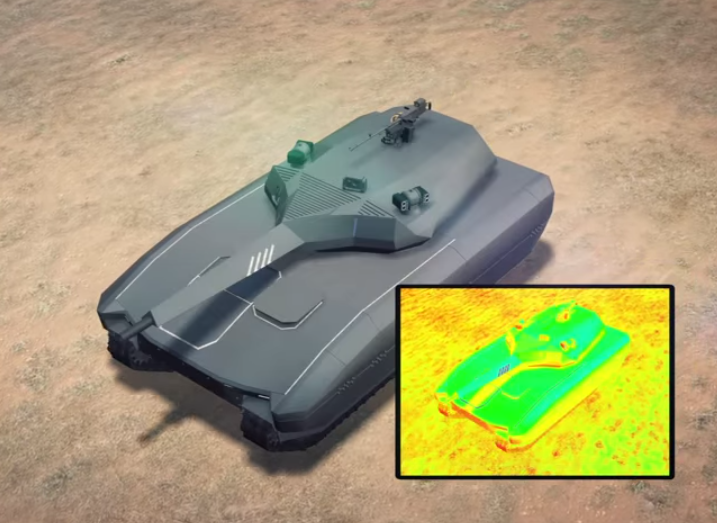
Poland is making defense technology splashes lately with the arrival of its PL-01 Tank concept, thought to be one of the tanks of the future that governments are starting to move towards. The Polish Government, Orbrum, and BAE Systems are working jointly on this project. The PL-01 Tank has a major feature, that it is virtually invisible to radar and thermals, that distinguishes it from the traditional tanks. The PL-01 Tank is invisible to enemy thermal imaging, infrared, and radar which make it unique and an attractive buy for any nation’s Army.
Launch of the PL-01 Tank:
This proposed Polish PL-01 tank is mainly designed for the Polish military and is being developed jointly between Polish Defense Company Obrum and British conglomerate BAE Systems. It is a light armored tank and designed as a fighting vehicle. It was disclosed first at the International Defense Industry Exhibition at MSPO in Poland on 2 September 2013. The tank is estimated that a full sample will be completed in 2016 and if everything goes well, it will be in service for marketing immediately thereafter. Mass production is planned to commence in 2018.
Key Specifications of the PL-01:
The Polish PL-01 tank has some unique and distinctive features that make it different from other traditional concept of most modern tanks. The obvious specification is that it is a stealth tank as far as radar and thermals are concerned. Very significant technologies are integrated into the concept to help the tank reduce its infrared signature. Cooled wafers are used on the outside of the tank to perplex the tracking systems of anti-tank weapons on the battlefield. It has the capacity to avoid the enemy thermal imaging, infrared and radar. In addition, the tank has a 940hp diesel engine that has the special capability of dispersing the exhaust system to further reduce its infrared signature. This feature will allow it to blend in with the environment by confusing the electronic detection systems of the enemy. Special cooled wafers (like a cooling plate) on the outside of the tank are used to make the tank appear more like a car or other object when it is viewed in infrared or detected in the enemy thermal devices. The tank has an unmanned turret and a large auto loading cannon. The turret is very versatile and can do multiple different firing tasks from the same vehicle. The angles of the tank are intended to diminish its radar signature and it is enclosed with a radar permeable coating. The sum total weight of the tank is 30,000 kg (standard layout) and with additional armor panels, it is 35,000 kg. The length, width and height of this vehicle are respectably 7 m, 3.8 m and 2.8 m. It can facilitate a crew of three. The main armament of this tank constitutes 105 mm or 120 mm caliber main cannon and the secondary armament is 7.62 mm remote controlled machine gun as well as other active and passive countermeasures. This includes a 40 mm or 12.7 mm grenade launcher, heat and radar reduction. It is equipped with a 940 horse power diesel engine attached to a torque converter, automatic gearbox and driving assistant mechanism. The suspension torsion bar is based on seven wheels. The speed can vary from smooth road to rough territory. On paved roads, the tank is supposed to reach up to 70 kph and on rough terrain, it can reach up to 50 kph. The operational range is maximum 500 km on paved roads. The PL-01 tank can use steel or rubber tracks. It can move rapidly on and off roads and efficiently traverses water.
English: This is the M1A2 TUSK Abrams Tank. (Photo credit: Wikipedia)
PL-01 Tank Layout and Comparison:
The design of PL-01 tank is akin to that of main battle tanks, with the driver located at the front of the vehicle and an unmanned turret mounted at the rear. There is a gunner and a commander within the hull and a crew of three soldiers can take their position in the rear part. The Combat Vehicle 90 is the model based on which the chassis of the tank is based. Currently the vehicle weighs in at about 33 tons and it is calculated that it will be about 39 tons with the additional armor. Russian T-90 main battle tank isn’t as light as the weight of the Polish tank. It is ten tons lighter than the Russian one and it is an advanced model of Abrams tank. There is a lot of criticism that the PL-01 is just another variation of the Polish Anders Tank. There are also some close similarities between the PL-01 tank and the Israeli tank Merkava – mainly that the engine-transmission compartment is located in the front part of both tanks.
English: T-90 main battle tank. (Photo credit: Wikipedia)English: IDF Merkava Mk4 main battle tank עברית: טנק מרכבה סימן 4 (Photo credit: Wikipedia)
Future Planning for the PL-01 Tank:
The Polish concept tank is currently on the stage of early development and on the verge of initialization. Designers confirm that in the future, there will be improvements to the concept to include possibly an “invisible” feature which causes the tank to appear to blend in with its surroundings to the naked eye. The designers would likely to use a system that has cameras and some type of displays on the outside of the tank. This will help the tank to match the image seen on the one side of the tank onto the video receivers on the other side of the tank. Having the tank be stealth and invisible would put it in an all new class of ground warfare that could change the battlefield forever.
Thoughts About the PL-01 Tank:
The Polish concept of PL-01 Tank is truly exciting and intriguing. It is quite interesting that the big budgets in the United States Military usually go into Aircraft (F-22 Raptor, F-35 Joint Strike Fighter) probably to help gain air superiority first. Sure they improve the ground vehicles, but not on the level of what Poland is trying to do. Poland has already conceded that it will not have air superiority against a Russian attack. So they are hoping to differentiate their forces by providing a tactical advantage with their armor. It is worth noting that there is no way Poland would have access to the stealth technology provided by BAE Systems without some kind of approval from the UK or US governments. In the end of the day, this same technology will probably make its way easily back to the United States and other NATO allies once it is fully developed and proven in Poland. The PL-01 Tank is definitely worth watching.
DARPA has been busy with the advancement of Ground X-Vehicle Technology.
English: This was the most up-to-date DARPA logo as of January 2009. It is obsolete now. (Photo credit: Wikipedia)
There has been a consistent formula which applies to mechanized warfare for at least a century, with regards to the protection of land-based armored vehicles and those who occupy them which is, the more the armor, the more the protection. The difficulty that has developed in the recent years is that with the increased armored protection, there has been an even higher increase in the penetration power of weaponry. As a result, there has been an exponential increase in the armor on such vehicles. This decreases the mobility of these vehicles while at the same time, it shoots up the manufacturing cost. This also restricts the access of such vehicles to roads only, and it becomes next to impossible for them to gain access into restricted spaces.
Size of the Ground X-Vehicle Technology Does Matter
On looking at any US Army armored division, the first thing that one notices is that the tanks are really, really big, and expensive. For instance, a British Challenger 2 weighs 68.9 tons and comes with a price tag of $7 million. There is no escape because, with the increasing power of antitank weapons, the tanks have to be increased in size accordingly. If we take a look back into history, during the First World War, the tanks were no larger than an average-sized SUV. However, over the years, tanks began to get loaded with heavier artillery and more sophisticated armor. To compound matters further, there was a lot of technology being loaded onto these tanks. This resulted in bigger tanks – much bigger.
All this led to the US military taking a closer look at the way armored vehicles are being produced and there was a serious doubt as to whether “The more the armor, the more the protection” was the only solution to the problem. With this in mind, the Defense Advanced Research Projects Agency (DARPA) put into force the Ground X-Vehicle Technology (GXV-T) program for addressing this issue and streamlining the way mechanized warfare is executed. Under the new program, instead of adding on armor, there would be a different approach to resisting and avoiding direct hits on armored vehicles, thus increasing mobility and survivability.
Ground X-Vehicle Technology
Specifications Ground X-Vehicle Technology
Here is a product that is not quite on the drawing board yet. However the Ground X-Vehicle Technology is being pursued single-mindedly by DARPA. Here is a brief description of the technology that DARPA is trying to implement in the years to come.
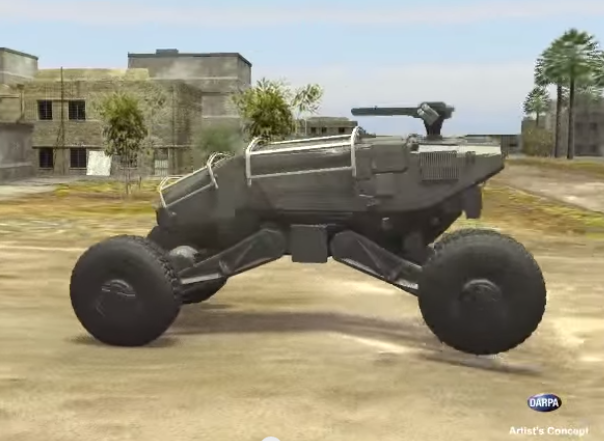
The main aim of the Ground X-Vehicle Technology is to produce tanks which are “half as heavy and twice as fast.” The program stresses on agility of the vehicles which should have capabilities of swiftly reacting to an attack by say, shifting the location of armor around within a split second. At the same time it should be able to effect a rapid change in direction in a bid to avoid a direct attack. DARPA also requires that the vehicles should have the capability of literally “dodging” bullets and rockets aimed at them.
The concept of the Ground X-Vehicle Technology program is to entirely remove the dependency on excessive armor once and for all. Kevin Massey, a DARPA program manager cites the example of the X-plane programs where more efficient aircraft was developed but, while at the same time, drastically reducing the size. The GXV-T program aims at manufacturing vehicles which are 50% smaller, thereby reducing the size of the crews and at the same time doubling the speed. These vehicles should be accessible to more than 95% of the terrain, increasing the difficulty in locating and engaging them.
What all this means is that methods have to be devised for producing tanks which are capable of off-road movements, similar to the way rally cars operate, and should be capable of dodging enemy attacks, while at the same time exhibiting stealth properties, shielding them from detection through infrared and electromagnetic sensors. In line with all these requirements, DARPA is hopeful of the emergence of these new GVX-T technologies within two years of awarding the contracts to successful bidders which is scheduled for April 2015.
DARPA Proposers’ Day
The need for bringing in fresh technology to realize the requirements of the Ground X-Vehicle Technology was expressed in the form of “Proposers Day” held on 5 September 2014. The aim of this gathering was to get prospective contractors together at one place, where they could put forth ideas, backed with the related technologies for the development of ground-based vehicles in line with the requirements of the Ground X-Vehicle Technology.
Order of Things to come
With the aggressive campaign of DARPA to create the Ground X-Vehicle Technology, it is going to be interesting to watch and see which way the wind blows. Budgets permitting, it does seem that the US Army is headed for a technological revolution in terms of ground-based vehicles. Although it is early days yet, when the technology finally does come into the field, it will probably change the way land-based army combat operations are executed. Until then, we can only wait and see what emerges with Ground X-Vehicle Technology.
A video of the Ground X-Vehicle Technology concept can be found here:
Before we get into the specifics of the MQ-9 Reaper Drone, one of the deadliest drones in the US arsenal, we must first cover some history.
History of the Drone
A third of the US Air Force’s aircraft is estimated to comprise of drones today. The concept of drones is not a new one. The history of drones or Unmanned Aerial Vehicles (UAVs) dates back to the 1930s with the development of the “Queen Bee” by the British Royal Navy.However, it was not until 1995, that concerted efforts were commenced by the United States to develop drones for military applications. The MQ-1 Predator (Predator A) was first put into use in 1995. It began as a surveillance vehicle and data gatherer, but was later fitted with Hellfire Missiles, for targeting suspected terrorists. It was created as a result of a directive from the Department of Defense for counter-insurgency measures at overseas locations.
Reasons for MQ-9 Reaper Drone Development
As a result of the war with Iraq, and in the aftermath of the 9/11 attacks, a need was felt to step up counter-terrorist measures by the US armed forces. The ongoing war with Afghanistan also reinforced this conviction. In 2007, the first test flights of the MQ-9 Reaper Drone were carried out at the Creech Air Force Base in Nevada. This new series of drones was first pressed into service in actual combat in Iraq and Afghanistan later during the same year. This was followed by successful missions in other countries like Ethiopia and Libya.
English: An MQ-9 Reaper unmanned aerial vehicle flies a combat mission over southern Afghanistan. (Photo credit: Wikipedia)
MQ-9 Reaper Drone Technical Specifications
The MQ-9 Reaper Drone (Predator B) was developed as an improvement to the MQ-1 Predator (Predator A). It is bigger and better than the MQ-1 Predator in terms of power and munitions delivery. The codification of the drone is as follows: “M” stands for Mulirole, “Q” for Unmanned Aerial Vehicle and “9” is the series designation.3
This drone is described as an armed drone of medium, multi-mission, medium-altitude capabilities. Its primary function is that of intelligence collection and the secondary function is attack on dynamic execution targets.
The MQ-9 Reaper is totally remote-controlled. It is fitted with a Multi-Spectral Targeted System, consisting of visual, infra-red and laser sensors. The munitions system is also laser-guided. The suite of functions that the Reaper can perform is surveillance, reconnaissance, precision strike, search and rescue during combat, convoy/raid over-watch, air support, buddy-laser, and terminal air guidance, development of targets and clearance of routes. The aircraft is fully-equipped with sensors and weapons with a satellite link between the drone and the ground control station. The entire aircraft can be dismantled and transported in a C-17 transporter or larger, but is also capable of independent taking off and landing from a standard US airfield.
Here is a summary of some of the specifications of the MQ-9 Reaper:
$56.5 million (4 aircraft with associated equipment)
Other MQ-9 Reaper Drone Buyers
The primary customer of the MQ-9 Reaper is the US Air Force and the US Government. However, the sale of this drone is not restricted to the US alone. In 2011, the US Department of Defense signed a contract with General Atomics Aeronautical Systems to supply 24 extra systems of the MQ-9 Reaper to the Italian Air Force. The total value of the contract was tagged at $15,053,926.
In 2013, the Netherlands declared that it would be acquiring its own fleet of Reapers by the year 2017, amounting to 4. Today, France and the UK are also using MQ-9 Reapers, making this drone a global product.
MQ-9 Reaper (Photo credit: Wikipedia)
Future Plans of the MQ-9 Reaper Drone
The MQ-9 Reaper has had a good tour of duty. However, it is likely to be replaced by the next generation of drones. The Army is now developing the successor to the Reaper – the Avenger (Predator – C), a sleeker and more robust design, compared to the Reaper. The main features which differentiate the Avenger from the Reaper is that the Avenger is jet-propelled and it is has stealth properties and the cruise speed is double that of the Reaper.
MQ-9 Reaper Drone Final Analysis
If we consider the track record of the MQ-9 Reaper, it would be fair to say that it has had a fairly successful journey. One thing is sure, and that is, unmanned aircraft will play a prominent role in the US Air Force in the future years. When Secretary of Defense, Robert M Gates addressed the Air Force Academy in 2011, he mentioned that although there will always be a need for manned flight in the US military, there is a great scope for the development of remotely piloted vehicles, for reconnaissance and strike. “I see no excuse for men in fighter planes to shoot down bombers,” he says, “The next Air Force is going to be built around scientists.”
It appears the MQ-9 Reaper Drone will continue to see heavy use for many years to come, until such a time as it is fully replaced by the Predator 3 and future models.
Where did the Ground Combat Vehicle come from and what is it? In 2009, the US Army announced its intention to “significantly restructure” it’s Future Combat System” (FCS). This was formally announced by the Secretary of Defense, Robert Gates. The FCS was a program being developed since the year 2000. It was to be a multi-billion dollar program which would be implemented over a period of several years, and one of the salient features of this program was the Manned Ground Vehicle, (MGV).
However, the development of the MGV was cancelled and replaced by another vehicle called the “Ground Combat Vehicle” (GCV), to replace the then existing M113s and the Bradley. The features were obviously planned to be better than the Bradley, in all respects.
M2 Bradley IFV (Photo credit: Wikipedia)
Features of the Ground Combat Vehicle
The basic philosophy behind the GCV was that it should be possible to add capabilities on to it in the future, including development of armor. Further, the vehicle should be adaptable to both existing as well as future network capabilities like jammers, radar and sensors. Furthermore, it should be integrated with mature technologies. The vehicle was expected to be in the field by the year 2017, at the latest. The capacity was expected to be a total of 13 soldiers, which would have been more that the capacity of 9 in the M2 Bradley. A common chassis would enable variants to be built around the base structure. The vehicle would also have modular armor, which could be added and removed according to combat requirements. The propulsion system would be an E-X Drive hybrid electric that would deliver high power torque.
Setbacks and Budget Cuts
Originally, once the Analysis of Alternatives (AoA) had been carried out by the army, and no other alternative contractors had been located, two contracts of $439.7 million and $449.9 million were awarded to two contractors, General Dynamics and BAE Systems, Nothrop Grumman respectively. Firms like Lockheed Martin, MTU, Detroit Diesel, Raytheon, Rheinmetall Defence, Krauss-Maffei Wegmann, SAIC and Boeing were also in the fray.
In 2010, a Request for Proposal (RFP) was issued. Under the deadlines of this RFP, companies were given up to January 2011 for proposals to be submitted for tracked or wheeled vehicles. The Army put a ceiling on the cost per vehicle to a range between $9 million to $10.5 million. The cost of each operational mile was to be $200. The vehicle was also required to fit on a C-17 transport aircraft. 1,874 vehicles had been planned, with the first ones being run off the production line in April 2018.
However, there were several clauses that the Army introduced, that would put the companies in extremely deep water, if there were any glitches in the production. For instance, there was a $450 million ceiling per company and if there was any further rise in the cost, 100% of the additional cost would have to borne by the contractor.
Further deterioration of the program occurred with Boeing protesting about its rejected proposals. The Army defended its case by stating that it had requested certain technical details from Boeing, but the company did not come forward. A total of 20 weaknesses of Boeing were identified, but according to the Army, the company did not address them adequately.
The program was officially called off on 24 February 2014, as confirmed by the Secretary of Defense, Chuck Hagel.
Potential of the Ground Combat Vehicle
If the GCV had been continued, would it, and how would it have benefited the Army? In 2009, Maj. Gen. Robert H. Scales (Ret.) wrote an article for the Armed Forces Journal. In his article, A Vehicle for Modern Times, Scales brings to the fore the burning issue of the state of the US Army’s ground forces. He feels that the GCV would be able to bring about the much-needed modernization of the US Army’s ground forces. He feels that the GCV could influence the way all other support systems of the war machine work, like sensors, network, aircraft and fire support. Scales makes a lucid observation that it is unfortunate that drastic changes are usually brought in as a consequence to the death of soldiers.
When the Stykers and Land Warriors were introduced, Scales says, they played different roles, such as long-range and short range transporters, firepower platforms, rally points or even rest centers. He says that the development of a land vehicle effectively resistant to Improvised Explosive Devices (IEDs) abundantly found in Afghanistan is far from satisfactory. He says that loading on armor has got its limitations; the balance has to be struck between offering sufficient protection and making the vehicle to unwieldy and overweight due to excessive armor. This is one good thing that the GCV has going for it.
Scales hits the nail on the head by stating that Soldiers and Marines have paid a heavy price in Iraq and Afghanistan. The Ground Combat Vehicle program he feels, would give them back what they have lost. He concludes the article with a powerful summation by saying, “Let’s get on with giving them the fighting system they deserve.”